


Plaster and wire mesh walls, suitcases, old clothes, children's bicycles and toys, food preserves, these are the objects from which Vlassis Caniaris has developed its artistic language.
Born in Athens in 1928, he studied at the School of Medicine and then went on to study at the Athens School of Fine Arts. Caniaris moved to Rome in 1956 and then to Paris in 1960. The art critic Pierre Restany was "struck at the time by his paintings, vast collages of paper covered with a light layer of white plaster, torn on the surface by multiple scratches, splashed here and there with sad colours. One could detect the synthesis of multiple reminiscences, the tachism of old walls, graffiti, gestures of lacerations; anti-Burri-blanc, Twombly scribbled on Tapies. » (1)
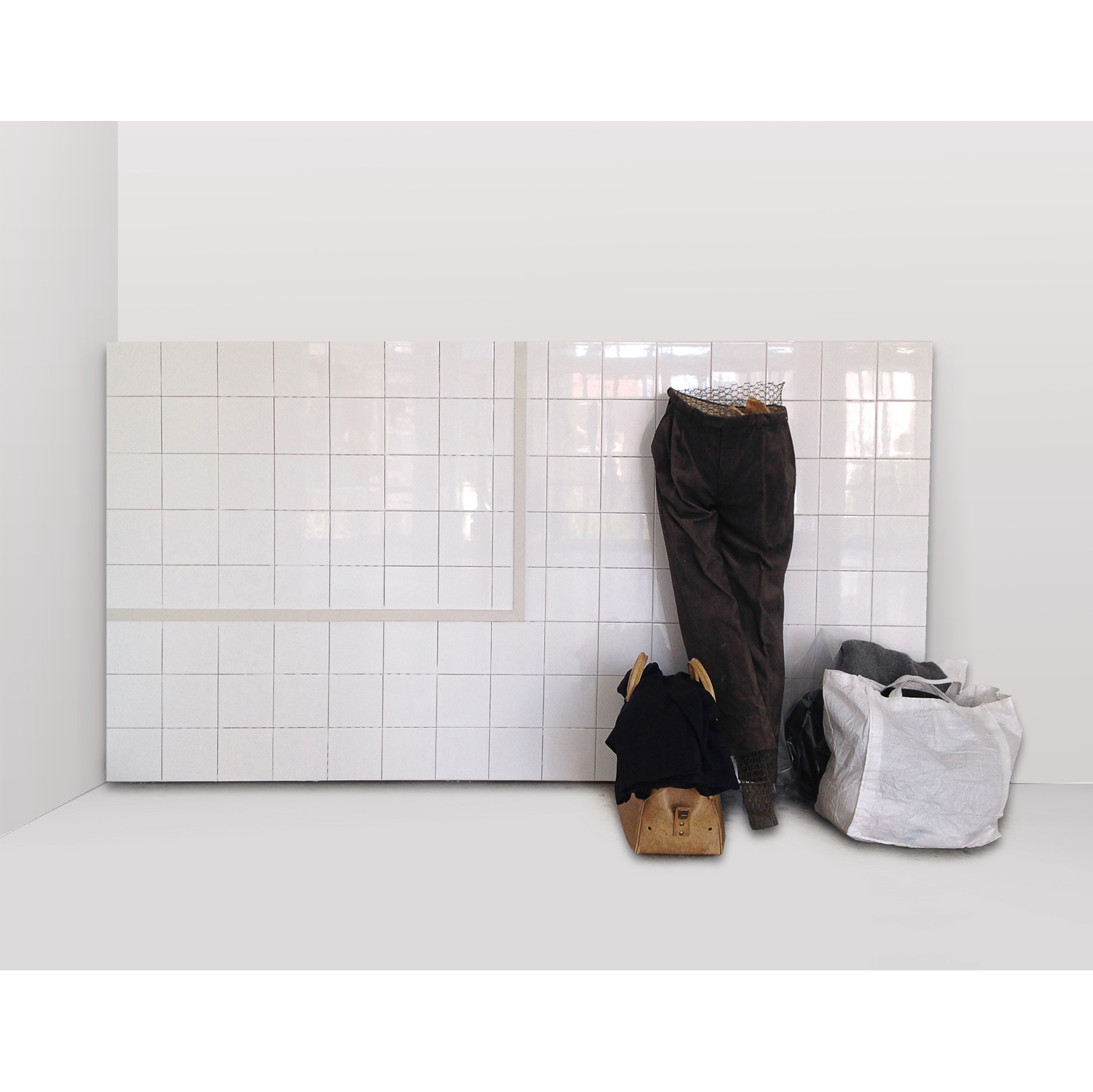 Vlassis Caniaris (1928-2011)
Image, 1972
Result: 39000 €
Caniaris seeks to reduce the strict limits of the canvas by transforming his paintings into sculptural objects in dialogue with space. From the early 1960s onwards, the Greek political and cultural scene became his main theme.
He returned to Greece in 1967, during the dictatorship of the Colonels, and left two years later for Berlin. There he developed a series of works on the theme of migration. He continued his approach of rendering objects and characters no longer as representations, but now as real objects in space, constituting a kind of environment.
Through this language close to "Arte Povera", he expresses his interest in the working class world. The same workers who came to invade Germany at that time, coming from the Balkans, from the countries of Eastern Europe. The characters are always faceless. They are part of a mass of unimportant, anonymous people.
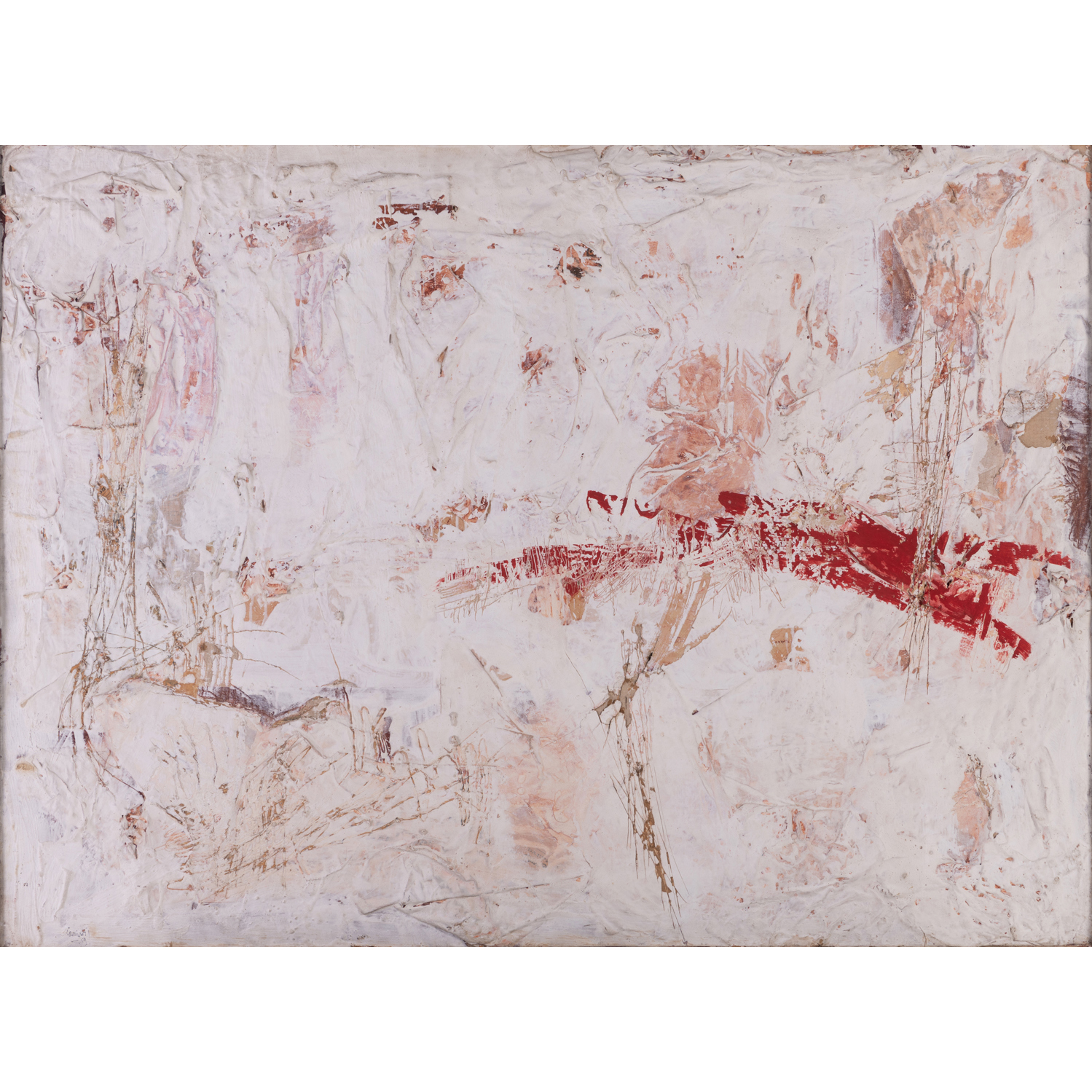 Vlassis Caniaris (1928-2011
Mur, 1959
Result: 26000 €
After 1973, France, Germany and Switzerland close their borders to ensure employment for their residents. Caniaris' works thus reflect his concern for the problems of immigration to Europe in the 1960s and 1970s.
In 1970, Jean Dypréau wrote about Caniaris: "If for some painters or sculptors the word 'art' still has a meaning, it is that of an observation and a protest. You will have understood from where the rise of "Arte Povera", so called by the Italian critic Germano Celant, started. Of this art, Caniaris is indisputably a precursor. He is still the one who was able to imprint a personal style on his approach, just like Beuys in Germany or Kienholz in America: each of his objects bears his imprint".
(1) Pierre Restany, « Notes analogiques pour un portrait de Caniaris, artiste grec contemporain », 1963