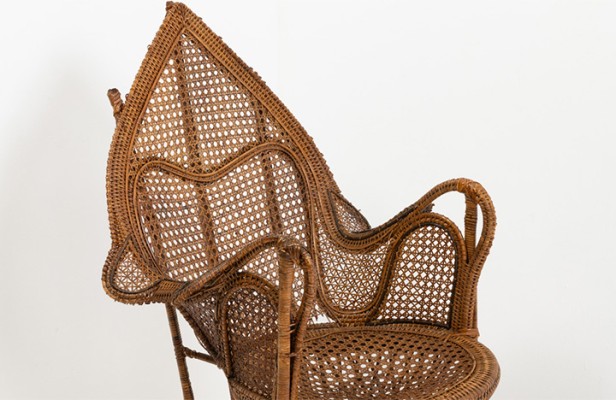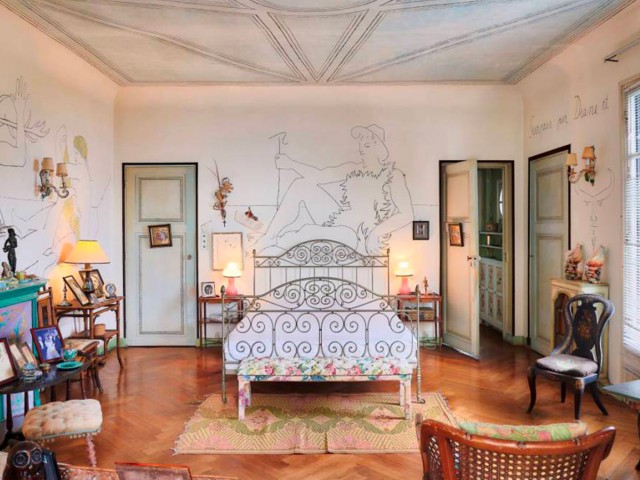
Francine Weisweiller, Parisian socialite and patron of Yves Saint Laurent, owned Villa Santo Sospir from 1950 to 1961. Before becoming a widow, she received the house of her dreams as a gift from her husband. Perched on the cliffs of Saint-Jean-Cap-Ferrat, the villa overlooks the Mediterranean Sea and offers exceptional panoramic views.
Initially simply whitewashed, in keeping with the traditional architecture of the region, the house was then decorated by the famous and exuberant Madeleine Castaing.
Known for having revolutionized the codes of interior design in the early 20th century, Madeleine Castaing cultivated a lifestyle based on mixing genres and daring combinations. She created a unique universe where emotion took precedence over decorative rigor, with the stated ambition of “making poetry with furniture.” Swirling foliage, fawn prints, unexpected contrasts: her style is particularly distinguished by her masterful use of blue. One of its shades became so emblematic that it was nicknamed “Castaing blue.” A color also dear to Francine Weisweiller, this blue adorns the Villa Santo Sospir and seems to resonate with that of the nearby sea.
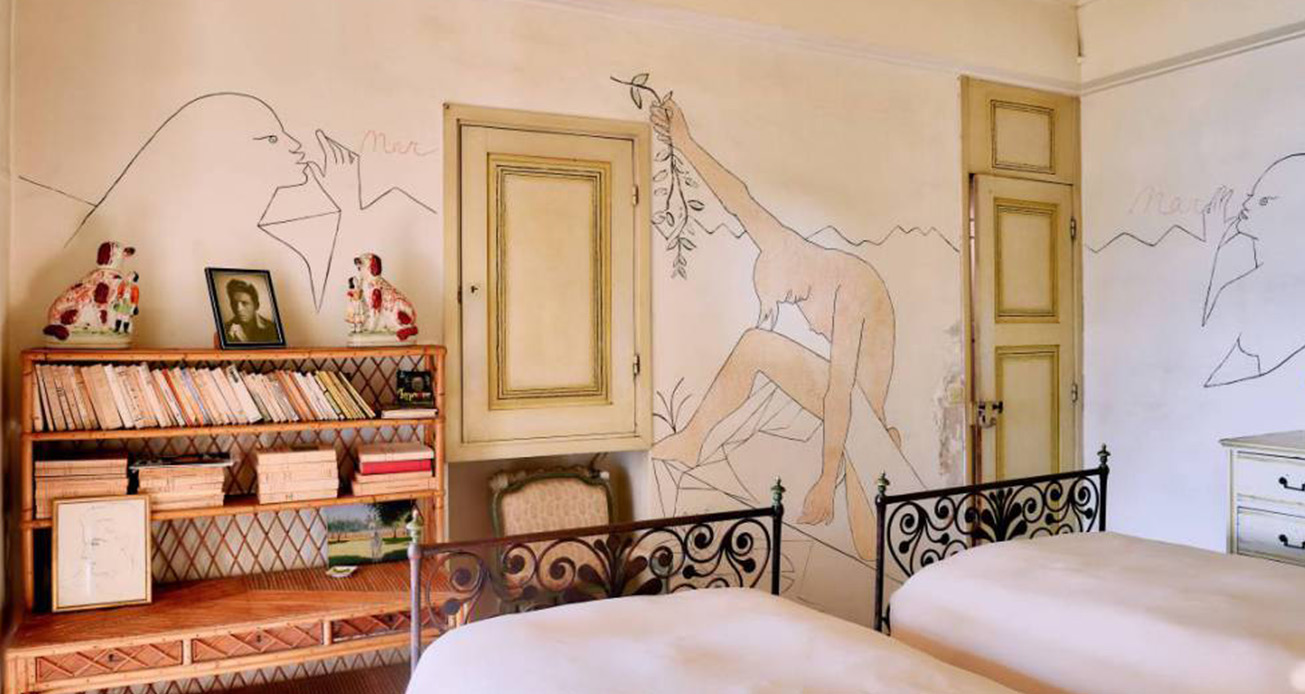
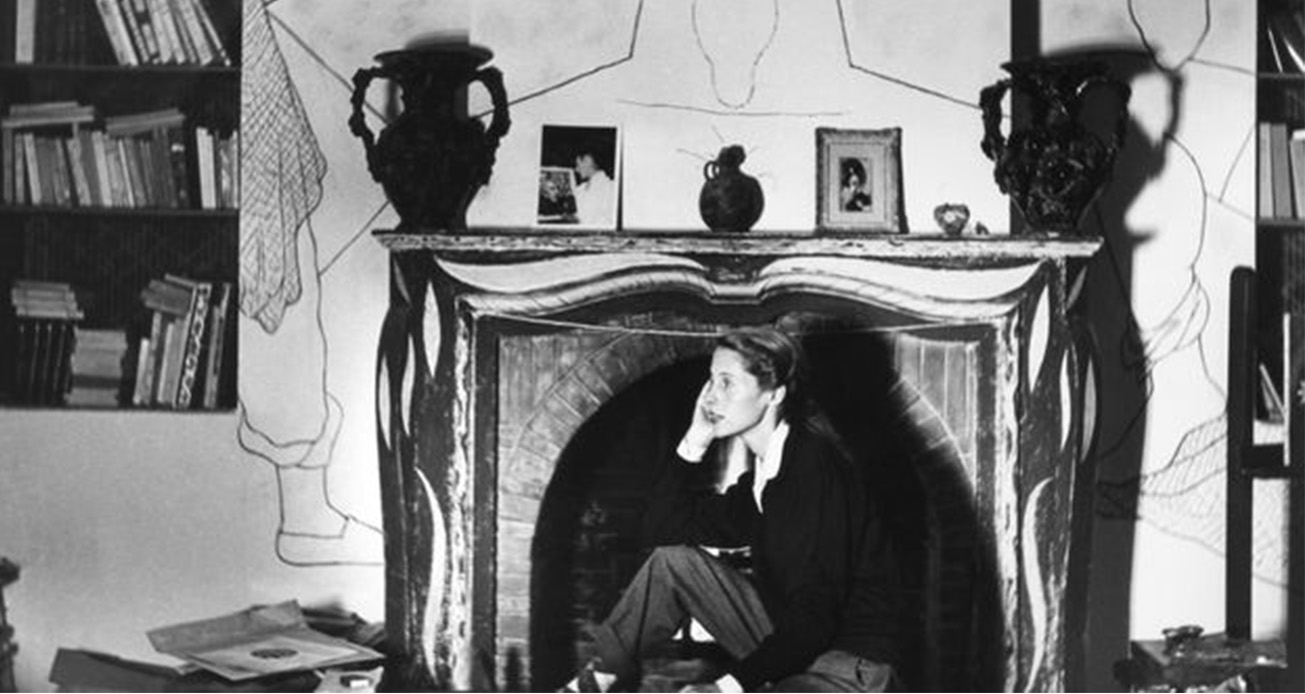
Later, Jean Cocteau would also be inspired by these sapphire waters, which reminded him of the Aegean Sea. It was during the filming of "Les Enfants Terribles", adapted from his own novel, that the artist met the woman who would become his friend and patron. It was love at first sight for both of them, leading to a deep friendship. Invited to stay at Villa Santo Sospir, Cocteau soon expressed a desire to leave his mark there. He asked his hostess for permission to draw a head of Apollo above the fireplace. This first fresco marked the beginning of a vast decorative cycle inspired by Greek mythology, which would gradually take over the walls of the house.
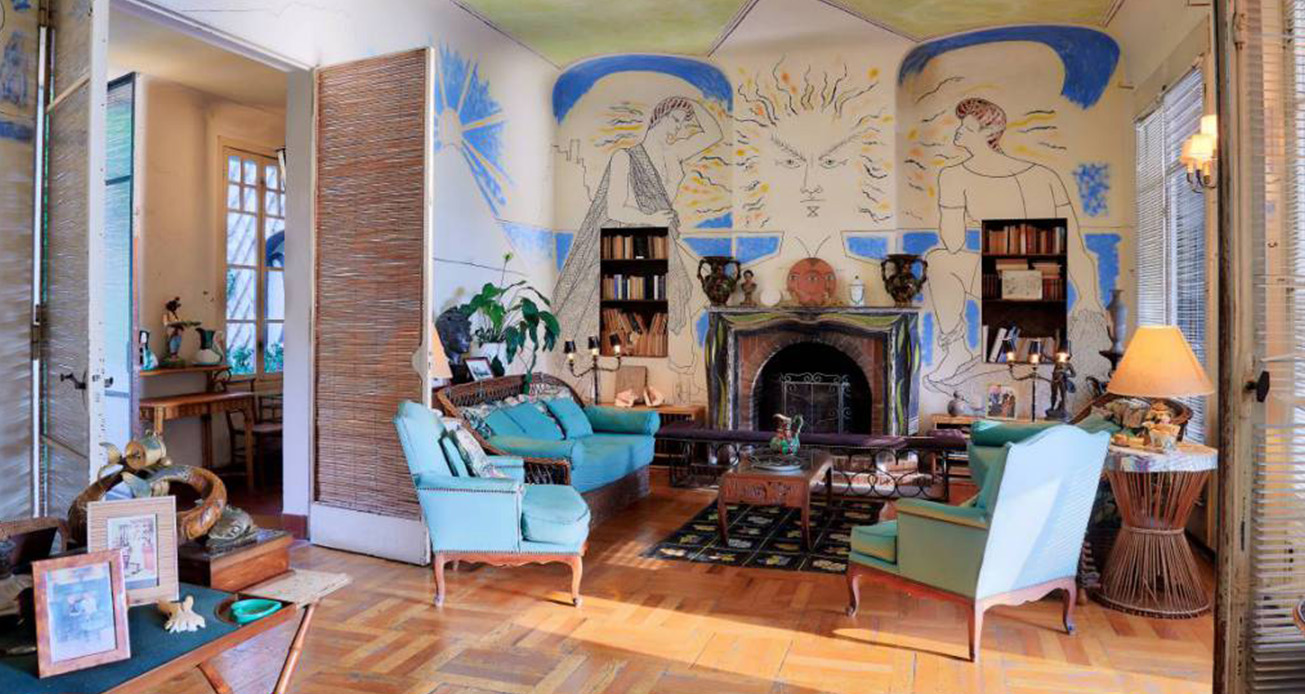
Over the years, the “tattooed villa” welcomed personalities of exceptional artistic and intellectual renown, such as Pablo Picasso, Marlene Dietrich, and Greta Garbo. Cocteau began painting there six years after the end of World War II and spent long periods there until his death in 1963. He wrote: “We tried to overcome the spirit of destruction that dominated our era. We decorated surfaces that men dream of destroying.”
Now listed as a historic monument, Villa Santo Sospir remains a unique testament to this artistic effervescence. All of the furniture and furnishings from the house are presented for sale in this catalog.