


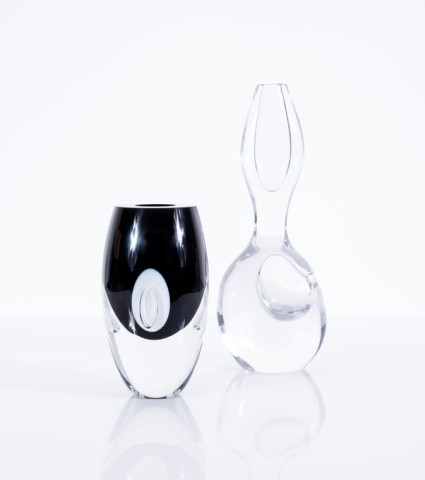
Scandinavian purity and sobriety best define the work of Timo Sarpaneva, born in 1926 Finland to a family of weavers and blacksmiths. His upbringing led him naturally to an early vocation as a craftsman, while his sensitivity for beauty, skill and innovation drove him just as naturally to study design at the Institute for Industrial Arts in Helsinki. Immediately following his graduation, he is hired as a designer by the historical Iittala glassware company.
-
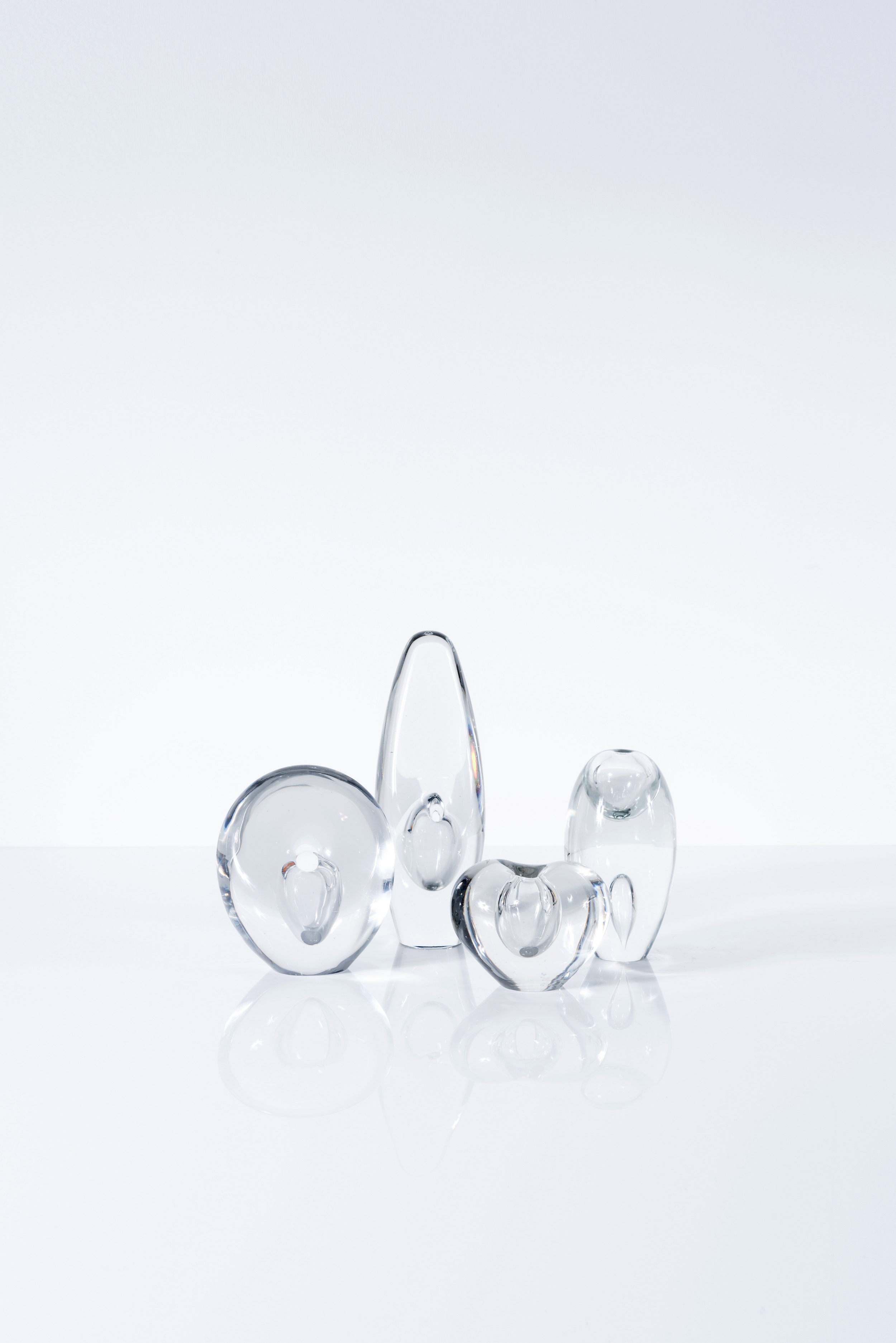
Timo Sarpaneva (1926-2006)
pour Iittala
Quatre vases en verre soufflé "Tear" - "Heart" - "Orchid" - "Sitting bird"
-
In this workshop, Timo Sarpaneva strives, as he always will, to merge the beautiful and the useful. His vases, worthy of admiration and contemplation in and of themselves, remain meant for everyday use. His main pieces are tradition kitchenware items, in the materials they are usually associated with: porcelain, metal, wood, textiles.
However, more than any other medium related to the decorative and utilitarian arts, he has a particular attraction for glasswork, its material, its transparency, its weight, the technical and physical challenges it involves, its colors and its touch. He was fond of telling an anecdote that as a child, he wanted to give new shape to a block of ice and waited for the ice to melt and transform under the heat of his fingers.
-
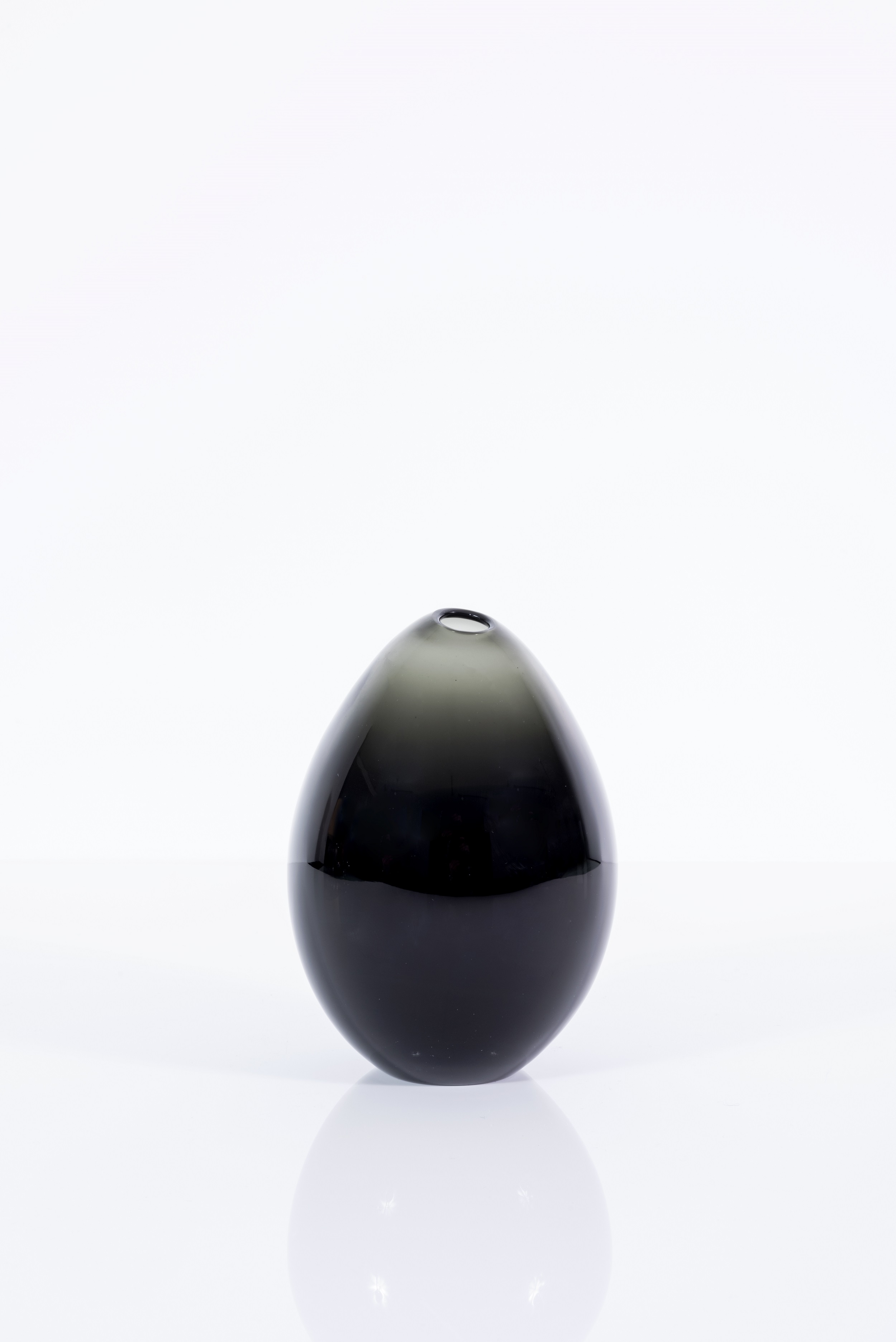
Timo Sarpaneva (1926-2006)
pour Iittala
Vase en verre soufflé "Egg"
Sold 780 €
-
According to him, everything must be measured, rational, but also considered in its entirety, from the packaging to the logo, along with the object itself. Each creation must find its place in a larger ensemble in order to create a harmonious world.
Spiritual son of the Arts & Crafts movement, Timo Sarpaneva was guided by the desire to link design and industrialization, craftsmanship and a wider production. However, the technique required to execute the pieces he imagined, the many hours spent on each object and the necessary and unavoidable intervention of the human gesture rather than a machine has always slowed large-scale commercialization. The pieces he has signed are now rare and sought after, testimonies of a style, an era and memories of a kind of utopia.
