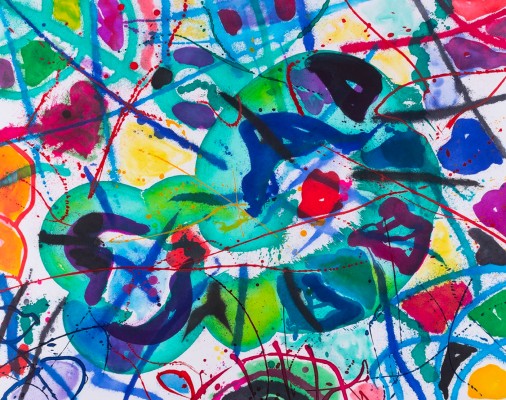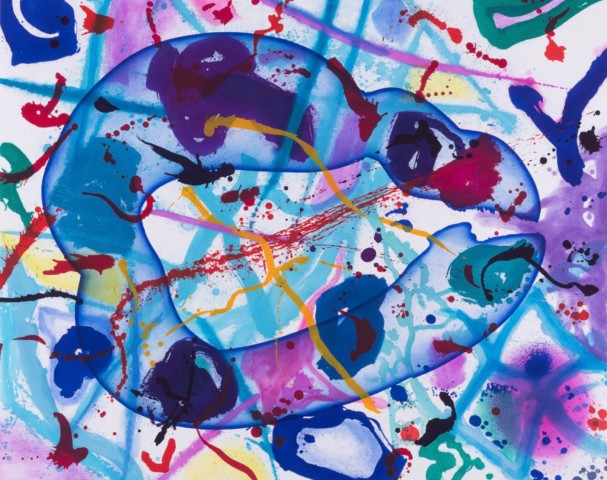
The first part of the Editions sale on December 11, 2019 will present a set of about fifty engravings in a catalogue: "Sam Francis - Engravings".
"I guess what is pleasing is that compression of time and space, in that one moment of pressing a button and pulling it out. That is compressions - physical, mental and spiritual. Everything is compressed into that moment. That is very different from making a painting. "
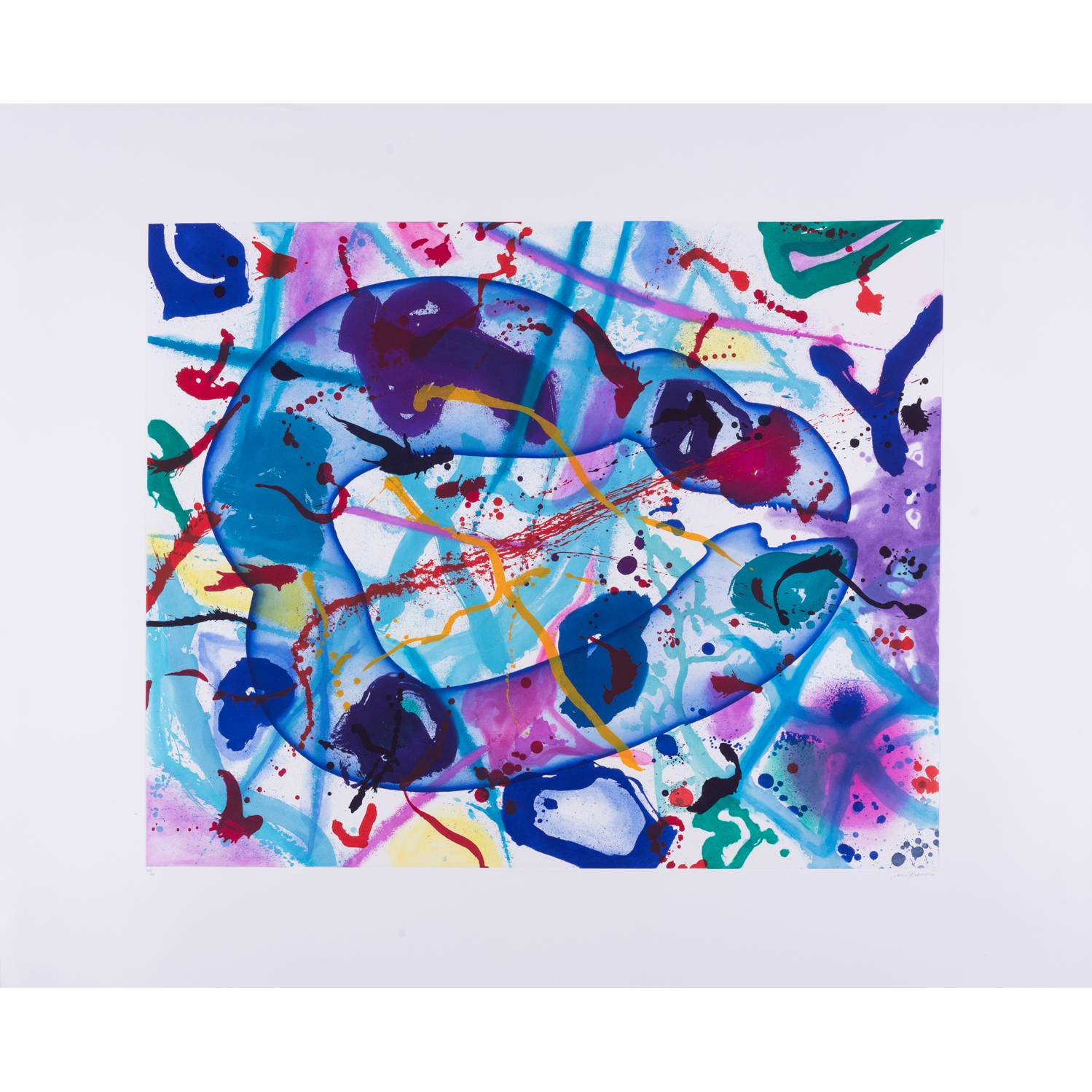
Sam Francis (1923-1994)
SFE-077 RC, Trietto 4 - 1991
Valuation : 6000 / 8000 €
Sam Lewis Francis was born on June 25th, 1923, in the Californian city of San Mateo. The eldest of a French-English family, his father was a mathematician, his mother a pianist and a French teacher; he counts Henri de Toulouse-Lautrec amongst his ancestors. After studying botany and psychology at UC Berkeley, Sam Francis enlisted in the U.S. Air Force in 1944 where he was involved in a severe accident, leaving him bedridden in the hospital for over a year. He took up painting during his convalescence, and believed in art’s therapeutic virtues throughout his life.
At that time, Sam Francis’ artistic studies began alongside David Park, who would go on to establish the Bay Area Figurative School. His first glimpses of Klee, Picasso, Miro, and in particular El Greco had a very strong impact on his artistic practice, and upon his recovery, he chose to return to UC Berkeley in 1948, abandoning medicine for a BA and Masters in fine arts. The influence of Hans Hofmann, a former teacher at Berkeley, was still vivid in the school’s teaching, and abstract expressionism reigned over the curriculum.
The artist’s first brush with prints was through lithographs. He first showed disinterest for this discipline he deemed commercial, but the emergence of print artists’ studios in the U.S such as Tamarind quickly quelled his initial doubts. Printer Tatyana Grosman[1] first introduced him to stone engraving. He was ‘bewitched’ by this peculiar Photos material and began appropriating it. Living in Paris in the 1950s, Sam Francis travelled throughout Europe and particularly in Switzerland, where he met his friend and gallerist Eberhard W. Kornfeld, who encouraged him to pursue printmaking. In Zurich, in 1960, he produced a first series of 60 lithographs with printer Emil Matthieu.

Sam Francis (1923-1994)
SFE-075 RC, Trietto 2 - 1991
Valuation : 6000 / 8000 €
This lithographic medium corresponded precisely to the artist’s personality. Sam Francis delighted in piecing together combinations, working on colorful layers and superposing them, seeing the reverse image of the end result, and developing a chromatic theme. That puzzle and its challenges captivated him. For the artist, this challenge is that of the mind’s visualization: “It's healthy, it forces me to think these things out, unlike painting, which is much more direct.”[2] The technique of lithographs also corresponds to the gestural splashes and dripping methods characteristic of Francis’ work. He could directly transfer the ‘drip’ and ‘splash’ experimented on in his painting unto the stone slate. His fascination with lithographs was reinforced by the transparence of lithographic ink, which allowed him to envision colors and shapes as thin veins[3] which he could reinforce as he pleased, something one cannot achieve with oil painting’s opaque aspect.
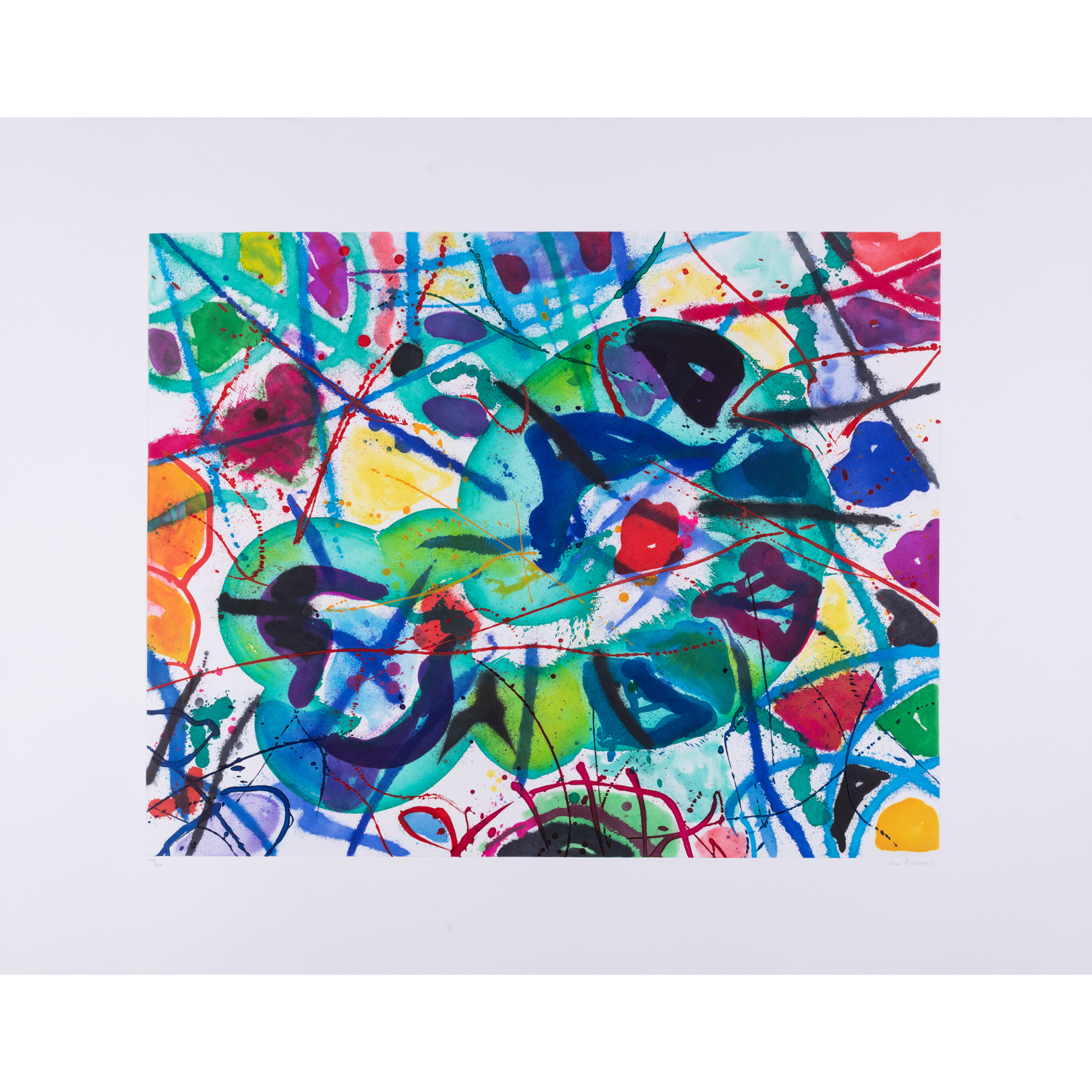
Sam Francis (1923-1994)
SFE-078 RC, Trietto 5- 1991
Valuation : 6000 / 8000 €
Sam Francis’ relationship to limestone lithography is nearly mystical: it produces downright alchemy. According to the artist, the stone is a unique source of life with its own physical properties. His first prints refer to his quest for “the spirit of the Stone”. Francis went so far as to recognize the existence of a mysterious element in the stone that remained beyond his control; the stone is the single medium through which his dreams could take shape. His work evolved through lithographic inks which became “a translucent demonic form that snakes over the surface, its interiors filled with a speckled life that pushes to break through the surrounding skin.”[4] Thereafter, the new masses pushed to the edges of the plate became the center of the work. In the prints from the following years, large parts of the composition remain white. Thus, for Sam Francis, the space becomes infinite emptiness in which proportions are superfluous. White allows color to express itself and therefore affirms its vital role. Ink can obliterate or reveal the color white, which itself becomes a subject. Moreover, the white used is rarely that of the ink but merely the color of the paper: “Paper has its own beauty [...] In itself it is already complete. So you are adding completeness to completeness when you start... The actual piece of paper has its own message.”[5] However, Sam Francis rarely used handmade papers, preferring classic ones such as the BFK rives, which allows his colors to shine and communicate.
In the second half of the 1960s, shapes became flatter and more linear, and were relegated to the edges of the paper, leaving the center of the composition empty and honoring its whiteness. Colors from that period seem hesitant to carry on towards middle of the plate.
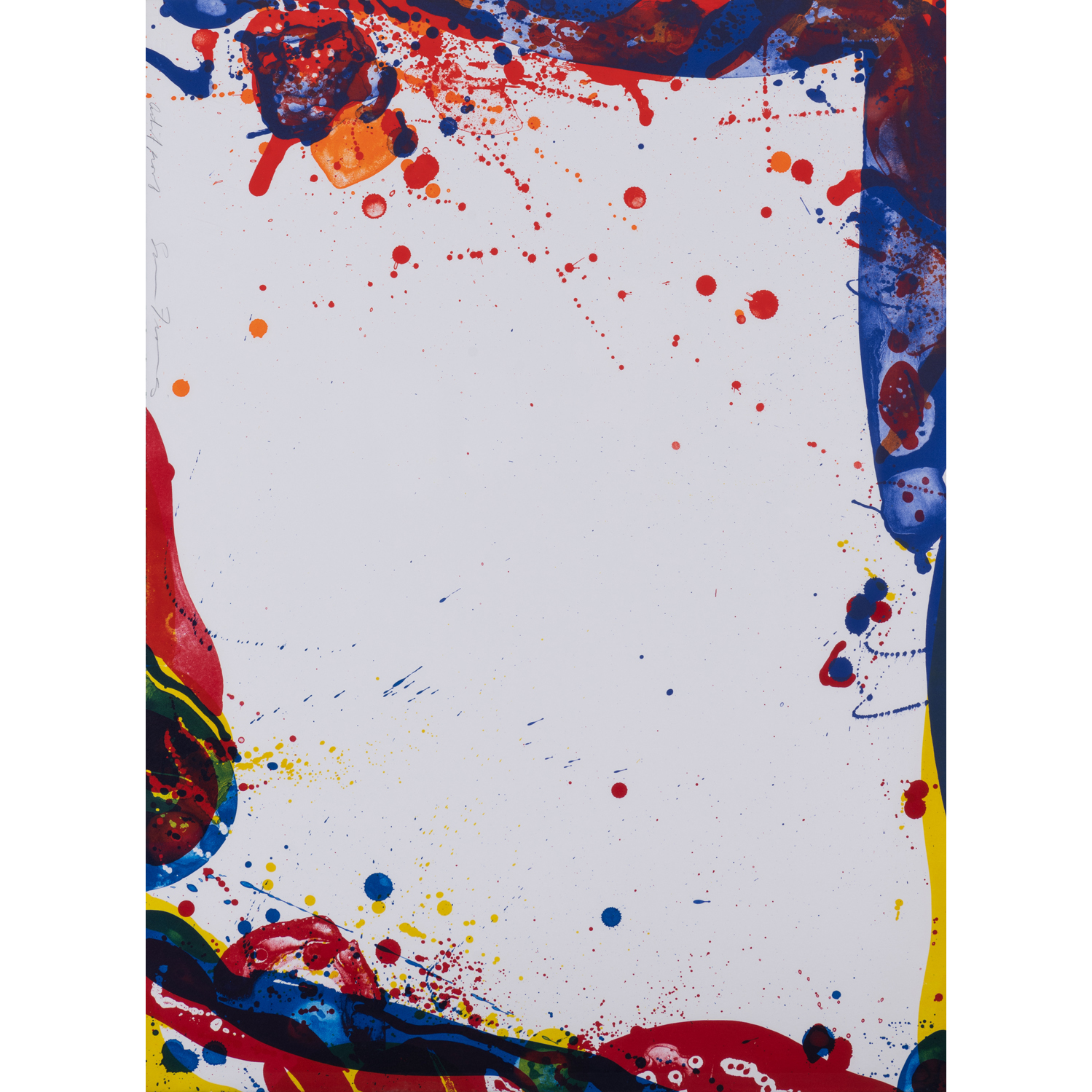
Sam Francis (1923-1994) SF-89, A Sail - 1969
Valuation : 3000 / 4000 €
Sam Francis worked in several printing workshops throughout the world. His first works in Switzerland were followed by those of the Tamarind Lithography Workshop, which opened in Los Angeles in 1960, and later in Japan, New York, and at the legendary Gemini in Los Angeles, opening in 1965. In 1970, Sam Francis opened his own printing workshop in Santa Monica, ‘The Litho Shop’, in order to control all aspects of print creation. He nevertheless kept collaborating with major workshops such as Gemini, where he could take full advantage of materials and methods unavailable in his studio.
The process, however, remains the same no matter where it takes place. Francis created designs himself until reaching the picture’s definitive shape, then worked with artisans until the end of the printing process. To reach the end result, he went through many trials and proofs, each varying in color or in the orientation of the stones. He gave some of these works titles, indicating they are not just variations but unique pieces. Little by little, he mastered all the printing techniques available at Gemini. It is in that very workshop that he discovered and mastered the silkscreen technique, which brought him to question his thinking process in the creation of a print. He had appropriated the stone and its shadow, now he had to grasp the more sensual and poetic silk. The same way he used transparent shapes in lithographs, he used silkscreen to apply different layers of color, lighting the paper from below throughout the process in order to glimpse the final stage. This immediacy in viewing the composition is distinctive of silkscreen printing.
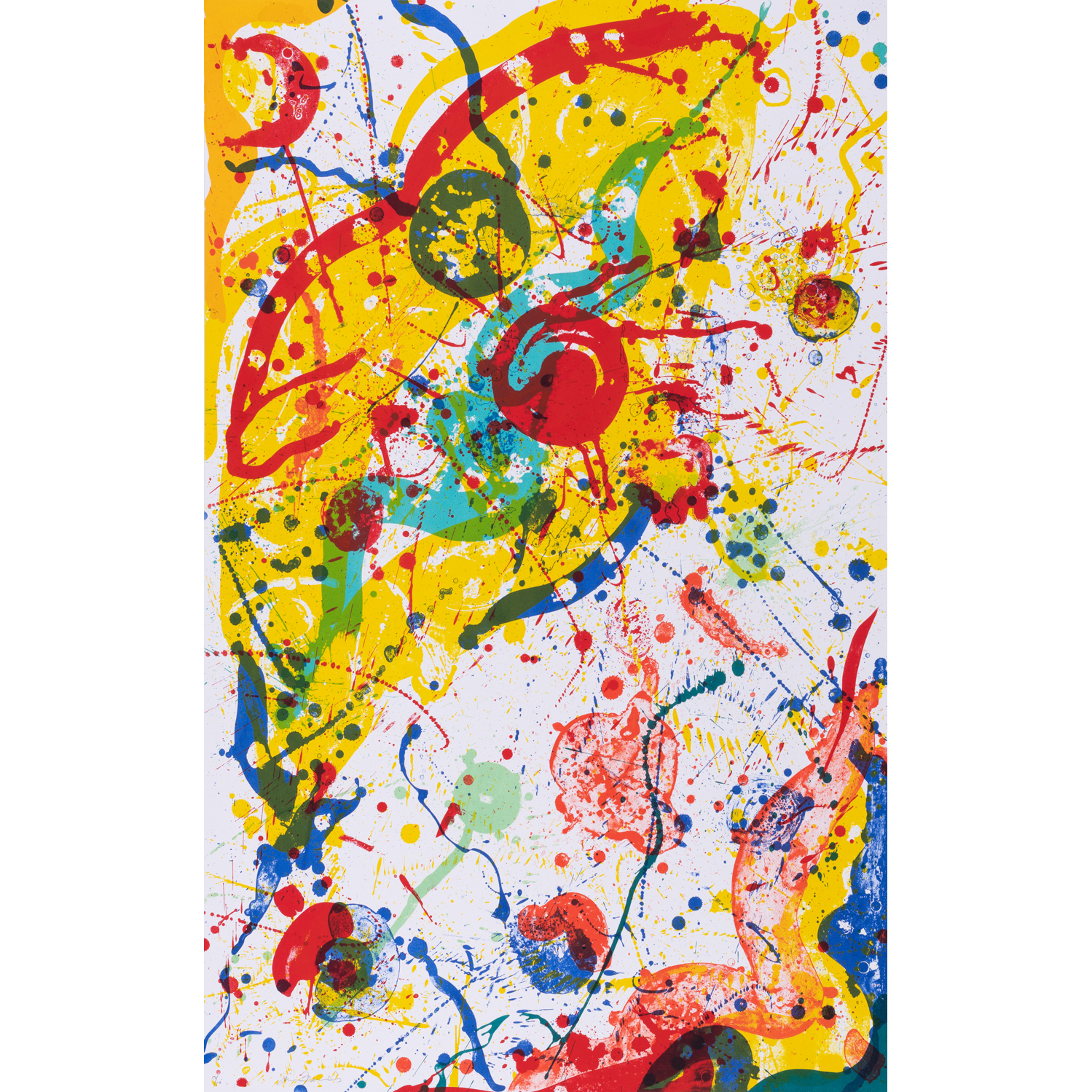
Sam Francis (1923-1994) SF-340 - 1989
Finally, Sam Francis tried his hand at etching, but with more difficulty. His response to the copper plate was not as intense as it was with lithographic stone, nor as novel as silkscreen printing. His first etchings were produced in 1973 by 2RC Edizioni d’Arte, in Rome. Some of his creations were in black and white, others in color. Only in 1981, working with David Kelso at the Gemini workshop, did his interest for copper etching grow. In that same year, he installed an etching press in his Litho Shop and began working in this medium regularly.
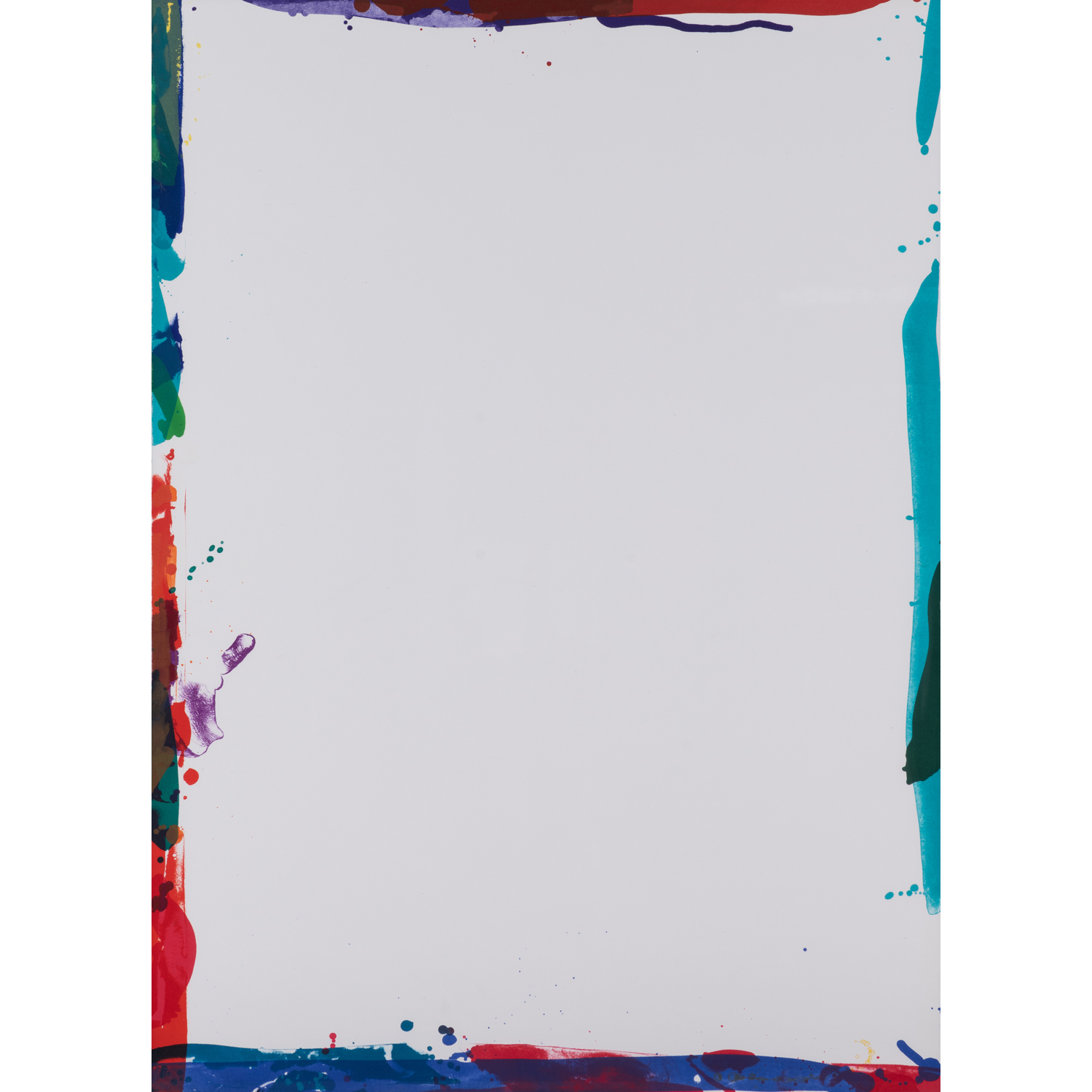
Sam Francis (1923-1994) SF-106A - 1969
Valuation : 1600 / 2000 €
The studio remained, throughout Sam Francis’ life, a ground for experimentation, trials, creative process, until the culmination of a lithograph, a silkscreen, or an etching. There, he worked on the paper surface, on the pressure applied to it when printing. He refined his movements, his shapes, and his pictures until he produced an original, unheard of body of work.
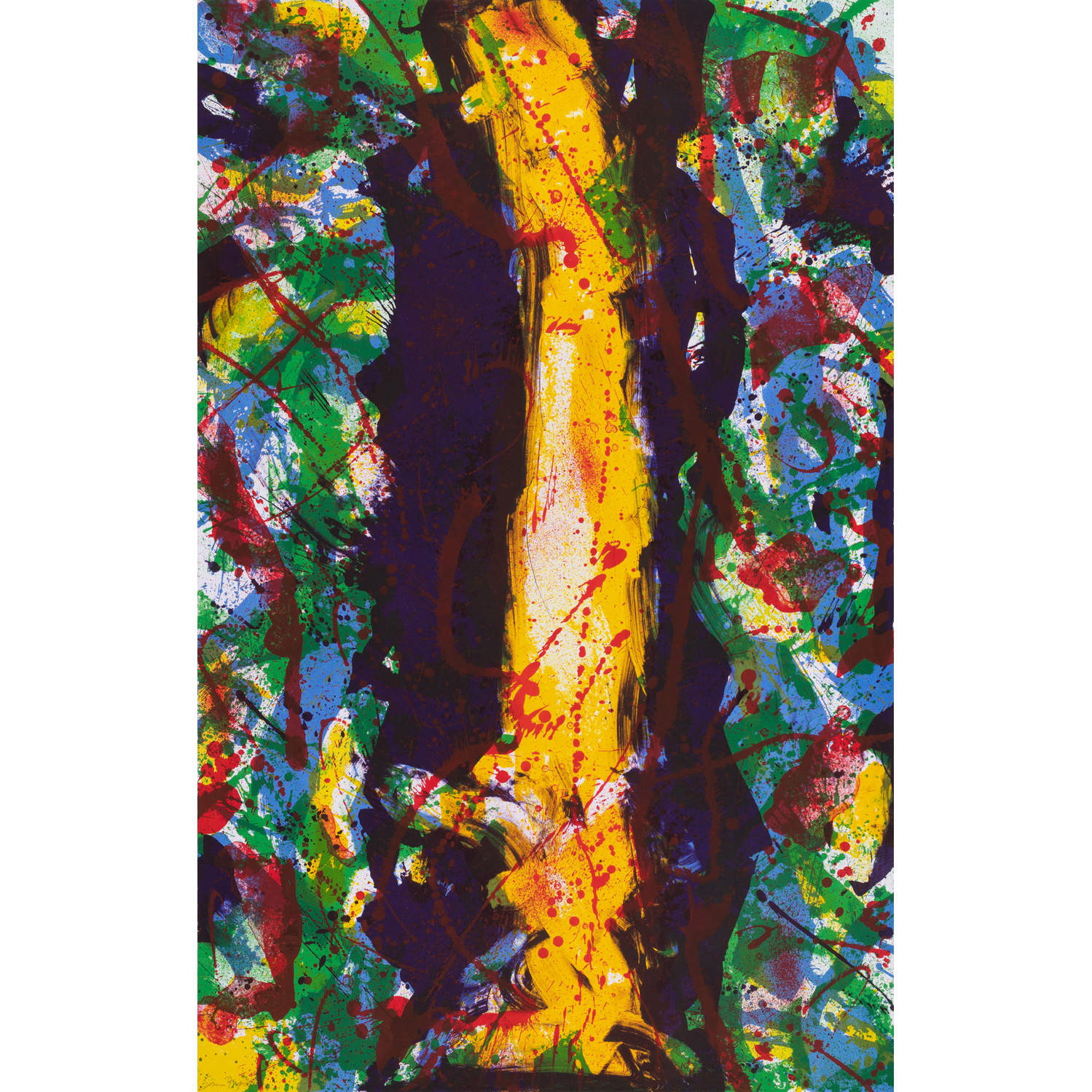
Sam Francis (1923-1994) SF-343 - 1990
Valuation : 3000 / 4000 €
His death, on November 4th 1994, left behind close to 115 intaglios, 335 lithographs, 21 silkscreens and 8 posters. Not many artists have dealt with prints with such respect and dedication. Piasa auction house presents, during its biannual Editions sale, a set of the artist’s work with no less than fifty prints showcasing the artist’s oeuvre and his commitment to the discipline of editions, through superb lithographs, silkscreens, and etchings.