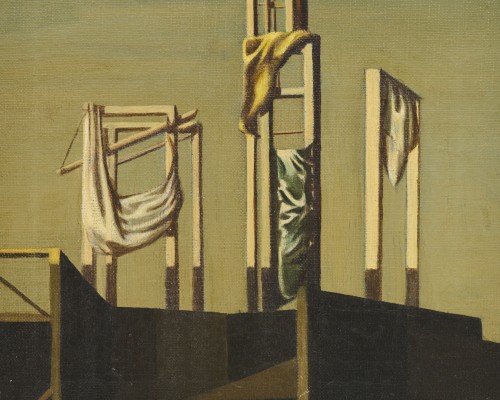
Exactly a century ago, the surrealist revolution began. In reaction to the devastation of the Great War, André Breton, who published his Surrealist Manifesto in October 1924, gathered poets and artists around him who wanted to change the world, their influence extending far beyond our borders. The recent works of Freud and Lacan on the role of the unconscious fueled the core principles of this movement, which aimed to give a predominant place to the irrational, chance, the power of dreams, and automatism in a quest for the marvelous, beauty, and mad love. The material world was replaced by the immaterial world of poetry, with poets like Desnos and Éluard, present in this sale.
This collection reflects Geneviève and Jean-Paul Kahn, who never chose a work based on its author but always for what it evoked, its history, or simply for its unique or unusual character.
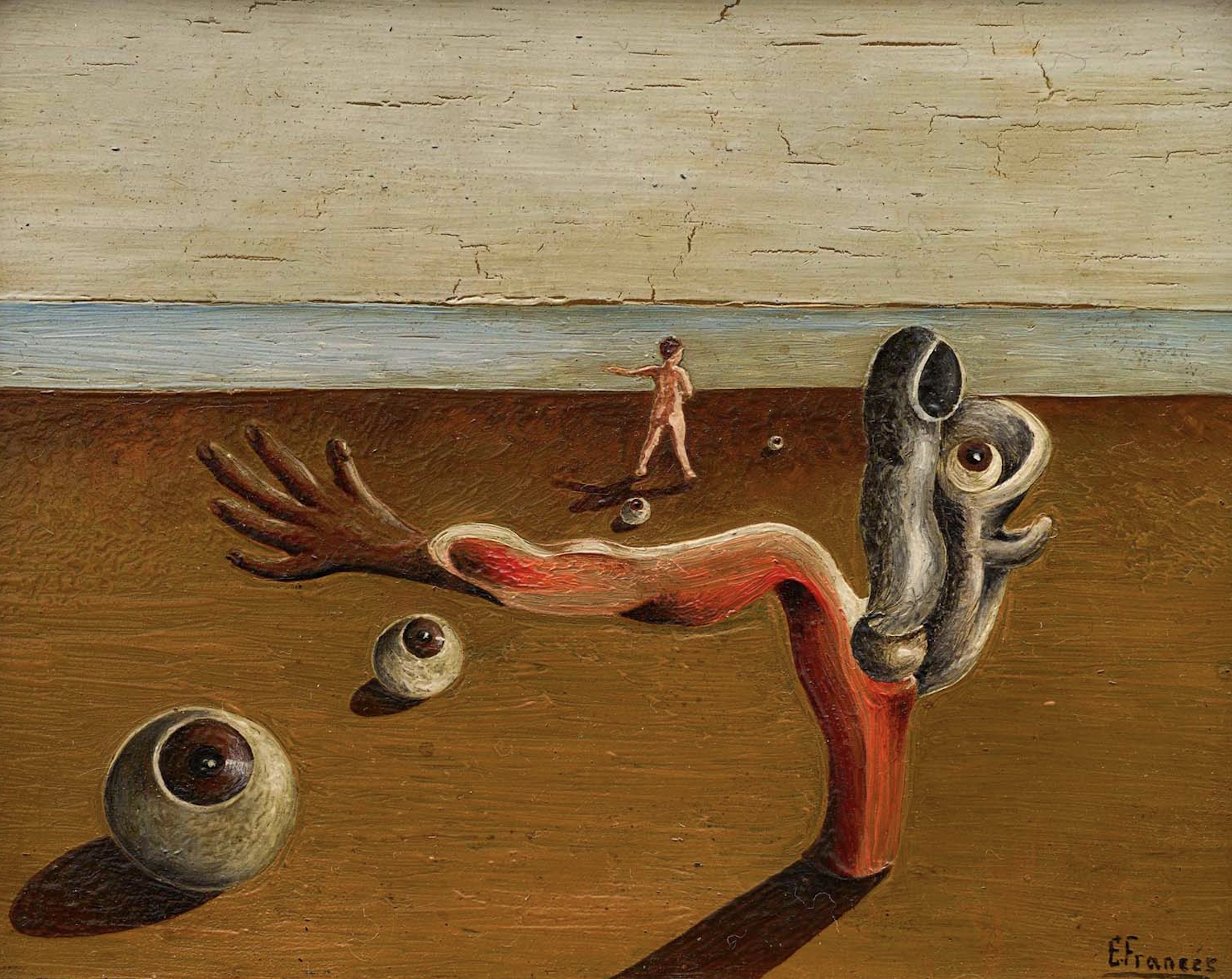
The surrealists utilized all modes of expression without limitation, and this ensemble is rich in diversity. It includes paintings, collective drawings, as well as collages, dear to Max Ernst, and objects diverted by Man Ray, or even the famous Ready-Made by Duchamp L.H.O.O.Q..
Among the object-boxes, there are also some rarities such as Le désir, the only box created before the war by Remedios Varo, a jewel by Georges Hugnet from 1934 offered to his friend Vulliamy, or this delicate gift from Jacqueline Lamba to Man Ray, Pour la poche.
Women held an important place within the group. While some were more muses for the surrealists, like Nusch Éluard, of whom we present one of the rare collages, others were acclaimed artists like Kay Sage or Dorothea Tanning, notably with this important painting titled Les Trois Garces.
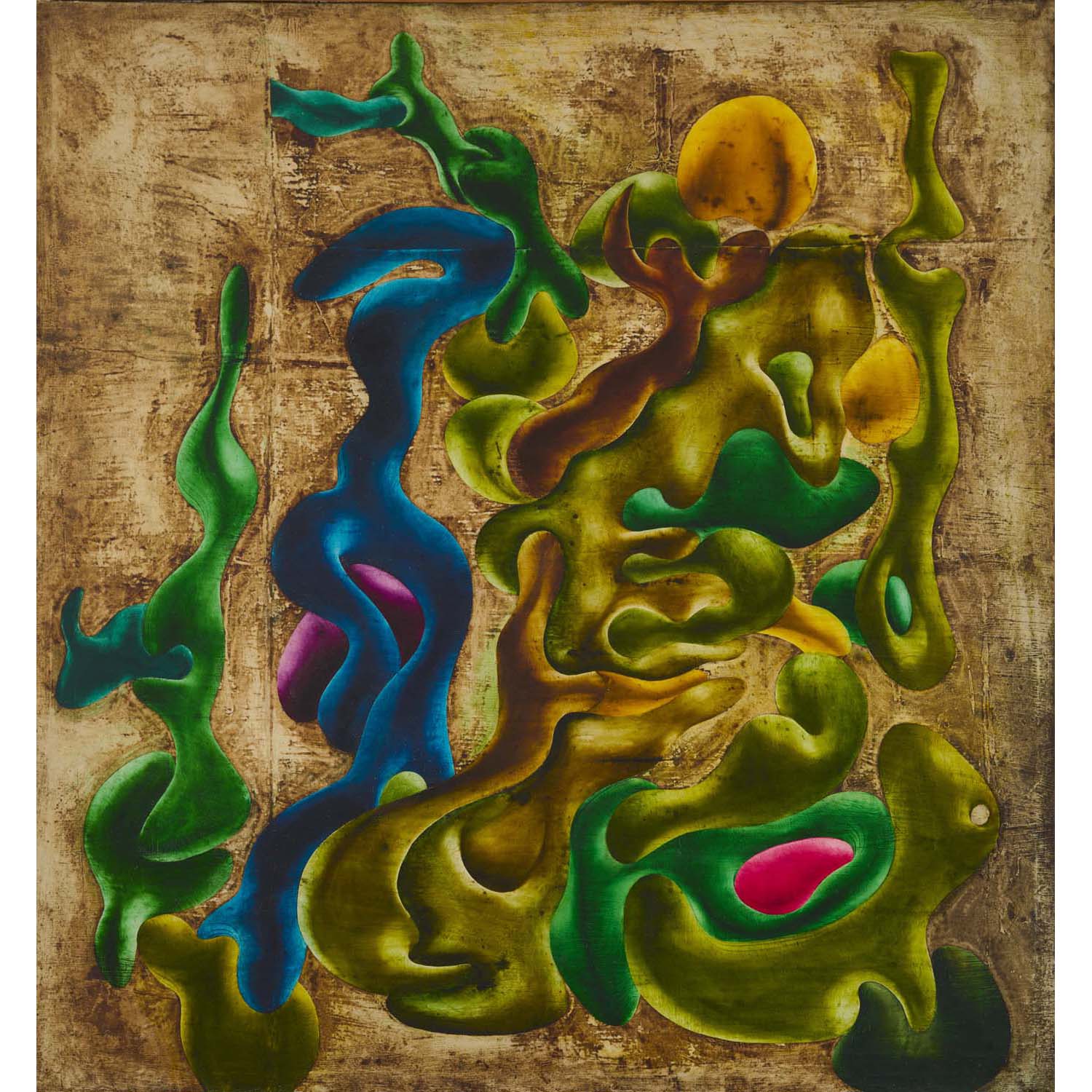
Simon Hantaï (Bia, Hongrie, 1922 - Paris, 2008)
Peinture, 1953 - 1954
Estimate: 100000 / 150000 €
Many of these works were featured in the surrealism's anthology exhibitions, such as the Surrealist Exhibition of Objects at the Charles Ratton gallery in 1936, the one at the gallery des Beaux-Arts in 1938, or more recently La Révolution Surréaliste at the Centre Pompidou in 2002.
While most were exhibited and published, Jean-Paul Kahn was also a discreet collector, and some works, sometimes acquired directly from descendants or close relatives of artists, are completely unpublished, like these three paintings by Jacques Hérold present in the collection.
During the war, the surrealist adventure continued in New York, where two great merchants, Julien Levy and Pierre Matisse, greatly contributed to making these "exiled artists" famous, whose influence on American artists was considerable, as evidenced by a large drawing by Pollock from 1943.
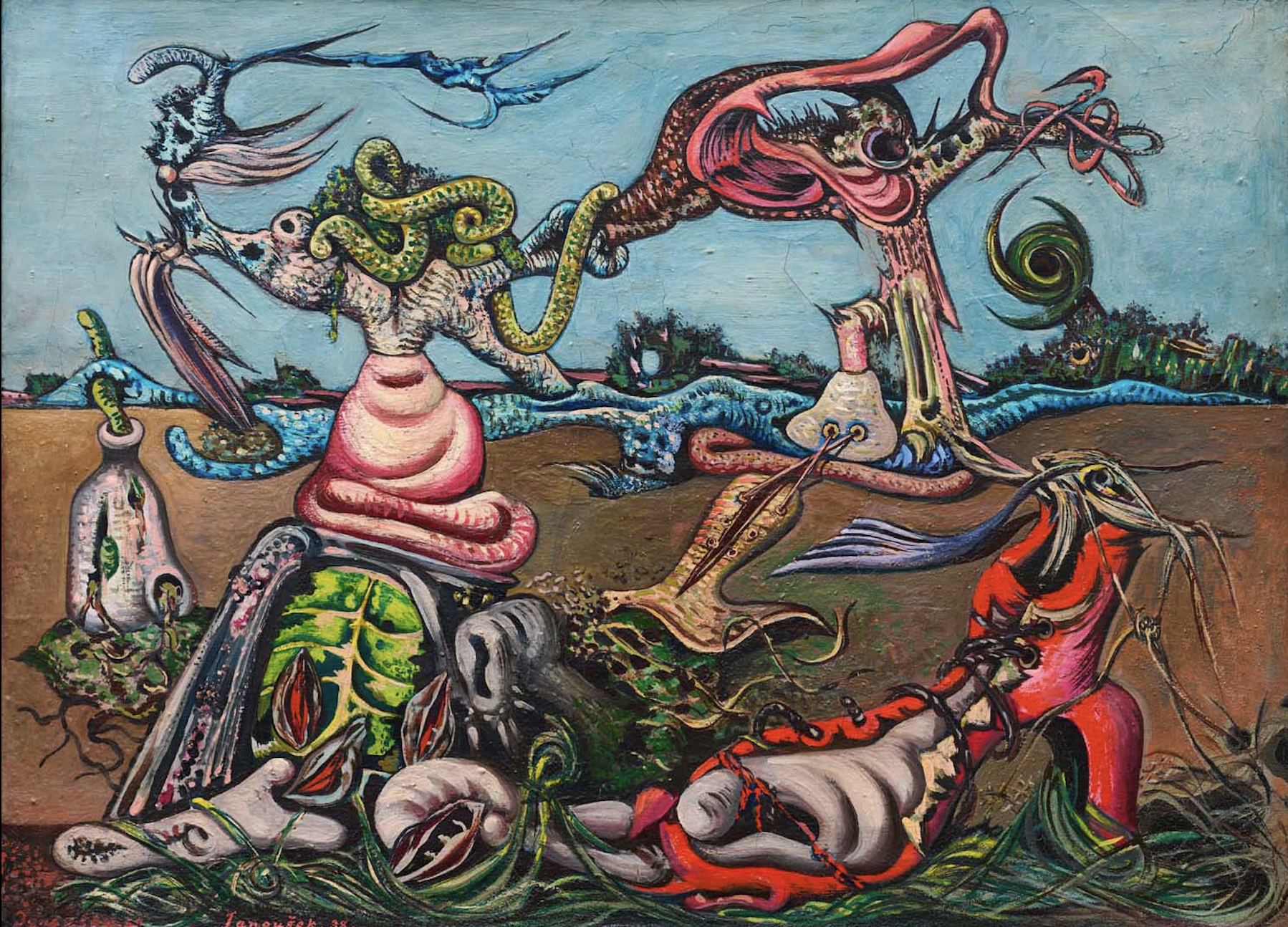
It was also in New York that Jean-Paul Kahn discovered Pop Art in the 1970s and began to acquire pieces, now historic, dating from the early 1960s, such as this Hot-Dog Tray by Lichtenstein, this Little Great American Nude by Wesselmann, or these two rare Self-portraits by Warhol made for the tenth anniversary exhibition of Leo Castelli's gallery.
While this ensemble explores surrealism in its foundations and its great diversity of expression, it pays tribute to Jean-Paul Kahn's ever-renewed curiosity for also being interested in the artists of his time who wished to maintain the spirit of surrealism by remaining faithful to one of its fundamental principles, the dream.
David Lévy