


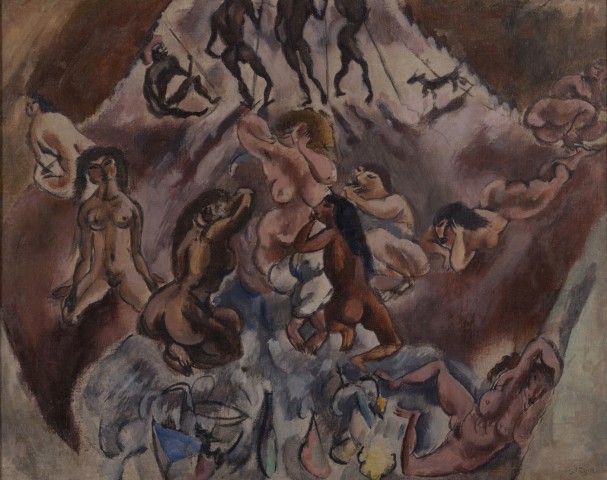
On Thursday June 3rd at 6pm, PIASA will be holding a beautiful Modern and Contemporary Art auction. On this occasion, the work of the Bulgarian artist Jules Pascin will be highlighted.
Bulgarian-born artist Julius Mordecai Pincas, known as Pascin (1885-1930), was considered, along with Modigliani, Soutine, Chagall, Kisling and Foujita, to be one of the major figures of the École de Paris. Initially influenced by illustration and expressionism, his singular work owes much to drawing, which he studied in Vienna, then in Germany (Munich and Berlin) where he collaborated on satirical journals such as Simplicissimus. He settled in Paris in 1905, living between Montparnasse and Montmartre and consolidating his training at the Matisse Academy. Fleeing the Great War in 1914, Pascin went to New York, frequented Harlem, then the southern United States, and finally Cuba, from where he brought back numerous drawings and watercolours showing his interest in Cubism in the work of volumes and structures.
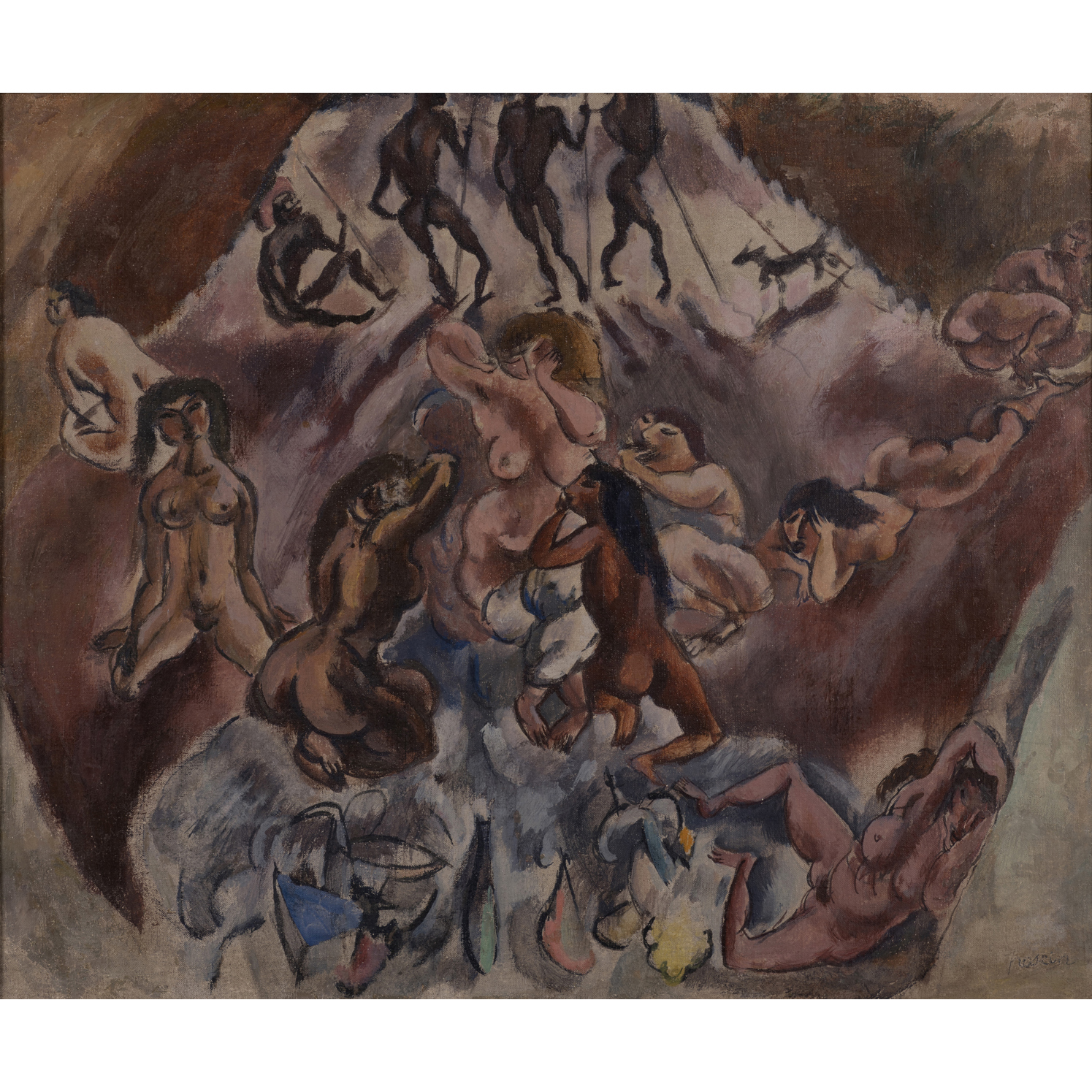
Jules Pascin (1885-1930)
Réunion infernale, 1919
Estimate : 35 000
/ 55 000
€
Back in Paris in 1920, Pascin developed his "pearly" period. A keen observer of artistic and social life, attracted like Toulouse-Lautrec to places of perdition, his favourite subjects were nudes and prostitutes. His drawings are distinguished by a sharp line, which is often lightened by a sfumato of predominantly pearl grey or vibrant pink. Similarly, his painting uses pastel and transparent tones, harmonies in half tones of grey and rubbed ochre. Whether he is depicting portraits, genre scenes or allegorical compositions, Pascin often blurs his forms and avoids any impasto, oscillating between a manner that is sometimes allusive and poetic, sometimes raw and realistic. Nicknamed the "Prince of the Three Mountains", the "Watteau of the brothel", the "American of the Danube", Pascin, who belonged to no country, no religion and no school, never stopped travelling between Europe and America. Refusing all academicism, he made spontaneity his watchword: "I don't paint for museums. Spontaneity, the moment, is an art in itself. If I fignify, it loses its meaning. "Losing himself in parties and alcohol, permanently dissatisfied, Pascin decided to end his life in 1930. In his farewell letter to his companion Lucy, he wrote: "I am a pimp," he said, "I am fed up with being a pimp of painting. "(...) "I no longer have any ambition, no artist's pride, I don't care about money, I have measured the uselessness of everything too much. "
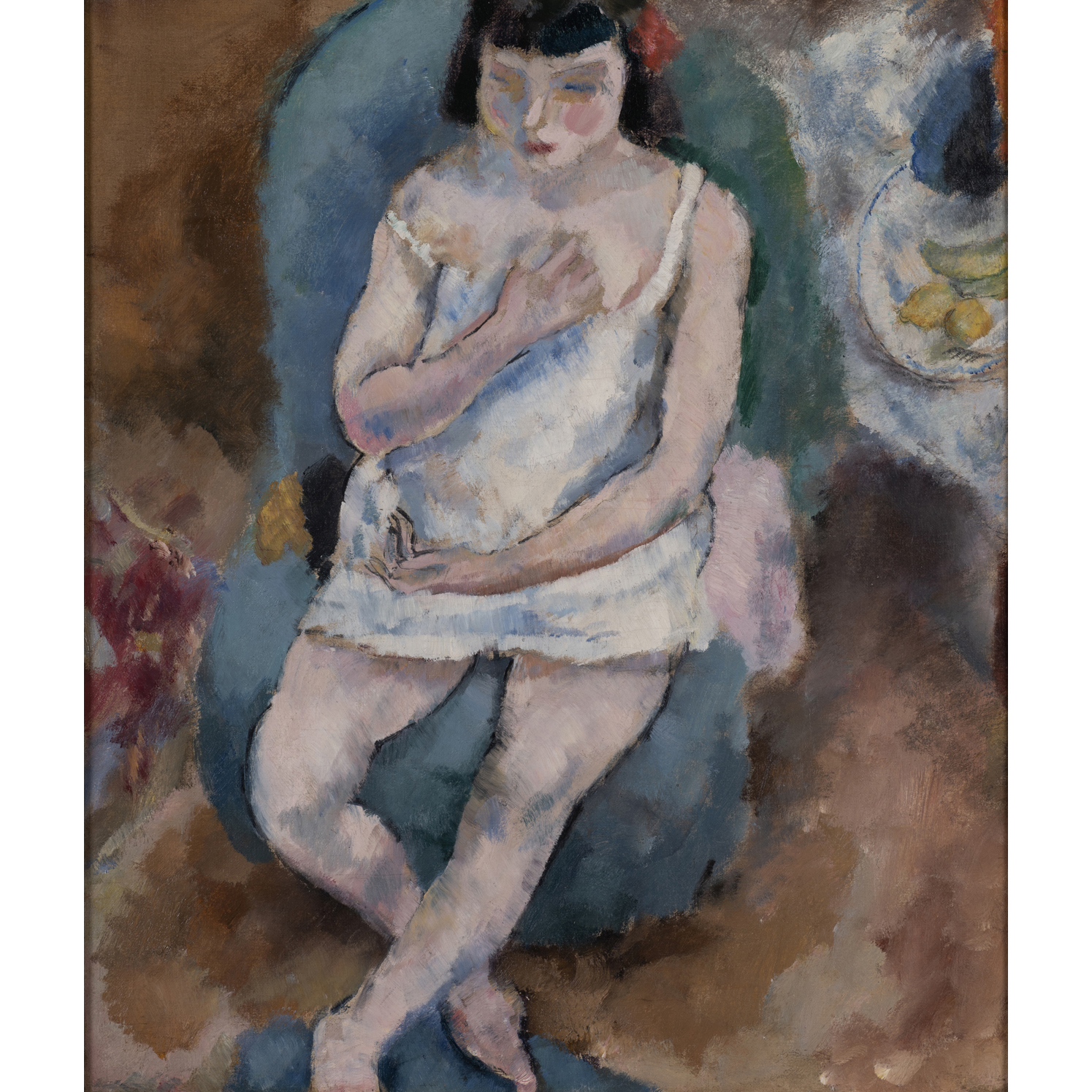
Jules Pascin (1885-1930)
Jeune fille en chemise, 1922-25
Estimate : 30 000 / 50 000€
