



Estimation : 5000 / 7000 € | Estimation : 8000 / 12000 € |
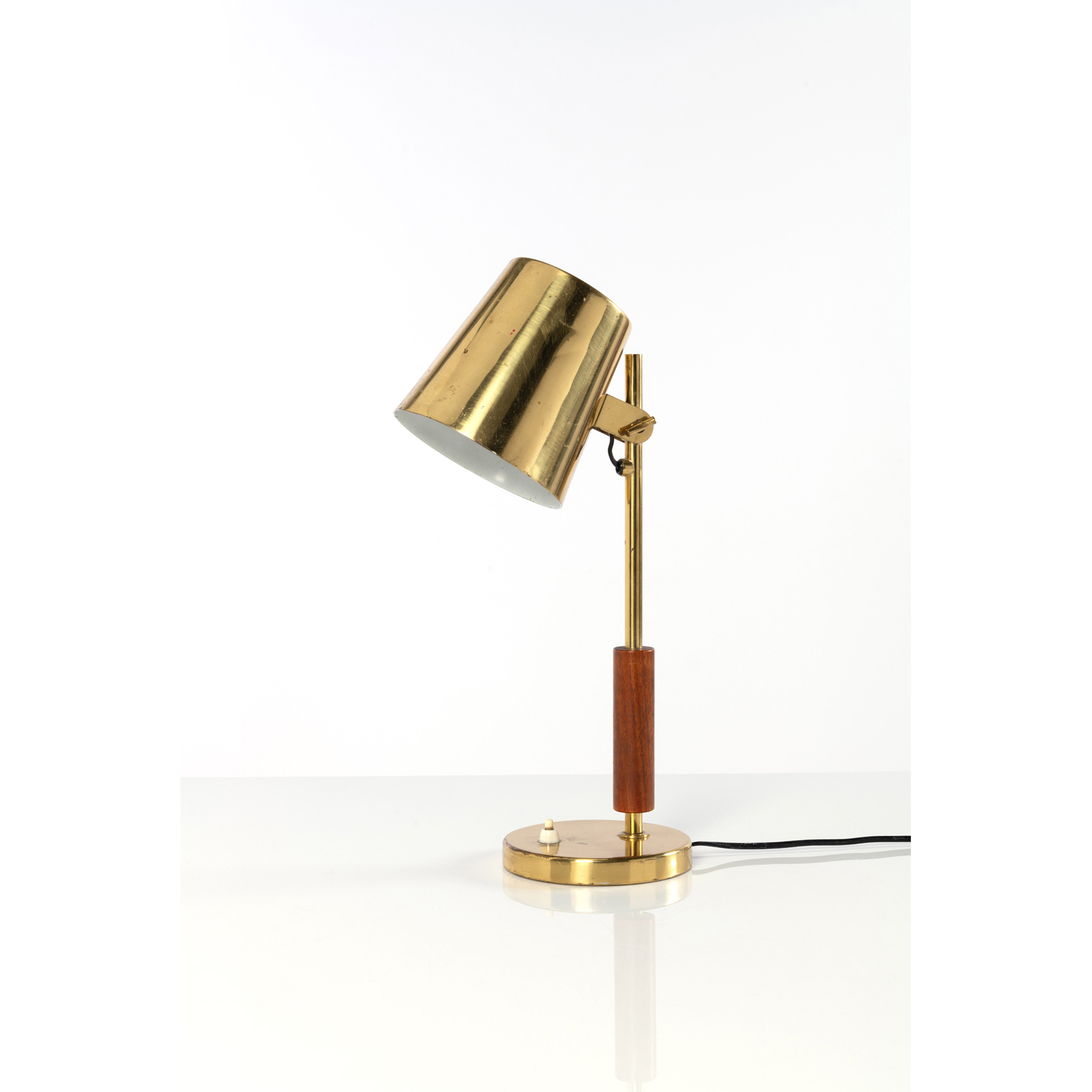
Born in Finland to painter parents, Paavo Tynell (1890-1973) began his career as a blacksmith. He studied at the Central School of Arts and Industry in Helsinki before teaching metal arts.
Industry pioneer Eric Ehrström suggested that Tynell set up a blacksmith's shop, and the company Taito Oy Ab was born, with Tynell as managing director and chief designer. It was the first luminaire factory in Finland, founded in 1918, and marked the beginning of 35 years of design, which earned Tynell its nickname: 'the man who illuminated Finland'.
Blending the traditional aesthetics of his training with modern design, Tynell brought a new way of thinking and designing lighting at the turn of the century. His specialisation in lighting from the 1920s onwards enabled him to meet the demands of the many post-war buildings and the massive electrification of homes.
His lamps are characterized by their simple but refined, elegant and delicate decorative lines, their functional design, and their shapes echoing nature, from which he draws his inspiration - snowflakes, shells...
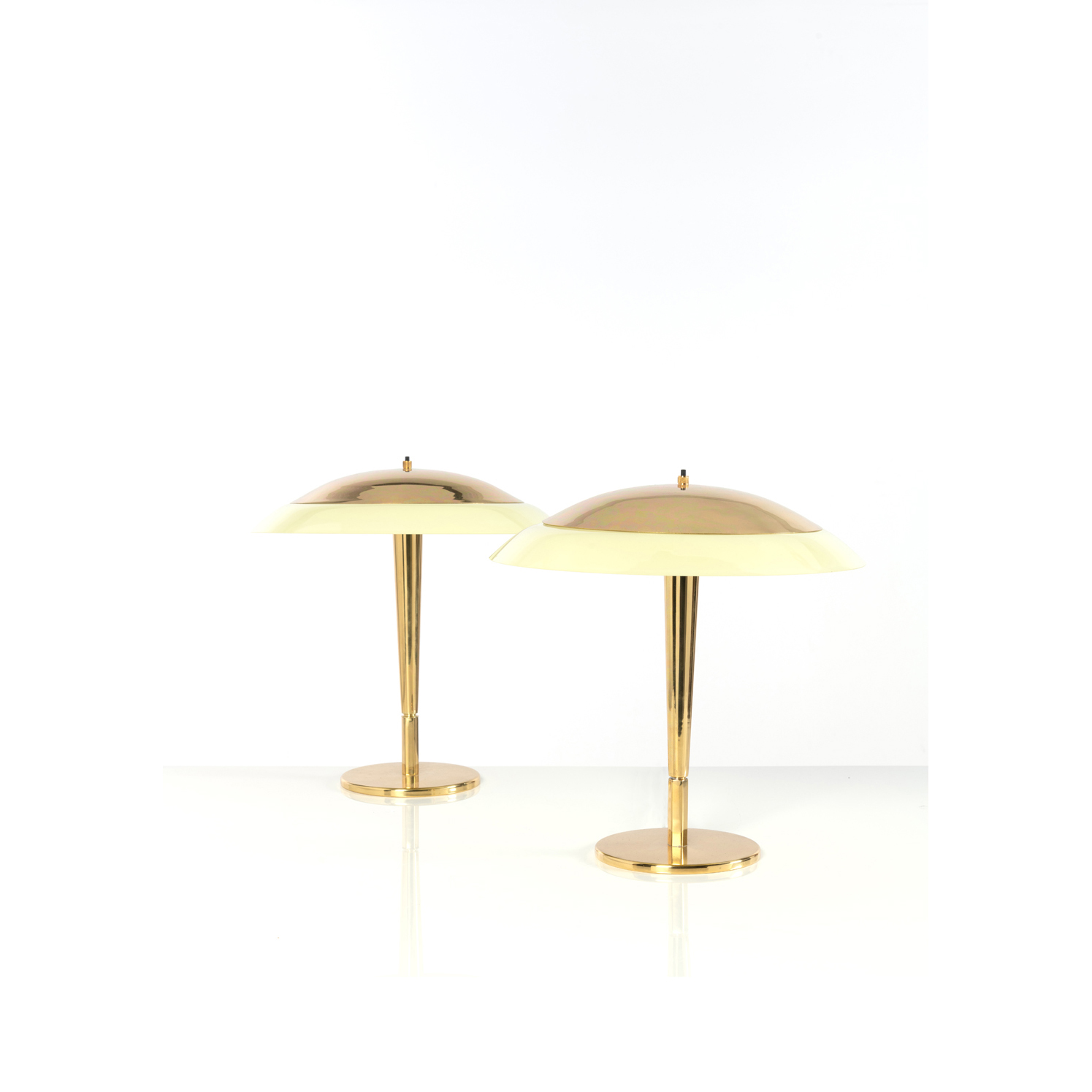
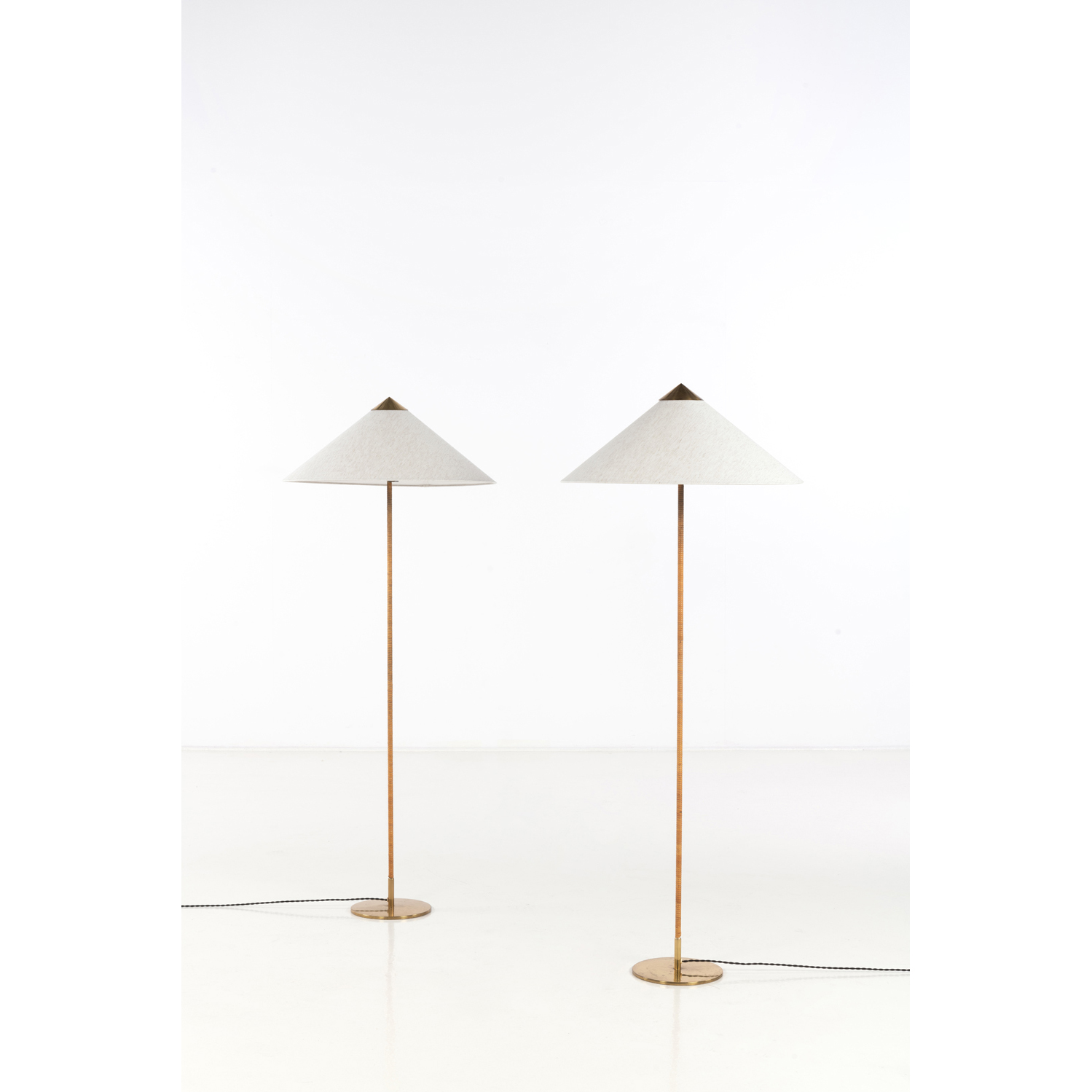
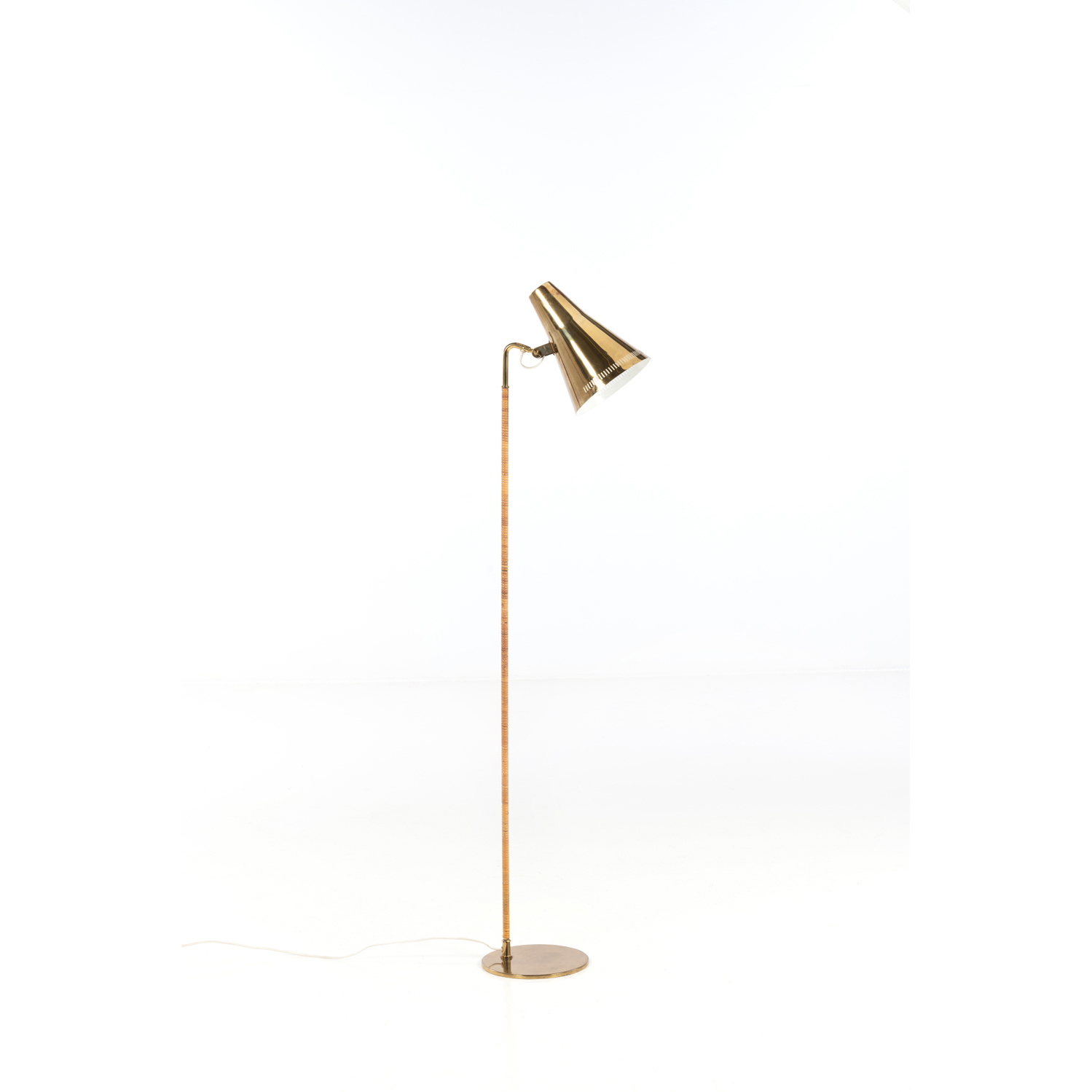
Floor lamp, table lamp, wall lamp or hanging lamp, all his models are mainly made of polished brass, Tynell's favourite material, sometimes mixing glass and leather. The brass is often perforated, creating patterns and plays of light.
Result : 15600 € | Result : 14300 € |
In the 1930s and 1940s, he collaborated with some of Finland's greatest architects, including Alvar Aalto, Pauli Blomstedt and Eero Saarinen, to integrate artificial lighting into modern environments. The Paimio Sanatorium, the Viipuri Library or the Savoy Restaurant in Helsinki are famous examples. The lighting can also be found in the Parliament or the Lasipalatsi offices in Helsinki.
Paavo Tynell's fame quickly crossed borders, his works were in demand throughout Europe (Barcelona, Paris, Milan, Brussels) but also in the United States, where he exhibited his work at Finland House - opened in 1948. He also creates lighting fixtures for private American homes, the office of the Secretary General of the United States and the prestigious company Lightolier.
In the early 1950s, Taito Oy, who at his peak had 150 employees, created luminaires for many countries, filling public spaces - hotels, railway stations and restaurants.
Despite this meteoric rise, the company was bought out in 1953 and became Idman Taito OY then Idman Oy; Tynell collaborated with Idman while continuing the American adventure with Lightolier or Litecraft.
His work was rewarded in 1929 at the Barcelona World Fair and in 1933 at the Milan Triennale, before he was awarded first prize at the prestigious Good Design Awards in 1951.
Result : 91000 € | Result : 22100 € |
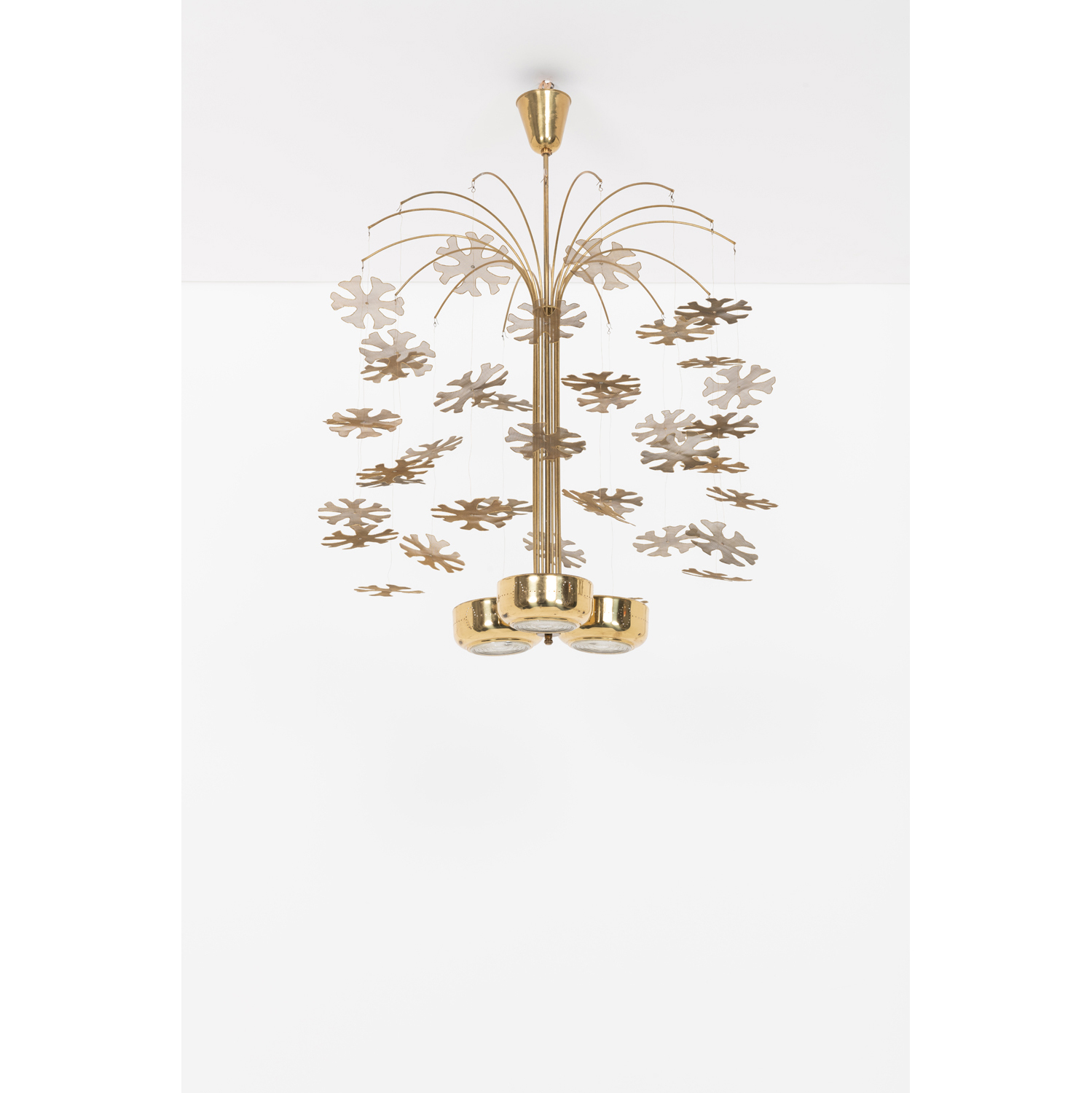
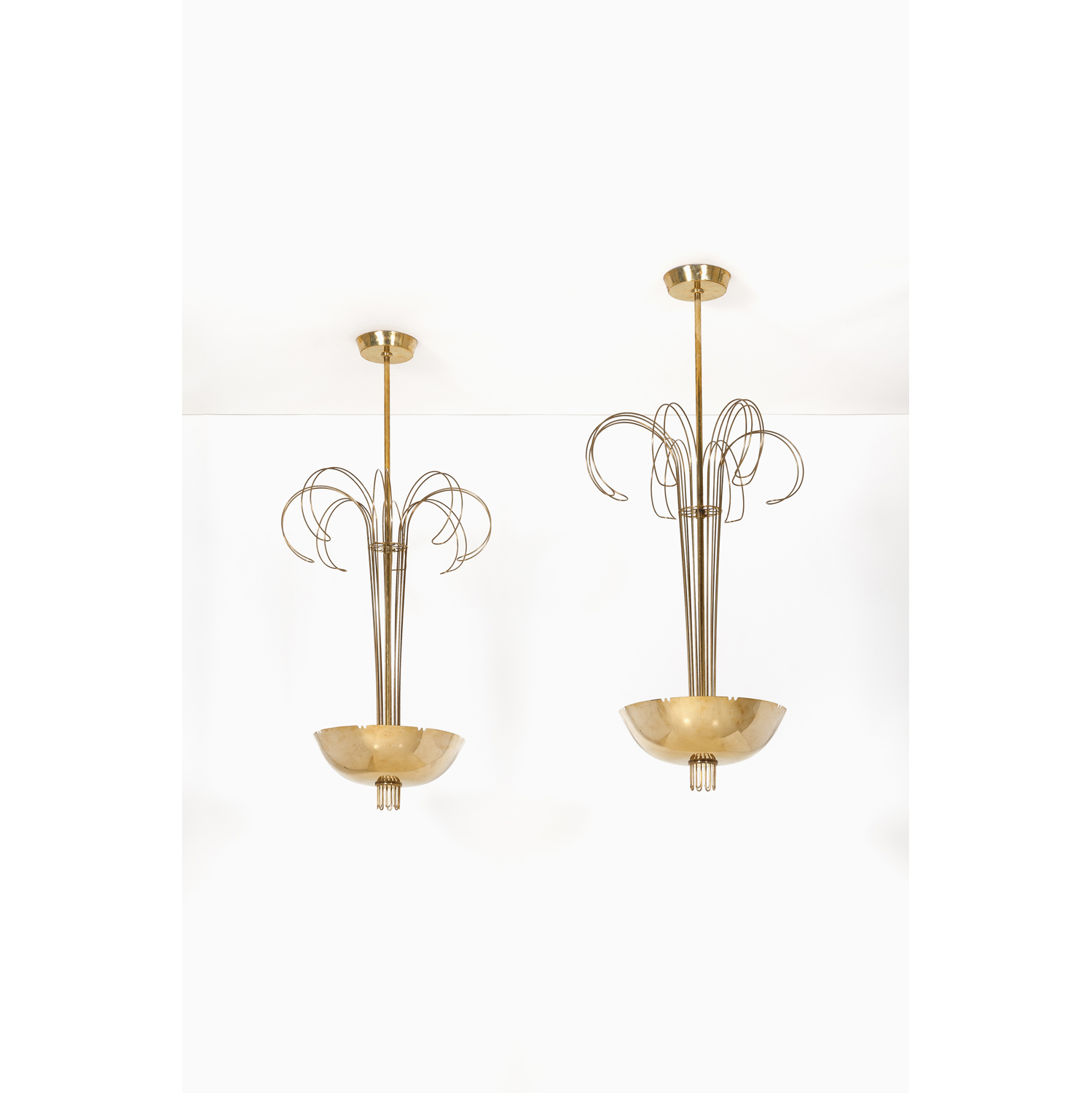
Among his most famous creations, the "Snowflake" suspension lamp from the Fantasia series, created for Taito Oy in 1950, illustrates all of Paavo Tynell's aesthetic prejudices, inventiveness and poetry: rods, themselves made of brass and slightly curved at the end, are attached to a perforated brass cup. Metal wires, which may look like gold threads, hang from these rods and keep the "snowflakes", a lattice of golden threads that seem to float in the air, in suspension, in a fragile balance.
The apparent simplicity underlies the incredible quality of the work, the precision in the construction, the meticulous attention to detail.
Extinguished, it is a sculpture in weightlessness. When lit, the small holes in the cup, the light that slides through the flakes, allow the chandelier that reflects on the ceiling in Chinese shadow to take possession, to literally illuminate the space.
A delicate, intimate, timeless work, which gives off an impression of softness and tranquillity. A major piece of creation, post-war design whose power and beauty has not been altered by time.