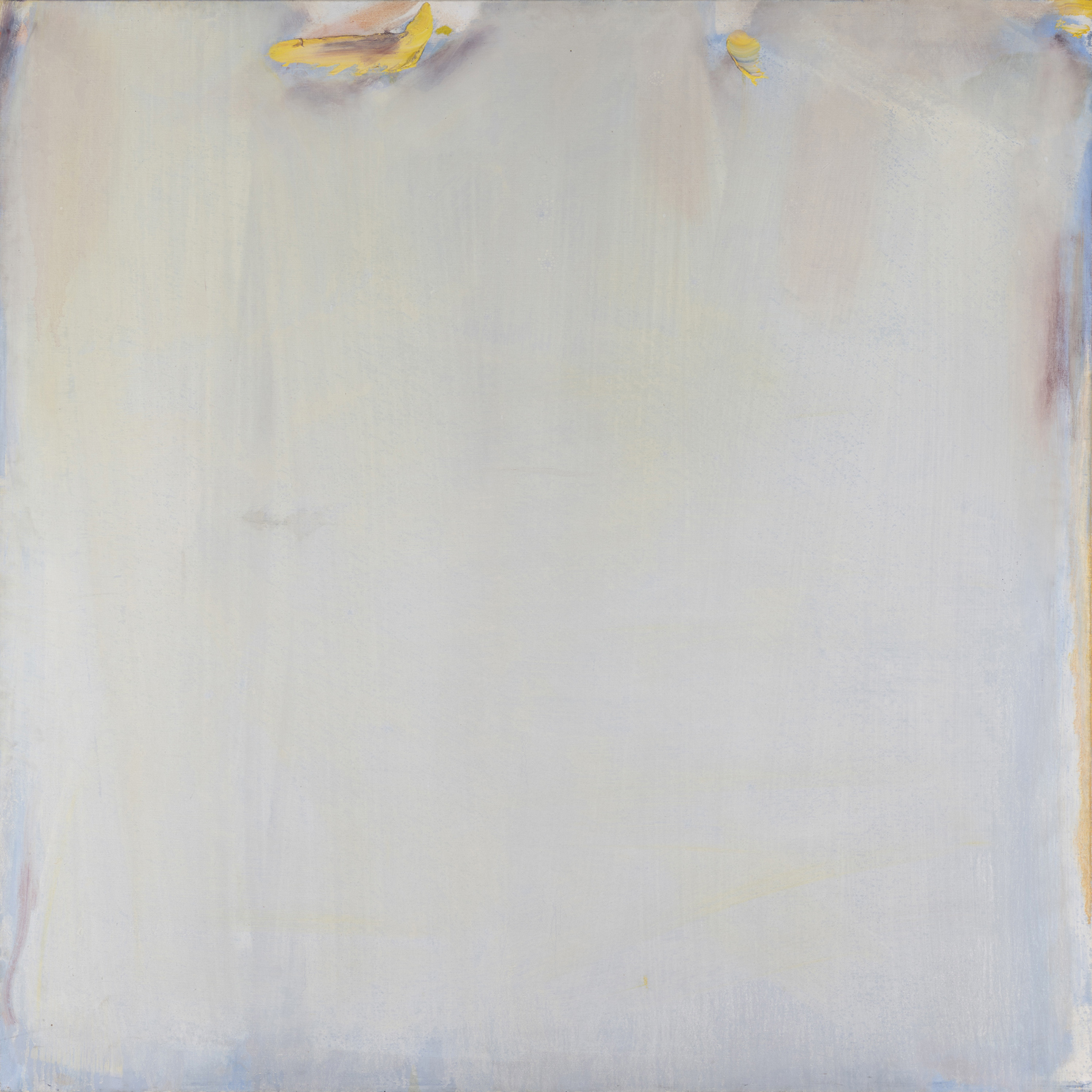
On June 3rd, PIASA will present a new session of Modern and Contemporary Art by auctioning a hundred works, including a magnificent oil on canvas by French painter Olivier Debré.
Olivier Debré first studied architecture, without abandoning painting, which he had practiced since childhood. His first paintings, done under the sign of impressionism and then expressionism, became abstract in 1943 under the influence of Picasso. After the liberation of Paris during which he was wounded, he finally devoted himself to painting. He executed a series of canvases depicting the horrors of war, marked by Guernica, and in which he sought to communicate in a pure sign all the emotion of the being in front of the Elusive. In the early 1950s, he developed his Signs of Characters, then his Signs of Landscapes, marking the passage from "very tight, full space, which is the space of man", to the "infinite notion of space, which is that of the landscape artist".
From 1960 onwards, his painting became less masonry and thicker and distanced itself from the style of Nicolas de Staël. Marked by the countryside of the Touraine region, and in particular the banks of the Loire, Olivier Debré lightened his palette, replaced the brush with the knife and lightened his material. As our painting entitled "Gris pale aux taches jaunes de Loire", Touraine (1983) shows, he spread the paint in vast areas of color, with edges hemmed in with thicknesses, torn with a gesture inscribing in space the mark of an existential act. The painting is indeed for Debré the place where he expresses a vital experience: "... What interests me is that the part of me that paints is a part of a sensitive and moved individual, that the thing, in a way, passes through me and that I dominate it intellectually, that I guide its development, but that it walks alone. This is how I become an element of nature, I become something that is handled. When I am like the wind, like the rain, like the passing water, I participate in nature and nature passes through me...".