As part of the "Art + Design of a European Private Collection" sale on Wednesday, September 23, 2020, PIASA presents a coherent collection of furniture and works of art by artists from the second half of the 20th century, including Niele Toroni.
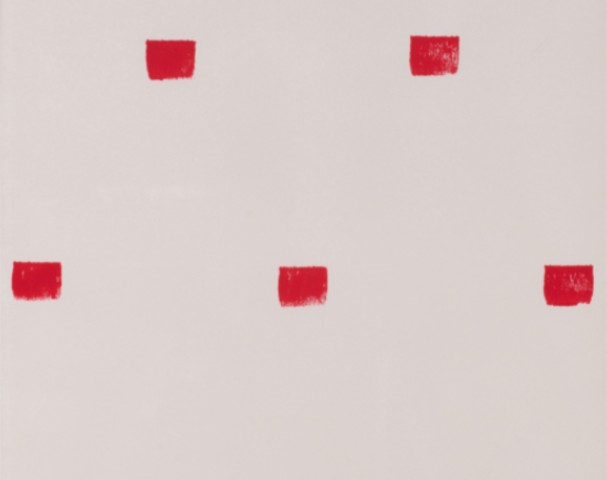
The Swiss artist Niele Toroni left the Ticino region in 1959, when he was a school teacher, to live in Paris and "paint". Since 1967, he has stuck "to the same statement, to the same method of work": "when I work as a painter, I show brushstrokes n° 50, repeated at regular intervals of 30 cm". "With a 50 mm wide flat brush, Toroni places paint impressions on a grid - a previously drawn drawing - generally starting 10 cm from the upper edge of his support (canvas, waxed canvas, paper, wall, glass, floor...).
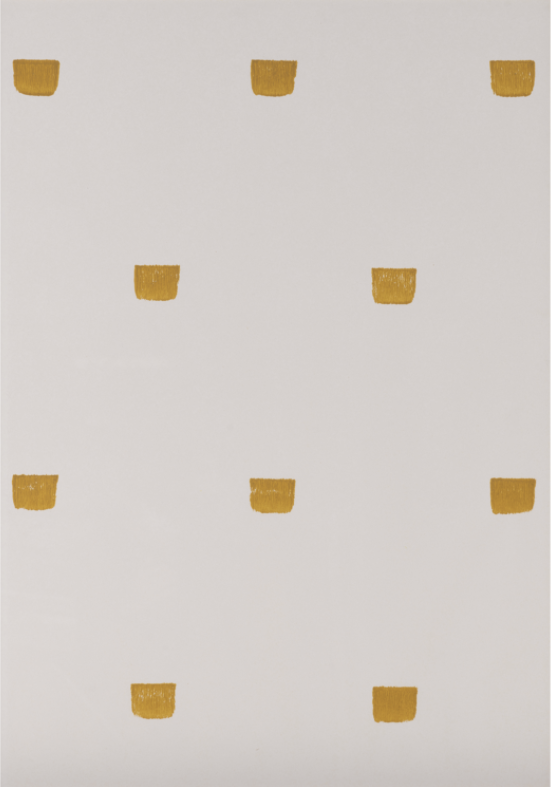
Niele Toroni (born in 1937)
Untitled,
Empreintes de pinceau n°50 répétées à intervalles réguliers de 30 cm, 1989
Estimate : 25 000 / 35 000 euros
Thus, the basic structure of his work consists of a set of pencil crosses, arranged in staggered rows, whose location is determined with a compass, every 30 cm, so that each print is placed at an equal distance from its neighbors. Toroni's approach cannot be related to conceptual art: it is not limited to a linguistic statement, it requires a material realization. His work, executed by hand, is never identical, because each brush print n° 50 differs from the others according to the quantity of paint, the vigor of the gesture and the type of support (it can be indifferently a painting, a free canvas, a wall...).
Toroni's method emphasizes the materiality of the painting, as Christian Besson emphasized in the artist's catalog raisonné: the brushstroke, which is the starting and finishing point, is offered "without registered movement, without gesturality; not the painter's touch but that of the brush; a touch that expresses nothing, an invoice.
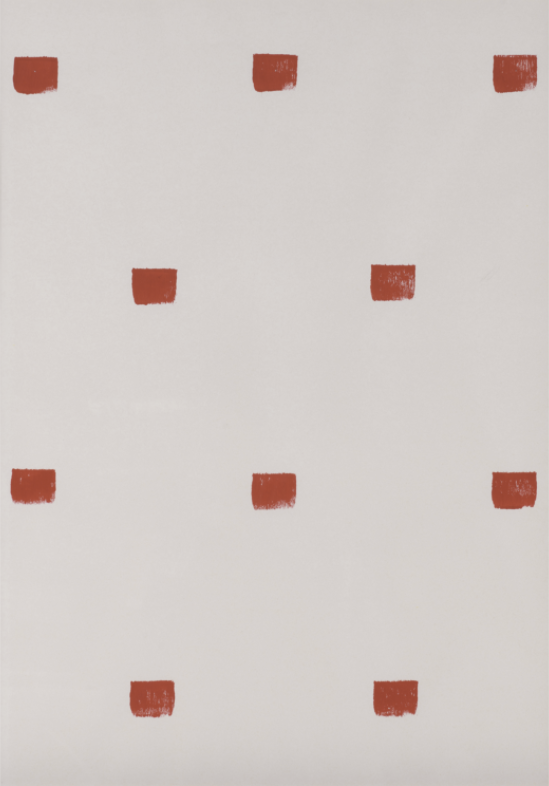
Niele Toroni (born 1937)
Untitled, Empreintes de pinceau n°50 répétées à intervalles réguliers de 30 cm, 1989
Estimate : 25 000 / 35 000 euros
According to Buren, Toroni's "work/painting" constitutes "a brilliant summary of all Western painting: the mark, the imprint, the brush, the surface, the color, the gesture, the all over, the single and the multiple, the body, its presence, its absence...".
If repetitiveness is at the center of his work, the possibilities offered to it are immense: besides the choice of the colors of the imprints, there is that of the spaces of intervention, when he works in situ. A true open work, Toroni's painting is thus the addition of all his achievements.