


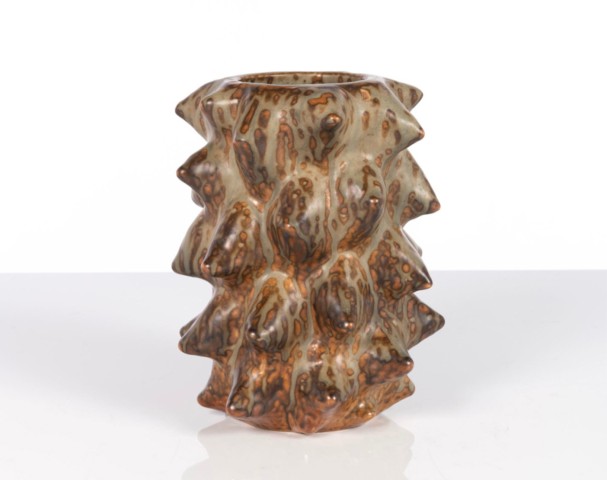
Axel Salto is considered to be one of the most important Danish ceramists. However, he made his debut as a painter in 1911 alongside the young avant-garde artists who paved the way for Danish expressionism. He then spent a few fertile years as a painter in the South of France, whose blazing sun exalted the strength of his colours. In 1916, following a meeting with Pablo Picasso and Henri Matisse, he founded the Klingen magazine. Between debates and exchanges of ideas, this journal has become the privileged playground of modern Danish artists of the time such as Poul Henningsen, Otto Gelsted and Axel Salto himself, who have all contributed to its development. Salto also deals with decorative subjects through vast frescoes that crown his work as a painter. However, the desire to approach more and more materials is deeply rooted in the mind of this artist who has always sought his inspiration and renewal in the possession of new techniques and materials.
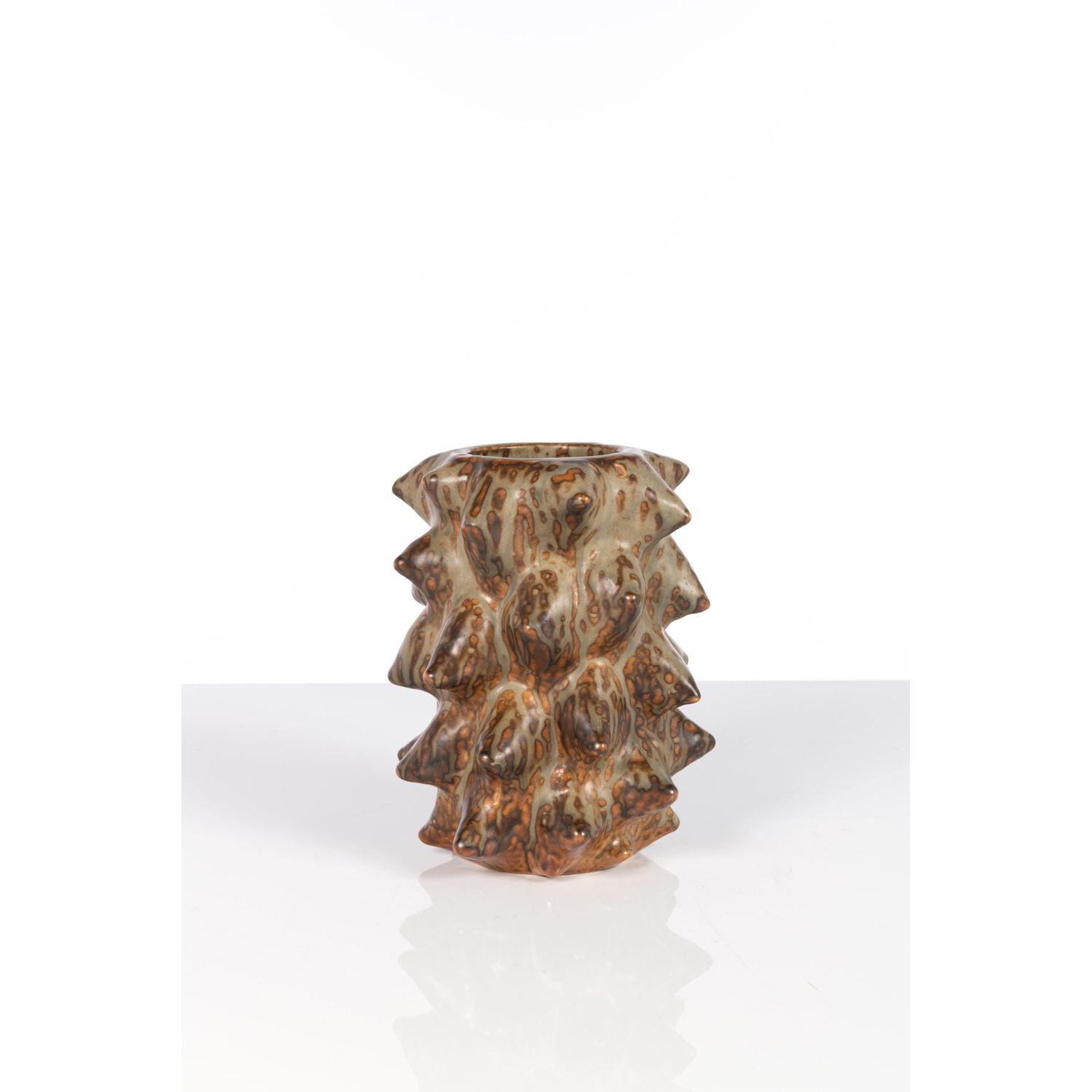
Lot 130 - Axel Johannes Salto (1889-1961)
Model 20.810
Vase
Glazed stoneware
Royal Copenhagen Edition
Signed Salto, 20810
Date of creation: around 1954
Height 24.5 cm
Estimate: 15 000 - 20 000 €
It was in 1925 at the Universal Exhibition in Paris that Axel Salto demonstrated his talent in the field of ceramics with his first works in porcelain, enamels on biscuit, executed by the Danish manufacturer Bing & Grøndahl. In the field of stoneware, Salto began modestly, in a small establishment where all the details of the execution could be closely followed and controlled and, with Carl Halier, a skilled ceramist, he managed to possess perfect material and technique. Later, under more favourable conditions, he collaborated with the ceramist Nathalie Krebs. From 1933 onwards, he had all his works executed by the Royal Manufacture of Copenhagen, thus having at his disposal the technical resources of a large factory. The artist shows a real gift for observing nature from which he draws to imagine his new sandstone creations. After the "fluted" style based on simple repetitive zigzag patterns comes the "button" or "bud" style, inspired by chestnuts and eucalyptus fruits.
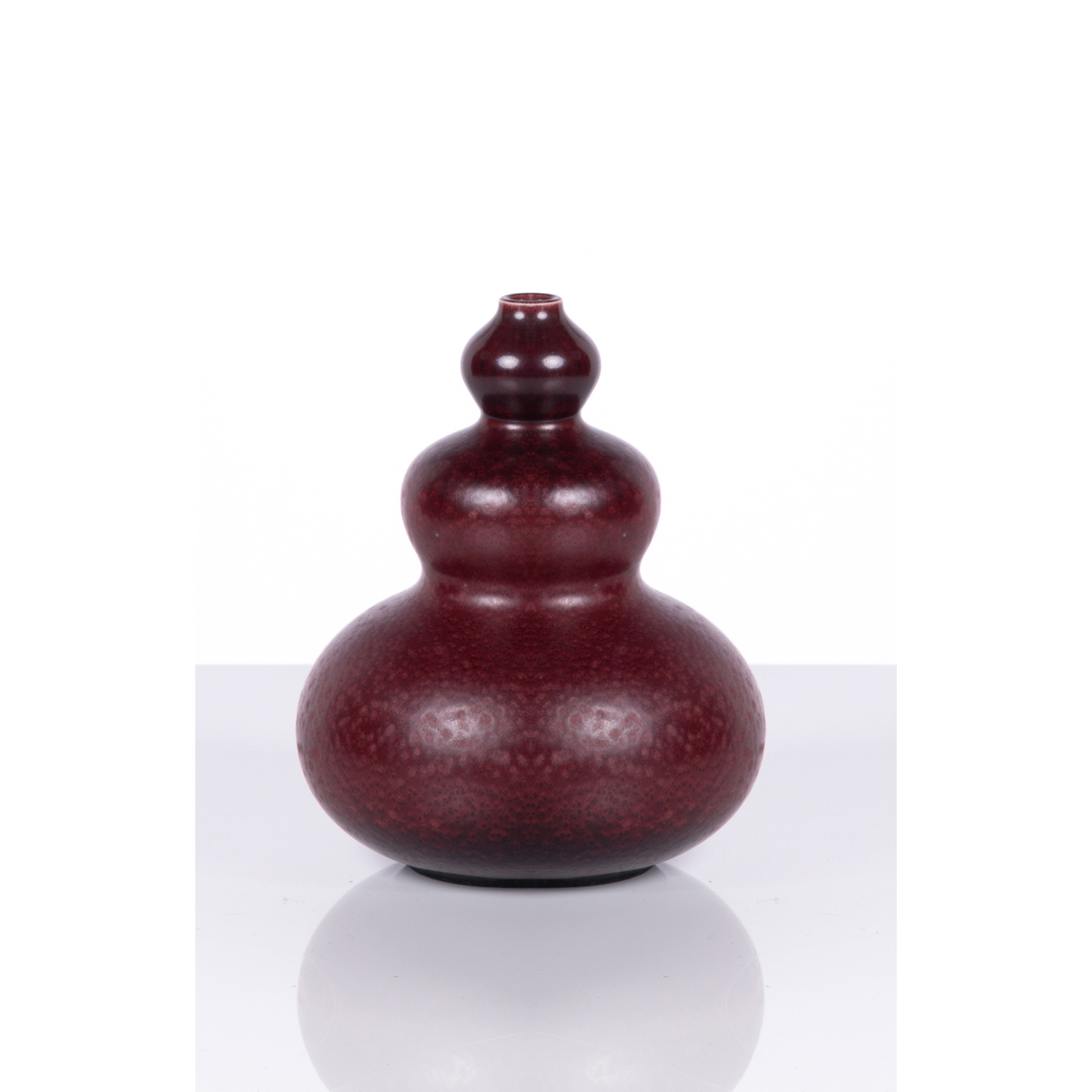
Lot 206 - Axel Johannes Salto (1889-1961)
Model 20.740
Vase
Glazed stoneware
Date of creation: 1945
Royal Copenhagen Edition
Signed in hollow Salto, 20740, three waves
H 17,5× Ø 14cm
Estimate: 3 000 - 4 000 €
Salto is fascinated by the shapes of plants. He thus studied the inflorescence, in the corn ear for example, the principle of which was the starting point for a new ceramic ornament: vases in the shape of pipes with sharp contours, vases with rounded and welcoming sides, huge vases with wide and tight bellies. He also introduces into his work the idea of movement, momentum and growth through a style described as "germinative" to the point that matter takes over. The jets become crazy branches, the light dissipates, the natural rhythm fades to give life to dramatic pieces where the wickedness of the spiky germs is underlined by a yellow colour of sulphur. Salto himself conceives such vases as diabolical things, subject to a curse. The germinative style also leads to richer roads such as the "core of strength", the name he gives to his latest forms of pottery, where a forest of conical tubes stands with strength and power.
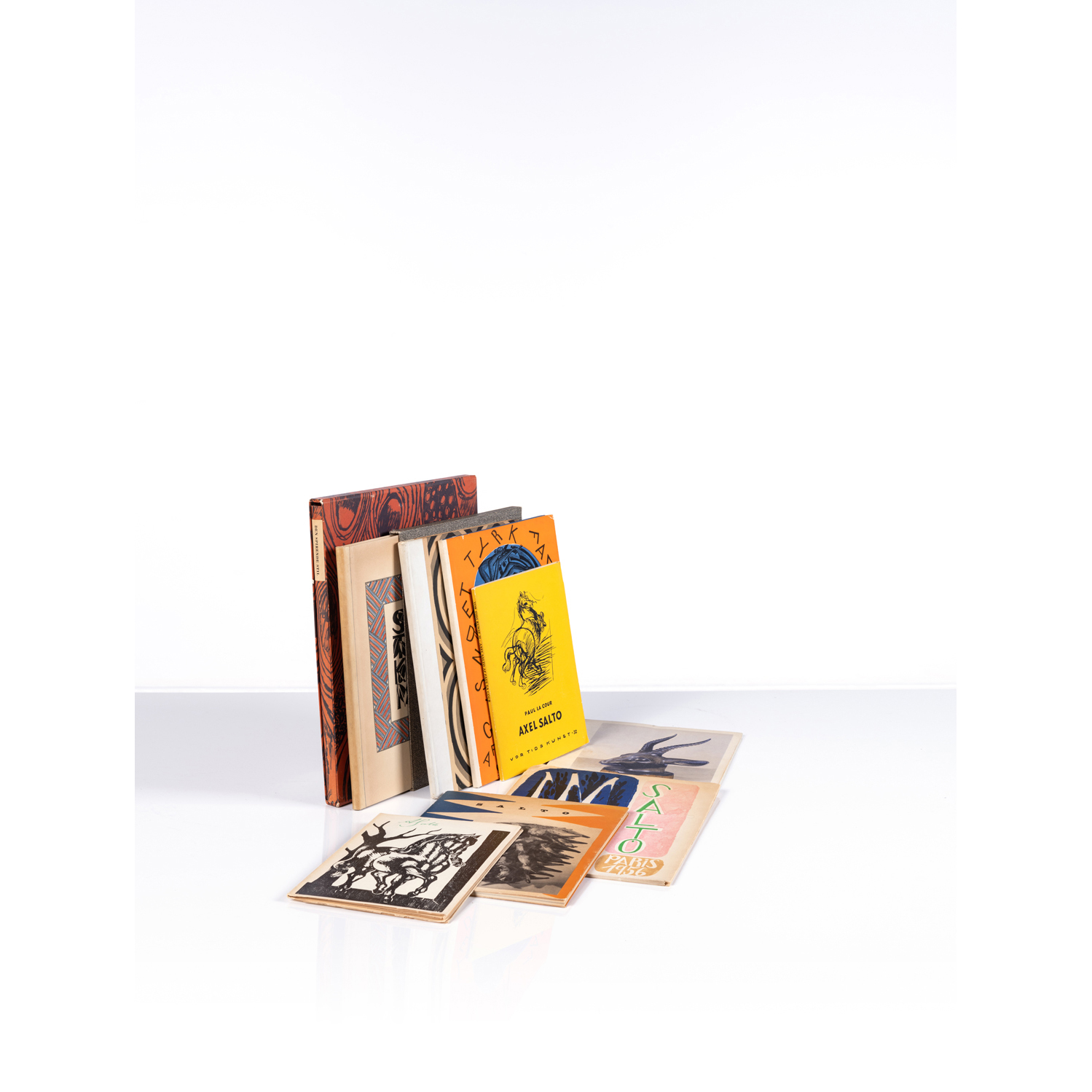
Lot 128 - Axel Johannes Salto (1889-1961)
Set of nine books
Estimate: 2 000 - 3 000 €
With these strong pieces, Axel Salto is renowned as a ceramist. His career was propelled and crowned with numerous awards (in 1937 at the Paris Universal Exhibition and in 1951 at the Milan Triennial). Sandstone became his favourite material. Salto's approach was to "create in accordance with nature, rather than copy its exterior". His work is unique in its time because of his uninhibited and passionate approach to the development and manipulation of new shapes and colours. Among the Royal Copenhagen Manufacture's glazes, Salto has often used the one known as "Sung".
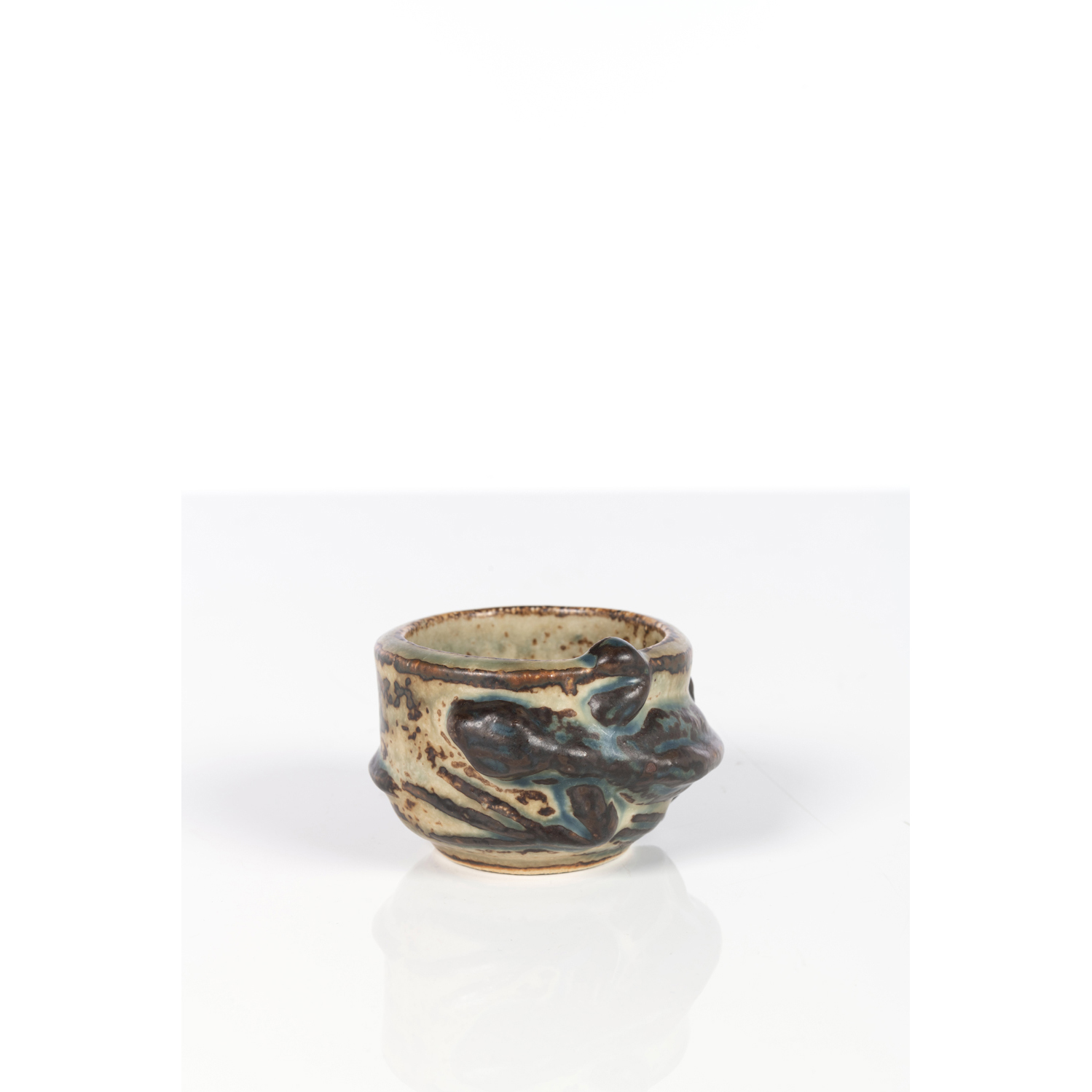
Lot 131 - Axel Johannes Salto (1889-1961)
20286
Vase
Glazed stoneware
Royal Copenhagen Edition
Date of creation: around 1944
H 6 x Ø 9,5 cm
Bibliography: "Axel Salto, Master of Stoneware", Clay - Museum of Ceramic Art Denmark, similar model reproduced p. 175 and referenced under number 187
Estimate: 800 - 1200 €
The different colours he uses range from attenuated green to white and dark grey in areas where the cover is thick, and the virile strength of the part is highlighted when the iron oxide pierces with its colour in the higher parts. Salto still cultivates olive colours, which are soft and uniform in colour, ranging from light green to olive brown and dark black velvet. For a while, he also studied solfatara, the uranium glaze, which makes it possible to produce a poisonous shade of green and sulphuric yellow on an ochre background. In the older glazes, you can also see the beef blood, the pride of the Manufacture. A genius in ceramics, Axel Salto has left his unique mark on northern ceramics, perhaps even more so than his contemporaries Stig Lindberg or Arne Bang, with his universe that is both poetic and singular, with his powerful subjects.
