


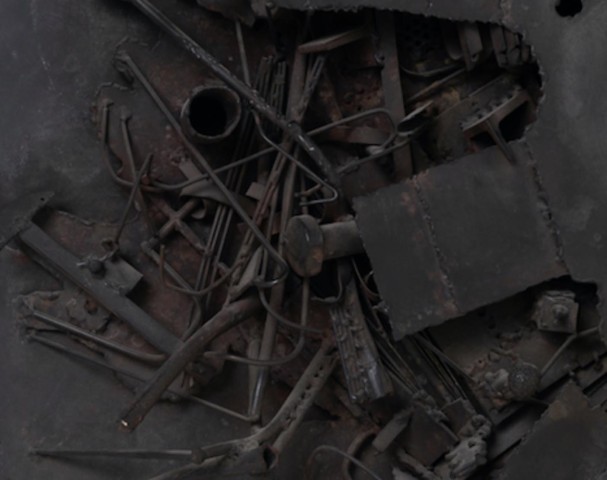
On the occasion of its next Modern and Contemporary Art auction, taking place on April 8th, 2021, PIASA will present to collectors several lots by the famous French artist César Baldaccini.
César, who celebrates the centenary of his birth this year, is one of the major figures of the artistic creation of the post-World War II period. After studying sculpture at the Ecole des Beaux-Arts in Paris from 1943 to 1948, he turned in the 1950s to metal waste and the use of arc welding, as his poor resources prevented him from obtaining more noble materials, such as marble and bronze. This choice also reflects his admiration for the metal sculptures of Gargallo, Gonzalez, Giacometti and Picasso.
In 1954, César set up his studio in a factory in Villetaneuse, in the middle of scrap metal dumps, which were to become his raw material. His sculptures, made up of welded scrap metal, fit in well with the miserable climate of the post-war period and gradually metamorphose into insects, fantastic beasts and strange human creatures. This is the period that marks the beginning of his recognition: he obtains the Trois Arts prize with Le Poisson, which is exhibited in the courtyard of the Lucien Durand gallery, and the following year he enters the National Museum of Modern Art. In 1956, César was very much noticed when he presented five sculptures in one of the rooms of the French Pavilion at the Venice Biennale. At this time, César made bronzes from existing irons and in 1957 inaugurated the series of Plaques (lot 41).
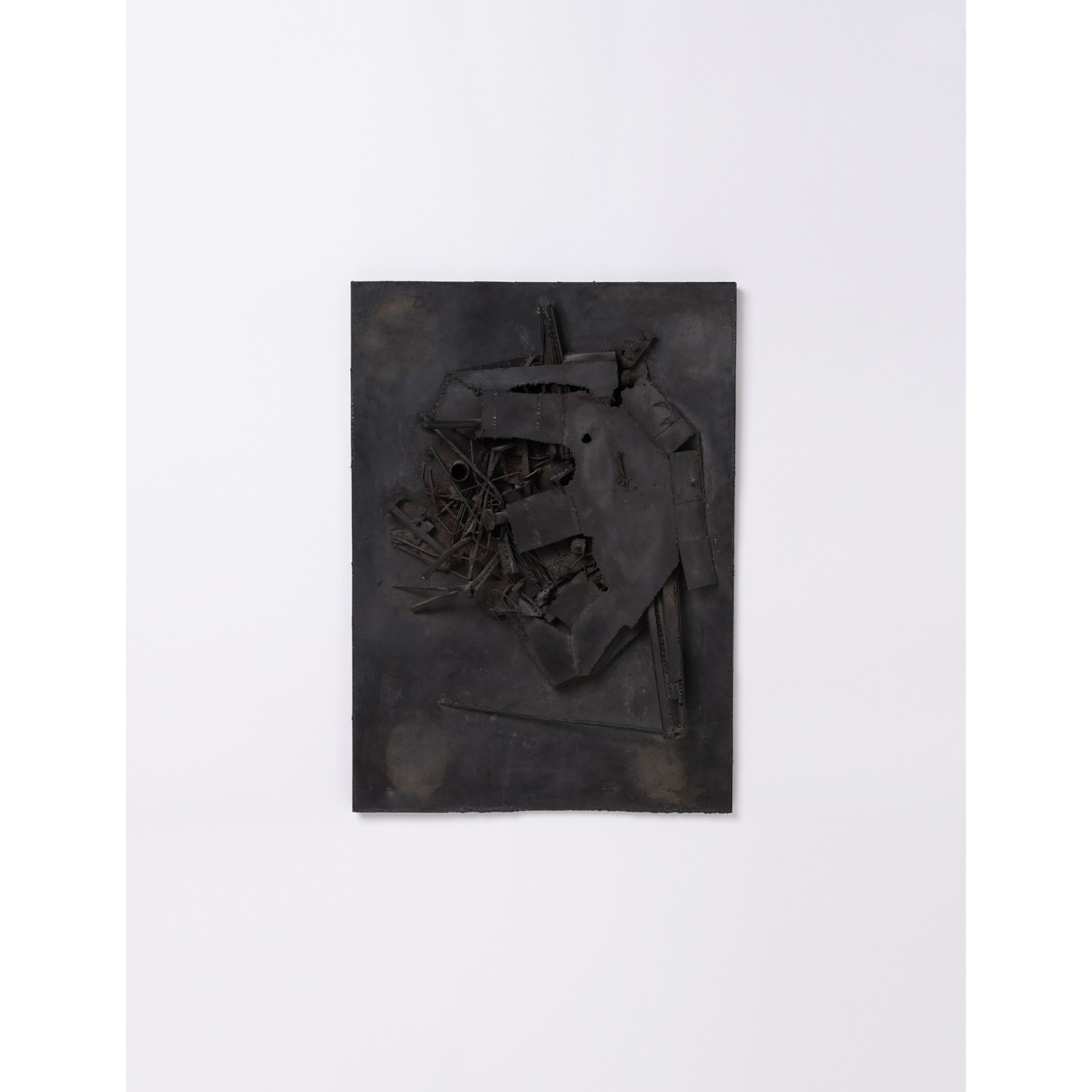
César (César Baldaccini) (1921-1998)
Relief, 1955
Estimate: 6 000 / 9 000 €
These large vertical sculptures show a new orientation: two-dimensional, abstract, they are based on the linear repetition of flat elements, which constitute "a scaly texture" (César). On the strength of his success, he signed an exclusive contract with the Claude Bernard Gallery and with the Hannover Gallery in London (1958). The series of large Panel-Reliefs that César produced in 1961-1962 in sheet metal, reminiscent of the Reliefs muraux of 1955, are based on the compact assembly of welded debris on a metal background. The year 1960 marks a decisive stage in the career of César with the appearance of the first Compressions. This series was initiated after he fortuitously discovered a giant American hydraulic press, capable of swallowing up the size of a car, at a scrap metal dealer's in Gennevilliers. When César presented his first "Compressions" (three compressed cars) at the XVIth Salon de Mai in 1960, the public cried scandal. The art critic Pierre Restany saw a decisive break in the history of sculpture, evoking "a new stage of metal", subjected to "a quintessential reduction". He invited César to join the group of New Realists that he had formed in October 1960 with Yves Klein, Arman, Raymond Hains, Martial Raysse, Daniel Spoerri, Jean Tinguely, Niki de Saint Phalle ... The art critic had perceived in these artists a common method of appropriation of the direct real that he assimilated to "an urban, industrial and advertising recycling" (60/90. Thirty years of New Realism, edition la Différence, 1990, p. 76).
César executed Compressions throughout his career, using the most diverse materials and exploring the formal possibilities of the press as an artistic tool. For example, the 1976 mural Compression (lot 46) reflects the artist's renewed interest in industrial waste. Flattened, it still relies on the use of the press, but the materials are coated with glue to ensure that they remain vertical. The taste for used materials has never left César whose work often oscillates between two poles, between a poor art and a more flamboyant art. The Compressions testify to this quest for "something else" that never left him, to his perpetual spirit of invention and research, to his unprecedented discoveries.
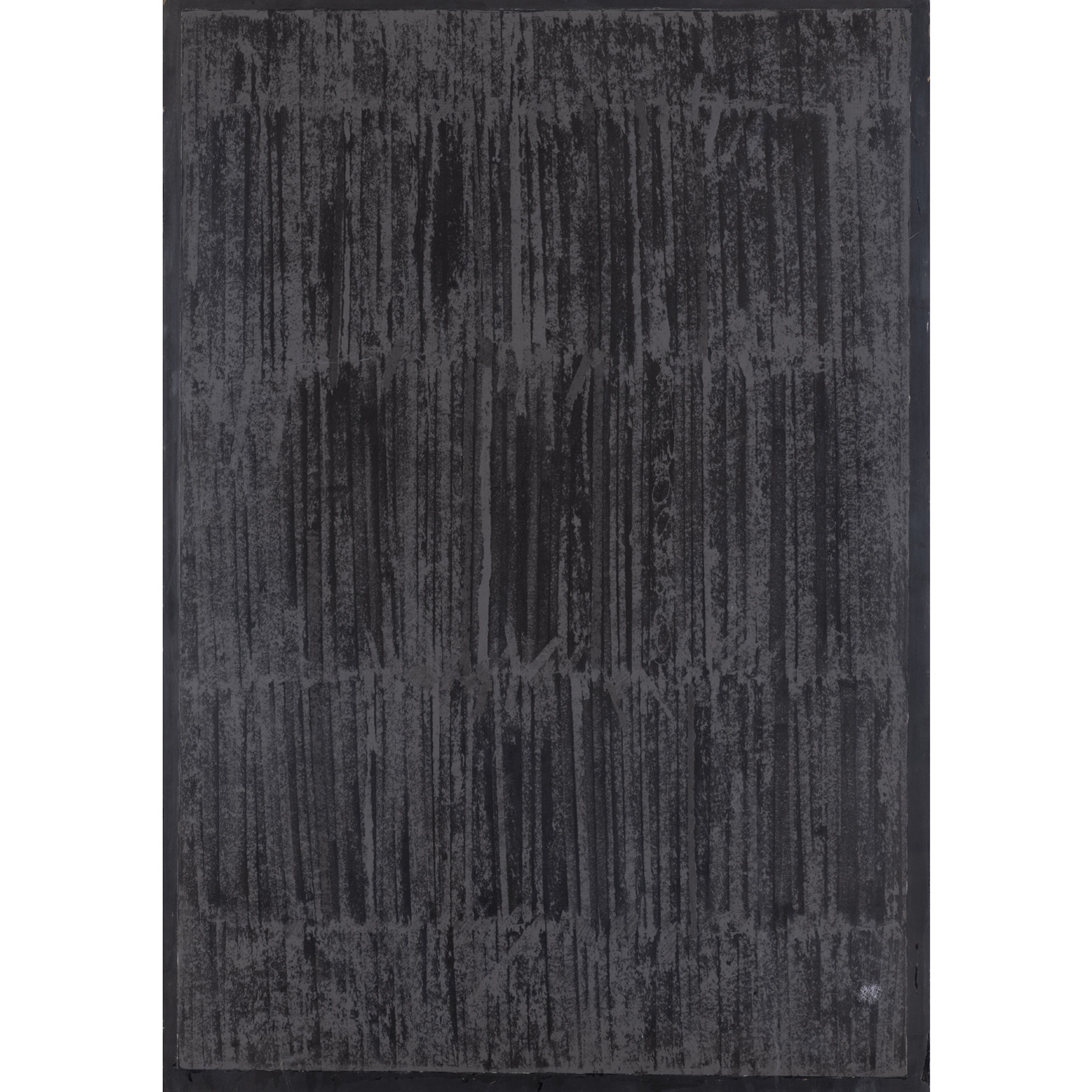
César (César Baldaccini) (1921-1998)
Arrachage, 1961
Estimate: 8 000 / 12 000 €
Thus, César, on the occasion of an exhibition organized by the Claude Bernard Gallery in 1965 on the theme of "The Hand, from Rodin to Picasso", discovered through the use of a pantograph, a technique that allowed him to make huge enlargements of the cast of his thumb (Lot 47). He did not make it in bronze but in a new material, synthetic resin. For César the thumb is the incarnation of anti-sculpture: "My goal is not the thumb, the thumb is part of the goal I have assigned myself. I want to make my portrait with fragments of my portrait. So, taking this tool and molding my thumb which is not a sculpture (there is nothing more anti-sculpture than a human print) allows me to move on to something else... while, by developing my print on this scale, I make it become sculpture (César, Conversation autour d'un pouce, lettres françaises, 30 December 1965). This imprint will give rise to small and increasingly large realizations, in all kinds of materials (plastic, white marble, crystal, cast steel or iron, bronze.
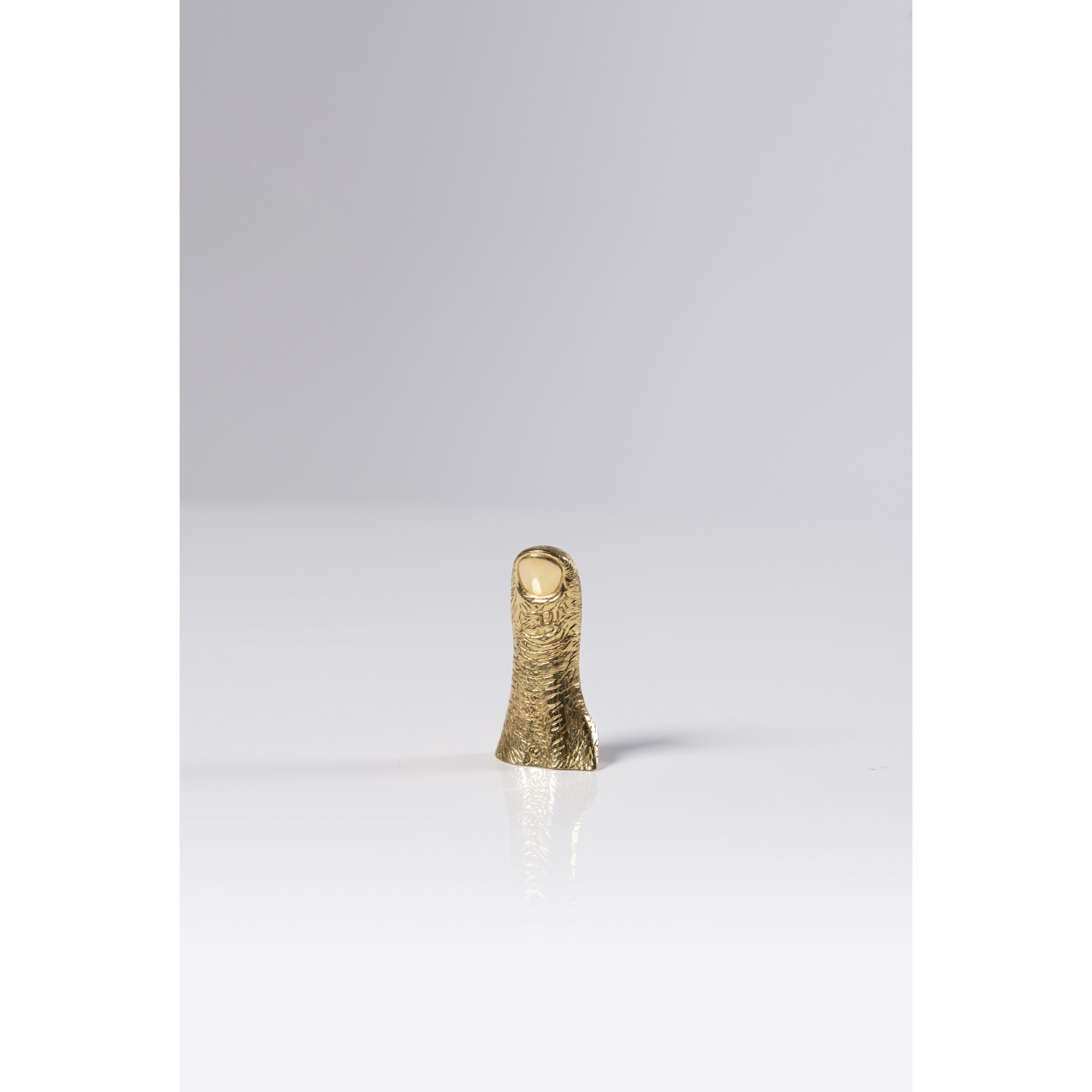
César (César Baldaccini) (1921-1998)
Chiseled yellow-gold thumb set on a brooch 18K (750‰)
Estimate: 2 500 / 3 000 €
César will make other anatomical prints, such as the breast of a dancer at the Crazy Horse. The Prints marked the beginning of his international recognition with the organization of retrospectives in Amsterdam, Duisburg and Marseille. During the tests for the realization of the Human Prints, César discovered new materials such as polyurethane foam. He was fascinated by its ability to develop and create, outside of the mold, flexible and organic forms. He explored the multiple possibilities with the series of Expansions from 1967, which are the material antithesis of the Compressions: their directed creation gives rise to happenings (from 1967 to 1970) and they were the subject of an exhibition in Paris in 1977.
Appointed professor at the École des Beaux-Arts de Paris in 1970, César enjoyed a growing reputation from that date on. Master of welded iron, inventor of Compressions, Expansions and Human Prints, he developed his work along these different axes, constantly renewing its expression, experimenting with changes of scale and exploring new materials. Thus, from 1978 onwards, he began to revisit his production by reverting to the technique of welded bronze, which allowed him to retouch old Irons by welding. It is from this technique that he will create major monumental works such as Le Centaure, homage to Picasso (1988), the Flying Frenchman, offered by Cartier to the city of Hong Kong in 1992, or the Hommage à Eiffel (1984-1988). The retrospective devoted to César by the Centre Pompidou in 2017, twenty years after his death, helped remind us of the profound complexity and originality of his creation.
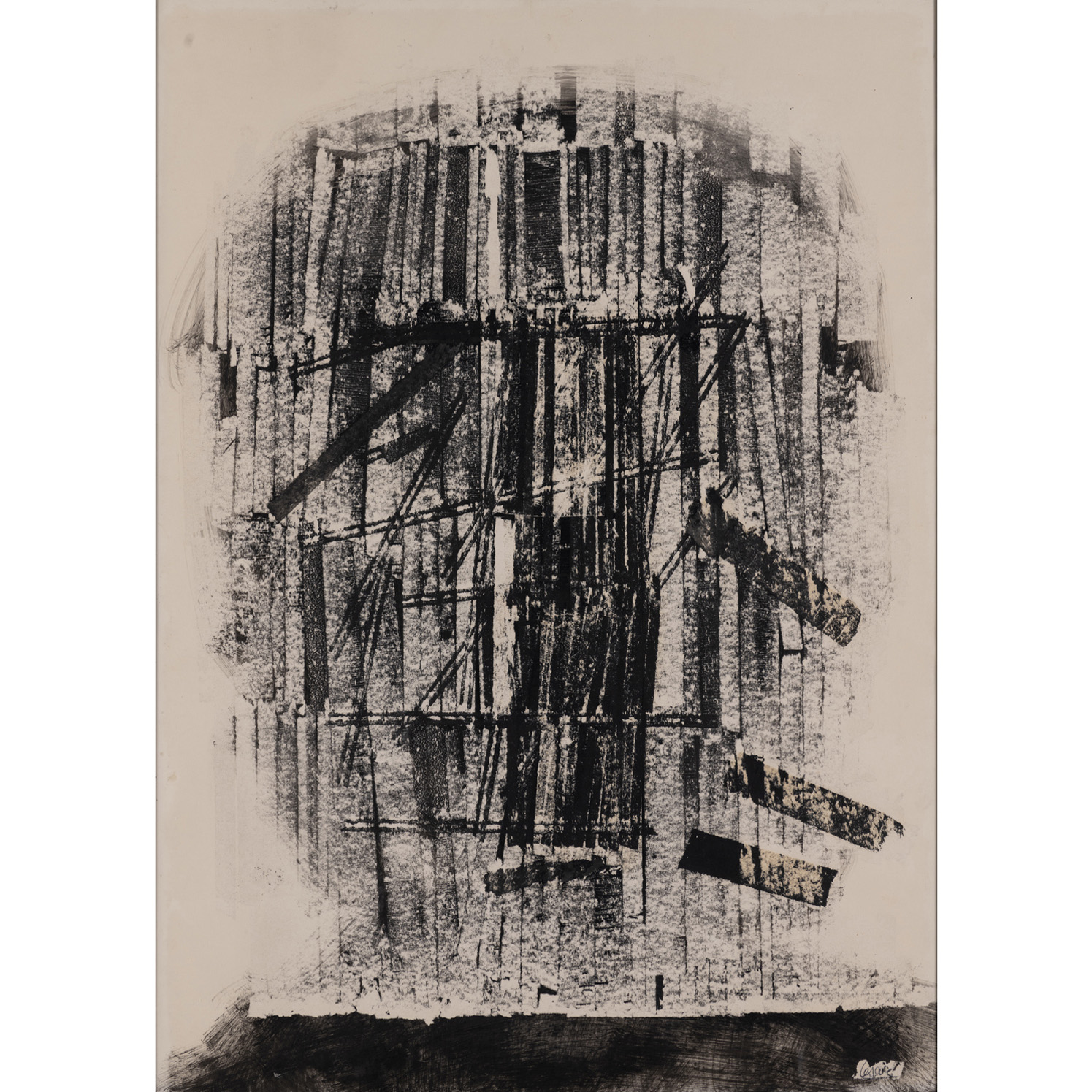
César (César Baldaccini) (1921-1998)
Arrachage, circa 1961
Estimate: 8 000 / 10 000 €
"His drawings, (lots 38, 39 and 40) for example, which are peelings of gummed paper previously inked, evoke, by the characteristic repetition of rectangular strokes the earlier series of "Plaques" (1959), sculptures striking by their tendency to two-dimensionality. The obvious decorative bias only exalts the realistic expressiveness of the material, the "verist" triumph of the mechanical fossil object. But the Parisian public, ignoring this profoundly realistic aspect, preferred to see in it, through the bias of the composition, a step backwards and a compromise. A very significant reaction: the same public that had previously been critical of Caesar's aestheticism is now ready to welcome its reassuring reappearance. Nothing is forgiven to Caesar: neither his success, nor his gifts, even less his anticipatory options. "
In 1957, César's collaboration with metal took on a new form: the artist now produced welded metal plates that resembled bas-reliefs or "iron paintings. These works illustrate Caesar's desire to "abandon the fragmentation of metal pieces" to return to "a more homogeneous material" in his work. Operating a displacement of the sculptural towards the pictorial, the plates are defined more like paintings than like forms which are spread out in space. Thus, for Pierre Restany "the series of Plaques, (is) remarkable for its tendency to the two-dimensionality, the linear repetition of the flat elements, the internal animation of the structures, with the cracked surface, split, sometimes perforated of part in part. (Same phenomena of vibratory animation and deep breathing). "
Our work, dating from the beginning of this series, was offered by César to Bob Calle, father of the artist Sophie Calle, a great collector and friend of César. In this work, the sculptor demonstrates his full mastery of metal, whose plastic potential he explores: he exploits its energetic richness by deforming the surface of the plate, hammering it relentlessly and going so far as to perforate it in its flesh. This work of appropriation of the metallic surface by César is not without evoking the matierist research of his contemporaries, like those of Fontana with the lacerated paintings but also the Buchi, or even the paintings of Alberto Burri in which he introduces shreds, digs crevasses. If, with the series of Plaques, César abandons the human figure for an abstract register, the vibrant expressiveness of this work testifies to the in-depth knowledge he had of the material, to which he confers an organic, even carnal dimension. Didn't Pierre Restany write: "César "lives" this scrap metal, he feels it as one breathes, he has a deep, sensitive, direct intelligence. "
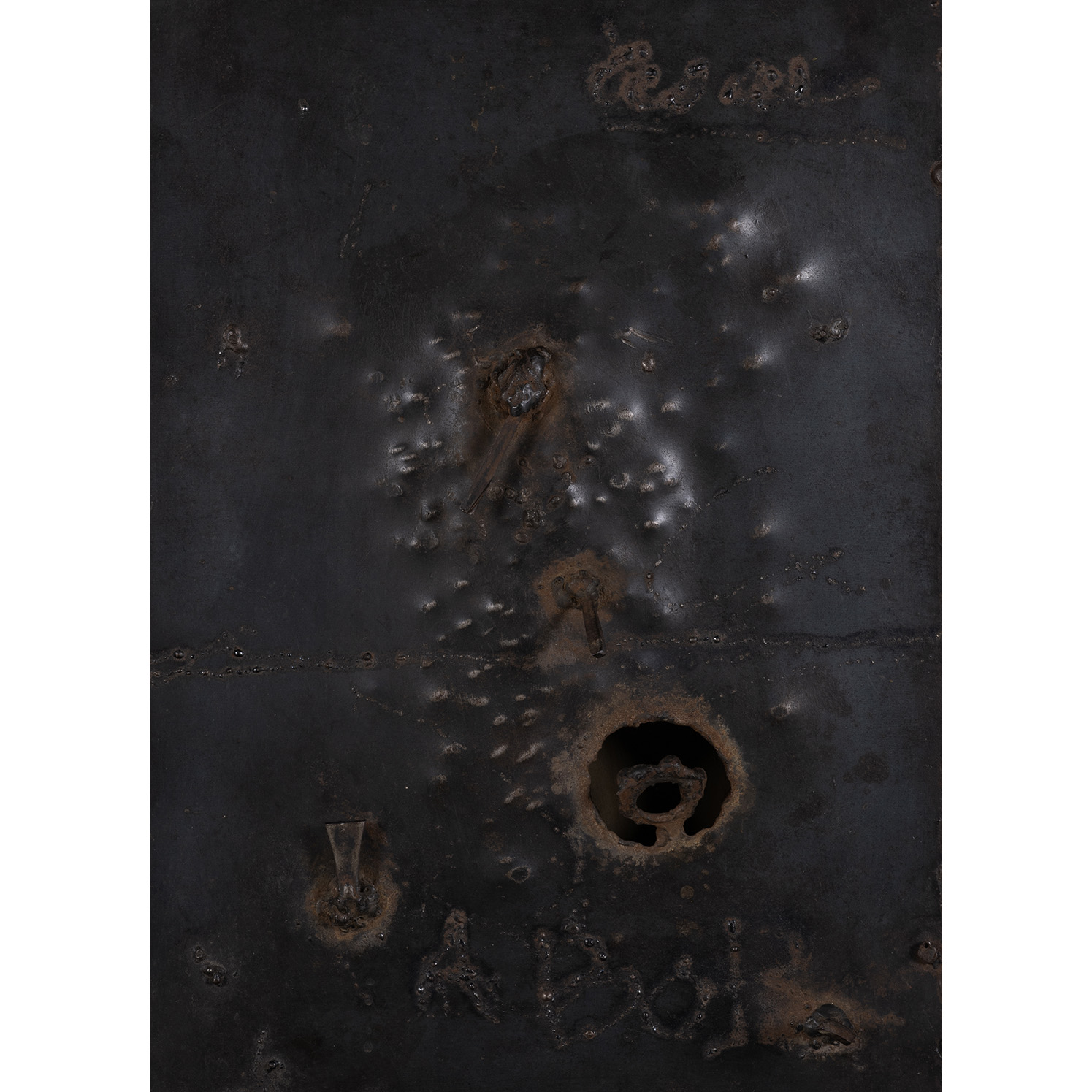
César (César Baldaccini) (1921-1998)
Untitled, 1957
Estimate: 50 000 / 70 000 €
Our work, dating from the beginning of this series, was offered by César to Bob Calle, father of the artist Sophie Calle, a great collector and friend of César. In this work, the sculptor demonstrates his full mastery of metal, whose plastic potential he explores: he exploits its energetic richness by deforming the surface of the plate, hammering it relentlessly and going so far as to perforate it in its flesh. This work of appropriation of the metallic surface by César is not without evoking the matierist research of his contemporaries, like those of Fontana with the lacerated paintings but also the Buchi, or even the paintings of Alberto Burri in which he introduces shreds, digs crevasses. If, with the series of Plaques, César abandons the human figure for an abstract register, the vibrant expressiveness of this work testifies to the in-depth knowledge he had of the material, to which he confers an organic, even carnal dimension. Didn't Pierre Restany write: "César "lives" this scrap metal, he feels it as one breathes, he has a deep, sensitive, direct intelligence. "
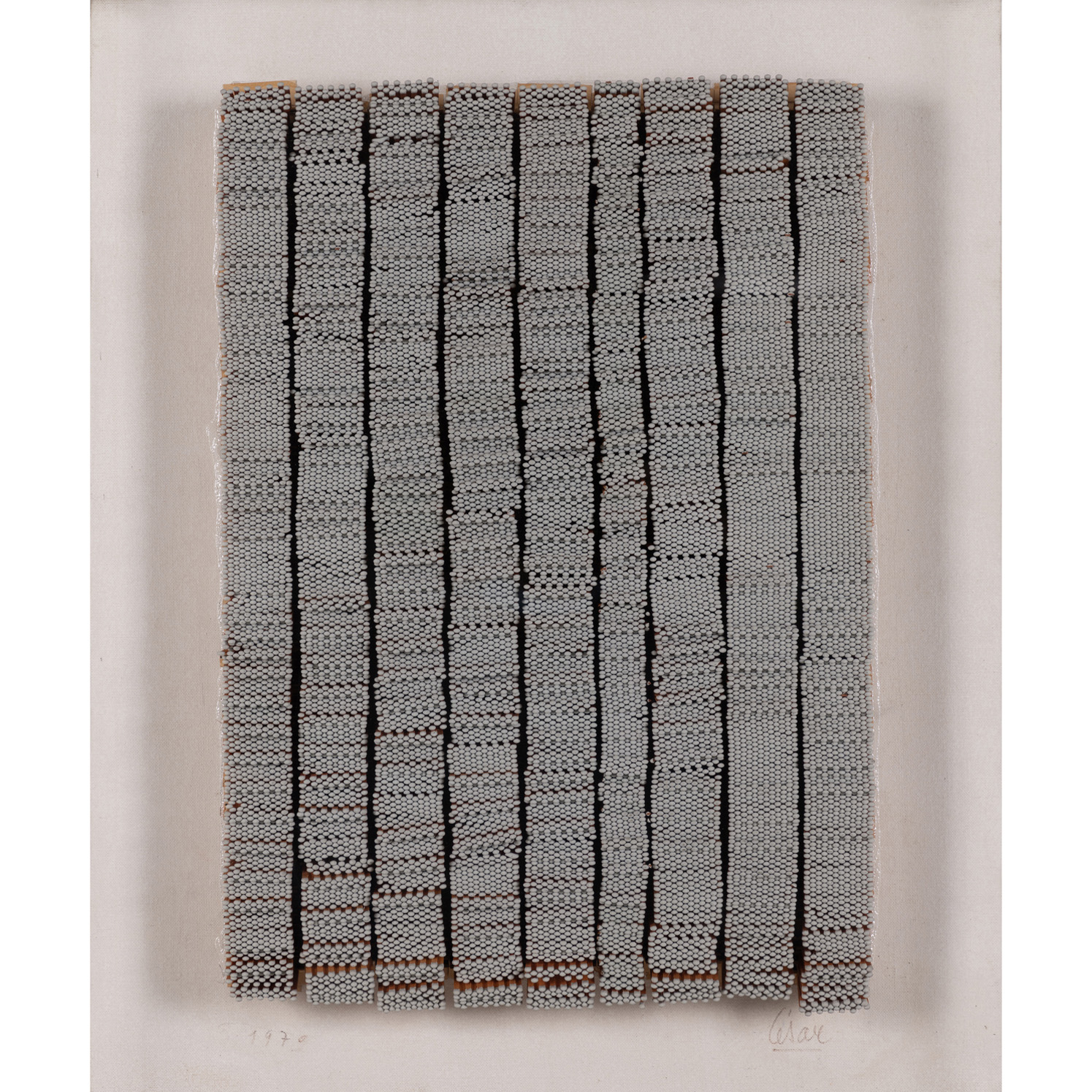
César (César Baldaccini) (1921-1998)
Untitled, 1970
Estimate: 20 000 / 30 000 €
