


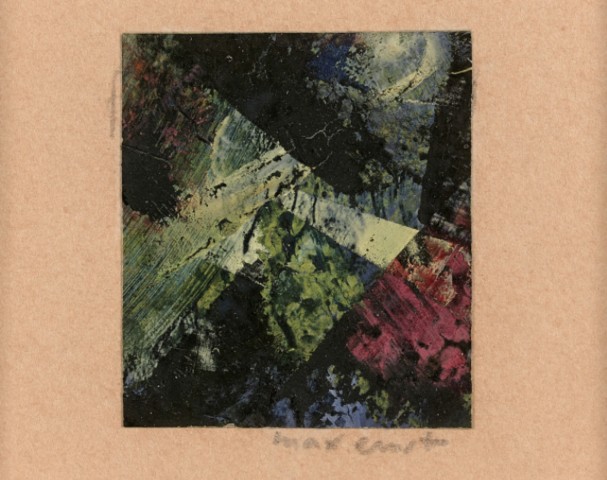
Among the artists in the selection of works proposed by the Department of Modern and Contemporary Art on Thursday May, 28, 2020, PIASA auction house highlights the German painter and sculptor Max Ernst with a gouache on paper, created at the end of the 1940s.
Born in North Rhine-Westphalia in 1891, Max Ernst studied philosophy at the University of Bonn before leaving it to devote himself fully to painting. The young man met the group of artists Der Blaue Reiter during one of their overt exhibitions. Two years later, in 1913, he presented his work alongside them in Berlin.
After meeting the poet Guillaume Apollinaire and the orphist painter Robert Delaunay,Max Ernst left his native Germany and discovered Paris. He experienced the effervescence of artistic life in the Montparnasse district, then the epicentre of European creation. After the First World War, during which he served in the artillery on the Russian front, Max Ernst became interested in the Dada movement.
The works he produced during this period constitute authentic laboratories where he experimented with a large number of materials and supports (paintings, prints and collages). He published the magazine La Chamade. The Surrealist artists André Breton, Paul Éluard and Louis Aragon collaborated in it. The early 1920s are synonymous with great intensity for him. He organized the Dadaist International Premiere in Berlin at the end of June 1920. Max Ernst took advantage of a stay in the Tyrol to meet Tristan Tzara and Hans Arp. In 1926, he also collaborated with the painter Joan Miró in the creation of sets for Serge de Diaghilev's ballets. It was not until 1934, in contact with Alberto Giacometti, that he really began to work as a sculptor.
In 1938, Peggy Guggenheim acquired a good number of works by Max Ernst, which she exhibited in her London gallery. That same year, Max Ernst, refusing to comply with André Breton's injunctions, withdrew from the Surrealists. Arrested as soon as the Second World War broke out, Max Ernst was interned near Aix-en-Provence in the company of Hans Bellmer before finally succeeding in embarking for the United States in 1941.
He settled in New York where he met Marcel Duchamps and many European intellectuals in exile. In 1946, married to the painter and writer Dorothea Tanning, he became a naturalized American and settled in Sedona, Arizona.
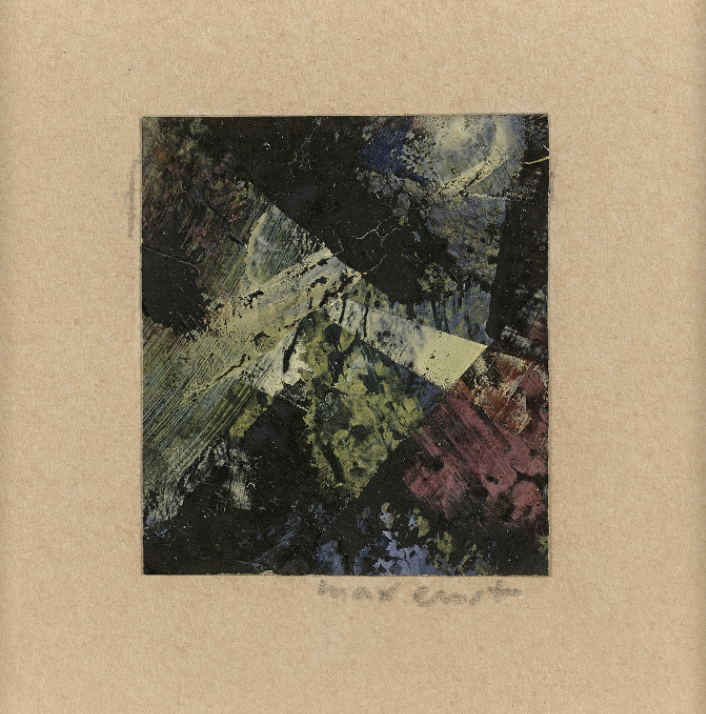
Max Ernst (1891-1976)
Microbe, circa 1946-1949
Gouache sur papier
Signé en bas à droite sur le support
3,5 x 3 cm
Provenance: Collection particulière, Paris
Microbe, the gouache on paper offered for sale on Thursday, May 28, 2020 by PIASA, was made precisely during this American period. Its estimate was established between 15,000 and 25,000 euros.
