Martin Bradley © D.R.
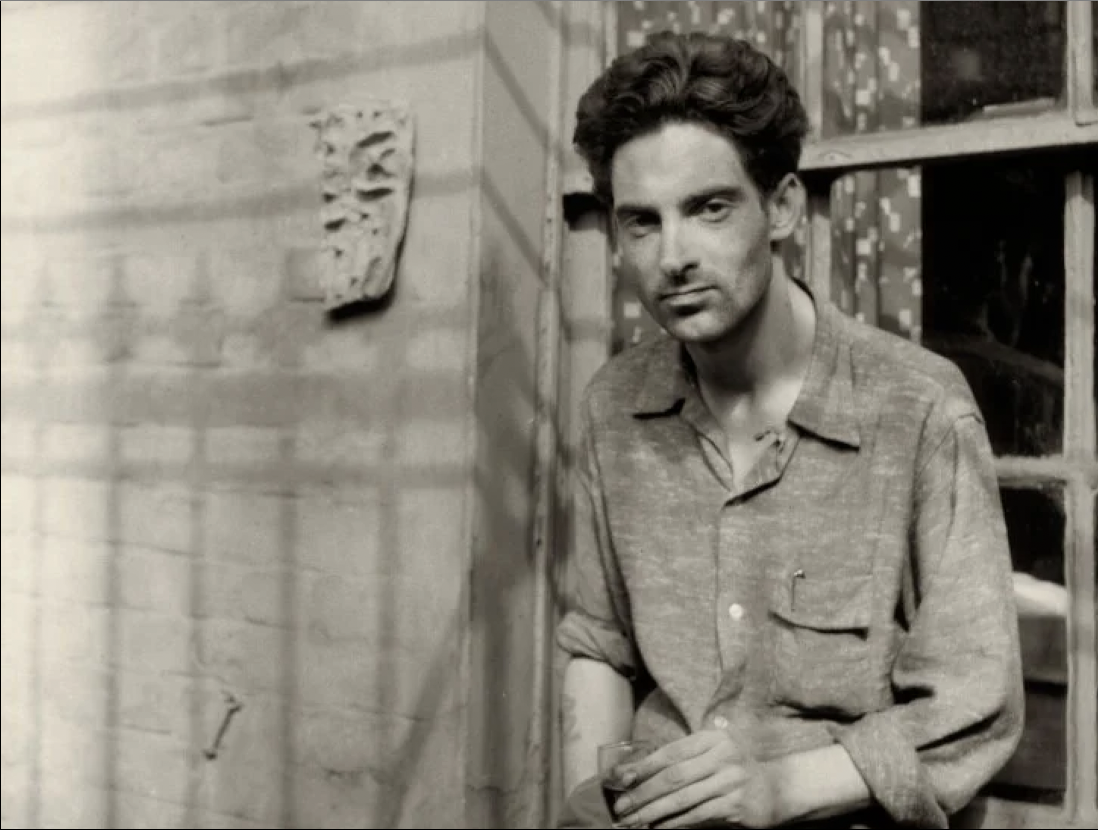
Born in 1931 in Hammersmith, a working-class neighbourhood of London, Martin Bradley grew up between two irreconcilable worlds. Orphaned and then adopted by a father who became a successful businessman, he rose from the depths to the top of the social pyramid without ever feeling at home in either world, later describing both as systems of constraint, deprivation and emotional paralysis.
At the age of fourteen, he fled this stifling environment and signed on as a cabin boy on merchant ships sailing around Central and South America. To occupy himself during the lonely voyages, he painted portraits of sailors in the academic style. Back on land, he continued this practice in London's shelters and pubs, selling his works for pittance.
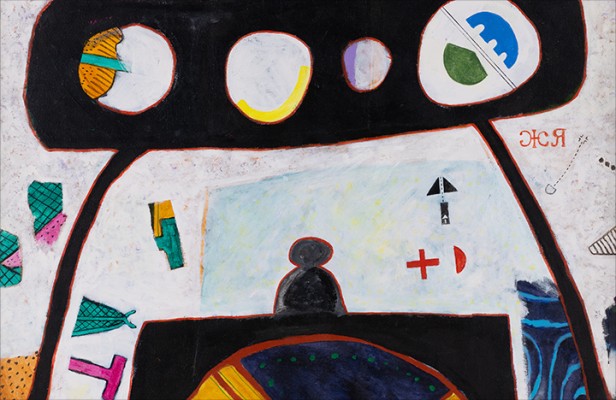
The turning point came when he abandoned portraiture in favour of abstraction, which he experienced as an intellectual and formal liberation. While struggling with alcoholism and drug addiction in the 1950s and 1960s, his work was exhibited in London's most prominent galleries. In 1958, he moved to Paris, then embarked on a ten-year journey through Asia. These travels gave rise to a unique pictorial language, nourished by signs, pictograms and titles integrated into the composition, conceived as a form of visual telegraphy.
After an initial period of tense and passionate work, his encounter with Buddhism and his Japanese wife, Tatsu, ushered in a brighter period, where painting became an experience to be lived rather than analysed: "A good painting is like a fire. As long as it burns and dances, we don't need to know the different types of wood that fuel it. One simply takes pleasure in enjoying its existence and what is visible."
Jean-Claude Silbermann © D.R.
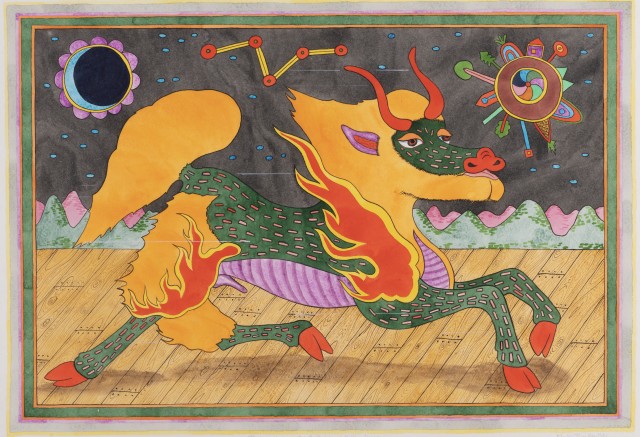
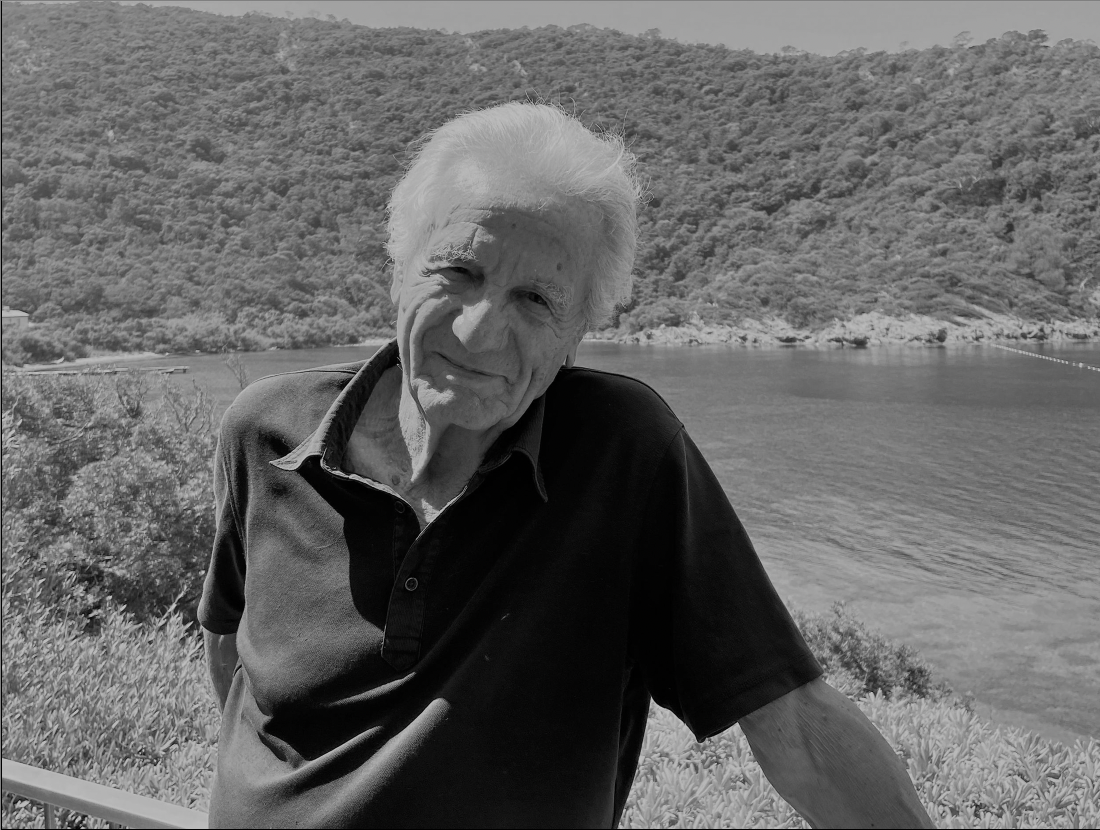
Born in 1935 in Boulogne-Billancourt, Jean-Claude Silbermann is an artist whose career embodies an inseparable fusion between pen and brush. Although his creative journey began with poetry at the age of 12, at 23 he found himself at a major impasse: his overwhelming desire to express himself was thwarted by a sudden inability to put words to paper. This forced silence prompted him to leave Paris for Brittany, where he met the painter Pierre Jaouen. Jaouen became his teacher and mentor, helping him to transpose his imagination into a tangible form. It was in this creative euphoria that Silbermann began to paint in order to give shape to his ideas.
His involvement in the Parisian surrealist movement from 1956 to 1969 had a lasting impact on his artistic identity. Guided by automatism and subconscious intuition, he relentlessly sought to create a world of pure poetry. A child of the city, he initially had a distant relationship with nature, which he considered unfamiliar and unattractive. It was only through the prism of art, and in particular thanks to Kandinsky's theories on the articulation of forms, that he finally managed to understand and integrate the organic world into his compositions.
Silbermann's technical uniqueness stems from a break with traditional painting conventions. For him, ‘drawing, at first, is just a line, a stroke that becomes an object’. During his apprenticeship, he composed his elements on canvas but felt limited by the background, which he never quite mastered to his liking. The turning point came in an unusual way, when he saw a restaurant menu holder. Inspired by this cut-out silhouette, he decided to abandon the confined space of the rectangular canvas. By cutting out his paintings, he freed his subjects from the frame and transformed them into autonomous poetic objects, thus definitively abandoning classical representation to allow form to exist in its own freedom.