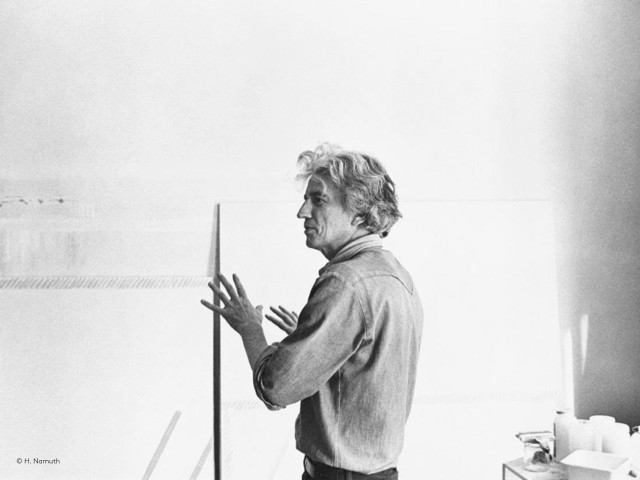
For a long time, Martin Barré was regarded as “a painter’s painter” and seemed almost naturally resistant to the market: no immediately recognizable style, no visual signature reducible to a motif, no spectacular gesture that could be turned into a brand image. What is at stake in his work is more discreet and more radical—a constant questioning of the place of painting within space.
Martin Barré’s oeuvre is structured into clearly distinct periods, each responding to the previous one through a shift rather than a rupture. 1954 marks the beginning of his painterly practice, as he establishes an artistic universe that distances him from the two major pillars of European modernity: geometric abstraction and gestural abstraction (Untitled, 1954, oil on canvas, €100,000 / 150,000).
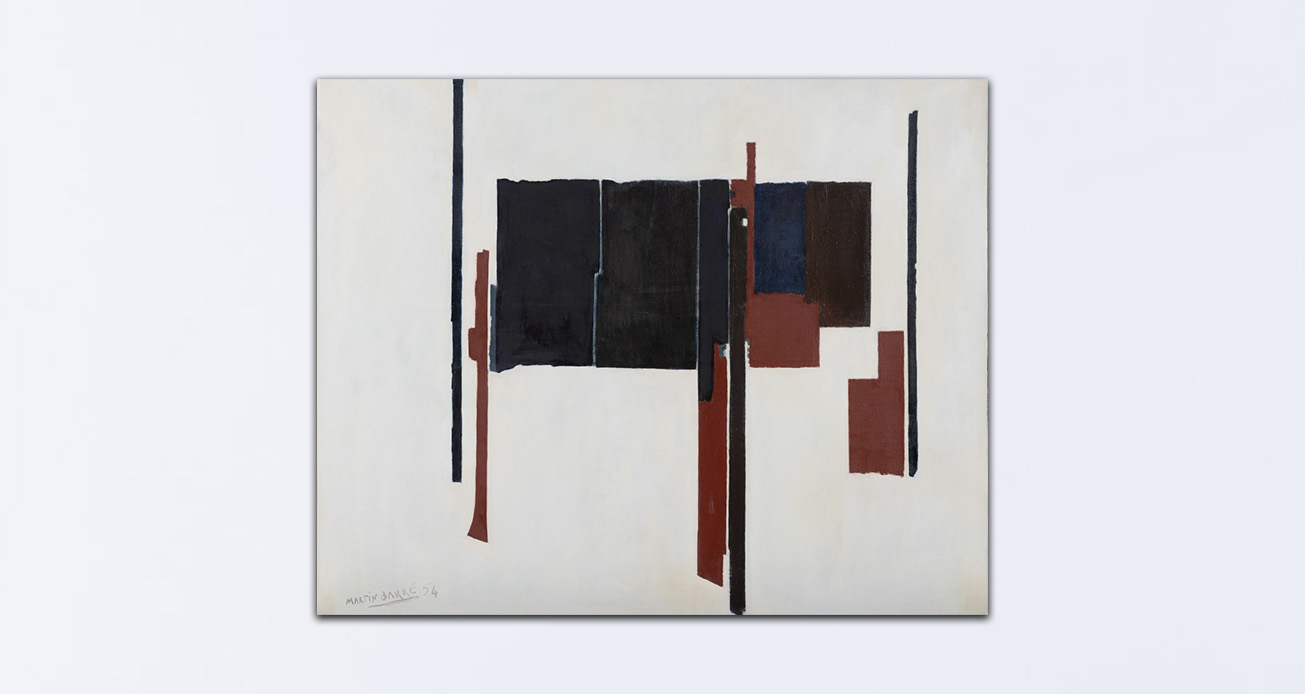 LOT 43
“Martin Barré is a painter for whom space matters more than form,” notes Michel Gauthier, curator of the monographic exhibition dedicated to the artist at the Centre Pompidou in 2020. “He develops strategies to dissolve and challenge form, and the line becomes his primary tool.”
Between 1960 and 1962, Martin Barré painted directly onto the canvas using tubes of paint. In 1963, he was among the first artists to introduce aerosol spray into his work. “This is his most famous body of work,” the curator explains, “the one that embodies a form of radicality—an attempt to de-subjectivize the gesture. This period is all the more mythical given that, following these experiments, the artist decided to stop painting in 1967.”
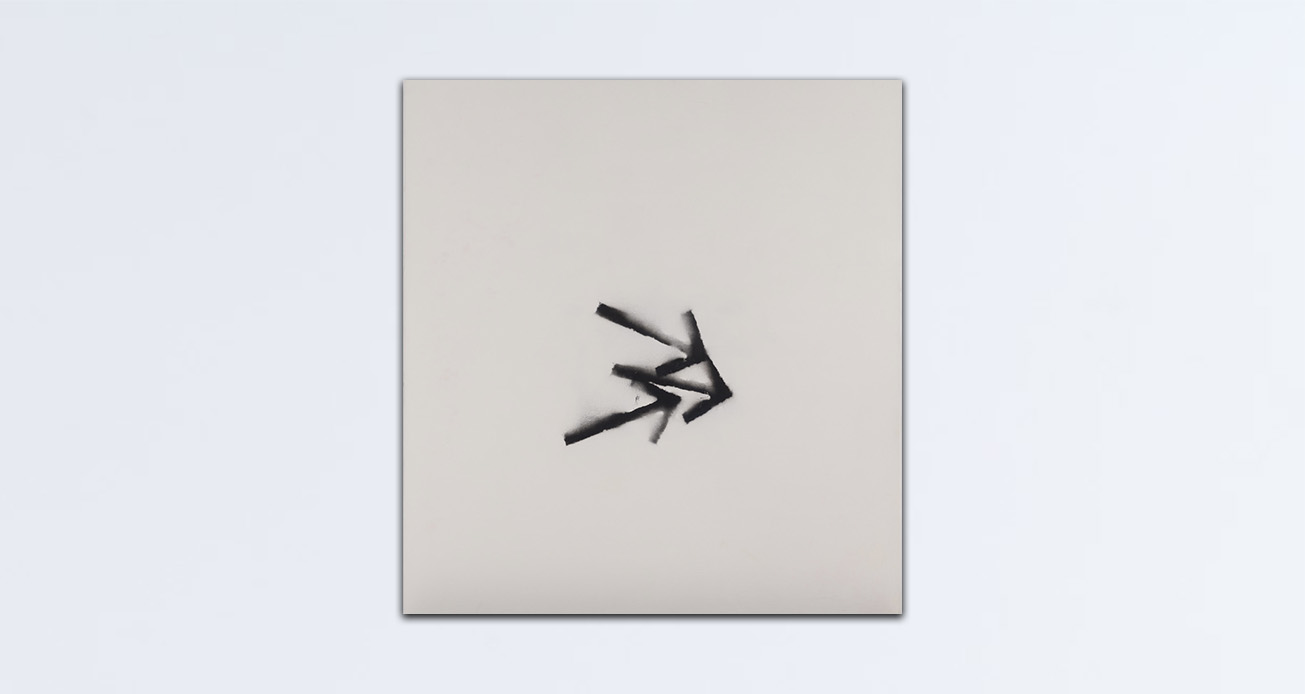 Lot 44
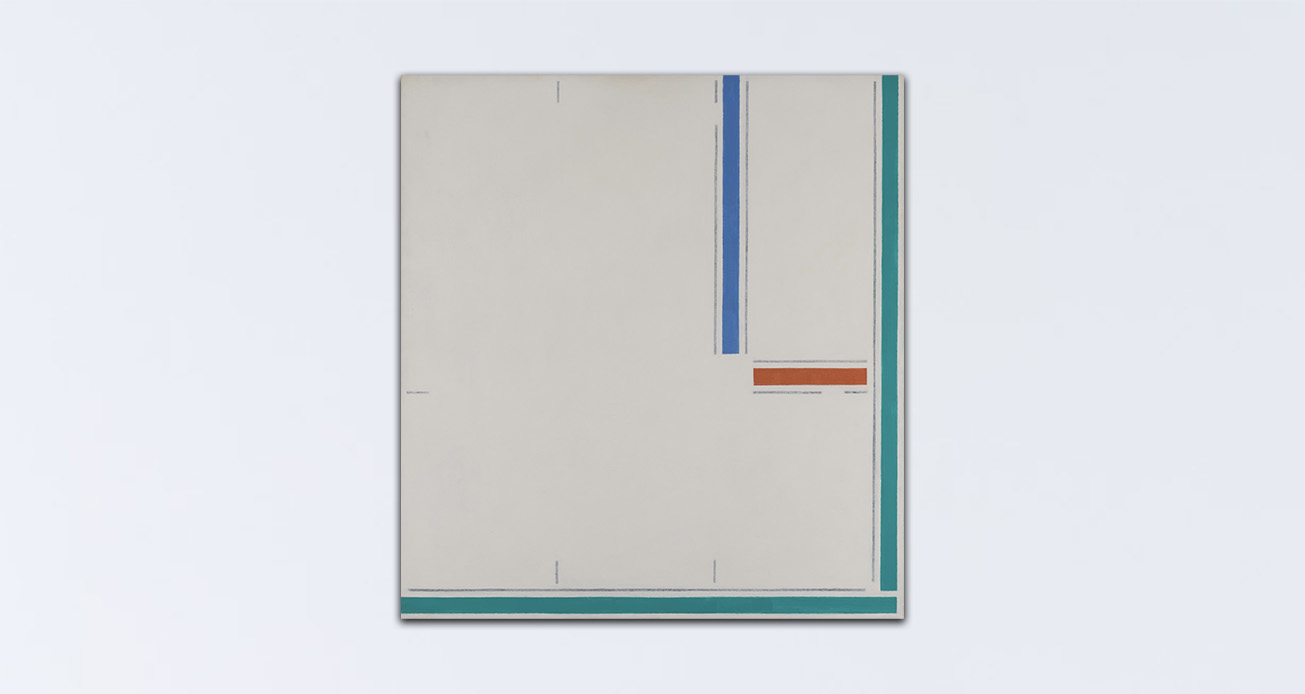
In the canvas 67.F.6 (1967, €120,000 – 150,000), created at the very end of this series, the three arrows crossing the immaculate white surface perhaps already point toward an exit. When, between 1976 and 1979 (79-B, 1979, 120 000 / 150 000 €), he grew closer to critic Jean Clay, founder of the journal Macula, Martin Barré, according to critic Catherine Millet, “entered a more formalist period and sought to respond to a dialectic in which the appropriation of pictorial space meets the painter’s arbitrariness.” Yet, she adds, theory quickly recedes: “There is no mysticism in this very pure painting, which certainly does not ask you to lose yourself in contemplation, but rather to engage with its dynamic.”
 Lot 45