


PIASA is pleased to present a section devoted to the Moroccan art scene through the intimate collection of an American diplomat. Acquired between 1971 and 1973, the works presented here reflect the effervescence of Morocco in the 1970s.
During those years, the artists benefited from a cultural context in full transformation, following the independence of the Kingdom acquired in 1956 and the formation, from 1964, of a cultural revival influenced by the teaching of the School of Fine Arts of Casablanca, then directed by Farid Belkahia. The teaching staff was composed of artists and researchers who were passionate about popular arts and rural traditions beyond the historical heritage of European art schools. The artistic tradition that developed in those years put forward multiple ancestries - Berber, African, Arab-Muslim, Mediterranean - and the rooting in orality; so many attributions that disrupted the hierarchical order established by the Fine Arts system, and thus made possible the articulation between scholarly culture and popular culture; artistic culture and material culture ; western and non-western culture.
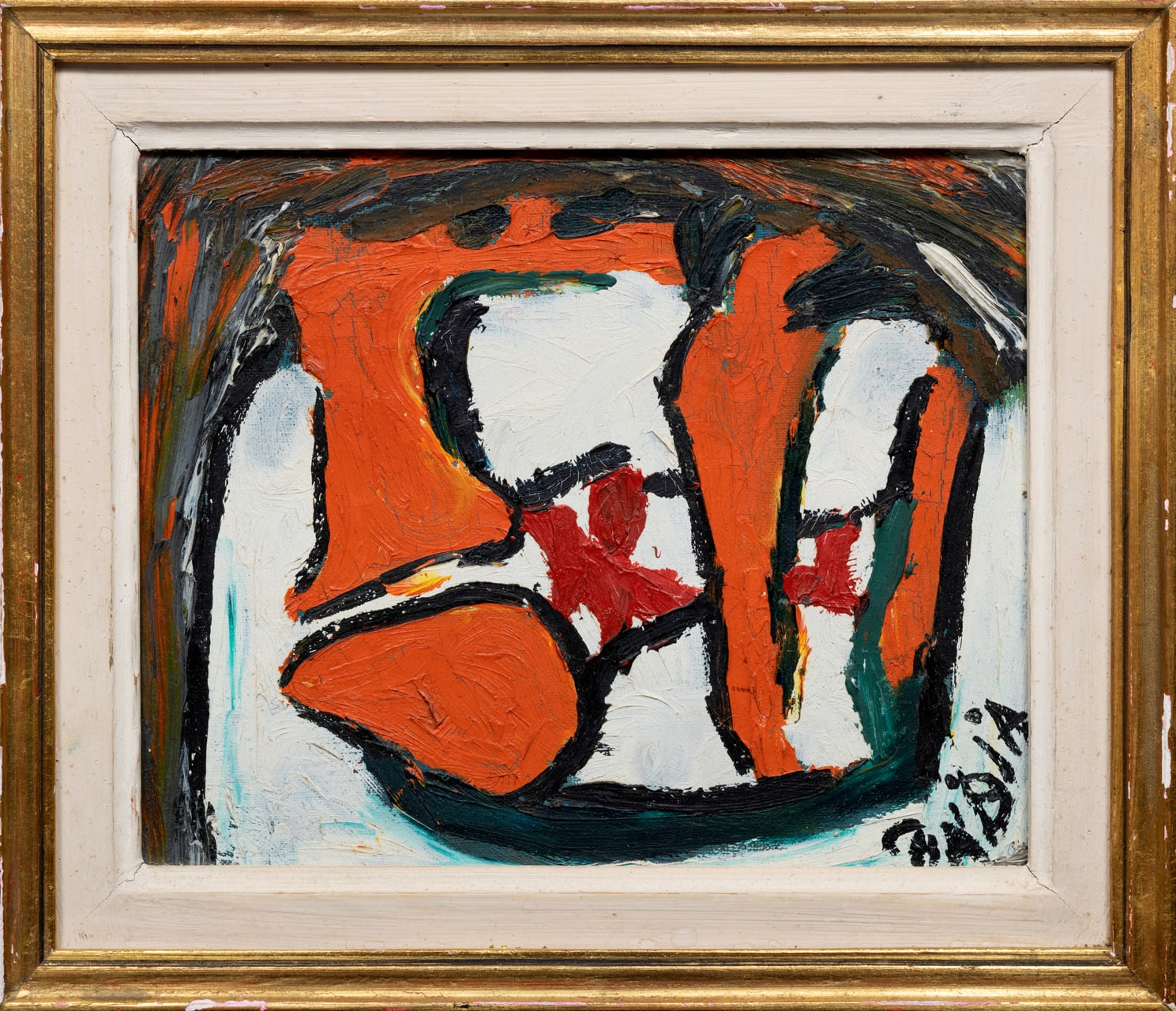
Chaibia Tallal (1929-2004, Morocco)
Marabout n. 59, 1971
Estimate: 12000 / 18000 €
Numerous exhibitions took place in Rabat, Casablanca, Tangier and Marrakech, mixing academic and popular influences, and the country's various cultural centers actively participated in the presentation of artists. This is the case of the American Cultural Center in Rabat, which organized numerous exhibitions at the favor of which our collector got to meet artists with whom he would form lasting friendships.
The collection bears witness to the artistic influences in vogue at the time, between academicism and secular traditions.
Two small works by the self-taught artist Chaïbia Tallal (1929-2004), ever in demand on the market, testify to her great mastery of color applied in flat surfaces surrounded by a network of strong black lines, compositions recreating the rural world she grew up in. A beautiful painting by Ahmed Louardiri (1928-1974) has also kept all its freshness. A gardener by trade, the artist distinguishes himself by compositions decorated with plants and palaces in a magical atmosphere inspired by the mythical world drawn from the oral sources of popular tradition. Two drawings by the artist Brahim Jebari (1945-1979) still draw from the local culture, here reenacted using soft lines in pastel colors.
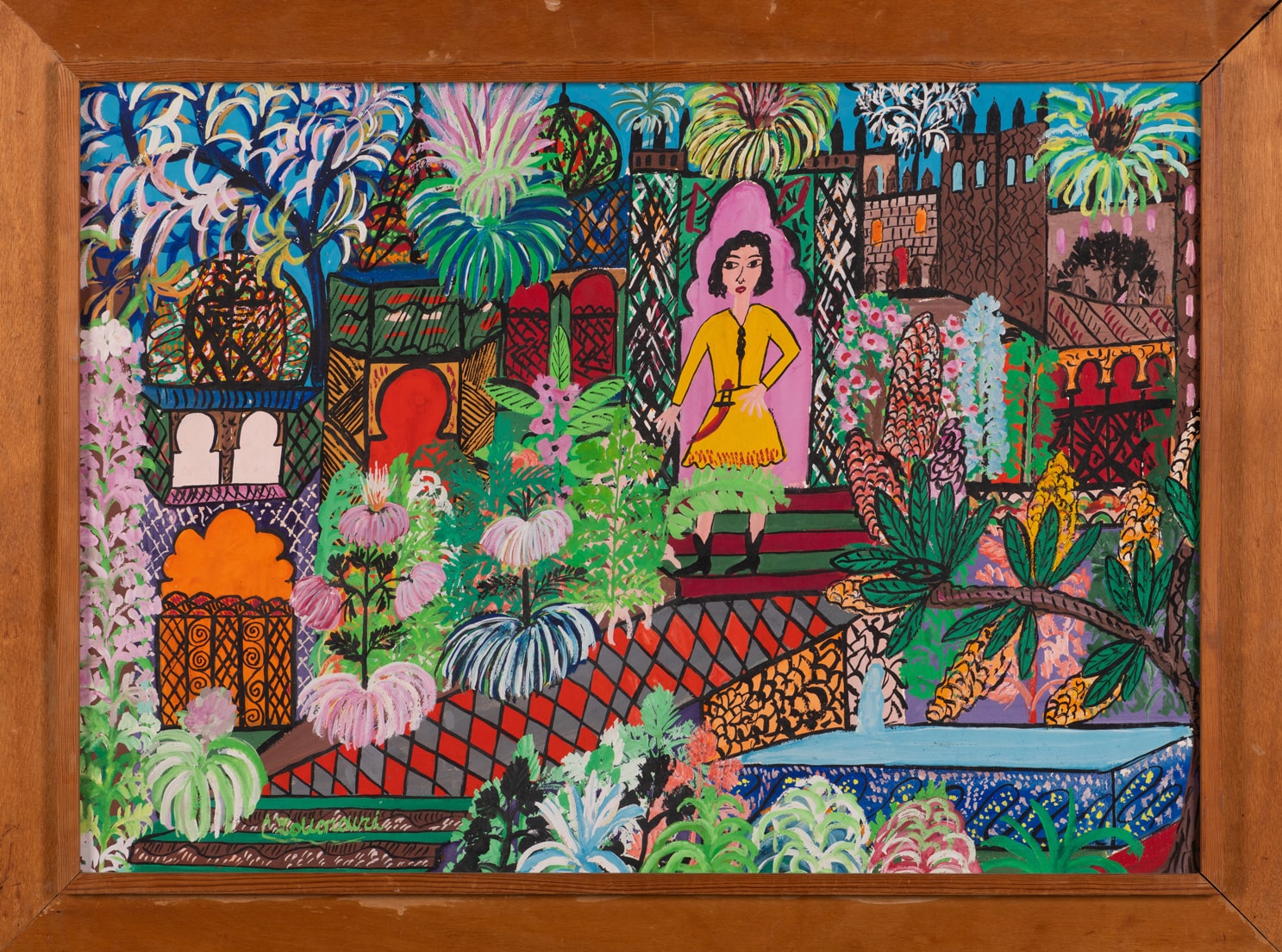
Ahmed Louardiri (1928-1974, Morocco)
Story of Moulay Ismaïl
Estimate: 15000 / 20000 €
With an oil on canvas with cubist accents, the painter Mohamed Hamri (1932-2000), close to Paul Bowles and Brion Gysin, pays a vibrant tribute to the city of Asilah, a center of Moroccan culture first founded in the ninth century and made famous by its arts festival.
The Western influence is also felt in the work of Karim Bennani (1936-2023) who, after studying Fine Arts in Fez, is admitted to the Ecole des Beaux-Arts in Paris in 1954. The two paintings we present here, all in curves, and with a strong approach to color, are anchored in a reduced palette and an abstract research typical of the artist’s work.
The painter and sculptor Larbi Belcadi (1930-2001) shapes and models matter, enriching his painting with the addition of texture, creating reliefs from which he creates a distinct pictorial language.
This highly selective ensemble of works, is a true testament to the richness and diversity of Moroccan creation.
