


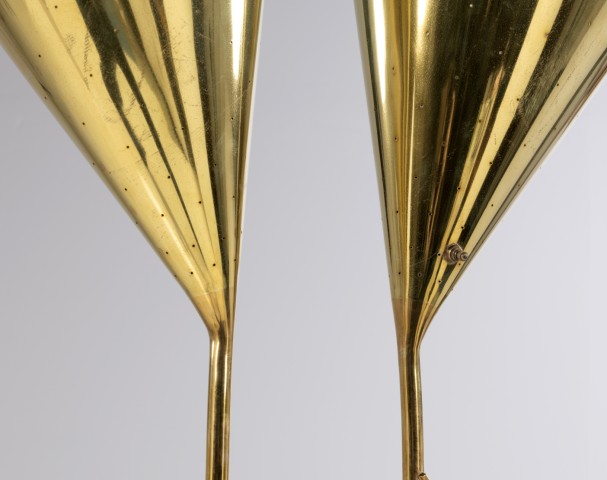
On the occasion of its next Scandinavian Design Auction on March 4th, 2021, PIASA will present collectors with a wide selection of luminaires from some of the greatest designers of the 20th century.
Due to their geographical position, the Scandinavian countries are characterized by a lack of natural light in the winter season. In Copenhagen, the average daily sunshine per year is 4 hours and 30 minutes and it rains 220 days a year. The position of the sun is also much lower than in southern Europe, and this influences the perception of brightness. In this context, light has always been of fundamental importance in Scandinavia, where artificial and natural light must complement each other in the best possible way to support human activities.
Before being translated in the domestic setting by a whole range of equipment of various kinds, light is first of all a question of symbolism, culture and social ties. In Finland, there is a certain moment that the Finns call "The Blue Moment", which can last a few hours between sunset and night. The sky is then deep blue and people get together to admire this magnificent spectacle of the sky while socializing. In Denmark, the term "Hygge" is used to describe a pleasant and intimate atmosphere, which promotes relationships with loved ones, around candlelight. Finally, every year on December 13th, Saint Lucia's Day, marks the return of light throughout Scandinavia, which is celebrated through a procession of bridesmaids and groomsmen dressed in white and carrying a candle in their hands.
In contrast to the endless winter nights, the light of the beautiful days is also perceived with tenfold acuity. At the northern end of Jutland, the Danish town of Skagen faces the sea on three sides. In summer, the sun's reflection on the North Sea and the Baltic Sea envelops the city in a unique light. From the end of the 19th century to the beginning of the 20th century, this luminosity attracted many painters, known as the Skagen School, who tried to capture on canvas the changing reflections of this northern light.
All these examples are strong markers of the different aesthetic, cultural and social meanings of light in Northern Europe. Life and interiors in Scandinavia are organized around light. One must first adapt one's space to the existing natural light in order to make the most of it, without losing too much in terms of thermal insulation, and then develop complementary artificial light sources that are efficient, economical, ergonomic and aesthetically pleasing.

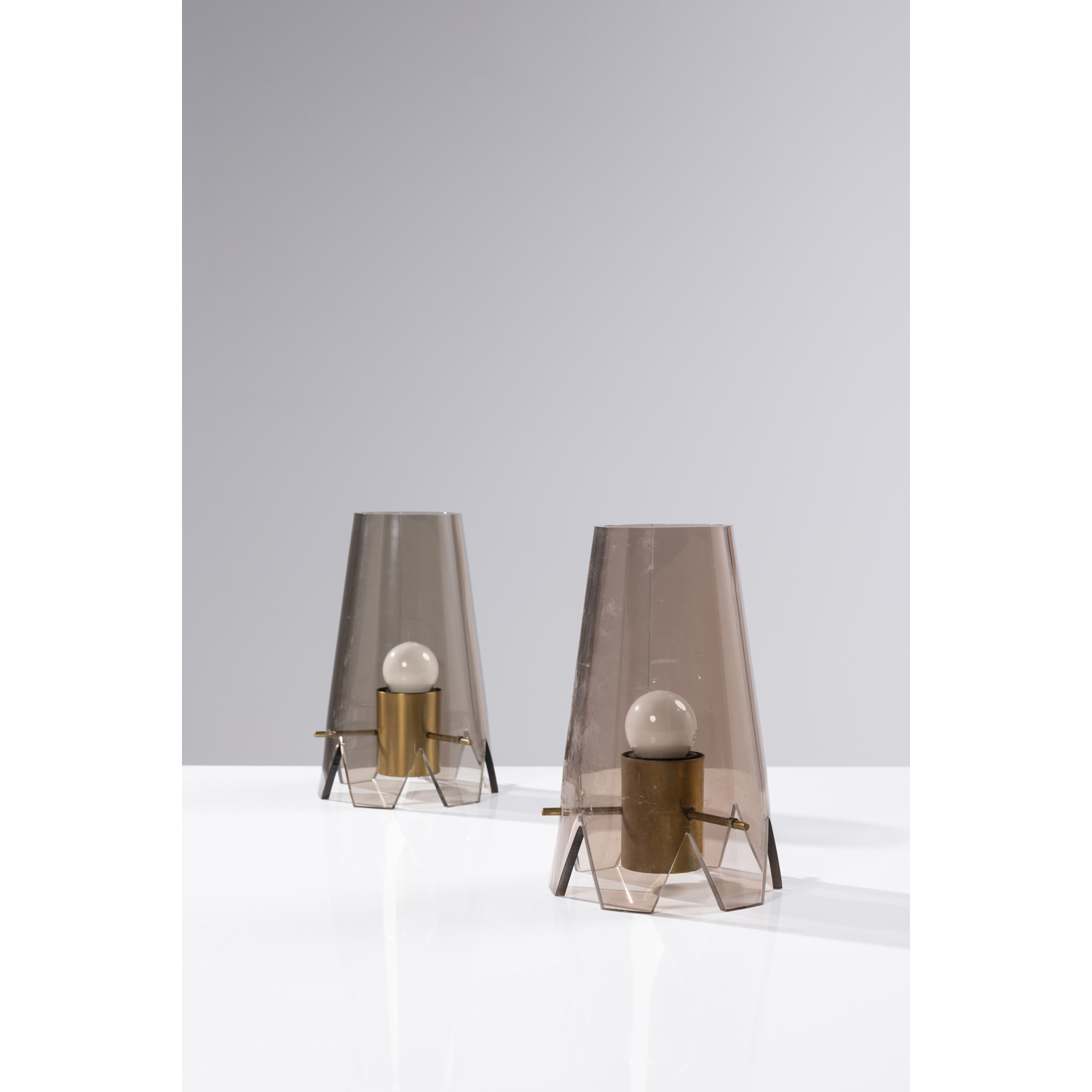
Norwegian production (20th c.)
Pair of ceiling lamps
Estimate: 15000 / 20000 €
Endowed with a developed industrial fabric, ancestral craftsmanship and a taste for modernity, the Scandinavians thus imposed themselves from the beginning of the 20th century as experts in light, whether it is the result of the electricity fairy or the candle flame. In Denmark, Finland and Sweden, certain manufacturers have elevated their production to the rank of international design icons: Louis Poulsen with the Flowerpot range by Verner Panton, the PH and Artichoke suspensions by Poul Henningsen, Valaistustyö with the A808 floor lamp by Al- var Aalto, Skultuna with the Lily candleholder by Pierre Forsell, etc.

Hans-Agne Jakobsson (1919-2009)
Paire d'appliques
Estimation : 3000 / 4000 €
In the pantheon of Scandinavian lighting, the Finn Paavo Tynell occupies a prominent place. Born in Helsinki in 1890, trained in artistic ironwork, Paavo Tynell attended evening classes at the School of Applied Arts and trained at a jewelry manufacturer. In 1918, he co-founded the publishing house Taito Oy (Savoir-faire S. A) which gave Scandinavian lighting its letters of nobility, thanks to its singular style. Tynell indeed integrates in his creations many natural and very poetic elements, such as shells, leaves, flowers, snowflakes... For his most exclusive works, he combines both brass and leather, using thin strips of wood to adorn his lampshades.

Paavo Tynell (1890-1973)
Modèle n°9619
Estimate: 40000 / 60000 €
Hailed as "the light of Finland", Paavo Tynell's reputation is growing and follows that of Alvar Aalto with whom he has collaborated. His extraordinary work can be seen in situ all over Finland, from the Helsinki Business School to the beautiful Resurrection Chapel in the Turku cemetery, built in 1941 by Erik Bryggman and restored by LPR architects Ltd. A mature synthesis of the architect's work, the building combines organic forms while interacting with the surrounding landscape. Throughout the interior and exterior of the building, Tynell's work is a hymn to nature and lightness. In this austere place inaugurated in the middle of the Second World War, the suspensions, candleholders, ceiling lights, crosses and other decorative elements of the Finnish master of light lend a touch of poetry, simplicity and spirituality. Light in the midst of darkness.

Poul Henningsen (1894-1967)
Modèle n°PH 31/2/2
Estimate: 12000 / 18000 €
