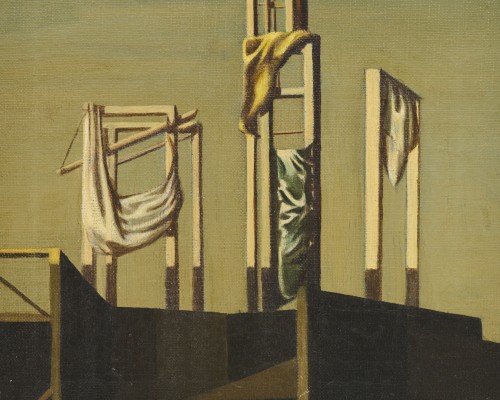
An American living in New York, Dorothea Tanning was close to the exiled artists who revolved around the dealer Julien Lévy and André Breton during World War II. At the end of December 1942, Max Ernst visited her studio to select works for Peggy Guggenheim's bold exhibition "Thirty Women" organized in 1943. The studio visit turned into a chess game. The two artists immediately formed the legendary couple immortalized in the famous photograph where they both pose in the Arizona desert where they stayed from 1946 to 1953, giving free rein to their creative genius. When Max Ernst met Dorothea Tanning, he had just married Peggy Guggenheim. During their divorce, Peggy agreed to let Max Ernst keep their little dog "Lhassa Apso," named Katchina, and two of the puppies.
While Max Ernst had created an alter ego, Loplop, the superior of birds, present in most of his work, Dorothea Tanning found in Katchina her alter ego, also endowed with supernatural gifts in her view. Since "Lhassa Apsos" originated from Tibet, Katchina's ancestors had lived in Tibetan monasteries. For Dorothea Tanning, they held answers to life's big questions, which bestowed magical powers upon Katchina. From magic to surrealism, there is but a step. Katchina's nickname, which refers to the spirits of Hopi Native American mythology and ritual dolls, reinforces the supernatural aspect of the little dog and elevates her to the status of muse. Thus, Katchina appears in many of Dorothea Tanning's works.
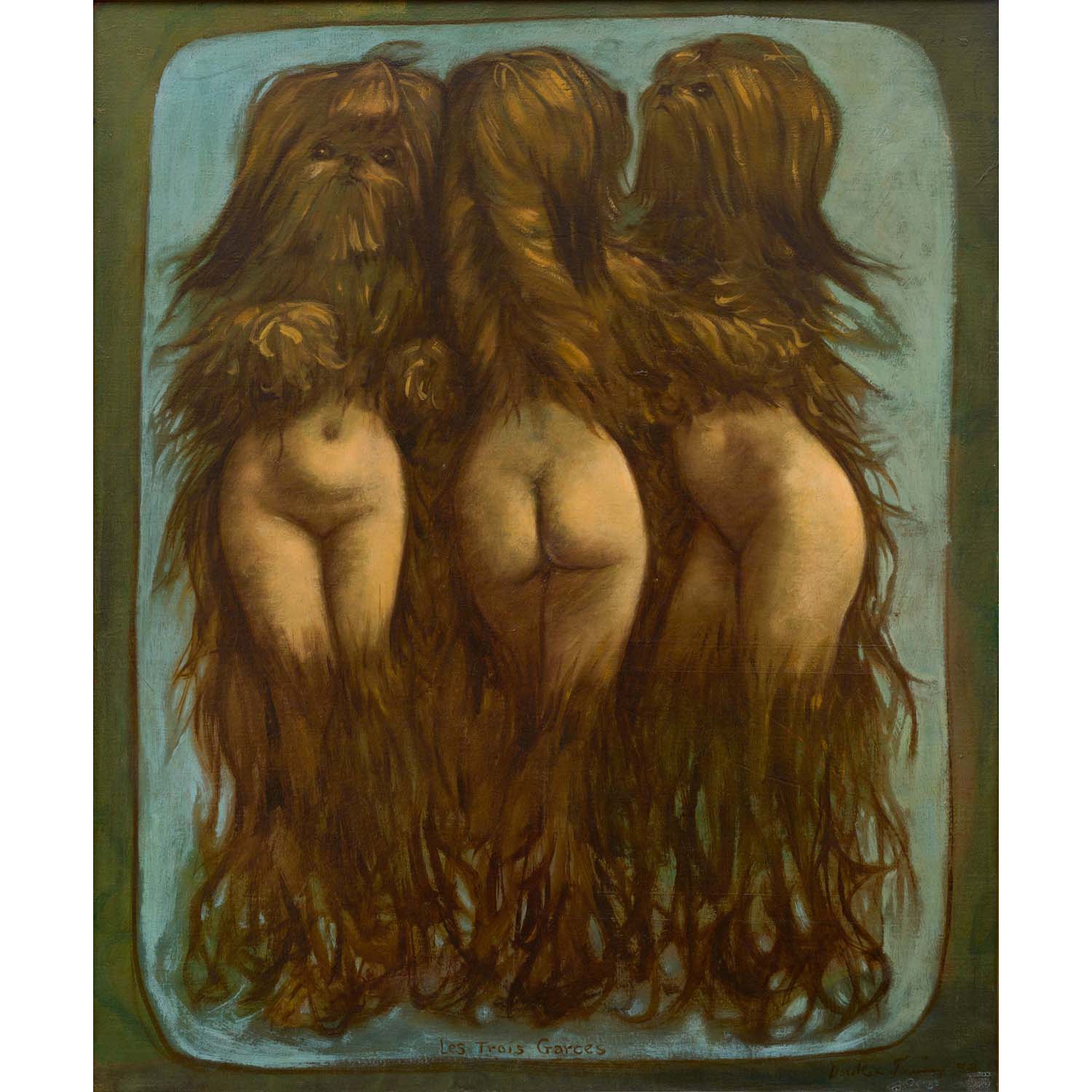
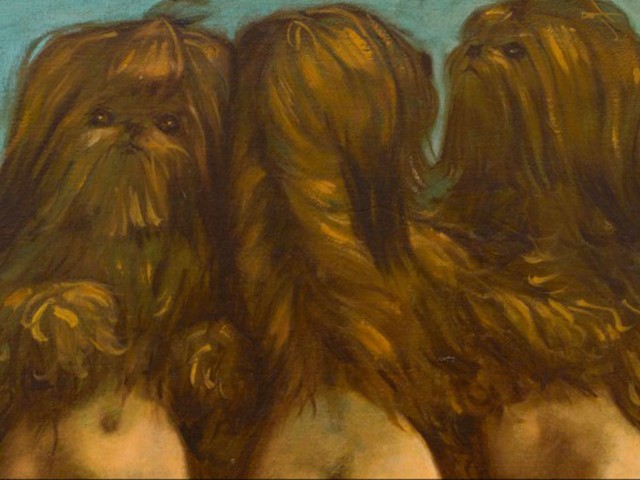
In "Les Trois Garces" (lot 46), Dorothea Tanning depicts three Katchinas metamorphosed into hybrid and dreamlike beings, part-dogs, part-women, in the same pose as the Three Graces of antiquity, three women of ideal beauty. Tanning skillfully plays on words, on their sound and meaning. The anagram merges with the pun. A letter changes place in the word, and the title changes meaning. The three Charites of Greek mythology embodied the goddesses of charm, beauty, and creativity. They are transformed into animal creatures. Divinity shifts into triviality and sexuality. With humor and irony, Tanning reveals the conscious or unconscious gaze on the female body turned animal. In 1967, Dorothea Tanning revisits this idea of metamorphosis in a photomontage of her self-portrait where her head is replaced by Katchina's. "Les Trois Garces" were exhibited at the Galerie Fürstenberg for the artist's first solo exhibition in Paris in 1954.
“Art has always been the raft onto which we climb to save our sanity.
I don’t see a different purpose for it now. It’s hard to be always the same person.”
Dorothea Tanning