


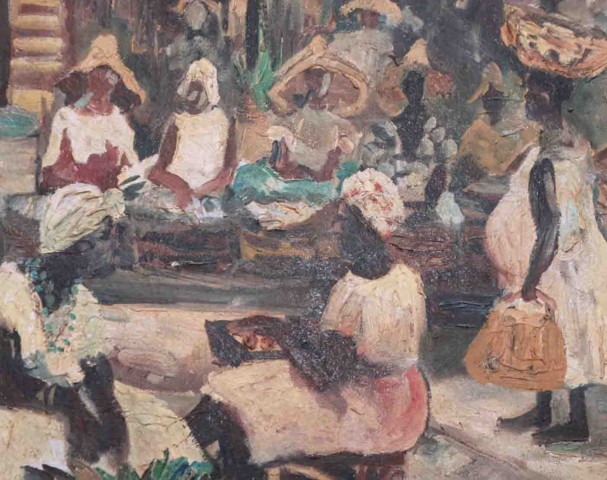
On May 11, 2022, as part of its Africa + Modern and Contemporary Art auction, PIASA will present collectors with two works by Brazilian artist Wilson Tiberio.
"And sometimes the answer is: 'No!' This affirmation comes from the black artist. And thus, a new art form takes shape: protest art, art for combat. Art of transition for a world in transition. Art of the present, suspended between a greatness lost and another type of greatness, yet to be conquered."
These are the powerful words spoken during the brief appearance of Brazilian artist Wilson Tiberio, in the iconic film by Alain Resnais and Chris Marker Les statues meurent aussi (1953), a film commissioned at the time by the activist journal Présence Africaine. In this sequence we see the artist painting with determination a canvas representing black men breaking the chains that held them captive, their faces marked by an expression of triumph. Tiberio's focus and commitment to the subject is palpable.
One of the first black painters to be recognized in his native country, raised in a tough family where art was a necessary escape, Wilson Tiberio is quickly noticed for his skill in painting. As early as 1947, he is invited to France and in the 1960s he travels to Senegal, where he meets President Senghor, and where he exhibits a few years later with the South African painter Gerard Sekoto. His work is present in the most important institutional collections in Brazil and abroad.

Wilson Tiberio
The carrier, 1944
Estimate: 4 000 / 6 000 €
The two paintings exhibited here come from a private Brazilian collection of patrons of the artist, and have been kept in the same family since the 1940s. They depict two scenes of daily life in Bahia, the "black capital” of Brazil, and already illustrate Tiberio's commitment to the black cause and social issues, several years prior to his arrival in Paris and the inevitable confrontation that would occur there, with the issues of decolonization carried by African intellectuals with whom he would immediately and until his passing, form a deep bond of friendship.
The "No" of Tiberio is found, like a red thread, in the work of many Portuguese and Spanish-speaking artists of the continent and its diaspora. From the Agudas of Benin to Brazil, through Angola, to Cuba and Chile, the work of these artists holds the political question as a precious heritage.
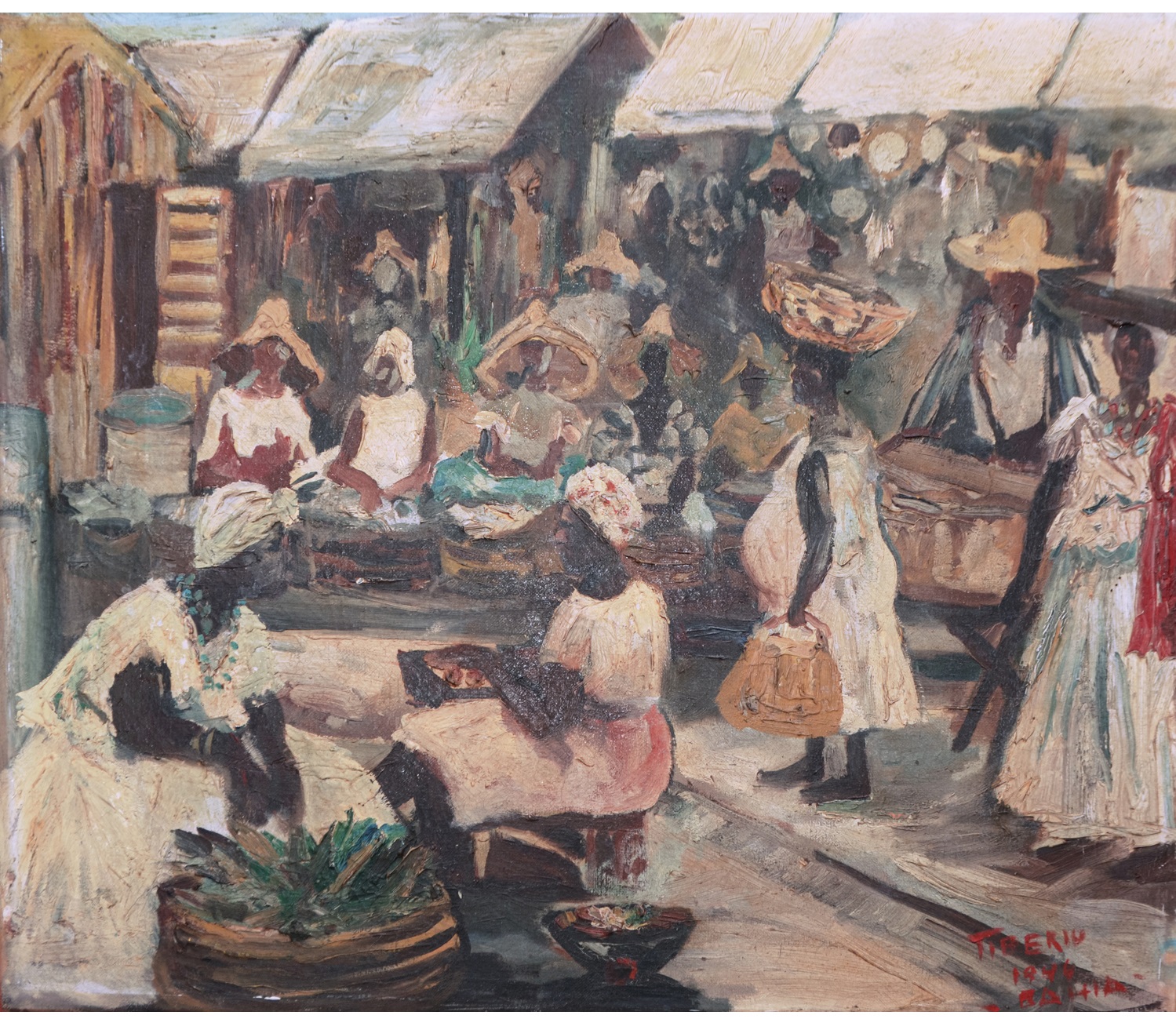
Wilson Tiberio
Market scene (Bahia), 1944
Estimate : 5 000 / 7 000 €
The surrealism of Manuel Mendive and the references hidden in his painting to initiation rites brought backfrom Africa (a subject that fascinated him as it did his compatriot Wifredo Lam before him) is an act of defiance against the Catholic conservatism of the slave masters; closer to us, Alfredo Jaar, in the touching video Embrace, deals with the difficult subject of the Rwandan genocide, which echoes in his personal history the dark hours of dictatorship in his own country. In The Geometric Ballad of Fear, Kiluanji Kia Henda explores the paradoxical beauty of wrought iron gates designed to protect homes from burglars. We read between the lines a commentary on the security issue in the region, maintained by internal and external forces desiring to maintain their hold on natural resources, at great cost to the well-being of the people.
If the first part of the famous rallying cry "A luta continua" is well known, the rest of the sentence, though equally important, is often forgotten: "A vittoria e certa." It is this idea of confidence in the future and an inevitable, prophetic victory, that we find in the work of the Angolan Ana Silva and Keyezua. Their black figures, treated with the tenderness of textiles or magnified by the theatricality that photography allows, face serenely a certain future.
The valor of these three combatting muses: Africa, Bahia and Cuba, leads us too, to believe that such a future is possible.
