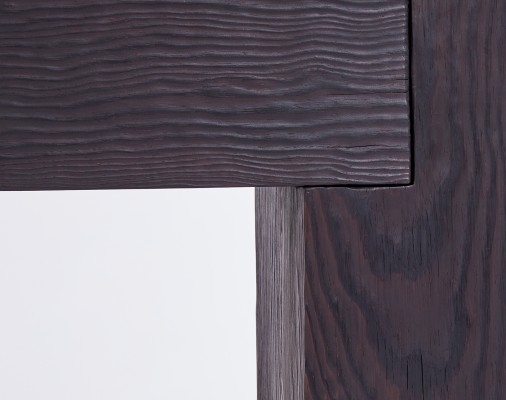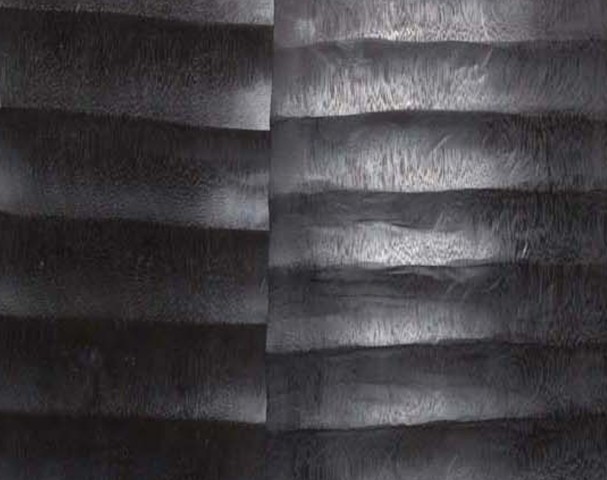
When asked to place himself in the history of his art, Jérôme Abel Seguin doesn't respond immediately. With a voice whose tone and diction travel between the slopes of Entre-deux-Mers and the islands of the Sunda, he eventually utters a name that stands as a monument: Donald Judd. One could add to that the name of Isamu Noguchi. It's a program that places models at a sufficient distance, explores the boundaries between artistic fields, and doesn't shy away from delving into what's known as decorative or popular arts. It's a bold program, leaning on a gentle brutalism, an oxymoron that exotic woods help understand: as radical – minimal – as its design may be, a piece of hard, polished wood becomes, to the touch, as delicate as silk.
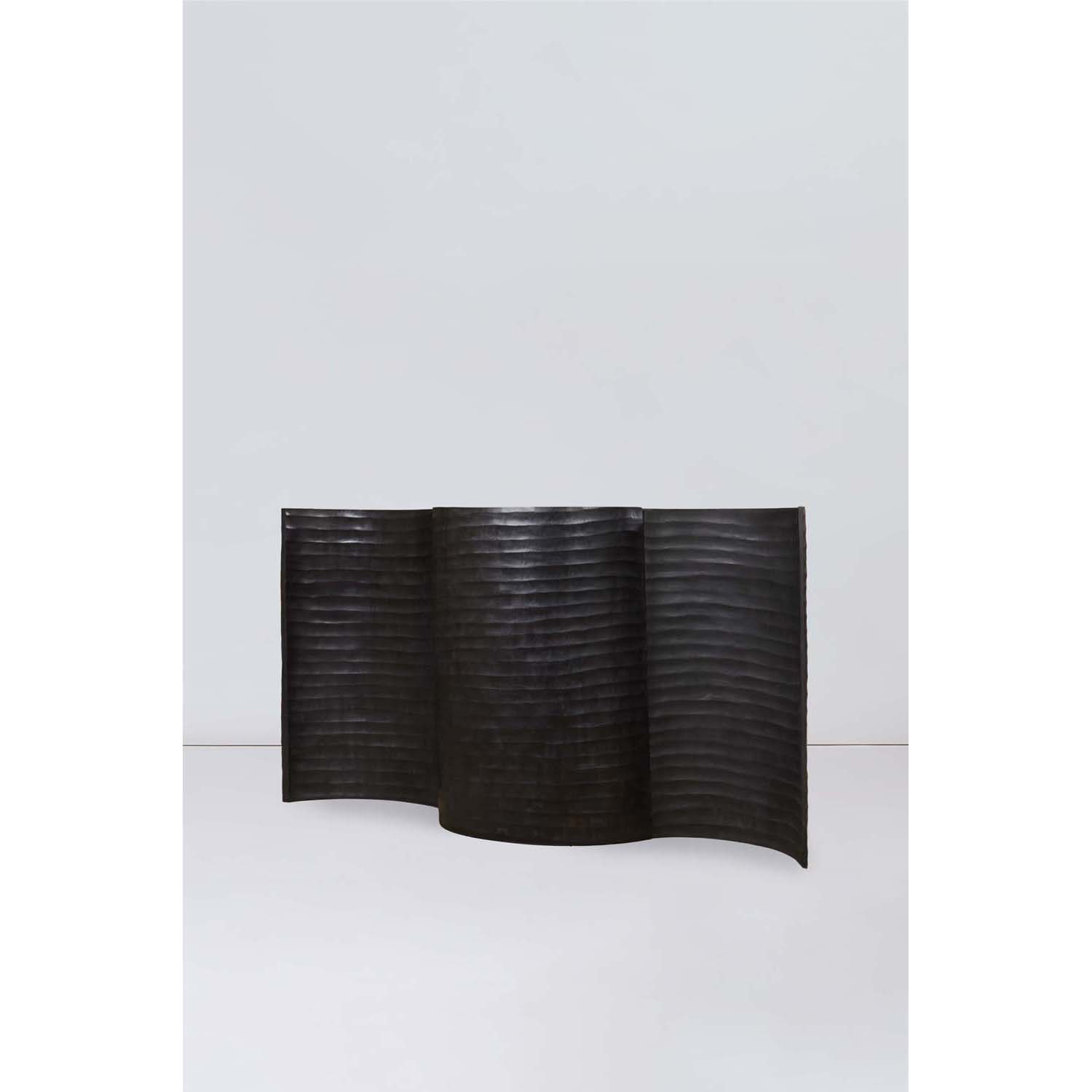
Jérôme Abel Seguin (Born 1950)
Paravent 3 volets - Unique pieces
Estimate: 8 000 / 12 000 €
Jérôme Abel Seguin's wooden furniture seems like ideas transformed into objects: it's hard to find a bench more "bench," a table more "table." The notion of decoration is entirely foreign to them. Their rule of construction is simple: reduce to the extreme the number of elements that compose them. Monoxyl fascinates Jérôme Abel Seguin. Yet, a monoxyl, such as a canoe, for example, twelve meters long and two meters wide, entails hundreds of hours of work with the adze, it's the choice of the tree (traditionally, in Sumbawa, on the slopes of Mount Tambora), it's the union of fire and water (the eruption of Tambora in 1815 was the most violent ever recorded in human history, plunging the planet into a year without summer), it's an incantation of the impossible to create the possible. The furniture doesn't become a work of art; it is returned to its original identity as a work of art. If the canoe were anything other than a work of art, it simply couldn't take to the sea. Translating this lesson, Jérôme Abel Seguin subverts it. And commits sacrilege: it will be the cross-sectional cut of the canoe, the pieces of which, arranged alternately with inverted concavities, constitute screens. From this gesture emerges a specific object that organizes space like the Indonesian archipelago joins and separates two oceans. Whether called furniture or sculpture, this object from the confines matters little. It asserts an art – minimal, of limits – whose least originality is not to propose a new relationship not to the furniture object but to the art object itself, sometimes connected by perilous routes to the local environment – the object creates space –, vital – Noguchi's heritage, who all his life tried to transform breath into matter – and historical – Brancusi's attention, who was Noguchi's master, to vernacular arts.
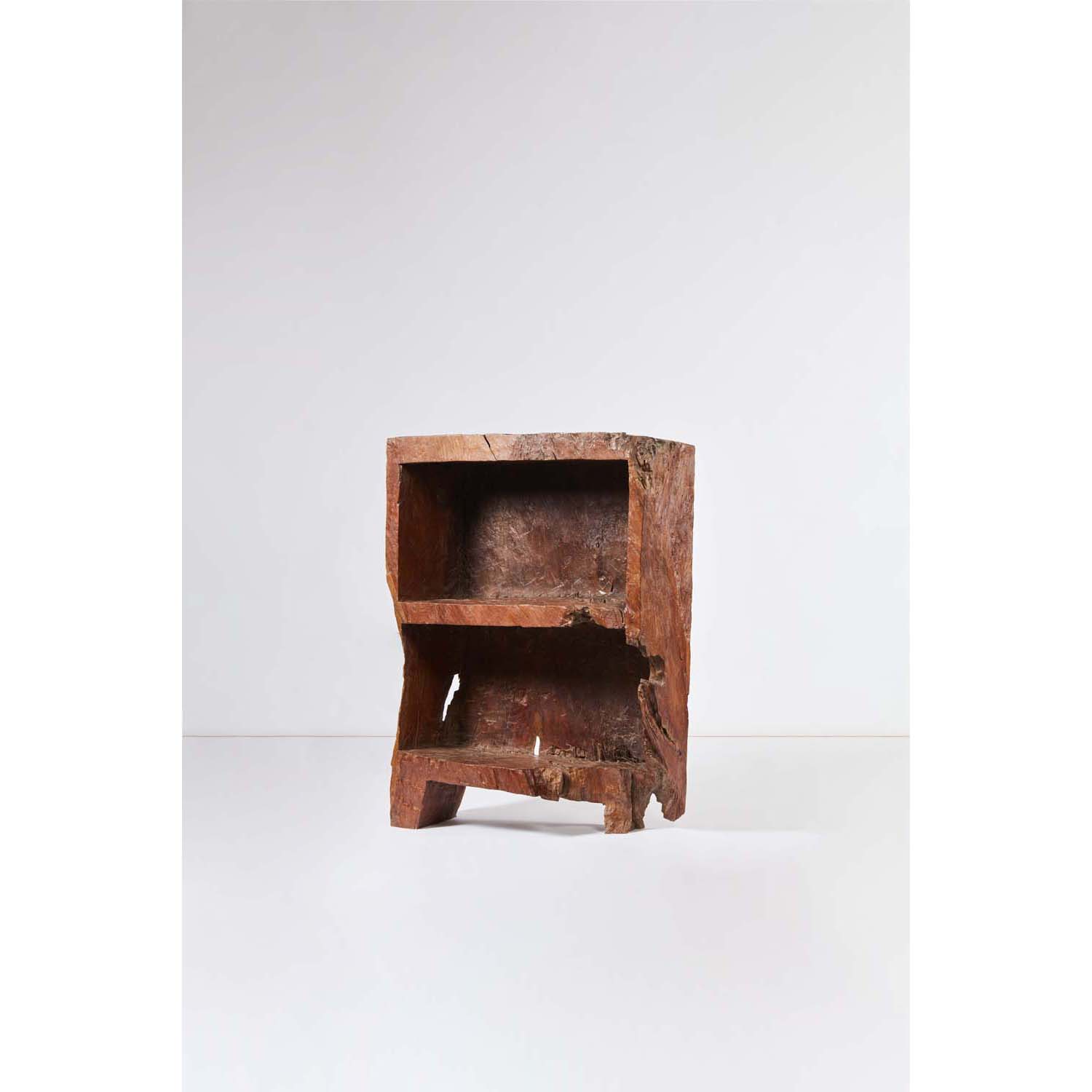
Metal furniture brings a counterpoint to this radicalism. They arise from strolls, walks in the debris of industrial landscapes stranded on the grandeur and majesty of islands, which perhaps were, in times long forgotten, an Eden. Perforated sheets, gear shafts, various parts gleaned from scrapyards freeze in the assemblies subjected to the artist's rigorous fantasy. Lost to their original utility and stripped of any ornamental function, they mutate: they are objects transformed into ideas – that of a table is intangible: a fixed surface maintained at seventy-five centimeters from the ground. The paintings made by juxtaposing series of metal springs follow the same logic: they subject the disparate to the order of abstraction. The same minimal morality – which also governs the realization of wood – is at work.
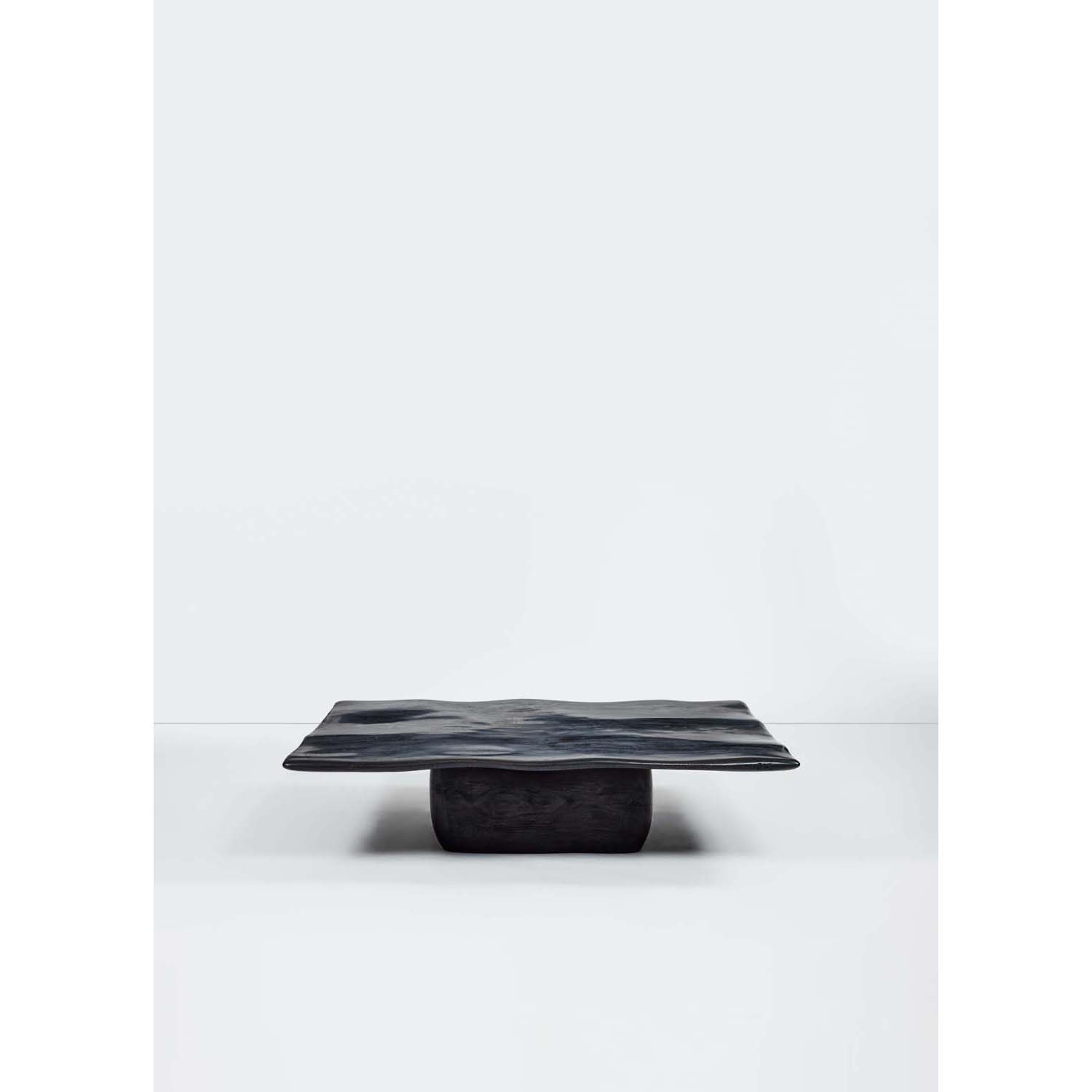
Jérôme Abel Seguin (Born 1950)
Wave - Unique piece
Estimate: 5000 / 7000 €
Finally, Jérôme Abel Seguin's works make room for objects in this sale that do not come from his hand, yet there, conspire in his universe. Monoxyl furniture or concrete jars on which the human hand has replaced time to embed shells, fragments of exterior panels from the Toraja habitats of Sulawesi, all assert a certain taste of the artist for scavenging. Whether his gaze falls on tall trees, objects of vernacular arts, or waste from industrial society, his gesture is a tribute to what is, to what was once called nature, to the power with which the anthropocene man is inextricably mixed, and it is indeed a contemporary aesthetics of nature that his work outlines.
François Boisivon