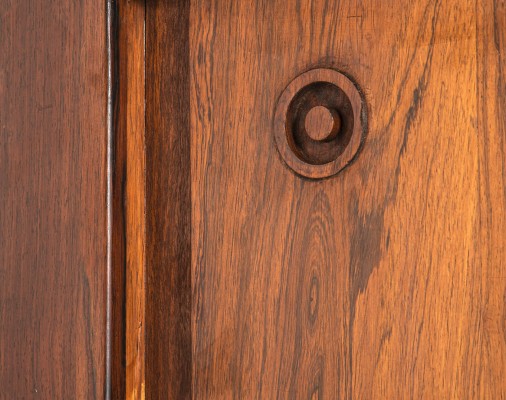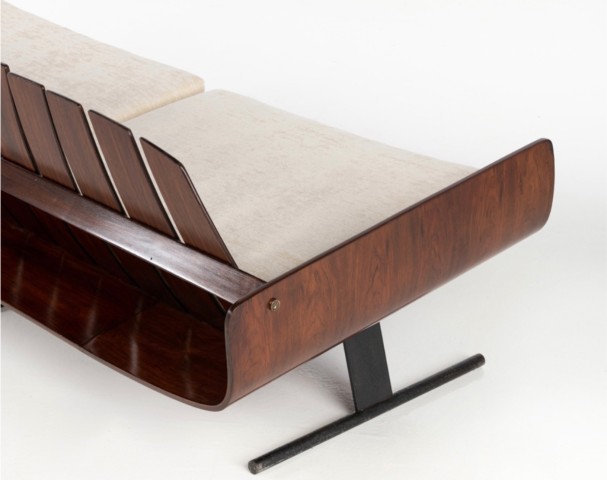
The selection of Italian and Brazilian pieces presented by PIASA's Design Department at the Royal Skating Rink in Brussels on Wednesday 18 December 2019 is a unique opportunity to draw collectors' attention to the talent of some of the most emblematic designers in the history of the 20th century. Jorge Zalszupin is more than ever part of it.
To escape the bites of the Foul Beast, Jorge Zalszupin fled his native Poland and moved to Romania. It was in this country that he obtained his diploma as an architect at the end of the Second World War. After a short stay in France, he embarked for Rio de Janeiro in 1949.
After a difficult start, Jorge Zalszupin found a job in Luciano Korngold's workshop in São Paulo and worked as an assistant architect. A few years later, in 1951, he opened his own firm.
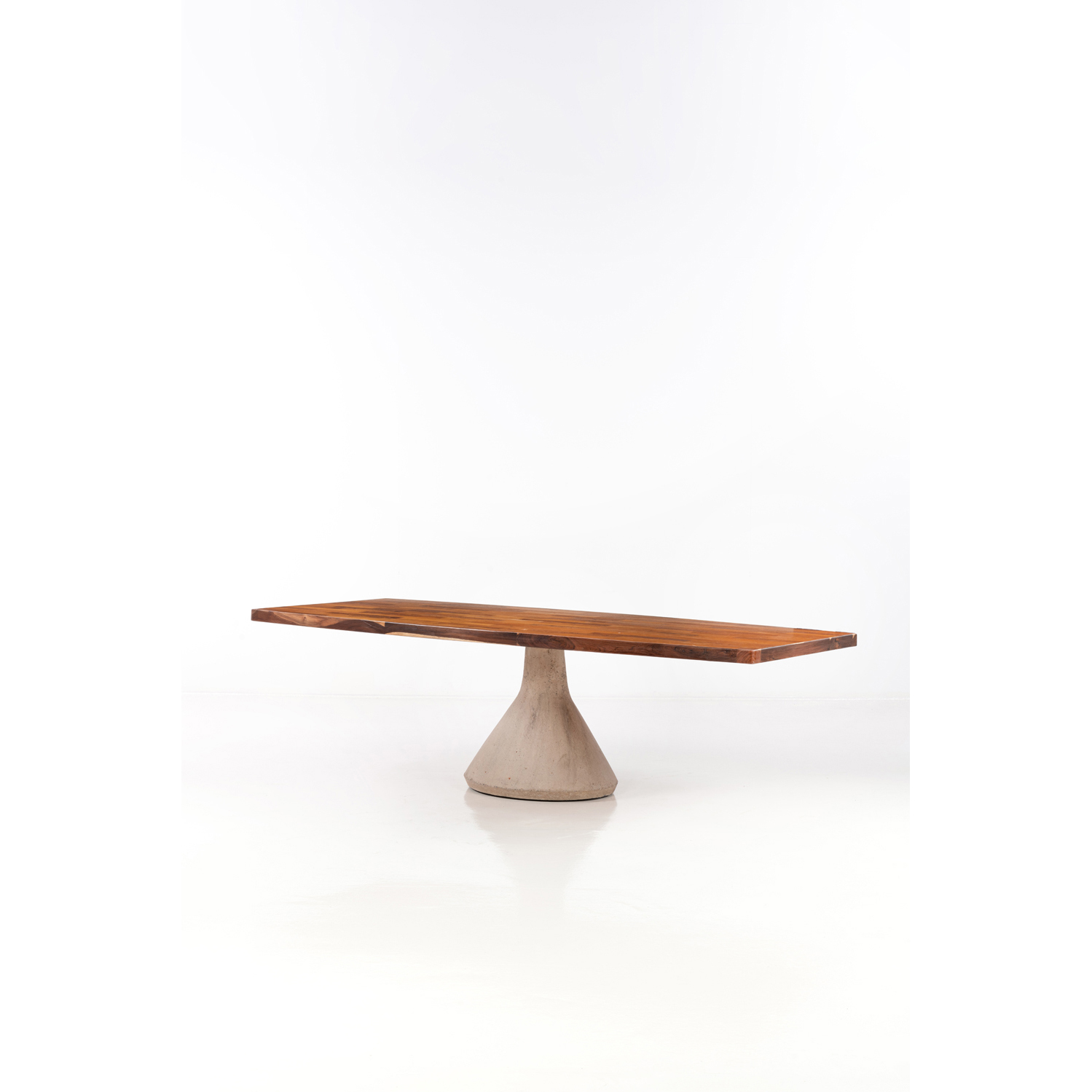
Jorge Zalszupin (né en 1922) Guanabara
Estimate : 15000 / 20000 €
Like most of the architects of his time, most of whom were European refugees, he not only worked on the plans of many private homes, but also designed the interior decoration and furniture.
The first pieces he designs are presented in a small workshop before being exhibited in a showroom in the centre of Sao Paulo. The designer works closely with Oscar Niemeyer and creates pieces for the many projects in Brasilia, the new capital.
From the mid-1960s, his furniture was sold under license in the United States and Europe. It is from this period that the Presidential Sofa proposed for sale by PIASA dates back to that time. Estimated at between 20,000 and 30,000 euros, it reflects the mix of European and Brazilian influences.
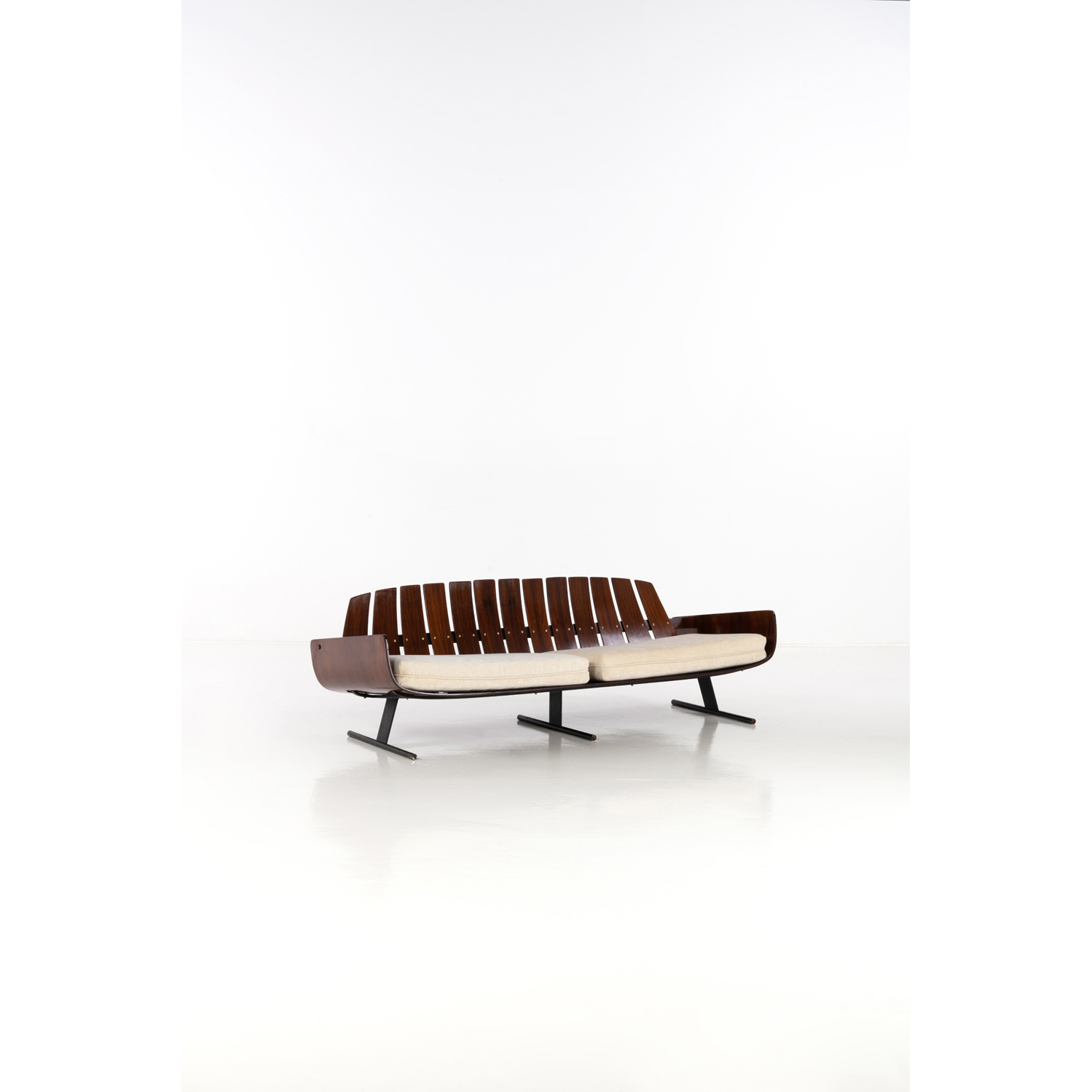
Jorge Zalszupin (né en 1922) Sofa Présidencial
Estimate : 20000 / 30000 €
Sensual but geometric lines, resolutely organic shapes and the combination of precious wood and fine leather: like all his work, this piece is a masterful example of the designer's work between classic details and functional elegance.
In the early 1980s, in a troubled Brazilian political context, Jorge Zalszupin returned to France and settled in Paris, where he began painting. Still alive, he is one of the last icons of Brazilian modernity.