


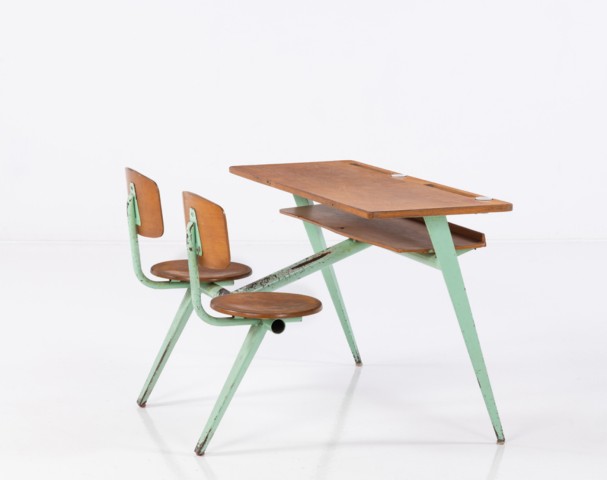
Estimation : 40000 / 60000 € | 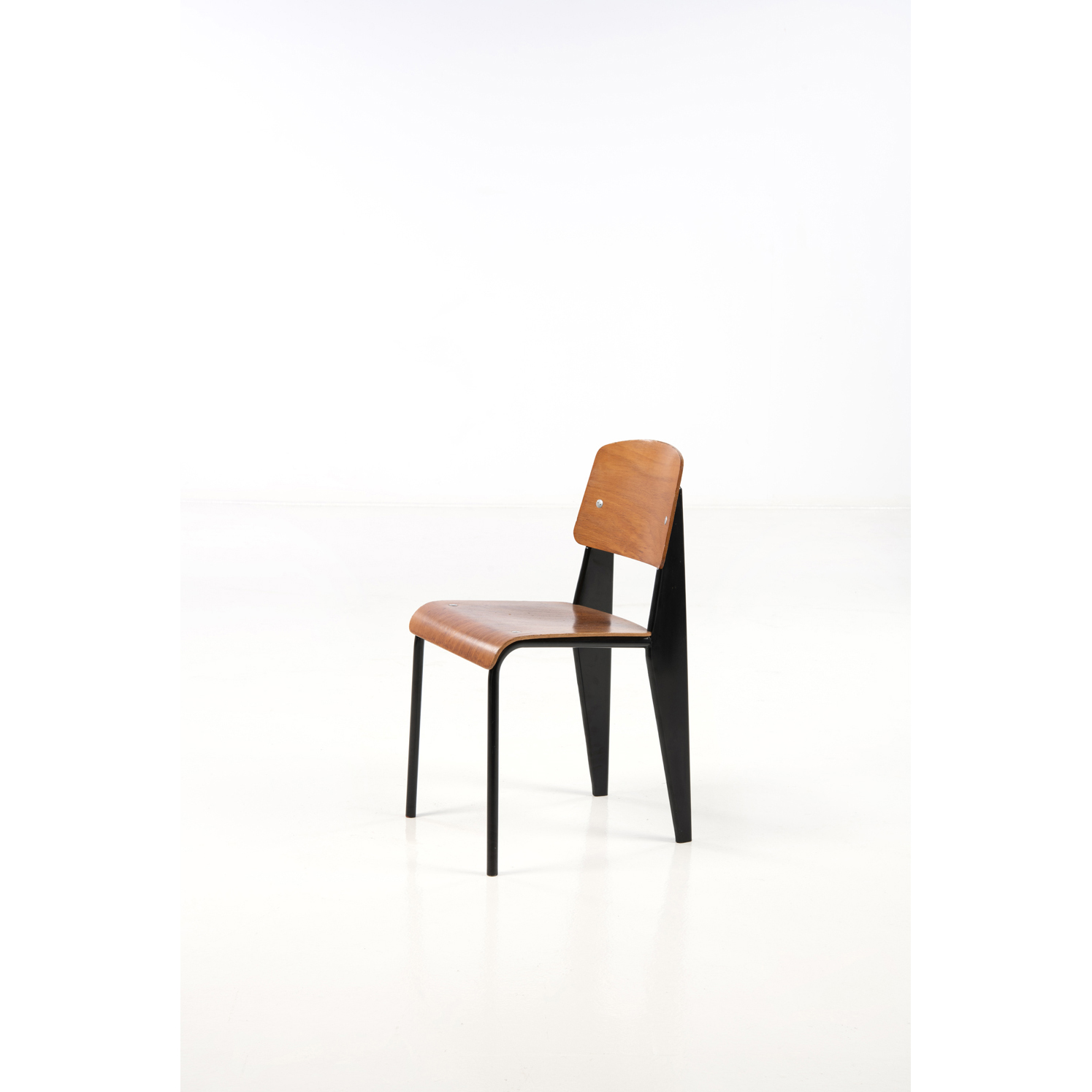 Estimation : 8000 / 12000 € |
Jean Prouvé's work is partly based on the vocabulary of aeronautics and automobile construction, and includes "airplane wing table", "aeronautical table" and "removable chair".
As early as the 1920s and the UAM show in 1925, two radically different conceptions of architecture were in fact confronting each other:
The first, represented by the icon, the father of modernity as we still conceive it today: Le Corbusier, who places his project within a global approach, of urban planning, of construction, and seeks the place of man in a modern city (without this always being concerted).
One material personifies this vision: concrete. Concrete is essentially defined in the long term - and in this respect it is in line with classical architecture: time to prepare it, time to form it, time to build brick by brick the house, the building, or the whole city.
A concrete building is also made to last, to resist more than any other material to erosion, accidents and natural degradation.
Concrete says a lot about the architect and about society: it wants to give the image of a certain immutability of things, even a form of eternity.
Résultat : 9100 € | Résultat : 6500 € |
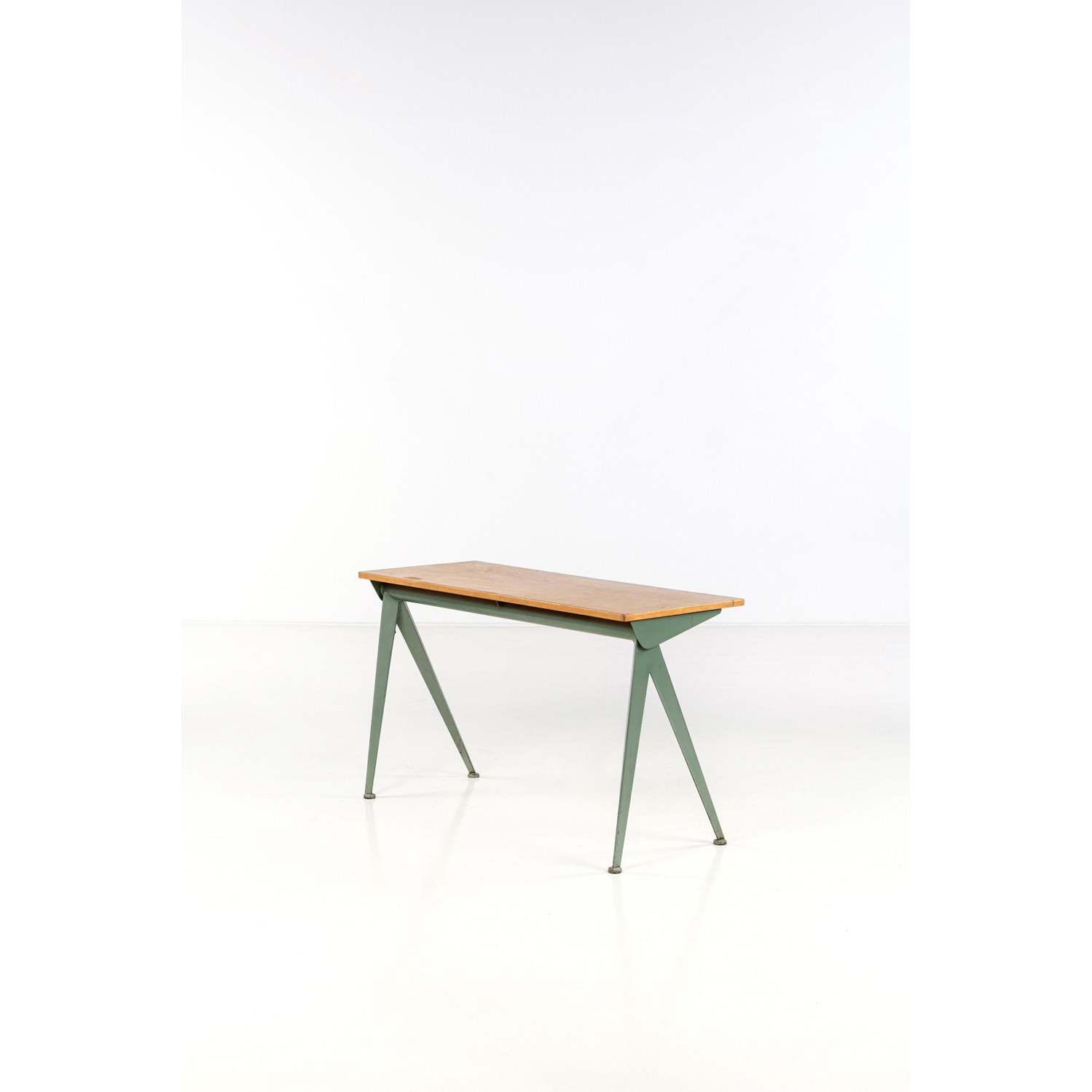
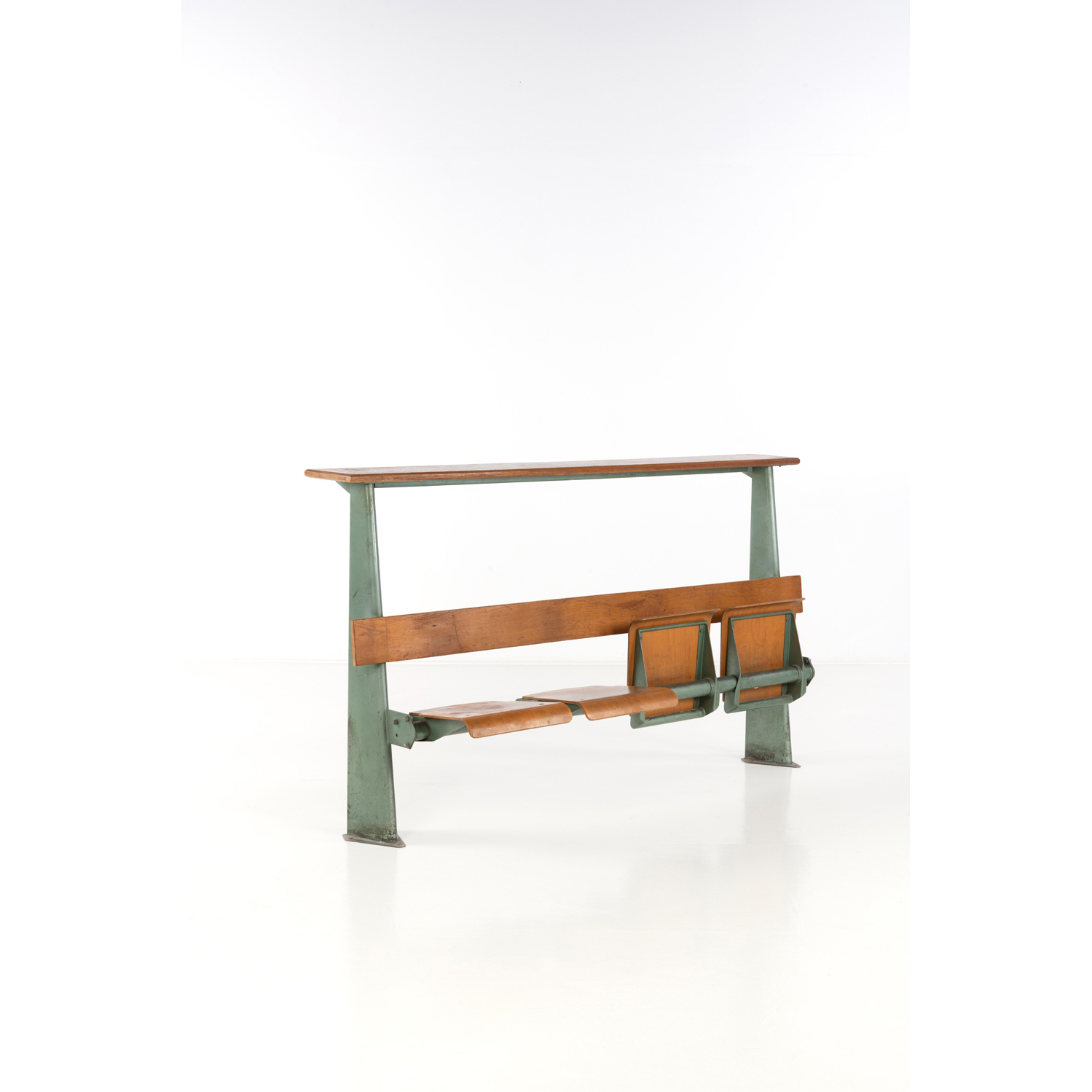
The second also echoes another facet of the Modernist movement: movement, speed, freedom.
With Jean Prouvé, it is an ideology of assembly, dismantling, construction rather than architecture. The pieces must be able to change, the façades must be replaced, the walls must move.
It is an emergency architecture, which must constrain time.
Saving time, saving time, making projects easier to carry out.
This program also has its material: steel.
Steel, a flexible material that can be profiled, pressed, to make it lighter and stronger at the same time (the standard chair in folded sheet metal created in 1925 - lot 245 of our "Design 1927-1994" sale as well as the curtain walls of the Maison du Peuple in Clichy in 1937 are emblematic examples).
Résultat : 13000 € | Résultat : 15600 € |
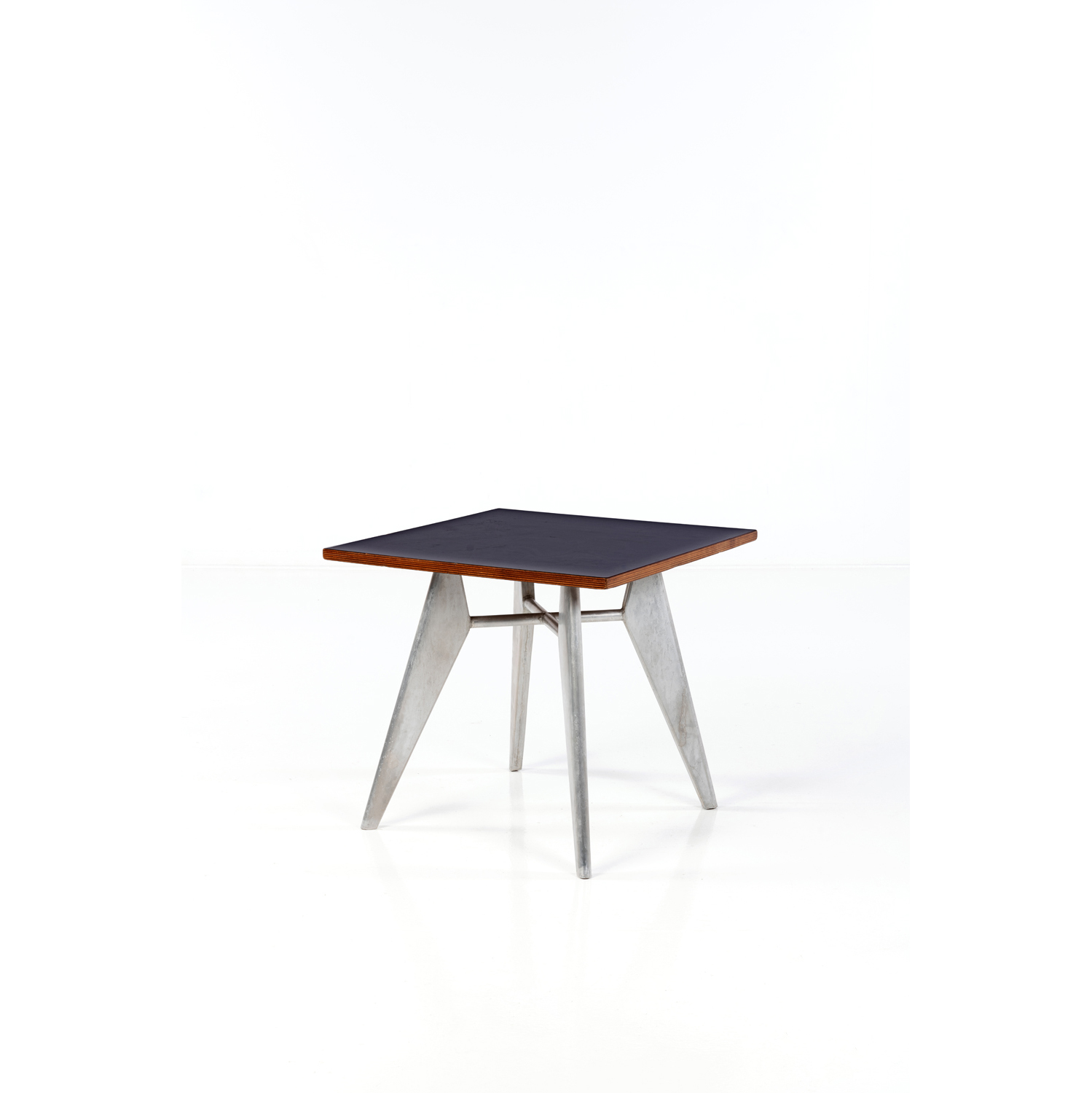
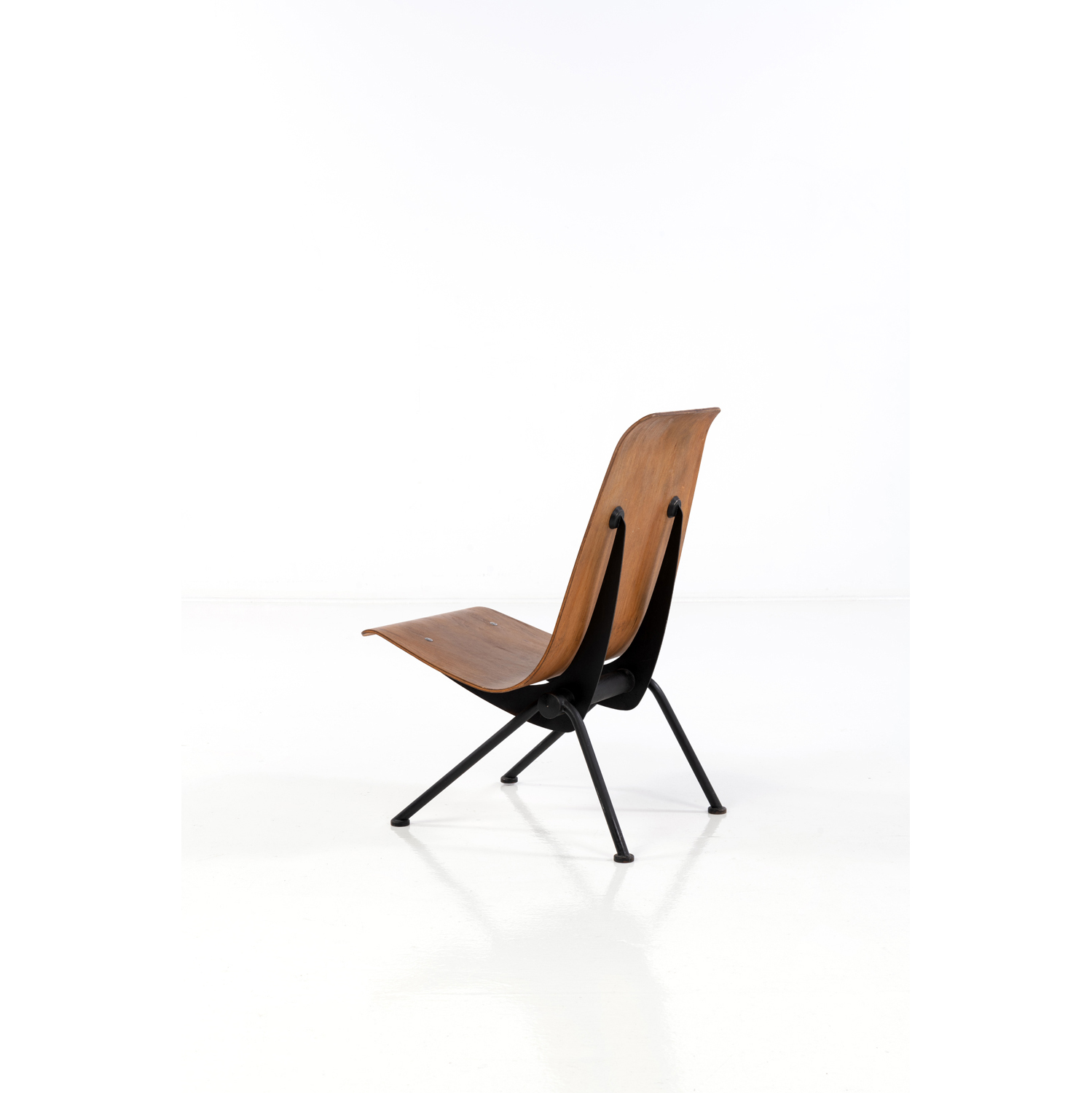
Steel that makes it possible to roll fast, steel that makes it possible to fly away, steel that makes it possible to dream of distant worlds that become accessible.
This material is not always designed to last - even if it is ultimately very strong - but to be used and reused again and again.
Jean Prouvé's houses and furniture can be assembled and disassembled at will, driven by the manufacturer's other passions, the automobile, aviation, drawing, aerodynamics: lightness, fluidity of form to counterbalance the mass of the object.
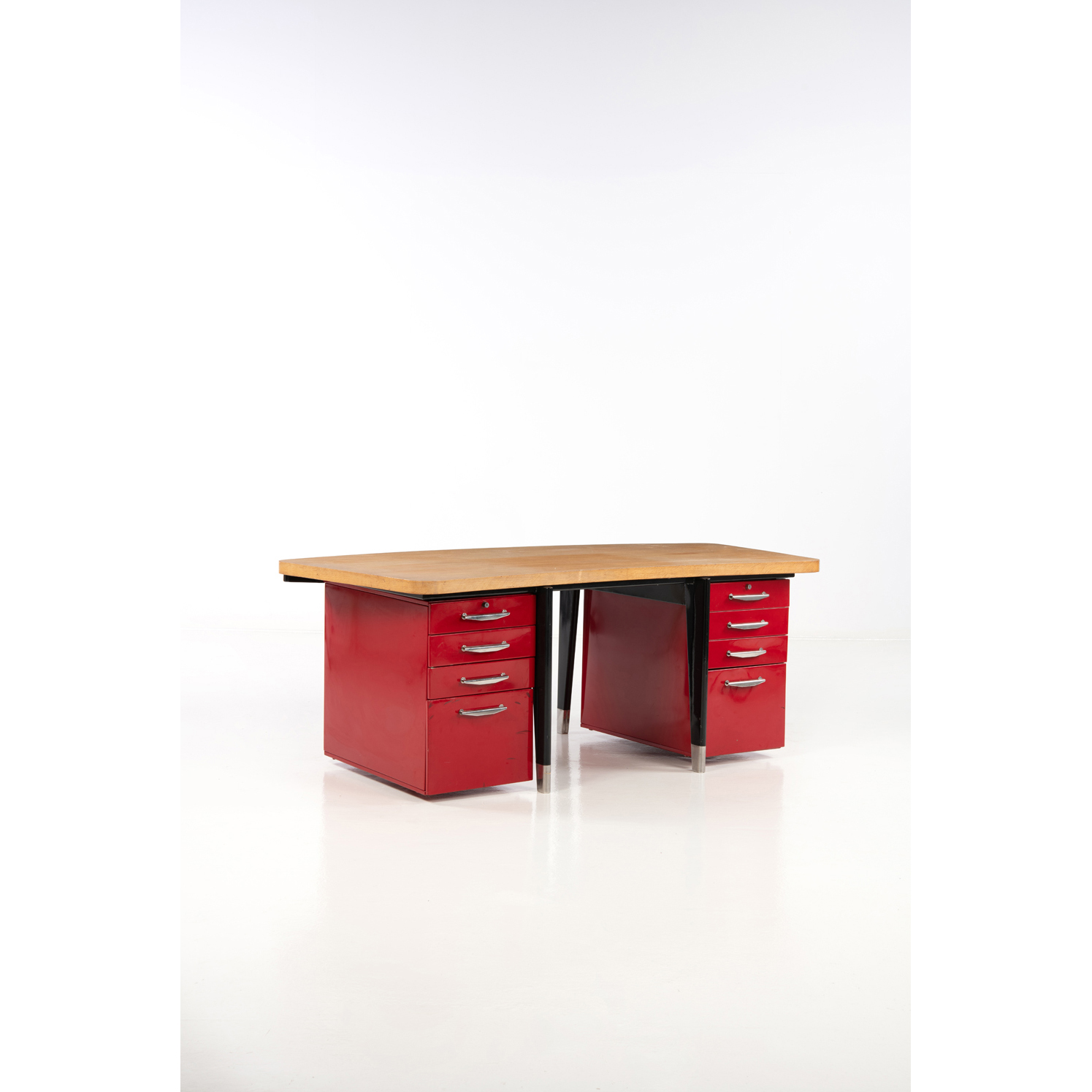
The Standard BS desk of 1941 reflects this spirit marvellously: the curved structure like the wing of an airplane, the polished and chromed steel in homage to the American "Streamline", the lacquered metal - here red and black - of a car body.
No difference between creating a piece of furniture or an architecture for Prouvé, all his approach, all his ideas, all his passions can be found in each of his pieces.