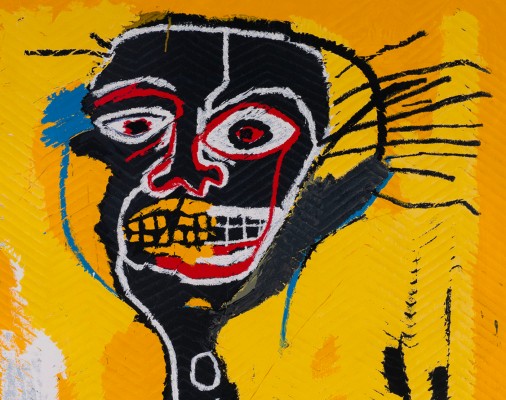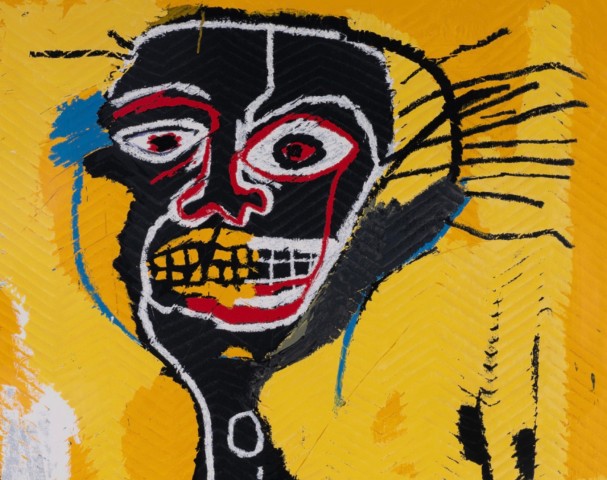
The masterpiece of the sale Editions of December 11, 2019 presented by PIASA, this "Cabeza" screenprint signed by Jean-Michel Basquiat is iconic for the artist's entire work.
Author of more than 2,000 drawings and paintings, Jean-Michel Basquiat has crossed the New York scene at the pace of a dislocated meteor. The product of an American urban culture strongly impacted by social and ethnic violence, the artist is one of the actors who allowed Street Art to enter the museum halls. Immediately identifiable, his painting is the place of the emergence of a new iconographic repertoire, heir to the modernist movement and a style that inspired many artists to this day.
As early as 1976, at the age of 16, the young man intrigued the East Village's artistic community by graffitiing the street walls near Manhattan's galleries under the pseudonym SAMO (Same Old shit). After several projects and collaborations (music, cinema...), his painting was the subject of a first exhibition in Annina Nosei's gallery in Soho and then in 1980 in the Larry Gagosian gallery in Los Angeles.
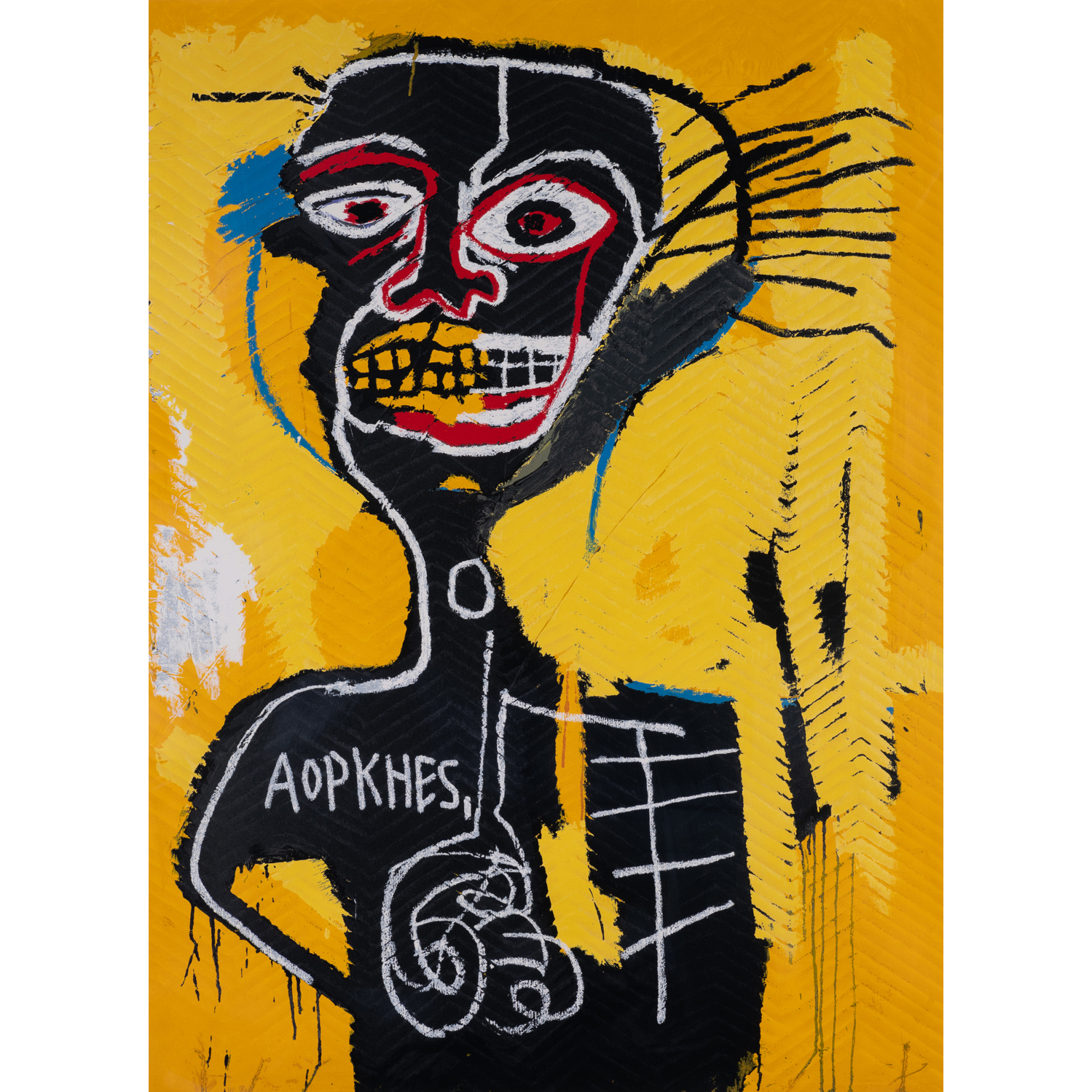
D'après Jean-Michel Basquiat (1960-1988)Cabeza, from Portfolio II - 1982 / 2005
Valuation : 70000 / 90000 €
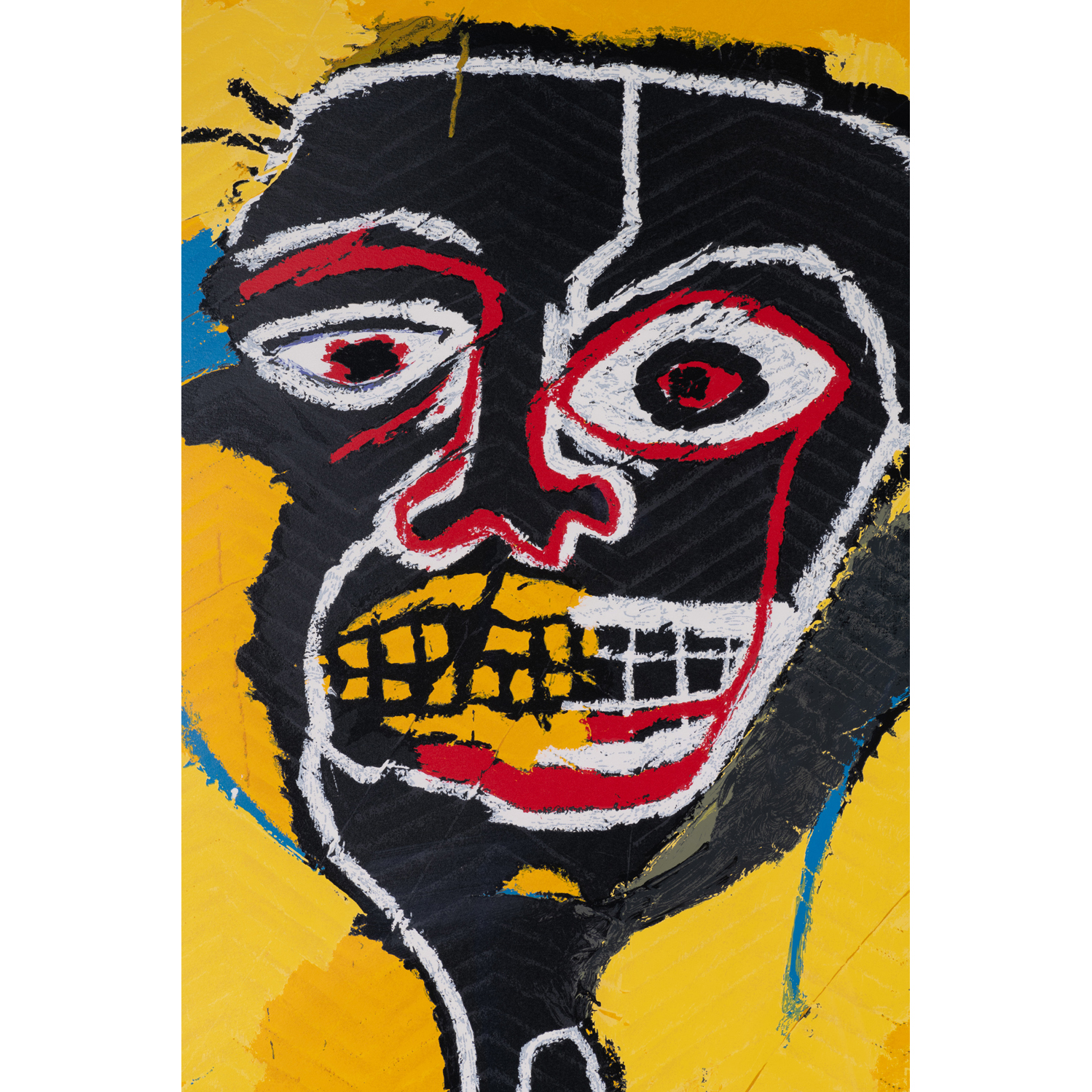
On a yellow background, in the centre of this screenprint numbered 85 copies, the character is schematically represented. The large black lines starting from his skull evoke the artist's hair, which rises, according to the portraits and photographs published in the press, to the rank of symbol.
"It would have been sad if, in the vein of appropriation, Basquiat had taken up the Africanizing "primitivism" of Picasso, Constantin Brancusi or Fernand Léger. We would have been entitled then, if this talented young black artist had embarked on the pastiche of a pastiche, to a boring satire at the end of the century. But he skillfully avoided the trap (probably the most dangerous of all) by forging his own "primitivism" from a personal iconography nourished by contemporary American life and turned towards a largely imaginary Africa.
The word "Aopkhes", which is very clearly written on the character's chest and recurrent in the artist's work, refers to the culture of ancient Egypt, a source of fascination for the painter. Jean-Michel Basquiat thus links the history of the United States to the history of the Old World, which symbolizes the forces of change.