


PIASA organizes a Modern and Contemporary Art auction on Wednesday, June 1st, 2022.
Featuring 42 lots, this auction offers a remarkable panorama of 20th and 21st century art through a selection of pieces that are particularly rare on the market. The selection is very international and includes works by major artists such as Wifredo Lam, Jean Dubuffet, Hervé Télémaque, Danh Võ and Jean-Michel Basquiat.
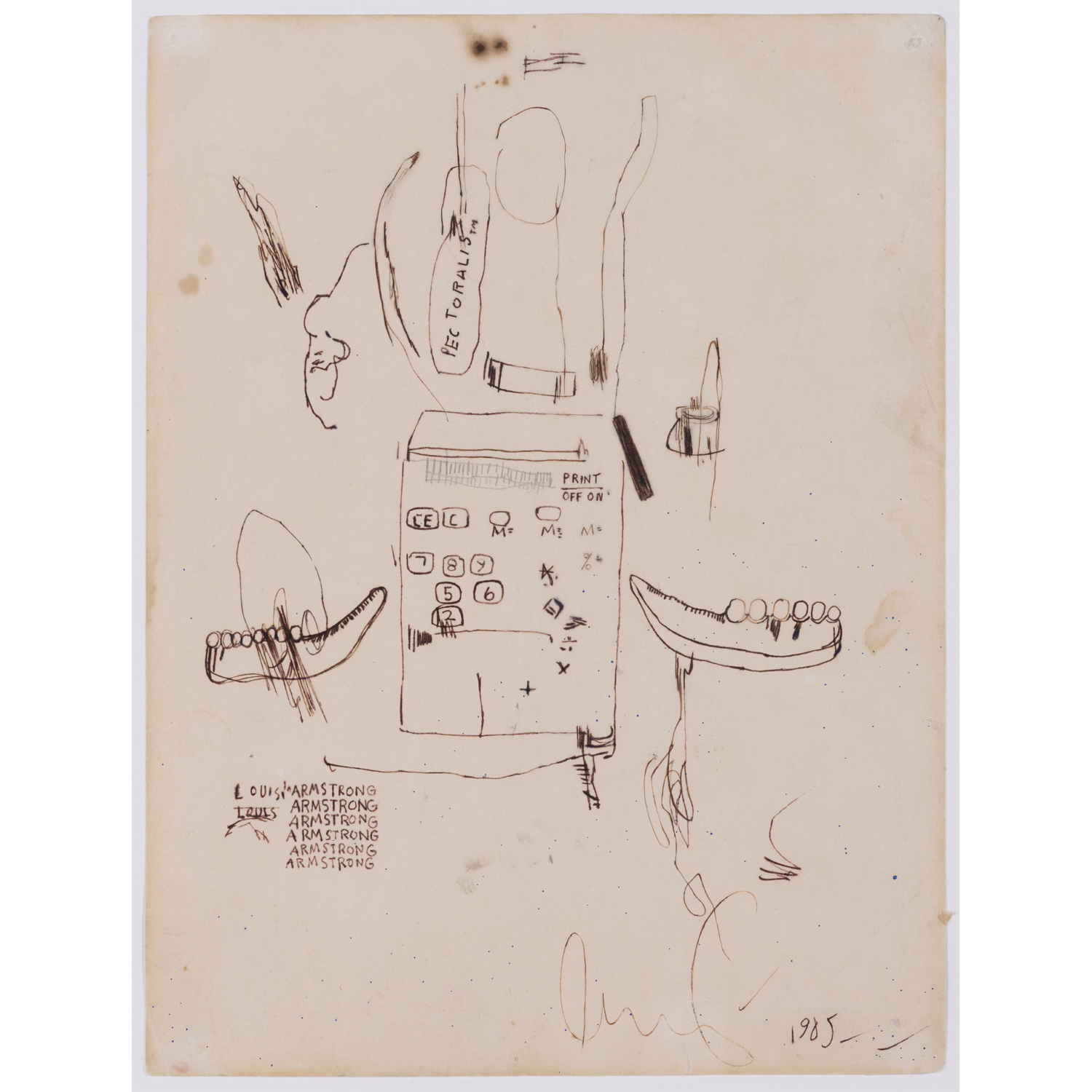
Jean-Michel Basquiat
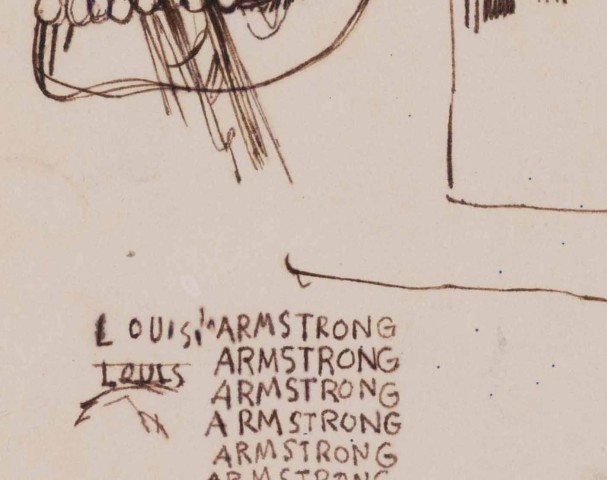
Untitled (Louis Armstrong), 1985
Estimate: 70 000 / 90 000 €
"I don't know how to describe my work. It's like asking Miles Davis: how does your trumpet sound?" he replies to journalists. From jazz to the New York underground scene, music is a major inspiration for Jean-Michel Basquiat (1960-1988), as can be seen in his work "Horn Players" (1983) or "Trumpet" (1984). Amongst jazz musicians, Basquiat admires the revolutionaries of the genre such as Charlie Parker, Dizzy Gillepsie and notably Louis Armstrong, as shown in our drawing.
In this work he paints a portrait that is both figurative and linguistic. The vitality, immediacy and rhythm of his works pay a vibrant tribute to these explorers of jazz and particularly to bebop, Basquiat's favourite style.
The metaphorical links between jazz and other artistic disciplines may be banal or tenuous, but in Basquiat's case they are palpable. Like a brilliant soloist, he understood the power of composition - where to fill a space with energy and where to let the viewer catch their breath or reflect.
He has also internalized the principles of theme and variation; think of his recurring motifs and repeated words, with their reflexive erasures and imperfections, as retouching and embellishing a melody or phrase. Like a musician's chiseled notes in the middle of a chorus, Basquiat's images and sharp words create meaning through context.
Before his death in 1988, Basquiat owned thousands of records, mostly jazz, and music was a constant presence in his studio. He worked best surrounded by stimuli - the television, the record player, many open books. Michael Holman, Basquiat's friend and musical collaborator, says: "If he wasn't painting, he wasn't doing much but eating, sleeping and going out. So he spent a lot of time listening to jazz while he worked. The music matched his hand, his temperament when he started his canvases."
