


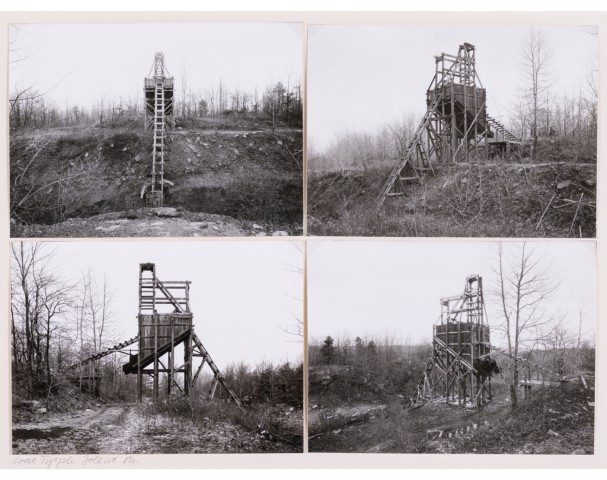
In the landscapes immortalized by the German photographer couple Hilla and Bernd Becher, the repetition of the motif, the systematization of the framing and the exclusive use of black and white create a strangeness that pushes the spectator to distance himself from a reality that suddenly seems deceptive.
It was very soon after their meeting in 1959 that industrial infrastructures (blast furnaces, headframes, gasometers, water towers, coal or grain silos) became a fixture in their photographs.
Bernd Becher was born in Siegen in a region, the Ruhr, which was badly affected by Germany's difficulties after the First World War and the economic crisis of 1929. It was in Stuttgart at the Academy of Fine Arts that he received his first artistic training. He began by painting landscapes of his native region before using photography for the first time in 1957 on the occasion of the demolition of a mine.
Hilla Becher, a trained photographer, is in charge of the photographic laboratory at the Düsseldorf Academy.
One of the characteristics of their work is the long exposure time, which partly explains the absence of any human presence. The forms of these metal structures metamorphose into sculptures and emancipate themselves from their functional birth. In fact, despite their attachment to the photographic medium, it was the grand prize for sculpture that the couple received in 1990 at the Venice Biennale.
Bernd (1931-2007) et Hilla Becher (1934-2015)
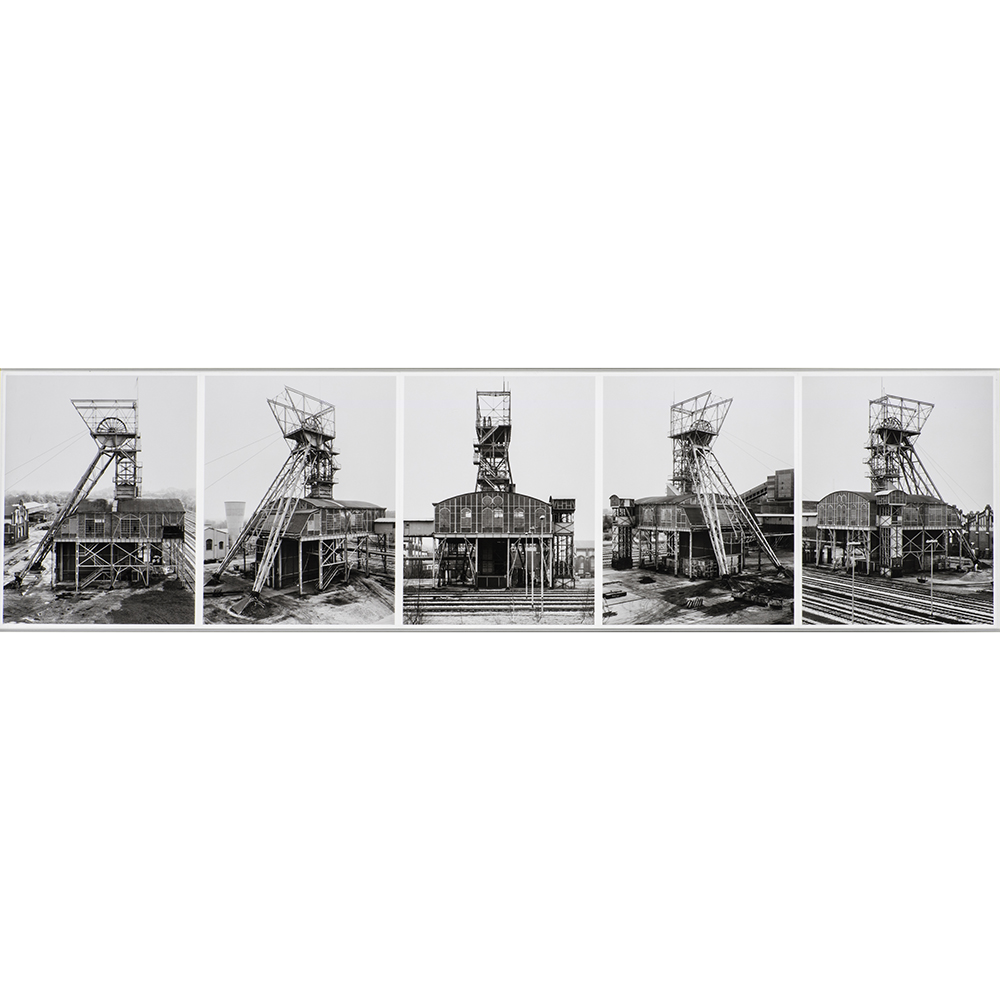
Fordertum Zeche Waltrop, Waltrop, Germany,
1982-2009
“Forty are better than one”, 2009
Tirage argentique
Signé et numéroté 39/75
Schellemann art production
38,5 x 47,5 cm
Result: 3 640 euros
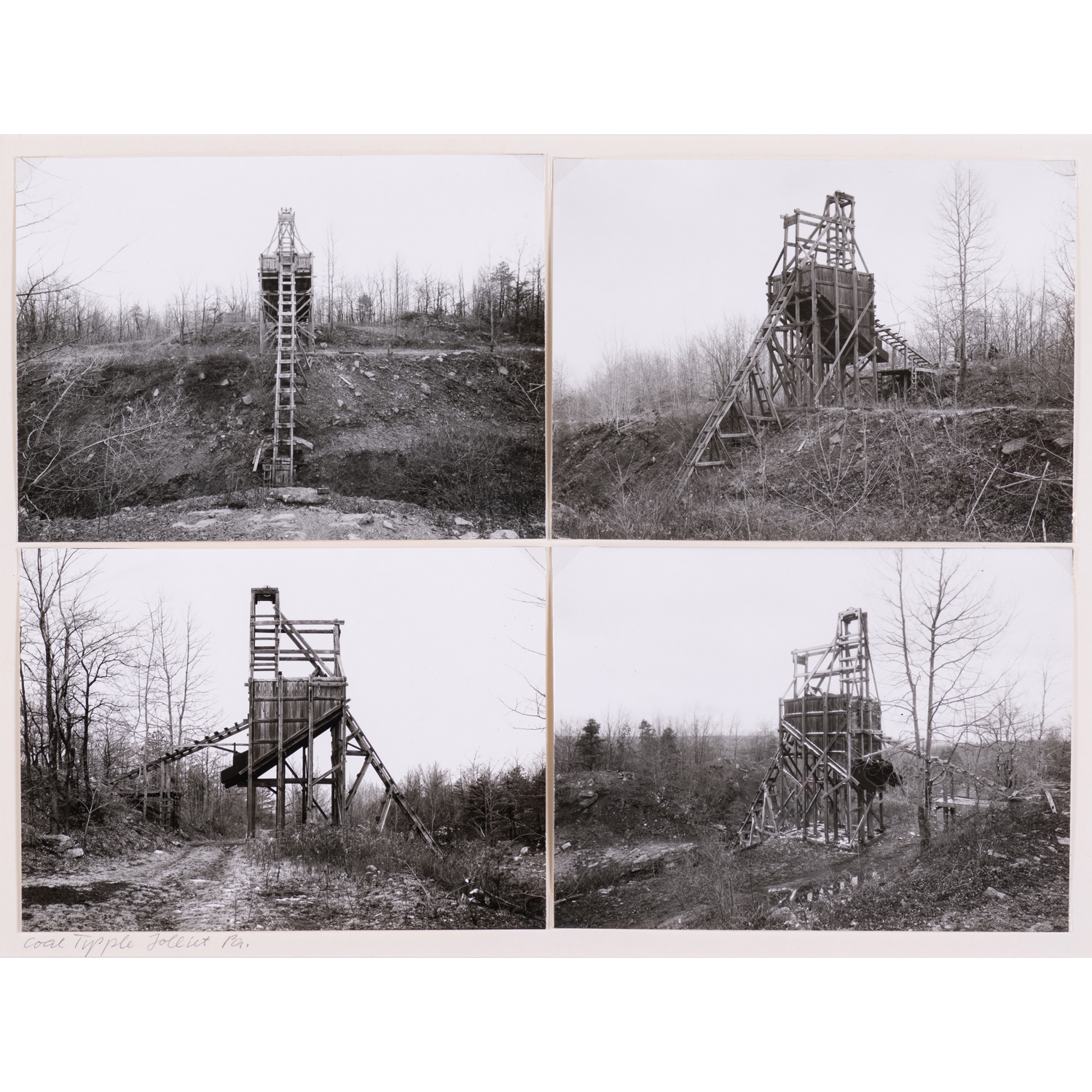
In 1982 in Waltrop, a small town on the outskirts of Dortmund, the couple took many pictures of a mine. Remnants of an economy on the verge of disappearing, these pictures were offered for sale by the PIASA house in 2017. Sold as part of the Daniel Varenne collection's dispersal in 2019, the four silver prints feature a mining installation in Pennsylvania. Here, the geometry of the pieces of wood contrasts with the surrounding vegetation.
Bernd & Hilla Becher (1931-2007 et 1934-2015)
Coal tipple, Joliet, Pennsylvania, 1974
Quatre tirages argentiques
Titré en bas à gauche
Signé et daté au dos
26,5 x 35 cm
Provenance:
- Art & Public, Genève
- Galerie Daniel Varenne, Genève
Result: 13 000 euros
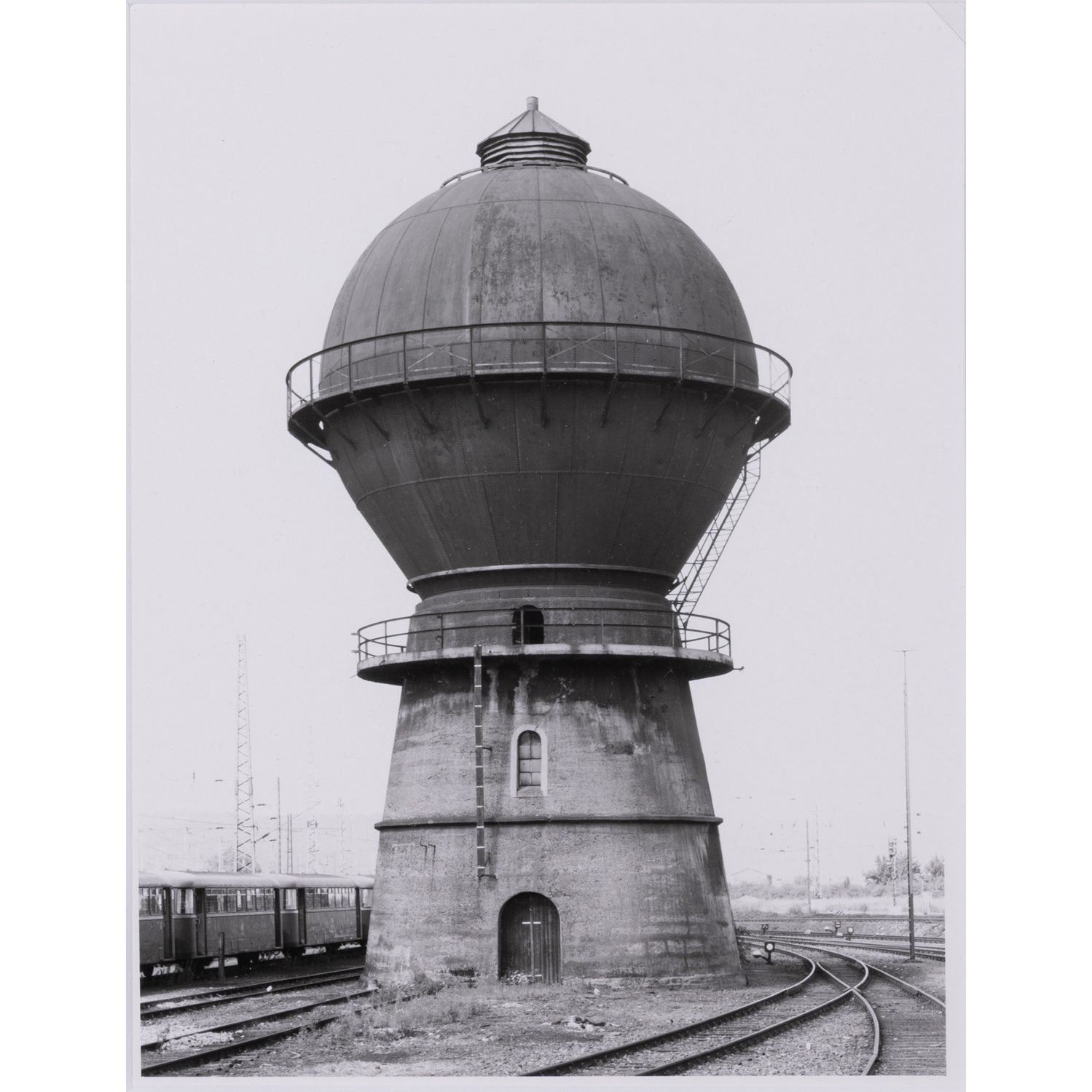
The gelatin-silver print on photo paper "Trier-Ehrang, D" was made in 1982. Made of concrete and metal, the construction takes place in the middle of railroad tracks. The neutrality of an exaggeratedly white background isolates the subject from the photograph.
Bernd & Hilla Becher (1931-2007 and 1934-2015)
Trier-Ehrang, D
1982- 2009
Gelatino silver print on photo paper
Signed and justified "AP 7/15" on the back
(F) : 21 x 16,4 cm, (C) : 37,5 x 32,5 cm
Result: 4 160 euros
Although the Becher couple took photographs in the United States and in many European countries, German territory appears to be the epicentre of their work. However, through the metaphorical use of these constructions, often imposing and even terrifying, Hilla and Bernd Becher implicitly evoke the recent bruises of their native country. In 1976, Bernd and Hilla Becher passed on their talent as professors at the Kunstakademie in Düsseldorf.
Among the artists who attended their course were the finest in contemporary photography, including Andreas Gursky (born 1955), Thomas Ruff (born 1958) and Thomas Struth (1954).
