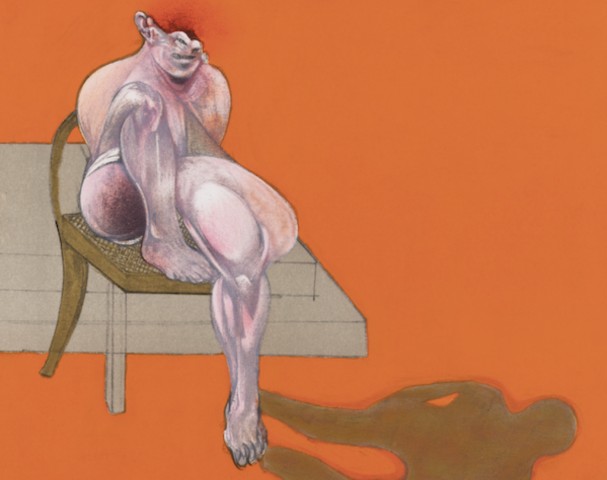
On Tuesday December 21, PIASA is organising a sale entirely dedicated to editions; prints, illustrated books and multiple works. The catalogue of this sale includes two rare triptychs by Francis Bacon.
Of all contemporary painters, Francis Bacon is perhaps the one who has most forcefully exploited the potentialities and tensions intrinsic to the triptych.
Inherited from the altarpieces of the Middle Ages, this tripartite mode of composition became the dominant expression of the genre in the sixteenth century, a preference that would endure throughout the Baroque period. Its apogee - which is also its swan song - is reached by Peter Paul Rubens' The Erection of the Cross (1610-1611), a masterpiece now exhibited in Antwerp Cathedral and with which some of Bacon's works resonate.
As a fine connoisseur of Baroque painting, Bacon quickly grasped the lesson of the Old Masters regarding the power of the multiple format. He therefore used it on numerous occasions while proposing a diametrically opposed approach. With Bacon, the triptych is no longer a scrolling narrative, like a gigantic easel painting, but three closed spaces. By emphasising the emptiness between the panels, he blurs the lines and makes the logical relationship between them less explicit. He questions the viewer about the links that unite the different parts of the work without making them hermetic to each other.
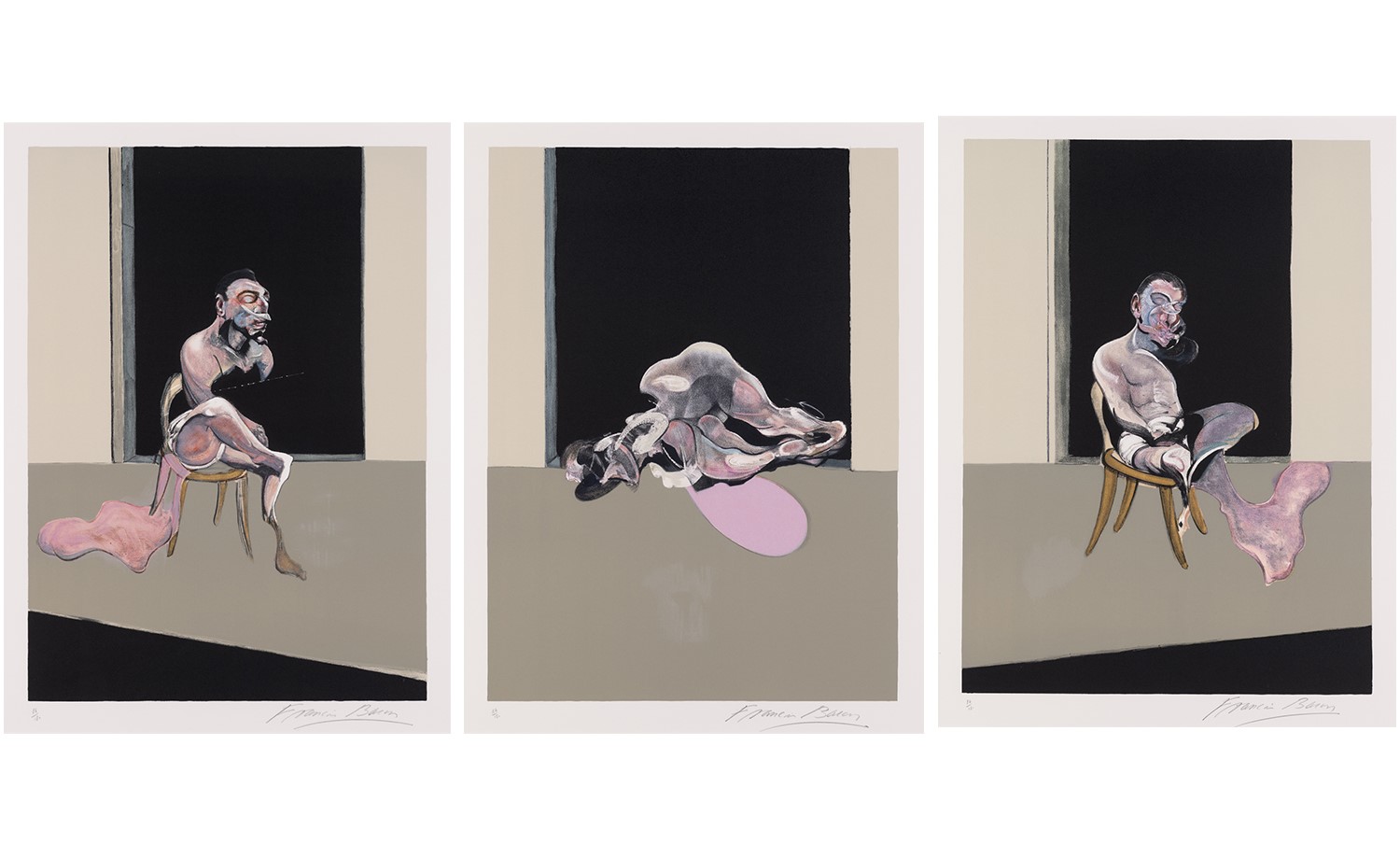
Bacon's frame isolates, but it never separates completely. This subtlety is found in many of his works, and in particular in Triptych - August 1972, which masterfully explores the interdependence that always exists between the empty and the full. Made at a dark period in his life, it is part of a series called The Black Triptychs, which began in 1971. A few months earlier, his lover, George Dyer, had committed suicide in the Hôtel des Saints-Pères in Paris, the day before the artist's retrospective at the Grand Palais, and although he was to live for another seventeen years, he felt that his life was almost over, "and that all the people [he had loved] were dead".
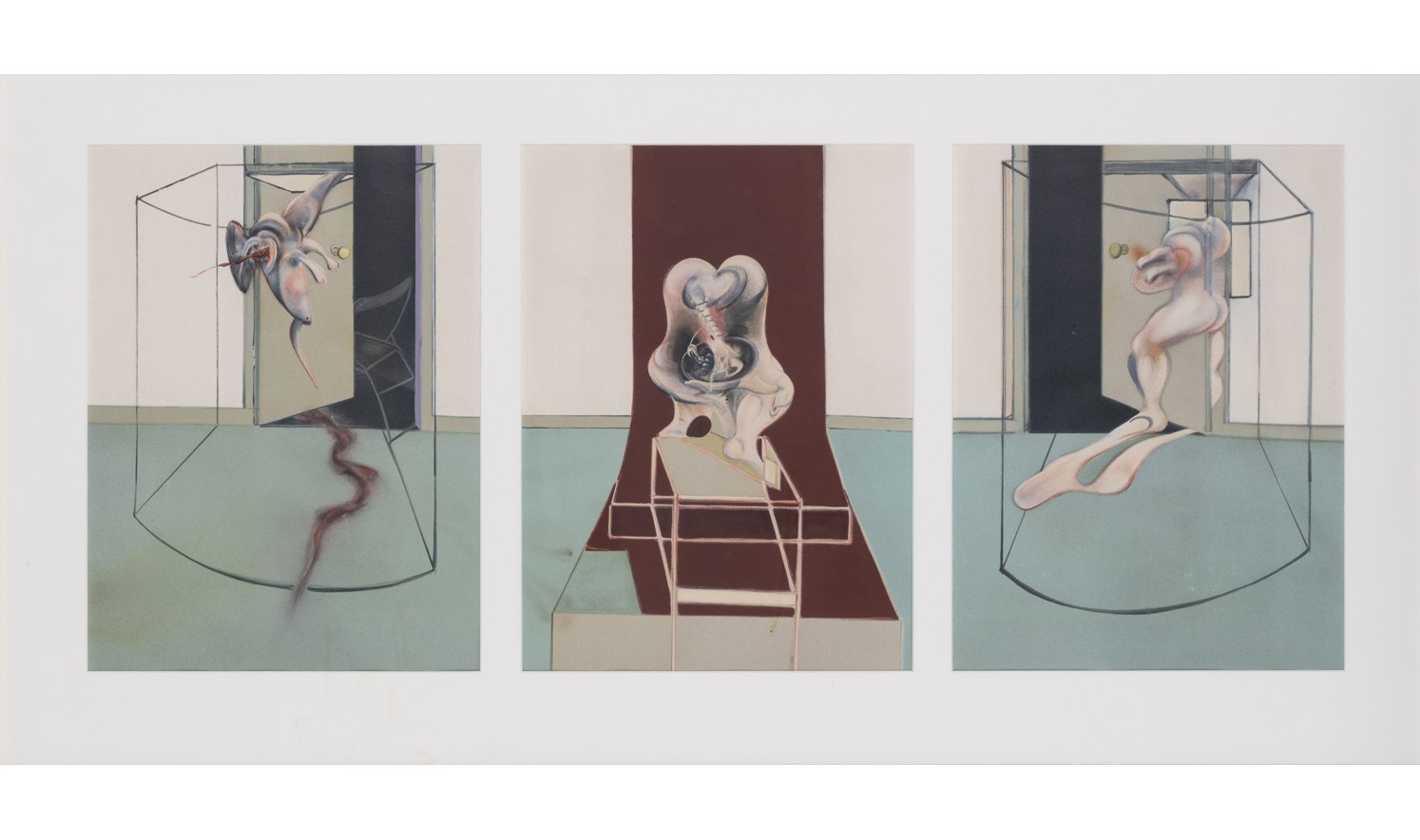
His anxiety is reflected in the dark skin tones or in the figure of Dyer, stalked by a large shadow, which takes the form of pools of blood or flesh, a proposition also found in In Memory of George Dyer (1971) and Triptych, May-June 1973, two other Black Triptychs. In these works, Bacon stages the tension of the void, of the near nothingness, suggested by a certain number of plastic markers: the shape of a monochrome door in the centre of each of the panels, shallow walls, and dark flat areas in the background.
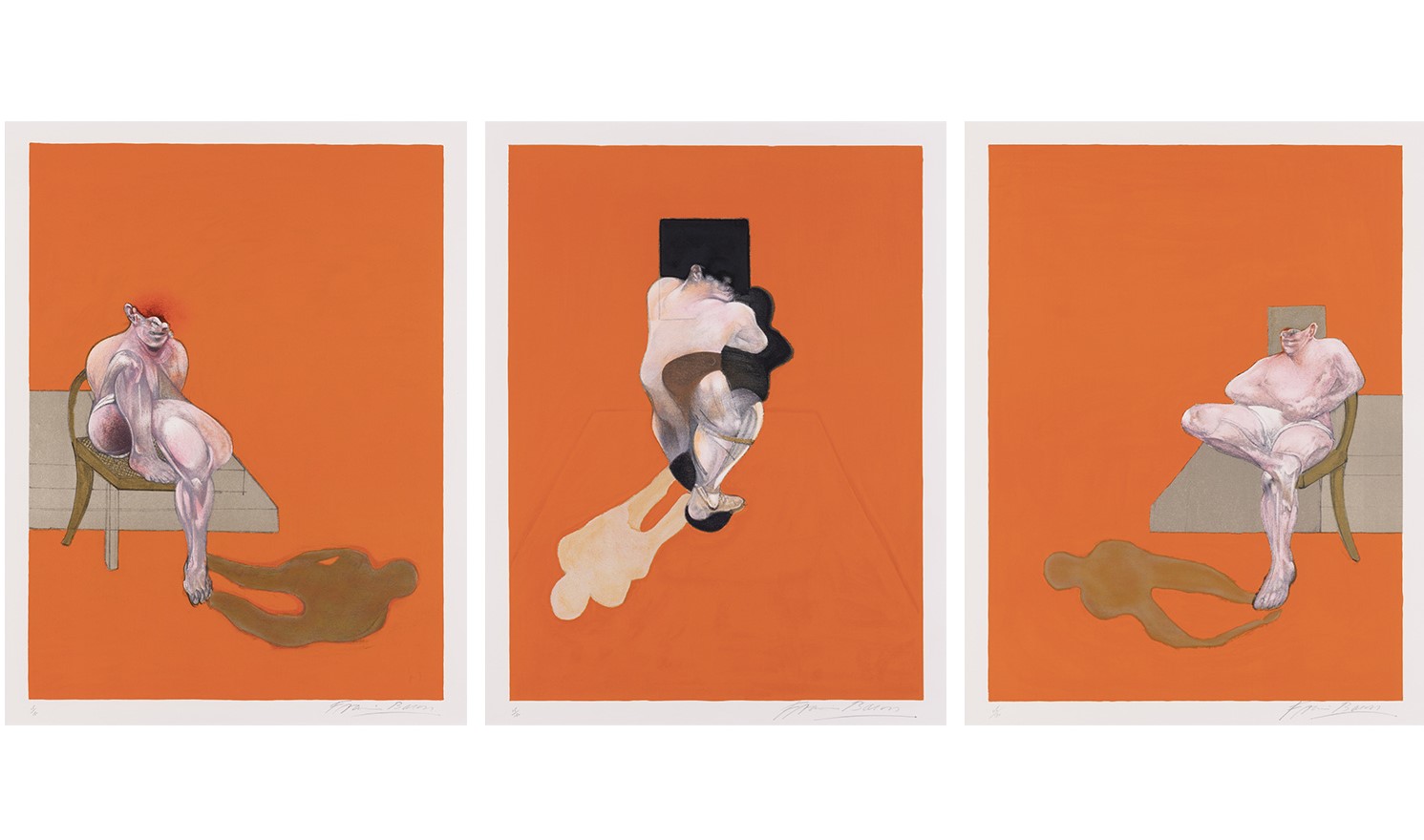
Bacon never recovered from Dyer's suicide and his work will remain haunted by an awareness of loss, death and the effects of the passing of time. He would later admit that "...although you are never exorcised, because people say you forget death...it doesn't...time doesn't heal. But you focus on something that was an obsession, and what you would have put into your obsession, you put into the work."