Félicien Rops’s reputation has been built on a productive misunderstanding. He has been conveniently classified as an artist of scandal, calculated provocation, and illustrated libertinage. This easy categorization has had the effect of neutralizing what is truly unsettling in his work: not obscenity—which can be tolerated and even consumed—but an eroticism of menace, in which desire is never separable from a muted violence, a cold irony, a dark metaphysics. The sale that Piasa is dedicating to the Namur-born artist on June 10—107 lots of drawings, watercolors, and heliogravures gathered under the title The Theatre of Desire—reveals this unease in its most immediate form: paper, line, hand.
Prostitution and Madness Rule the World, 1879 (lot 7, €15,000/20,000), is a composition that first appears as an allegory but quickly becomes troubling. Charcoal and white pencil on paper: a female figure stands atop a celestial globe strewn with stars. But this is not a woman. It is a hybrid creature, a female torso set upon goat limbs—the animality of the sabbath, of Baphomet, of the satanic pact. The devil is there, crouched at her feet, yet in a posture of submission: he is not the master, but the mount, the base, almost the footstool. Rops overturns the usual theological hierarchy. The woman is not the devil’s prey; she may have assumed his form in order to subjugate him. Eroticism ceases to be a fault. It becomes an absolute, cold, and implacable power.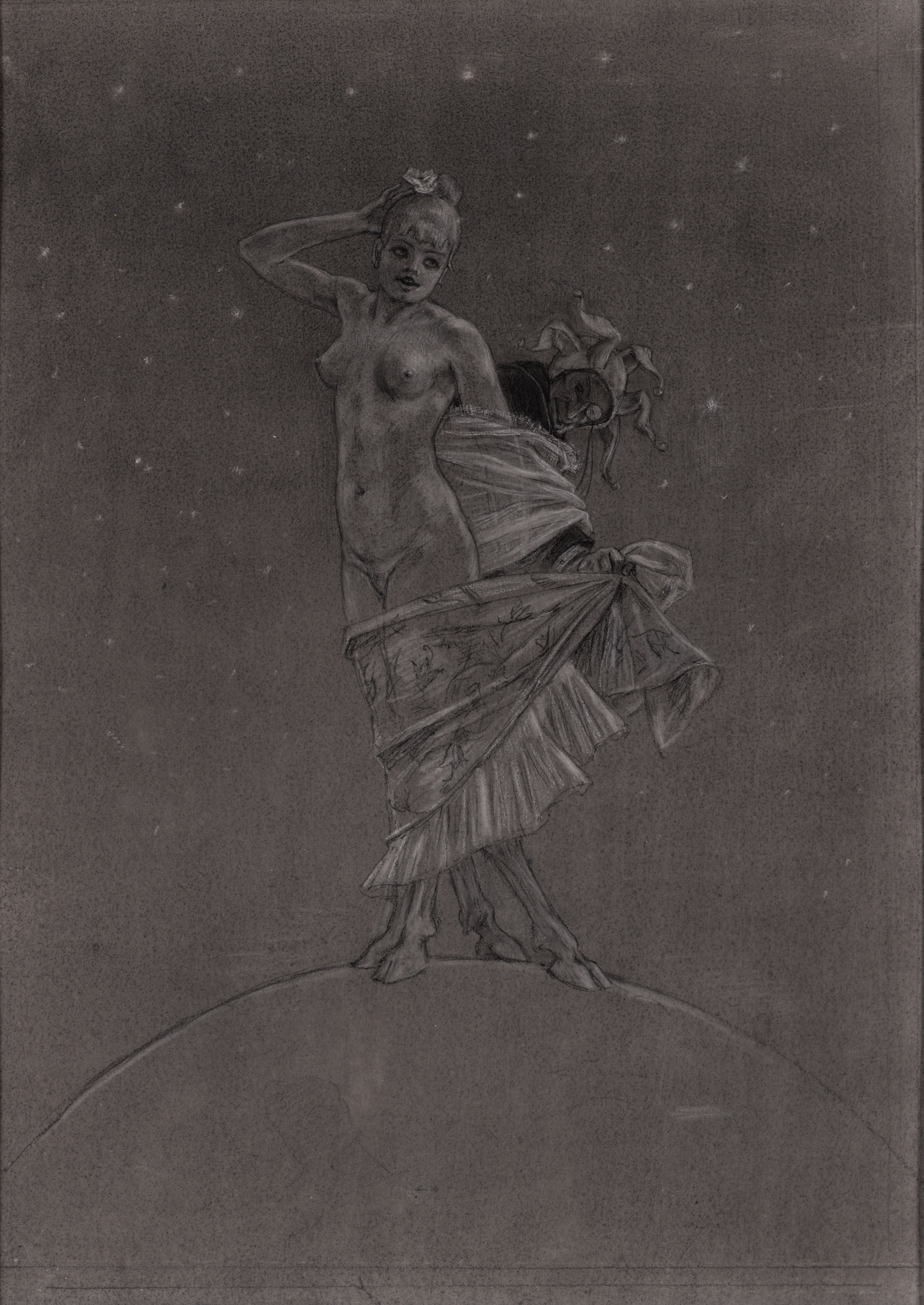
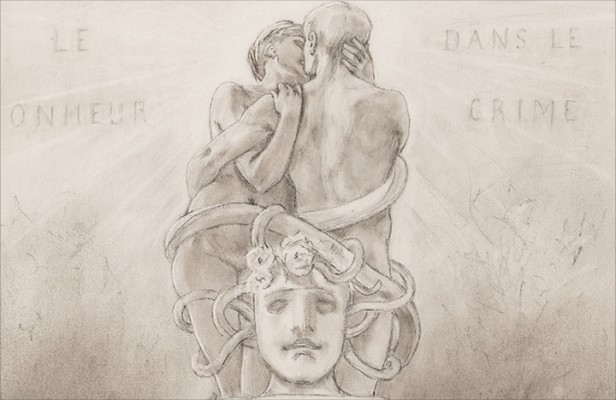
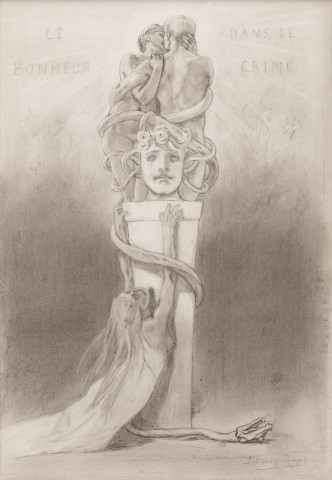
Happiness in Crime, 1883–1884 (lot 10, €10,000/15,000), takes its title from the most troubling of Barbey d’Aurevilly’s Diaboliques and adopts its vertical, serpentine structure. A figure reminiscent of Medusa, a woman desperately clinging to the pedestal, a dead serpent coiled around it. At the top, two intertwined bodies, indifferent to the scene, drowned in the astral light illuminating the words inscribed on the sheet. Rops shares with Barbey d’Aurevilly the conviction that crime and voluptuousness belong to the same ontological register—that pleasure carries within it something irreparable—thus intensifying the sense of unease.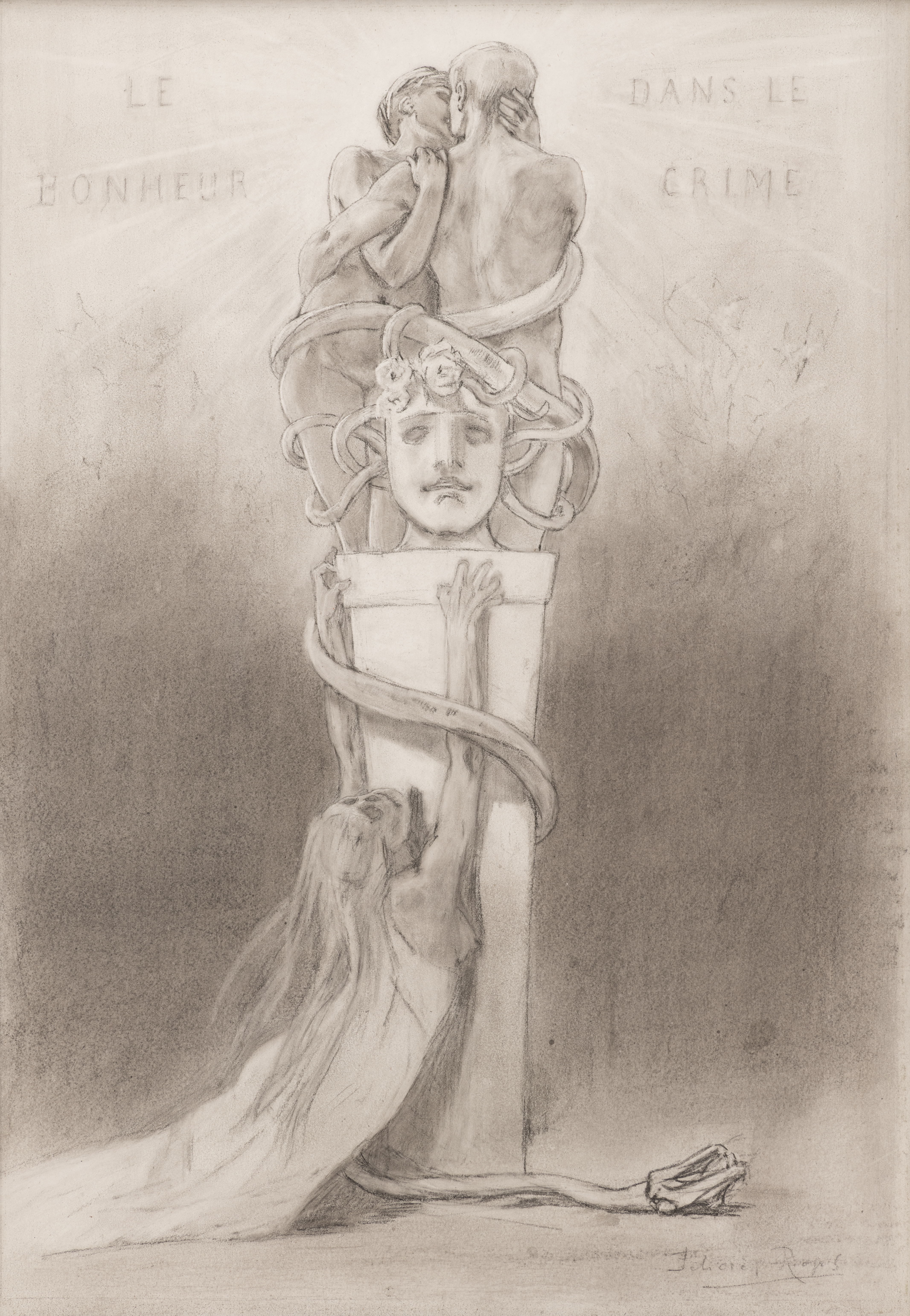
Rops’s eroticism is rarely merely libertine. In his most significant works, sexuality is always linked to a power that transcends bodies: death, the devil, the profaned sacred. Saint Teresa, Ecstasy (lot 30, €4,000/6,000) directly raises the question of the relationship between mystical ecstasy and erotic ecstasy. This is not superficial provocation. It is an inquiry into those zones where body and soul cease to be distinguishable—without cynicism, yet with a form of iconoclastic humor.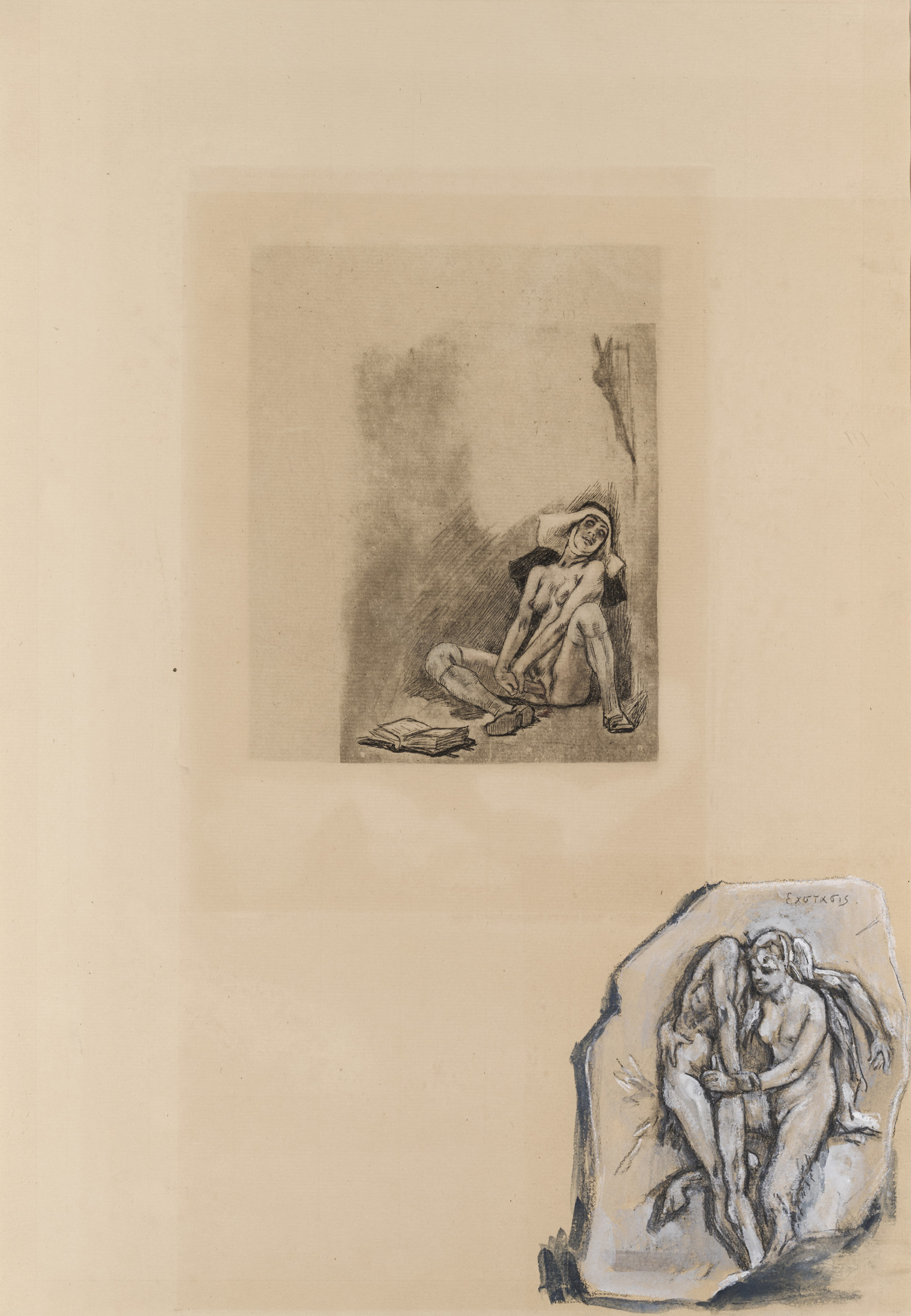
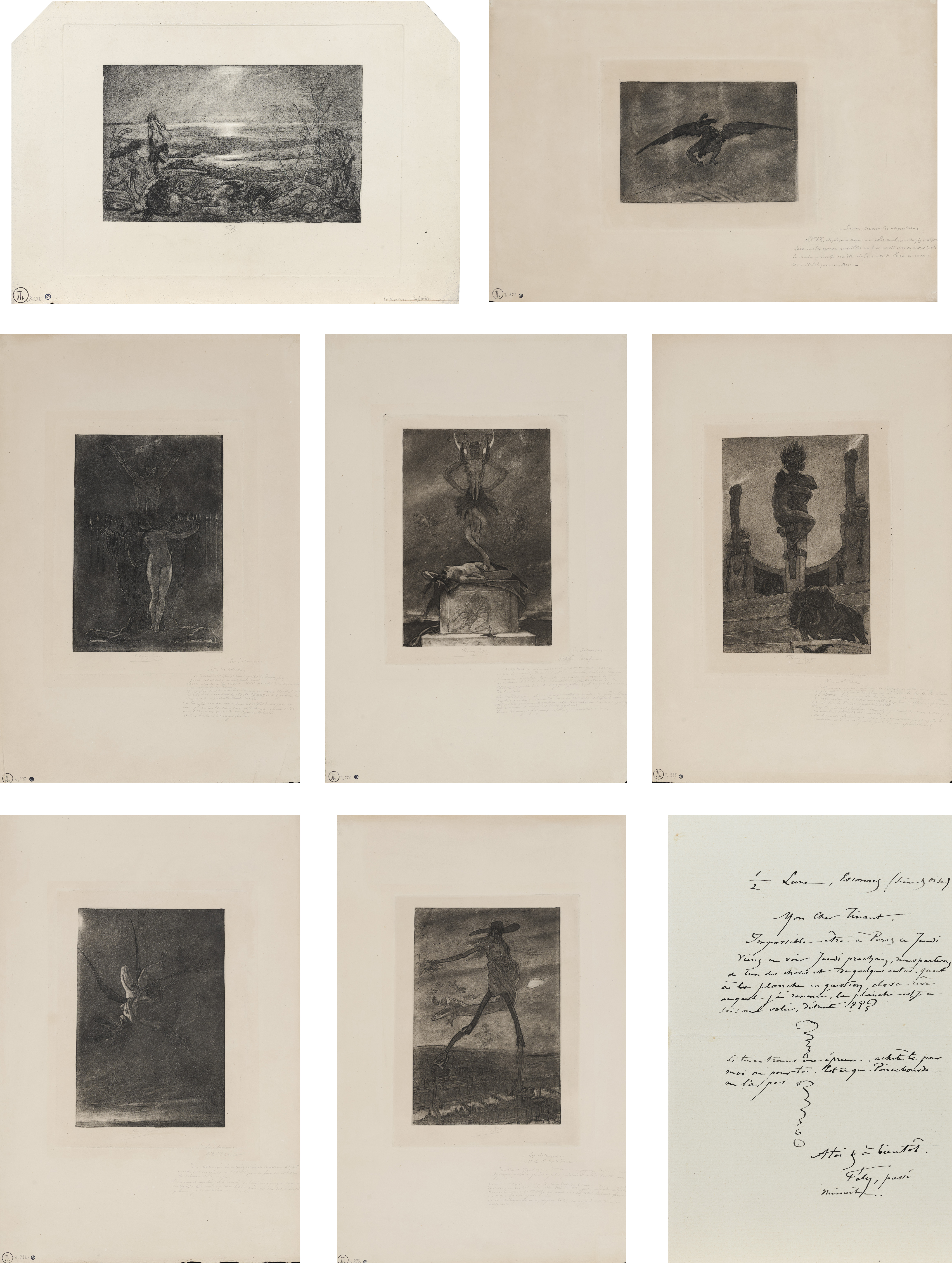
Finally, The Sataniques (lot 105, €2,000/3,000), a set of seven heliogravures accompanied by a handwritten letter from the artist, constitutes one of the most moving pieces in the sale. The letter brings the artist back to his human dimension—as someone who thinks and deliberately constructs this theatre. The unease is not accidental in his work. It is its program. Félicien Rops is not a libertine; he draws the reverse side of desire.