Following the success of the first-ever sale organised in Cape Town on February, 14, 2020 in partnership with Aspire Auction, PIASA is proud to renew this collaboration with the South African auction house by organizing a special session dedicated to modern and contemporary African art on Wednesday, June 24, 2020, this time in its Parisian setting.
The selection will be an opportunity to shed light on the creativity and dynamism of the South African scene, both modern and contemporary, with several works by William Kentridge, Irma Stern and Gerard Sekoto.
A panorama of the contemporary pan-African scene
The sale will open with the first icons of modern Congolese painting, revealed in the "Beauty Congo" exhibition at the Fondation Cartier and at the dedicated sale of the Pierre Loos collection at PIASA in September 2018.
An emblematic "J'aime la couleur" from 2004 by Chéri Samba will open the selection dedicated to the popular painters of the Congo, along with works by Moké, Chéri Chérin and JP Mika.
The resolutely pan-African selection of the sale will visit the major centres of African artistic creation:
- West Africa with works by Aboudia, Armand Boua, or Yéanzi, figures of the Ivorian scene.
- East Africa: Kenya will be represented by the works of Michael Muzyoka, Peter Ngugi, Joseph Bertiers or Michael Soi, already presented at PIASA during previous sales.
- South Africa with a selection of works by Sam Nhlengethwa, Nicholas Hlobo, Bambo José Sibiya, Simphiwe Ndzube, Peter Clarke.
Finally, the sale will present a strong selection of photography, a flagship medium for contemporary African and South African artists, particularly with works by David Goldblatt, Guy Tillim, Zanele Muholi and Mohau Modisakeng.
Citations
"While travel, economic activities and cultural events are at a standstill, African artists confirm their propensity to alert us to the state of the world. They feed us, they push us to take a break and encourage us to question ourselves. More than ever, the social issues depicted by the artists illustrate the relevance of their words, to denounce the environmental emergency, the consequences of urbanization, the excesses engendered by globalization and the risks undertended by international inequalities. Committed to Aspire to highlight the richness and diversity of artistic creation in Africa, with a focus on the dynamic South African art scene, we are once again offering an ever more exhaustive panorama of contemporary African art through our common platform".
Christophe Person, Director of the Contemporary African Art Department, PIASA.
"After the success of the first sale in Cape Town in February of this year, we're preparing for the follow-up sale in Paris on 24th June with great anticipation. The first time that an African auction house presents a collection of works for sale in Europe marks an important moment in the history and development of the global art market.
It is a pleasure to collaborate with Piasa as we work together to develop and internationalise the market for modern and contemporary African art. Our shared belief in the inherent quality, historical significance and value of African art supports our efforts to work to build this market to levels comparable to those of its European and American counterparts".
Ruarc Peffers, Managing Director, Aspire Auction
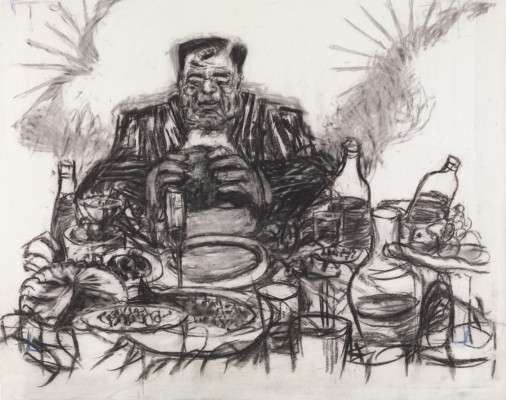
William Kentridge
A graduate of the Johannesburg School of Fine Arts, William Kentridge began a career as an actor and director in the 1970s in a theatre company.
In 1989, he directed an animated film "2d greatest city after Paris" based on black and white charcoal drawings. Inspired by a dream, this project stages the city where he was born. The character of Soho, which is reminiscent of Alfred Jarry's Ubu Roi, is an effective means of indicting bourgeois greed.
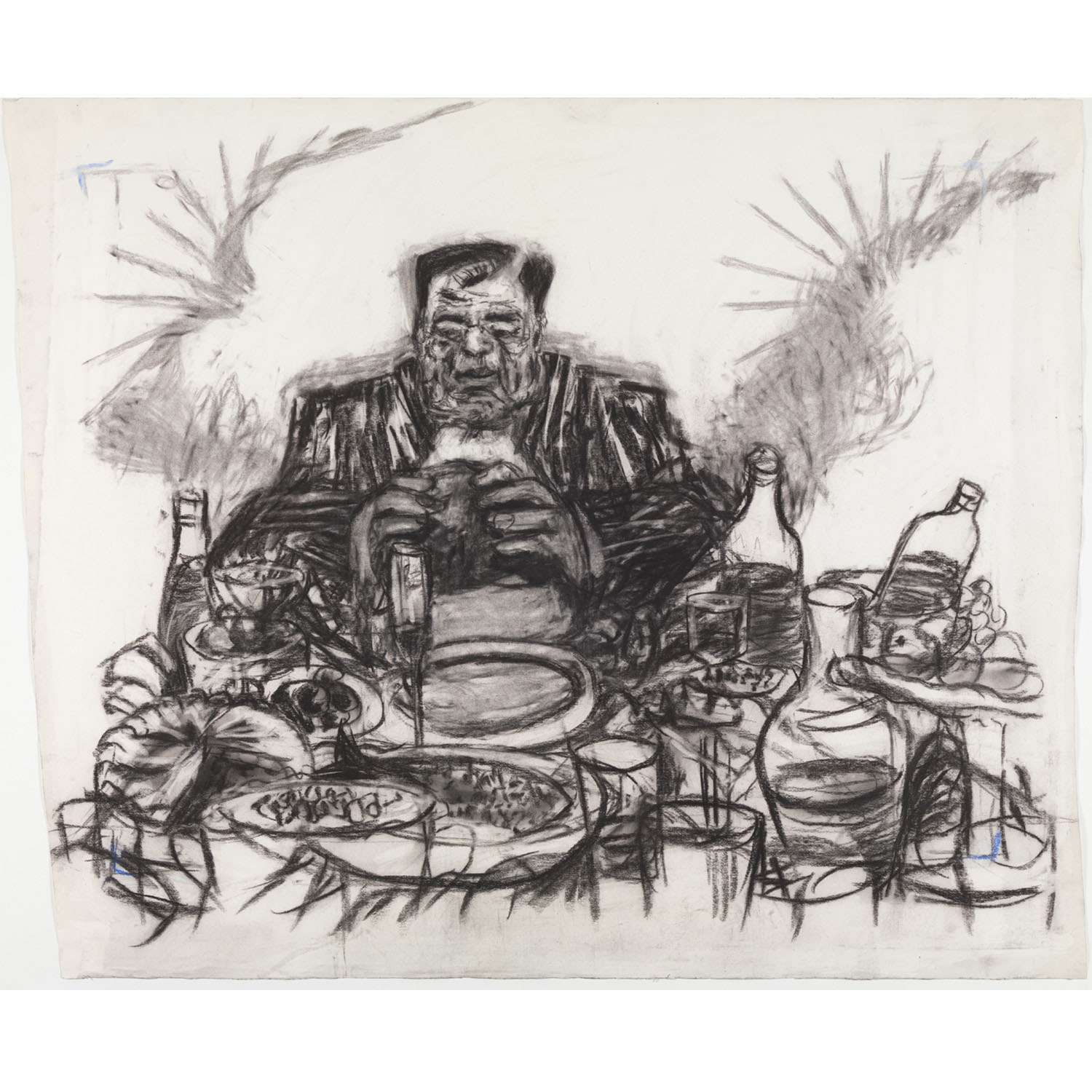 William Kentridge (né en 1955, Afrique du Sud)
Drawing from Johannesburg, 2nd Greatest City after Paris (Soho Eating),1989
Estimation : 190000 / 250000 €
Testifying to the extent of his now international fame, the artist's work has been the subject of an ambitious retrospective at the Musée d'art moderne de Villeneuve-d'Ascq.
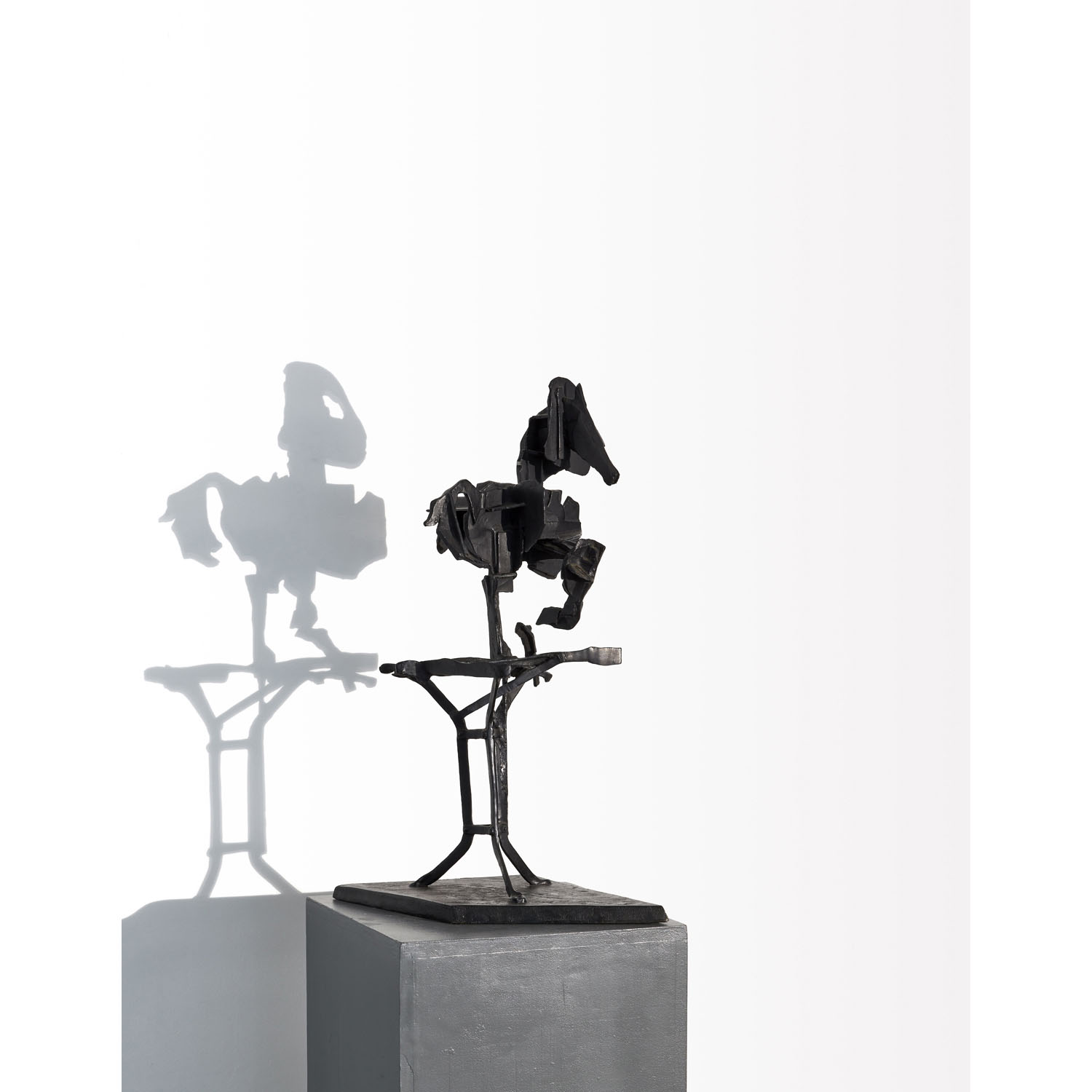
ƒ William Kentridge (né en 1955, Afrique du Sud)
Sculpture for Return (Double Half Horse), 2008
Estimation : 42500 / 60000 €
Mode Muntu
Born in Lubumbashi, Congo in 1940, Mode Muntu is the author of works mainly on cardboard, in gouache. The aesthetic he developed consists of a singular exploitation of four-colour process and brush technique. His paintings, composed of small dots opposed to each other by various colours, generally represent graphic silhouettes, male or female. The work Untitledoffered for sale, the dancing contours of the latter seem to accompany the frantic rhythm of the percussions.
The artist, who died in 1985 and was often ignored by the market, was the subject of an ambitious exhibition in 2017 at Cité Miroir in Liège, where his works were brought together with those of A.R. Penck and Keith Haring.
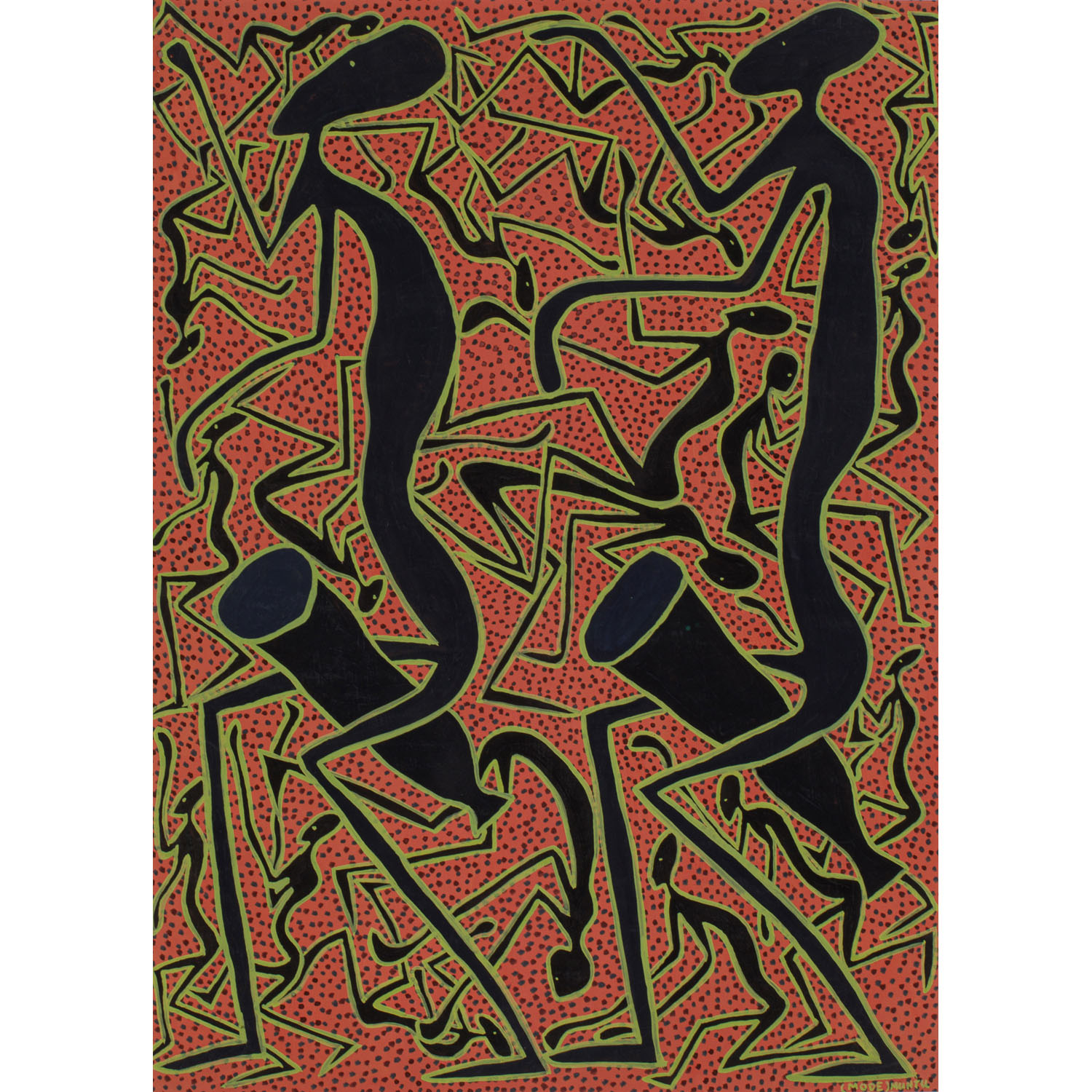
Mode Muntu (1940-1985, Congo)
Sans titre
Estimation : 20000 / 30000 €
Eddy Kamuanga
Born in the Democratic Republic of Congo in 1991, Eddy Kamuanga Ilunga studied painting at the Academy of Fine Arts in Kinshasa.
On a light background partly covered with ideograms, Eddy Kamuanga Ilunga presents two characters. The monumental quality of his works makes the characters both heroic and elegiac If their colourful clothes, between fashion and tradition, are part of the Congolese reality, it is not the case with their skin on which a printed circuit network is inscribed. The Democratic Republic of Congo remains the world's largest exporter of coltan, a raw material used in computer chips and mobile phones.
In his work, Kamuanga Ilunga explores the changes that have shaken his country's economic, political and social identity since the colonial period. Increasingly globalized, but still faithfully Christian, much of the country rejects its multi-ethnic indigenous heritage.
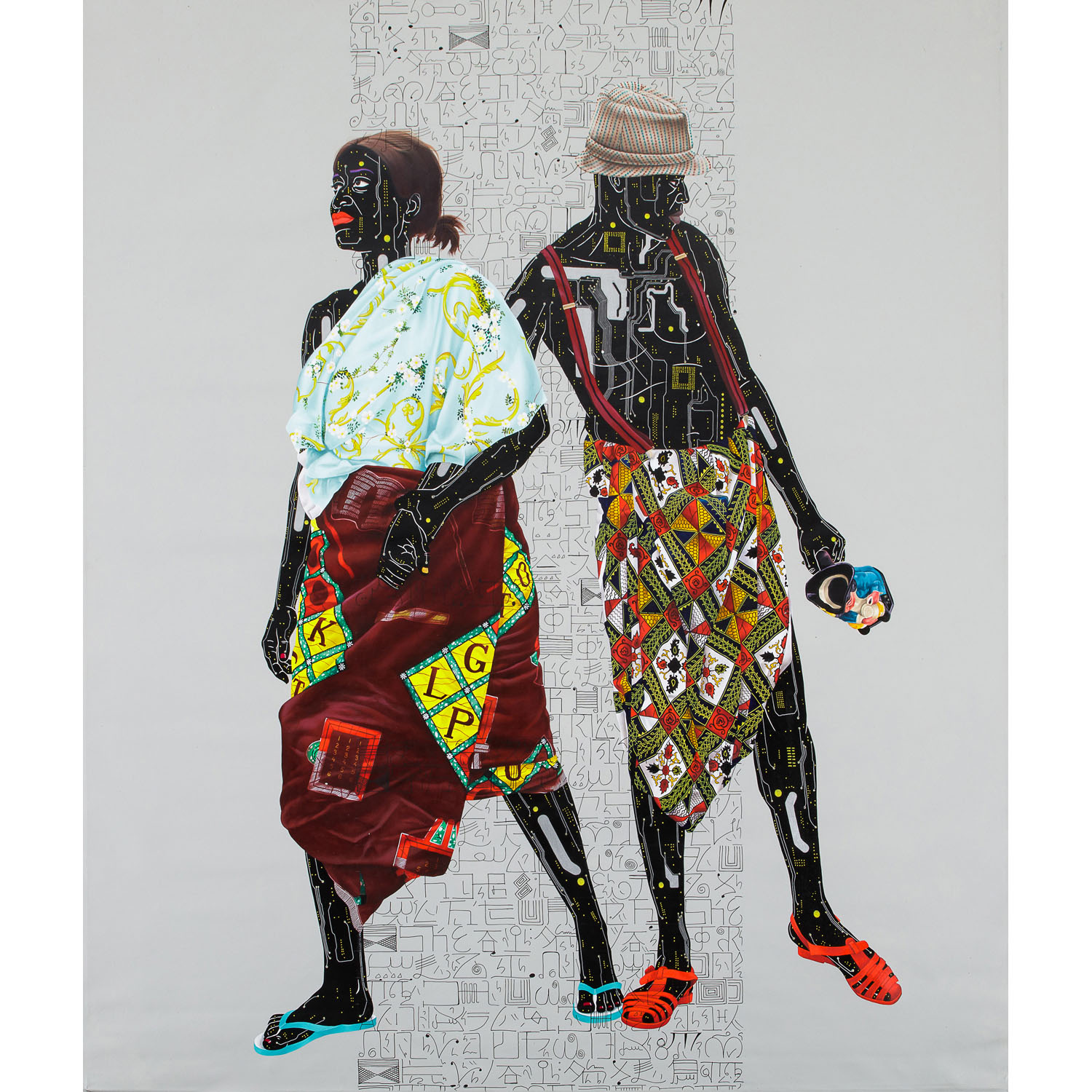
Eddy Kamuanga (né en 1991, République Démocratique du Congo) 2018
Estimation : 30000 / 50000 €
Omar Ba
Graduated from the National School of Fine Arts in Senegal in 2002, Omar Ba participated in several exhibitions in Senegal before coming to Switzerland where he has been living since 2003. It was during this period that he abandoned abstraction in favour of figurative and narrative painting.
If a great diversity in the techniques and materials used characterizes his work, corrugated cardboard is often privileged as in the work offered for sale by PIASA. In "This Way is Not Easy 2", the abundant iconography stages a plural and hybrid bestiary. The North/South relationship and current events on the African continent also feed his work, as suggested by this boat flanked by a red cross.
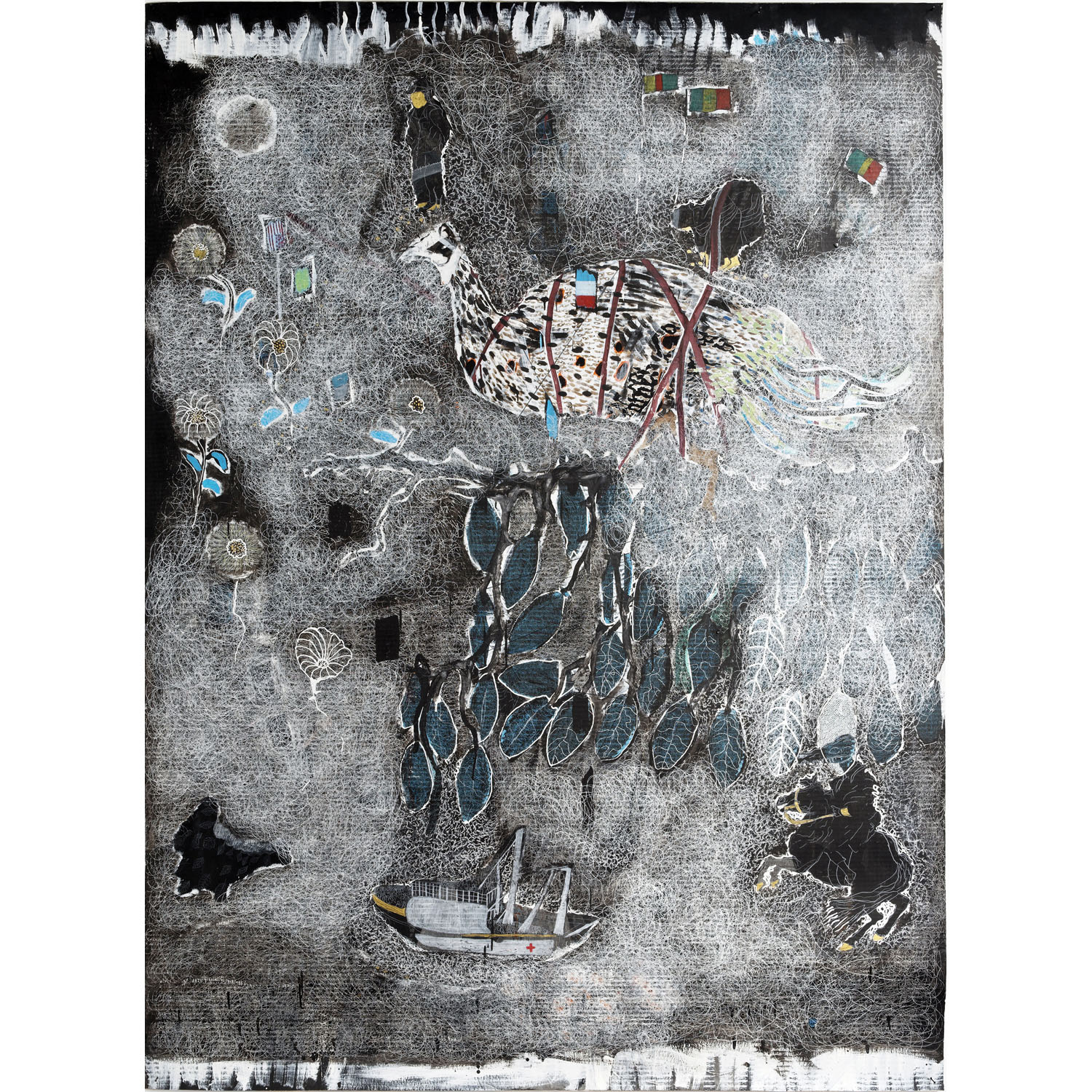
Omar Ba (né en 1977, Sénégal)
This Way is Not Easy 2, 2011
Estimation : 25000 / 35000 €
Mwenze Kibwanga
Born in 1925 in Kilumba in the Katanga region of the Democratic Republic of Congo. He frequented the Hanger, the name given to the studio of the Belgian painter Pierre-Romain Desfossés, before joining the Académie des Beaux-Arts d'Élisabethville in 1954, where he would end up giving courses. The artistic movement of which he is one of the members is characterized by rural and popular iconography (hunting and fishing scenes, village life, local fauna and flora).
Mwenze Kibwanga has exhibited at the National Museum in Kinshasa but also abroad, notably in Switzerland. His work is now presented in the collections of the Royal Museum for Central Africa and the MoMA in New York.
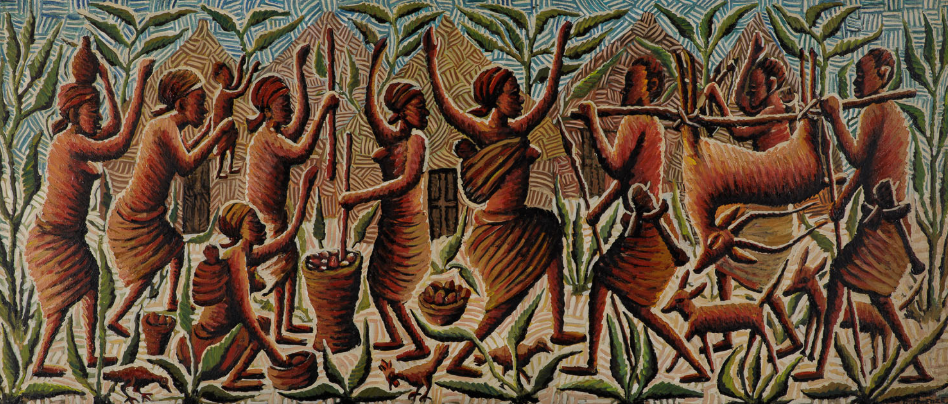
Mwenze Kibwanga (Congo, 1925-1999)
Sans titre (retour de chasse), 1968
Estimation : 10000 / 15000 €
Joseph Ntensibe
Born in Uganda in 1953, the painter Joseph Ntensibe is the author of a pictorial production increasingly prized by international collectors. One of his works, Tropical garden 2, sold for 156,000 euros at the last sale dedicated to contemporary art on 7 November 2019. Resolutely turned towards nature, his works offer a most dreamlike chromatic atmosphere.
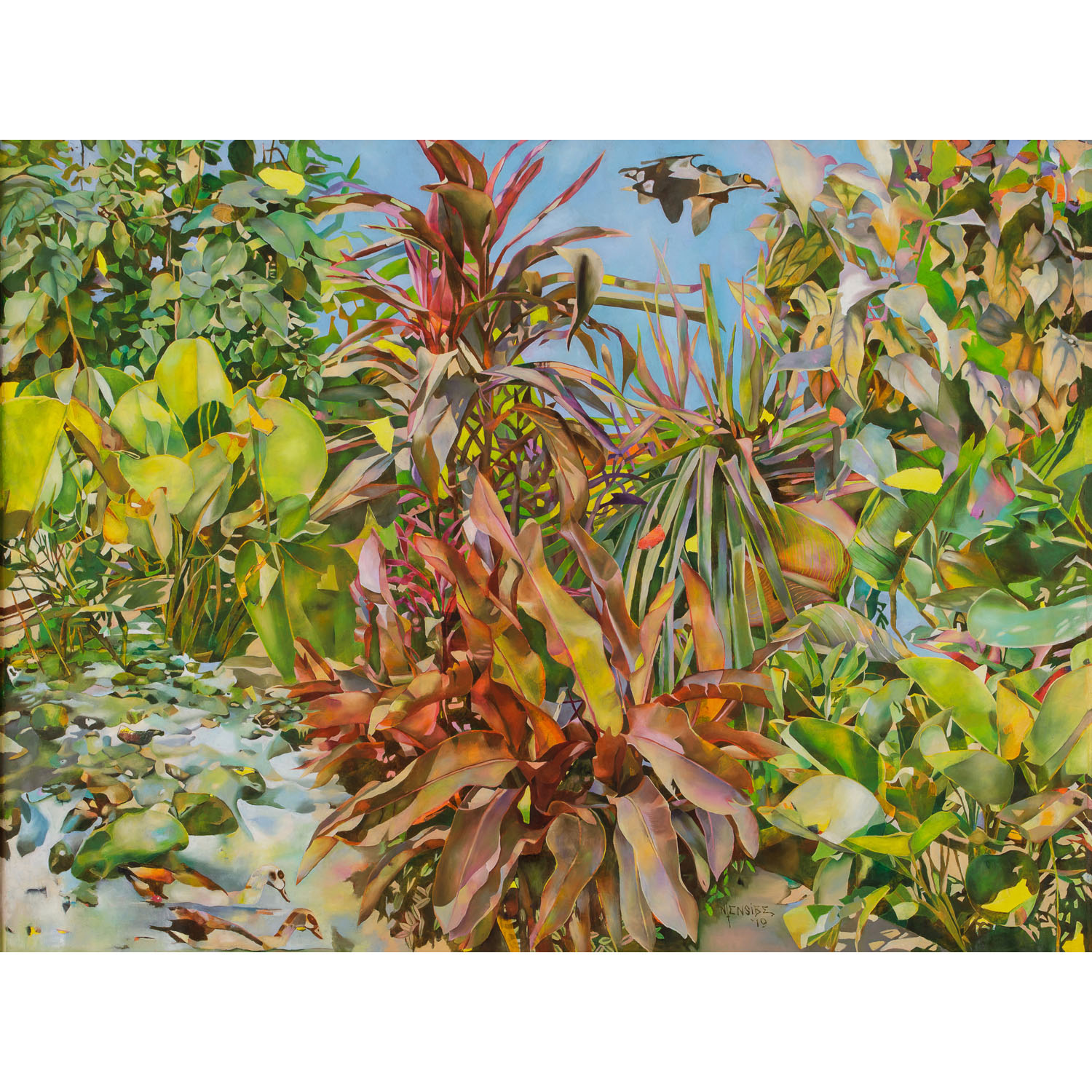
Joseph Ntensibe (né en 1953, Ouganda)
Tropical garden 4, 2019
Estimation : 20000 / 30000 €
Simphiwe Ndzube
Born in 1990 in Hofmeyr, South Africa, Simphiwe Ndzube lives and works between Los Angeles and Cape Town.
Through his hybrid paintings and sculptures, the artist questions postcolonial narratives by proposing dreamlike political landscapes that tend towards universality. From a mythological perspective, his work is characterized by an interaction between objects, media and two-dimensional surfaces.
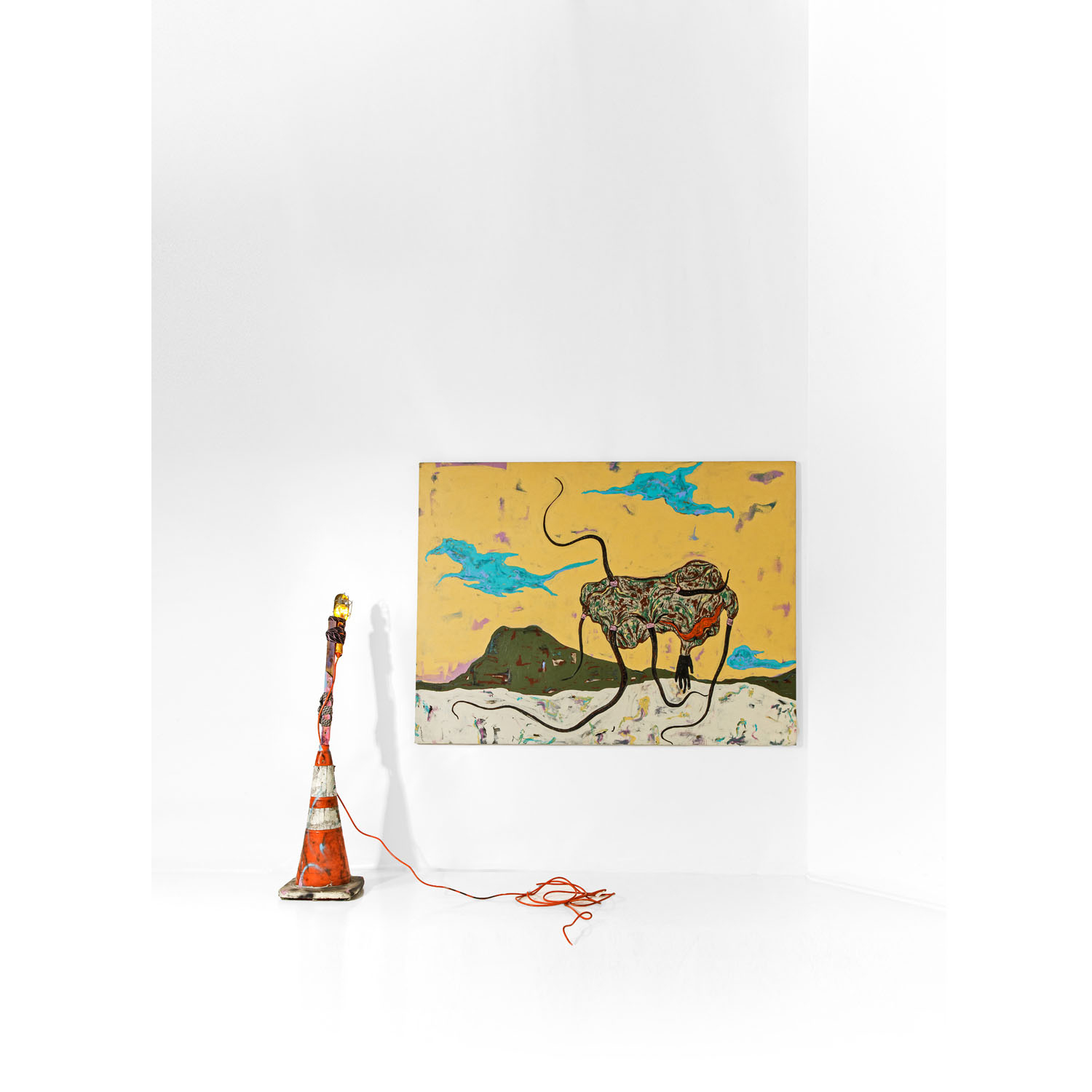
ƒ Simphiwe Ndzube (né en 1990, Afrique du Sud)
Beast and a Beacon, 2017
Estimation : 10000 / 15000 €
Irma Stern
The many portraits Irma Stern painted throughout her life give a glimpse of her close circle of friends; her social acquaintances, supporters and patrons. While Stern often worked with models, "society portraits" were commissioned where resemblance to the commissioner was paramount.
Dora Sowden was the eccentric music and arts critic for The Rand Daily Mail newspaper in the 1940s and 1950s in Johannesburg. She was married to the famous novelist, poet and cultural affairs writer Lewis Sowden who, in 1935, introduced Stern in his essay on Jewish Art in South Africa. The Sowdens were among the literary and cultural figures of the time. Lewis also published a review of Stern's November 1943 exhibition at the Gainsborough Galleries, the year in which this magnificent portrait of Dora lost in thought and wearing her signature scarf was painted.
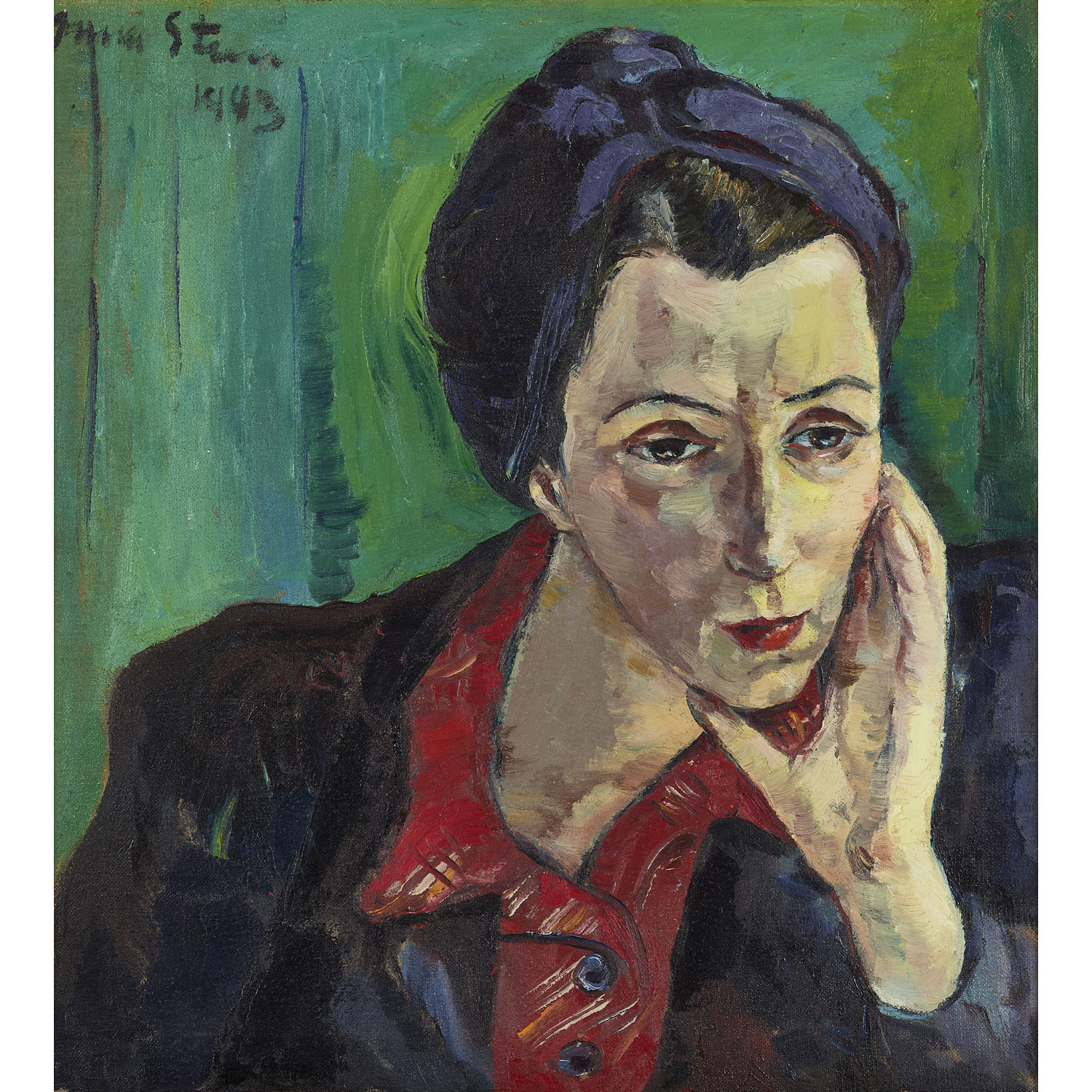
ƒ Irma Stern (1884-1966, Afrique du Sud)
Portrait de Dora Sowden, 1943
Estimation : 150000 / 250000 €
Gerard Sekoto
Gerard Sekoto's early works rarely appear on the market. Made before he left for Paris in 1947, they are much sought after by collectors who appreciate their importance. Barbara Lindop, a friend of the artist and author of numerous publications on his work, spoke of her amazement at "the humanity of his pre-exile paintings, free of sentimentalism, faithful to the truth and with a poignant realism to reveal the heroism of ordinary human life".
In 1938, Sekoto moved to Sophiatown, Johannesburg's legendary black cultural centre, celebrated by Miriam Makeba as "the songbird of Africa". Men gather at the end of the day to drink a beer as the slowly setting sun casts its long shadows. Sekoto's painting is one of the first depictions of black people painted with empathy by a black artist. Sekoto
portrays his fellow man with sensitivity and warmth... The tonal variations of the primary colours create a syncopated rhythm while the warm, bright light underlines the camaraderie between men.
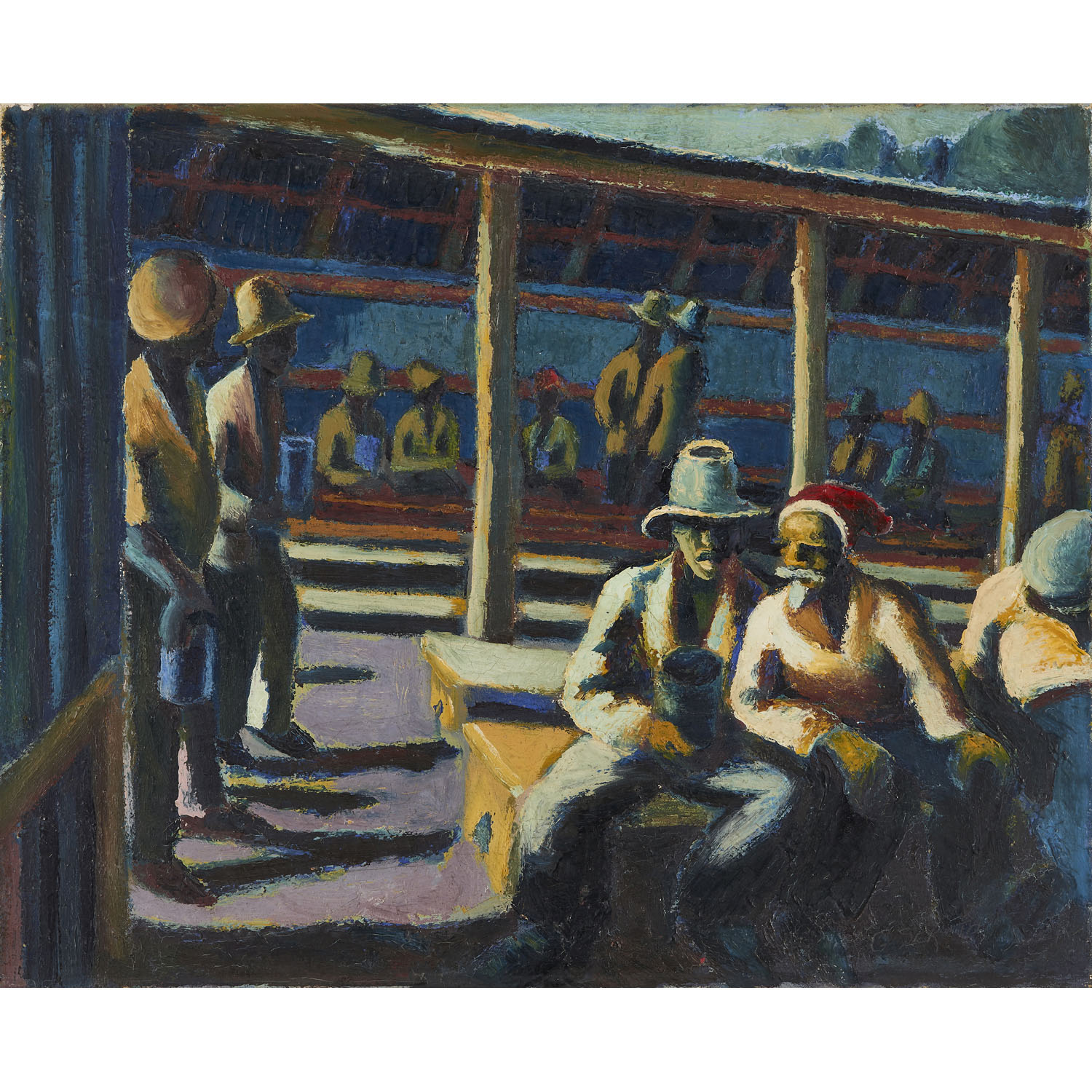
ƒ Gerard Sekoto (1913-1993, Afrique du Sud)
In the beer hall, 1939-1940
Estimation : 75000 / 100000 €
Nicholas Hlobo
Nicholas Hlobo is known for his large, fluid and organic sculptures that are both formal and highly structured. His work focuses on femininity and masculinity through the use of materials such as ribbons, rubber tubes, organza, lace, canvas, paper and found objects.
Hlobo won the Tollman Award for Visual Art 2006, the Standard Bank Young Artist Award 2009, and was a finalist for the Future Generation Art Prize in 2010. The same year he was selected as a "protégé" by Sir Anish Kapoor for the Rolex Mentor and Protégé Arts Initiative.
Although a leading figure in the first market, Hlobo's work has appeared at auction less than ten times.
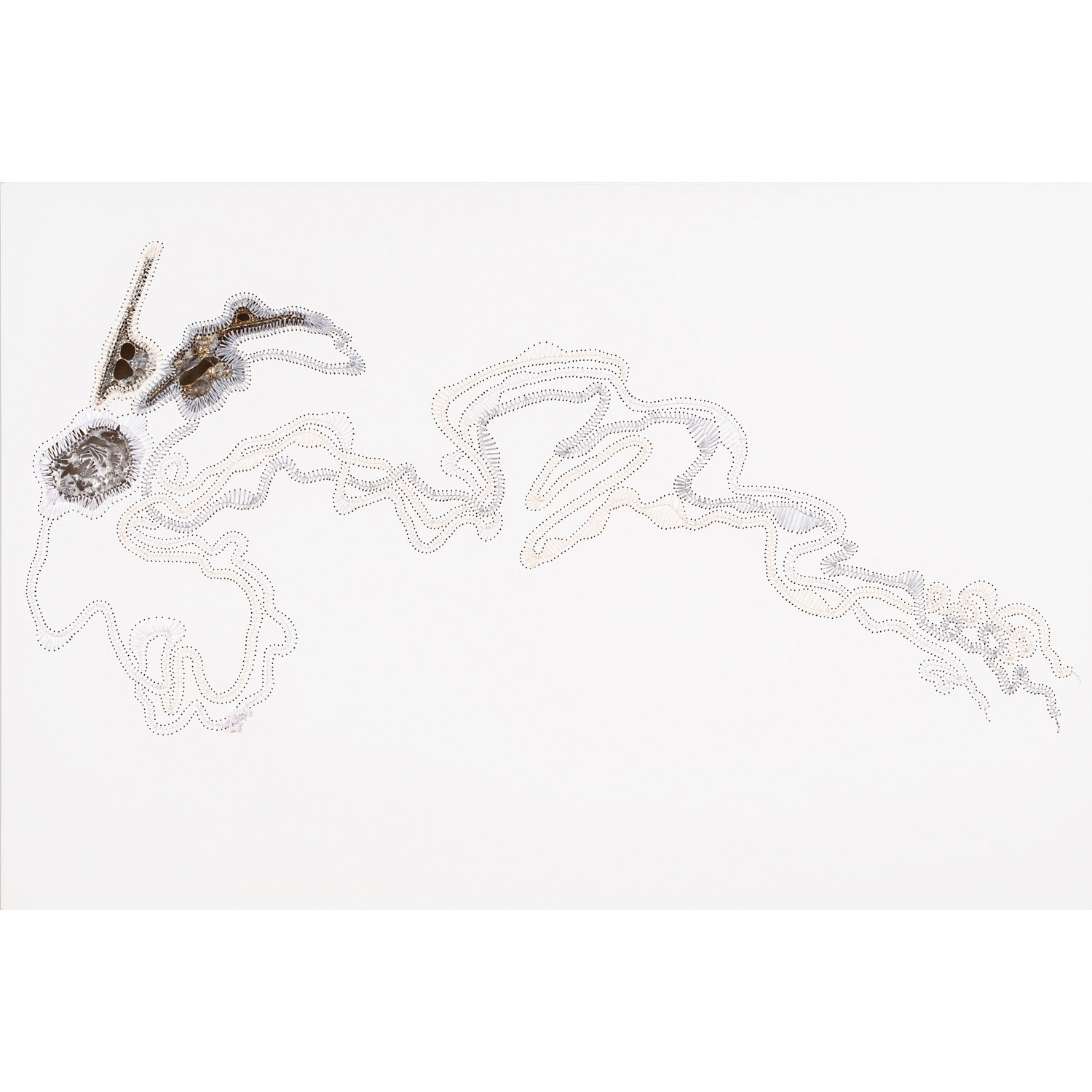
ƒ Nicholas Hlobo (né en 1975, Afrique du Sud)
Umfanekiso, 2012
Estimation : 45000 / 55000 €