


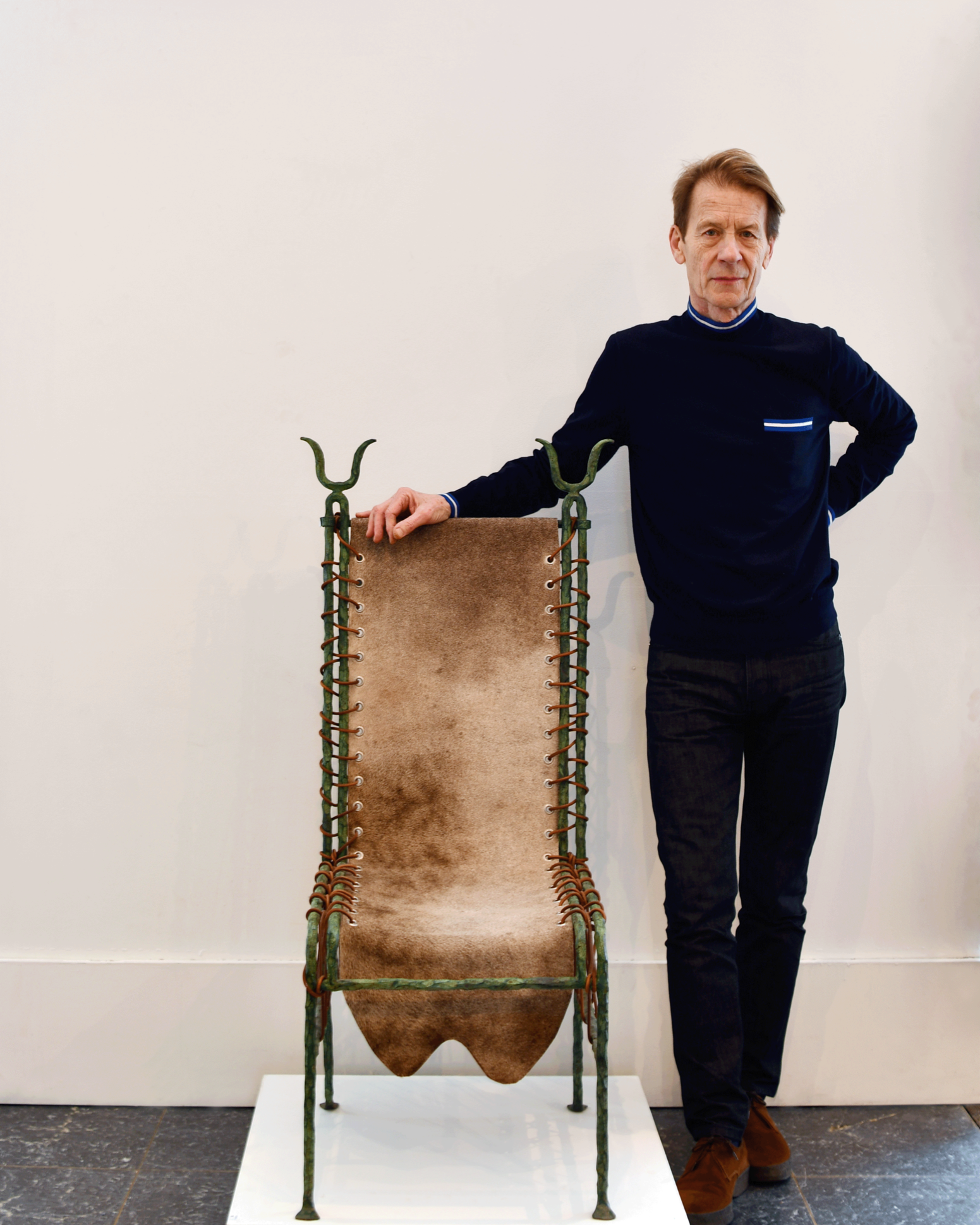
Mattia Bonetti and chair "Barbare". Exhibition "The Cat-Berro Collection: 40 Years of Design".
Piasa, 75008 Paris. Photo courtesy of Piasa.
On Wedneday, April 5th, Piasa is holding an auction featuring part of the collection of editor Francis Cat-Berro. A look at the emblematic piece, the "Barbare" chair by Elizabeth Garouste and Mattia Bonetti.
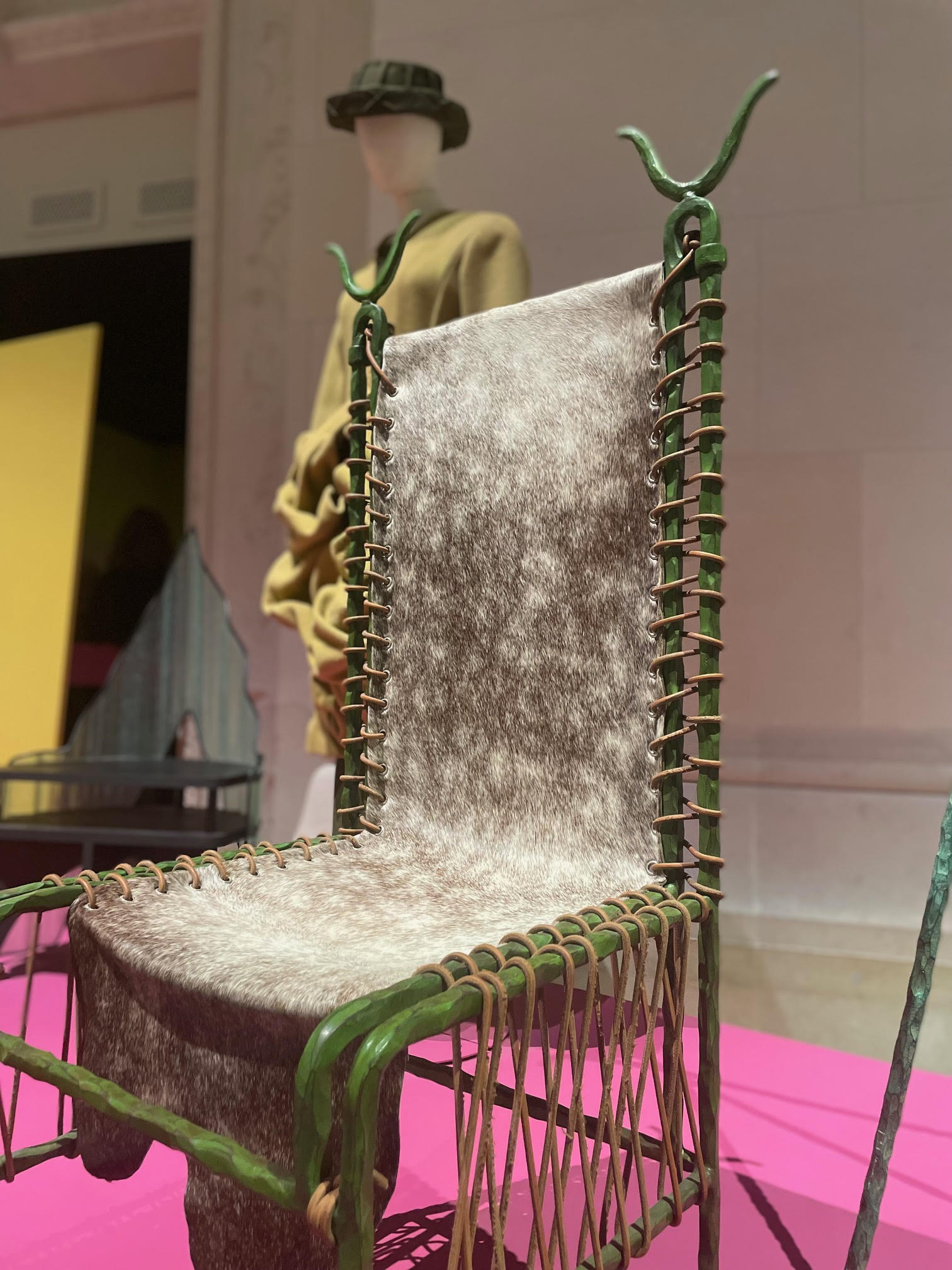
Exhibition "1980s. Fashion, Design, and Graphic Design in France".
Decorative Arts Museum, 75001 Paris. Photo DR.
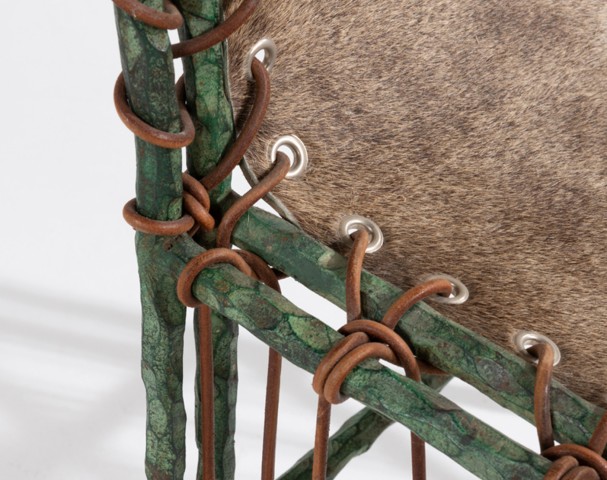
"Prehistoric Furniture" (New York Times, October 1981), "Ethno Design" (Libération, February 1982), "Prehistoric Chic" (House & Garden, April 1984). When Elisabeth Garouste and Mattia Bonetti presented their first collection of furniture and objects on Rue Royale in the venerable Maison Jansen in 1981, the success of the exhibition was immediate. The press was thrilled by the novelty and radicalness of this iconoclastic design. "We had, with Elizabeth, a desire to break away and find a new starting point, from which we could source a new genesis of creation," recalls Mattia Bonetti. "The idea was to flip existing values on their head: to make archeology the cutting edge of modernity." The "Barbare" chair rapidly became one of the key pieces of the collection. "The wrought iron parts of the very first ones were handmade by working priests in Tuscany," recalls the designer. Speaking with Libération at the time, Elizabeth Garouste added, "We wanted … to treat furniture like an ornament, by inventing 'matériages'. Everything as an illusion, like in theatre." The faux-bronze patina in oxidized metal and patinated aniline reminds us of this quest to dramatize the everyday. The foal leather, stretched and attached with leather lanyards to the structure, reinforces the furniture's prehistoric aspect.
The designers' meeting of Pierre Staudenmeyer, co-founder of the Néotù Gallery with Gérard Dalmon in 1984, marked a turning point in both of their careers. He offered to launch a limited edition series of their works, and the "Barbare" chair soon became his favorite piece. "I think that Pierre wanted to keep the pieces to 100 only," recalls Mattia Bonetti. "I don't even know if he made them all. I only know of three, personally." Francis Cat-Berro's copy is one of the three. As a collaborator of the Néotù Gallery, he collected Garouste and Bonetti's works early on. When the gallery closed in 2001, he took up the torch and became the official editor. The "Barbare" chair, designed "like you would a fashion collection, an idea, or a desire" became an emblem of the unique glamor of the 1980s.
- Elizabeth Garouste, Libération, February 1st, 1982.
- "The Cat-Berro Collection: 40 Years of Design". Piasa, 118, rue du faubourg Saint-Honoré, 75008 Paris, Wednesday, April 5th, 5pm.
