


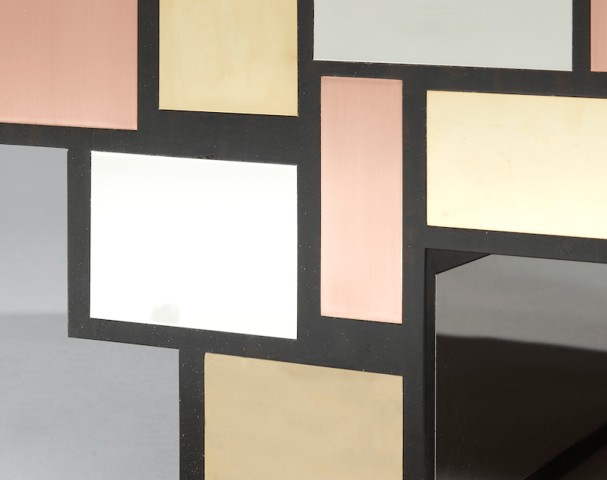
"My collection is not carried by nostalgia or a look at the past, but by a passion for living in the present." - Francis Cat-Berro, February 2023.
On April 5th, PIASA is organizing a sale of the design collection of Francis Cat-Berro. This design sale is a testimony to an entire period which brought French design to the forefront of the international scene.
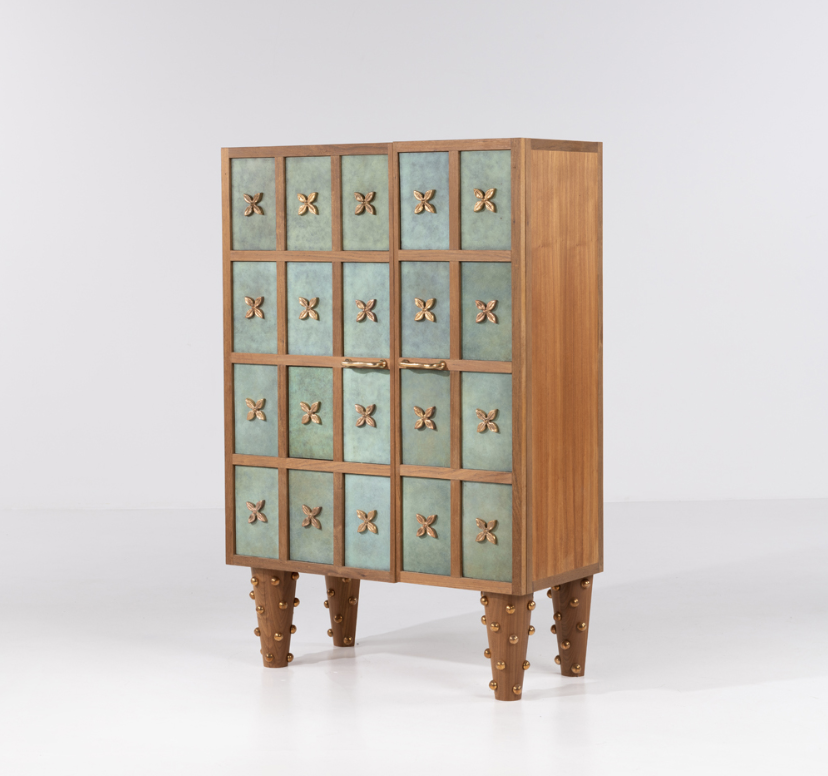
"The 80's" evokes a period of intense creativity, an overlap of all paradoxes and contradictory desires. In all fields, from art and fashion to architecture and design, the driving purpose of it all is a liberating eruption of expression. Design is a mirror of society and consumer culture expresses eclectic tastes, pushed by marketing strategies and media support. It is in this way that the cult of the star designer emerges. Numerous schools of thoughts have developed regarding the defining qualities of objects, the meaning of design as a metier, and new challenges ahead: the Punk and Memphis movements, postmodernism, minimalism, deconstructivism. Their commonality is their degree of irrationality.
Francis Cat-Berro observed this creative effervescence from his father André's traditional cabinetmaking workshop, which he joined at the end of the 1970s. A decisive meeting with Pierre Staudenmeyer, head of a contemporary design gallery, would ultimately push him towards contemporary furniture. The Néotù gallery, founded in 1984 by Gérard Dalmon and Pierre Staudenmeyer and located in the fashionable area of the Centre Pompidou, presented young designers' furniture for the first time in its "white cube" section of its gallery, lifting up a generation that questioned society through the language of forms and techniques. This gallery was soon picked up by the press, who enthusiastically declared that "the Neotu has launched the Neo-everything".
At the time, these designers were still obscure, coming from all horizons: Jasper Morrison, André Dubreuil, Sue Golden, John Webb, François Bauchet, Martin Szekely, Sylvain Dubuisson, Ron Arad, Zeus, Pucci de Rossi, and Dan Friedman. The gallery introduced design in a new economic system -- that of the limited series -- which piqued the taste and the desire to collect, following the example of sculpture. As soon as he met Pierre Staudenmeyer in the mid-1980s, Francis Cat-Berro began to build his collection, sensing that a new energy was underway and expressing his desire to participate in this creative renewal.
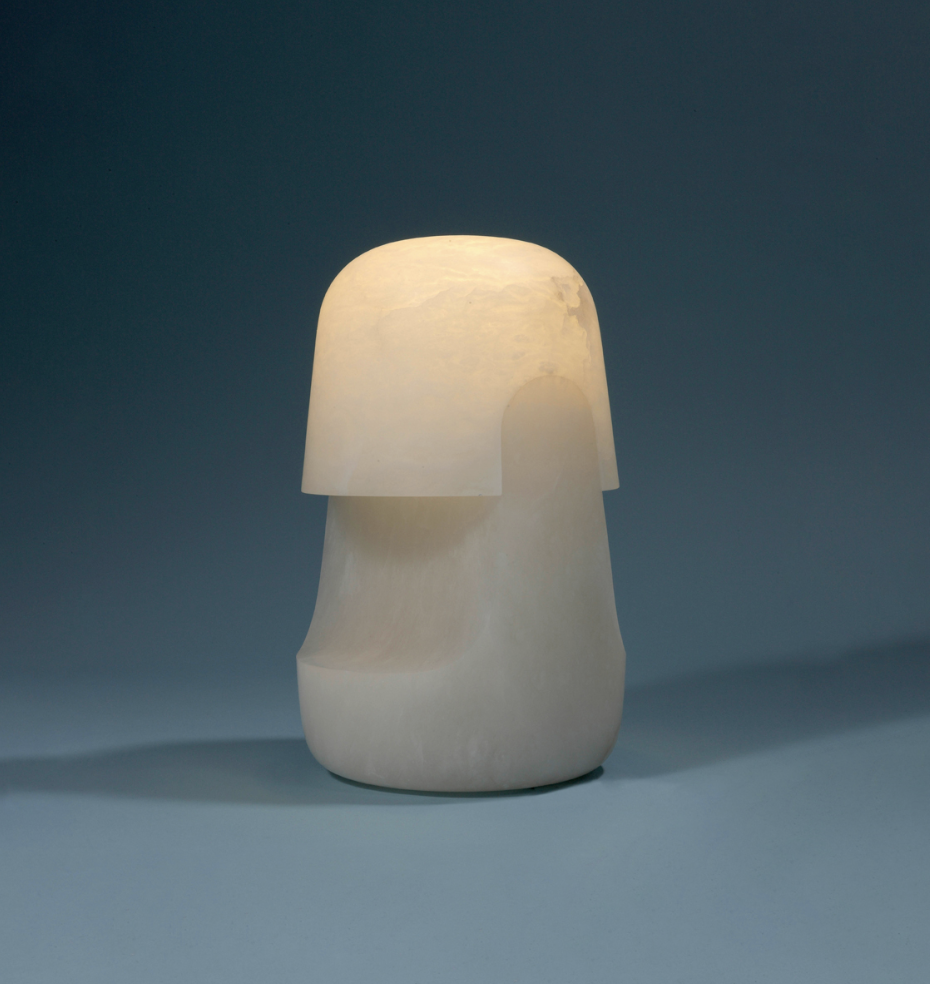
Eric Schmitt (born in 1955)
Lampyre - Artist's proof 4
Estimate: 12000 / 18000 €
Francis Cat-Berro initially established himself as an exceptional collaborator, contributing to the projects of the gallery owners with his atelier experience. He created contemporary and complex furniture, and his first collaboration with Staudenmeyer came to life as the Jasper Morrison Plywood desk. This was a revolution for the atelier. The works follow one another with Garouste and Bonetti, Christian and Elizabeth Migeon, Eric Schmitt, and Jacques Jarrige.
He would continue to expand his network and assert his taste by producing furniture, such as the "Zaire" pedestal table by Garouste and Bonetti (1998).
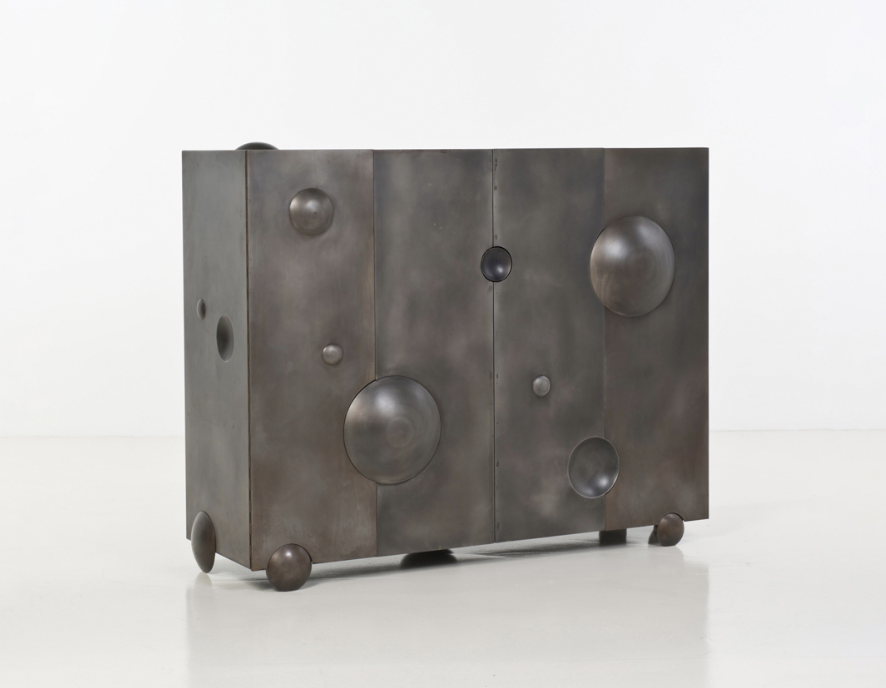
Mattia Bonetti (born in 1952)
Bubble - N°2/8 Sideboard
Estimate: 40000 / 60000 €
In 2006, in collaboration with Véronique Sainten, he opened the Cat-Berro gallery in Paris in the 6th arrondissement where they passionately assert their style still today. The designers from the atelier remained faithful to them; Mattia Bonetti, Jacques Jarrige, Eric Schmitt, and Olivier Gagnère confidently accepted to embark on the gallery adventure. Designers Patrick Naggar, Pucci de Rossi, and Christian Biecher joined in as well. They produced a corpus of remarkable works, through monographic or collective exhibitions, renewing and transgressing the laws of traditional cabinetmaking by giving free rein to their designers.
In the 2000's, they met young people such as Constance Guisset, Laurent Corio, Gaëlle Gabilet, and Stéphane Villard, whose reflection introduced poetry and new uses. By choosing to produce the work of the designers of their time, Francis Cat-Berro and Véronique Sainten proposed "collectible design". With a path based on innovation, open-mindedness, and know-how, the pair renewed the typology of furniture and, in turn, made this discipline a part of history. The gallery on rue Guénégaud closed in 2018.
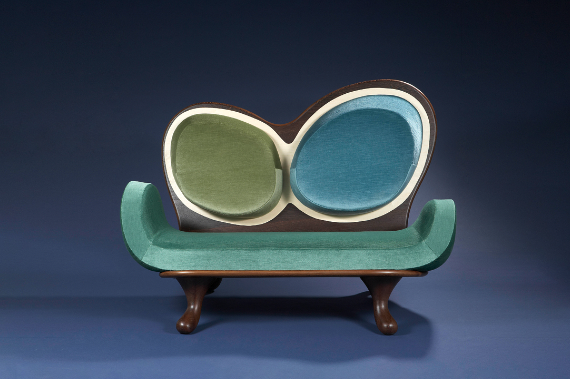
Mattia Bonetti (born in 1952)
Surf - Unique piece, Sofa
Estimate: 10000 / 15000 €
Francis Cat-Berro, driven by an insatiable taste for the culture of the object, has built up an eclectic collection that bears witness to his era from the very beginning. Over the years, he has purchased rare and exceptional pieces that have gone on to become icons, such as the "Barbarian" chair and the "Arc-en-ciel" desk chair by Garouste and Bonetti, the "Jumbo" throne by Pucci de Rossi, the "Sylvia" cup by Martin Szekely for the Val-Saint-Lambert, the "Surf" sofa by Mattia Bonetti or the "Lampyre" lamp by Eric Schmitt. Today, Francis Cat-Berro is turning a page and selling his collection that covers 40 years of creations, from the mid-80s to today.
A true testimony to his enlightened commitment, the 160 objects in this collection are a reflection via forms, colors, and functions of the remarkable invention of the human spirit in the service of design from the 80s to the 2000s.
- Anne Bony
