


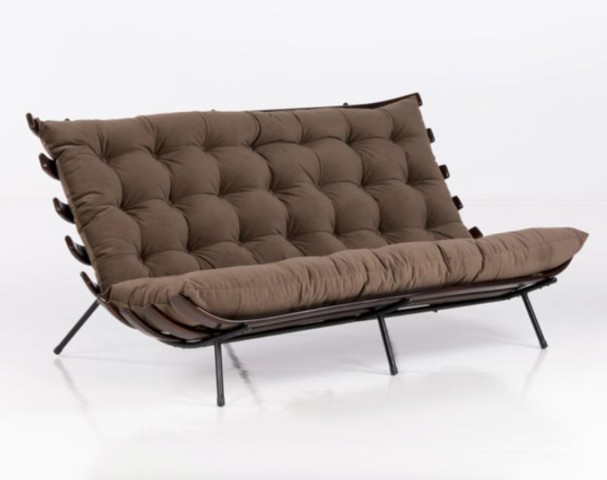
As part of its online vacation "Art + Design II", PIASA is offering for sale a sofa signed by one of the leading figures of Italian design, Carlo Hauner.
Born in Brescia in Lombardy in 1927, Carlo Hauner studied art and design in Milan before moving to Brazil after the Second World War.
Although he began his career as a painter, it was in furniture making that he achieved excellence. A few months after settling in São Paulo, the designer joined forces with his brother Ernesto Hauner. In the early 1950s, the two brothers bought the factory from Pietro and Lina Bo Bardi. The Moveis Artesanal company was then created. The company produces custom-made pieces commissioned by architects such as Gregori Warchavchik and Lina Bo Bardi. In 1952, Carlo Hauner met the Austrian designer Martin Eisler, who had lived in Argentina since 1938. It will be decisive.
The latter's brother-in-law, Ernesto Wolf, a wealthy businessman, financially supports the creation of the Artesanal gallery. Inaugurated in 1953, it becomes the company Forma. The Forma adventure is a very important milestone in the emergence of Brazilian design and its gradual emancipation from the aesthetic tutelage of the old continent. The result of their collaboration, the furniture produced by Forma is truly anchored in their era, that of industrial design.
They are characterized by the use of tubular metal, allowing the deployment of tapered and tapered shapes. The "Costela" sofa offered for sale by PIASA is made of wood, lacquered metal and textiles.
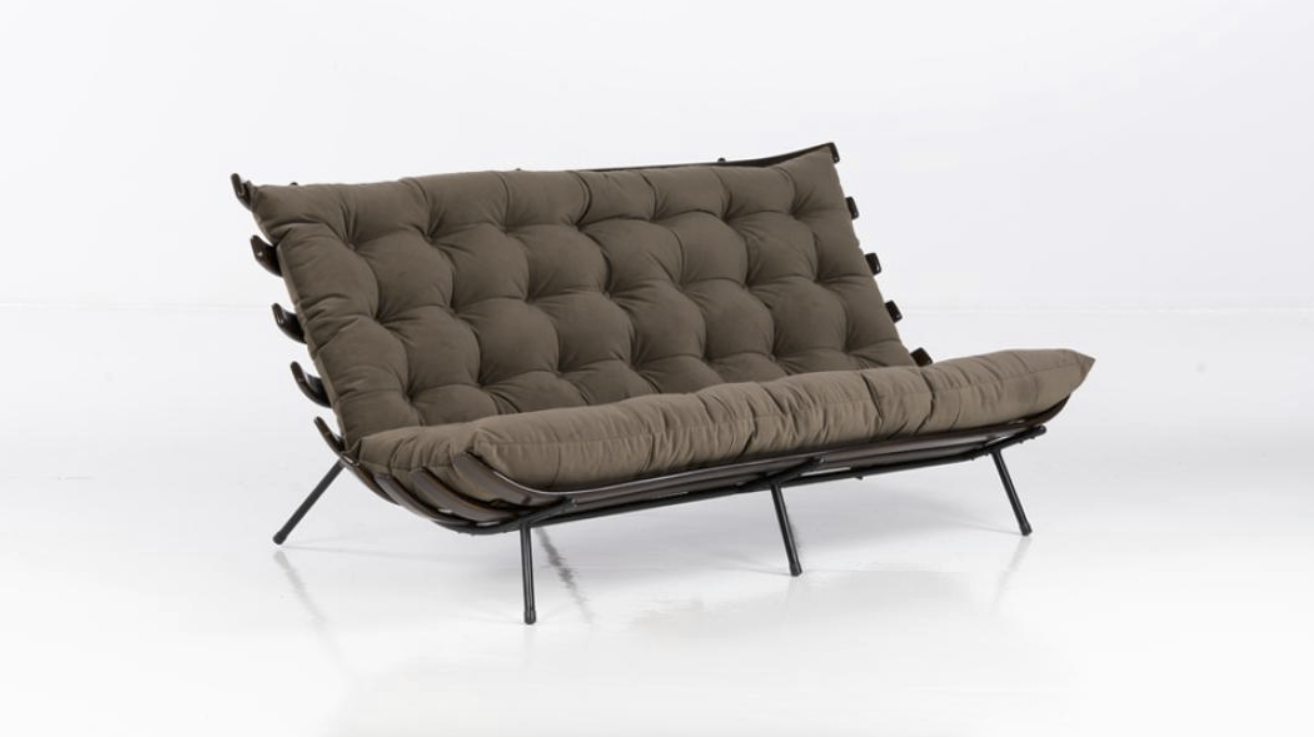
Carlo Hauner (1927-1997)
& Martin Eisler (1913-1977)
Costela
Canapé
Bois, métal laqué et textile
Date de création : années 1950
H 73 × L 161 × P 91 cm
Estimation : 10 000 - 15 000 euros
Dated from the 1950s, it is estimated at between 10,000 and 15,000 euros. For Carlo Hauner, the Brazilian episode lasted only about ten years. At the end of the 1950s, he returned to Italy. A symbol of the hybridity of the designer's career, the company Forma di Brescia, which he founded, supplied desks, chairs and tables to the Brazilian embassy in Rome and then to the Vatican.