


If his fame is largely due to his work as a ceramist, painting is a medium that occupies, from the early years of Axel Johannes Salto's life, a decisive importance. During his training at the Technical College in Copenhagen and then at the Royal Academy of Fine Arts from 1909 onwards, the Italian Renaissance offered him a vast repertoire of iconography from which he would draw throughout his career. The drawings and oil on canvas that he executed allowed him to reinvest mythology and to represent some of the great events in Danish history.
Gradually the surfaces of his paintings witness the appearance of natural motifs which will be the ones he will deploy in his ceramic production in the early 1920s. On the benches of the Academy, Axel Johannes Salto befriends Jens Adolph Jerichau (1890-1916). With this Danish sculptor, whom he frequented assiduously during his stay in Paris, "he was in the habit of strolling the streets of Montmartre, day and night".
In 1909, Salto went to Dresden and saw the exhibition of the group Die Brucke. The woodcuts on display there would have a great influence on the young artist. In notes written years later, he would mention Ernst Ludwig Kirchner, Karl Schmidt-Rottluff and Emil Nolde, praising the inventiveness of their formal language.
In Paris, the young Axel Johannes Salto had the good fortune to meet the painters Henri Matisse (1869-1954) and Pablo Picasso (1881-1973). A real revelation, this first visit was followed by a second, in 1925, during which he had the opportunity to present a series of stoneware tiles, commissioned by the Danish company Bing & Grøndahl, in the Danish pavilion of the International Exhibition of Modern Decorative and Industrial Arts. Axel Johannes Salto thus inaugurated with great pomp and ceremony a successful career during which he produced more than 3,000 pieces, notably in the ceramic workshop Carl Halier in Frederiksberg.
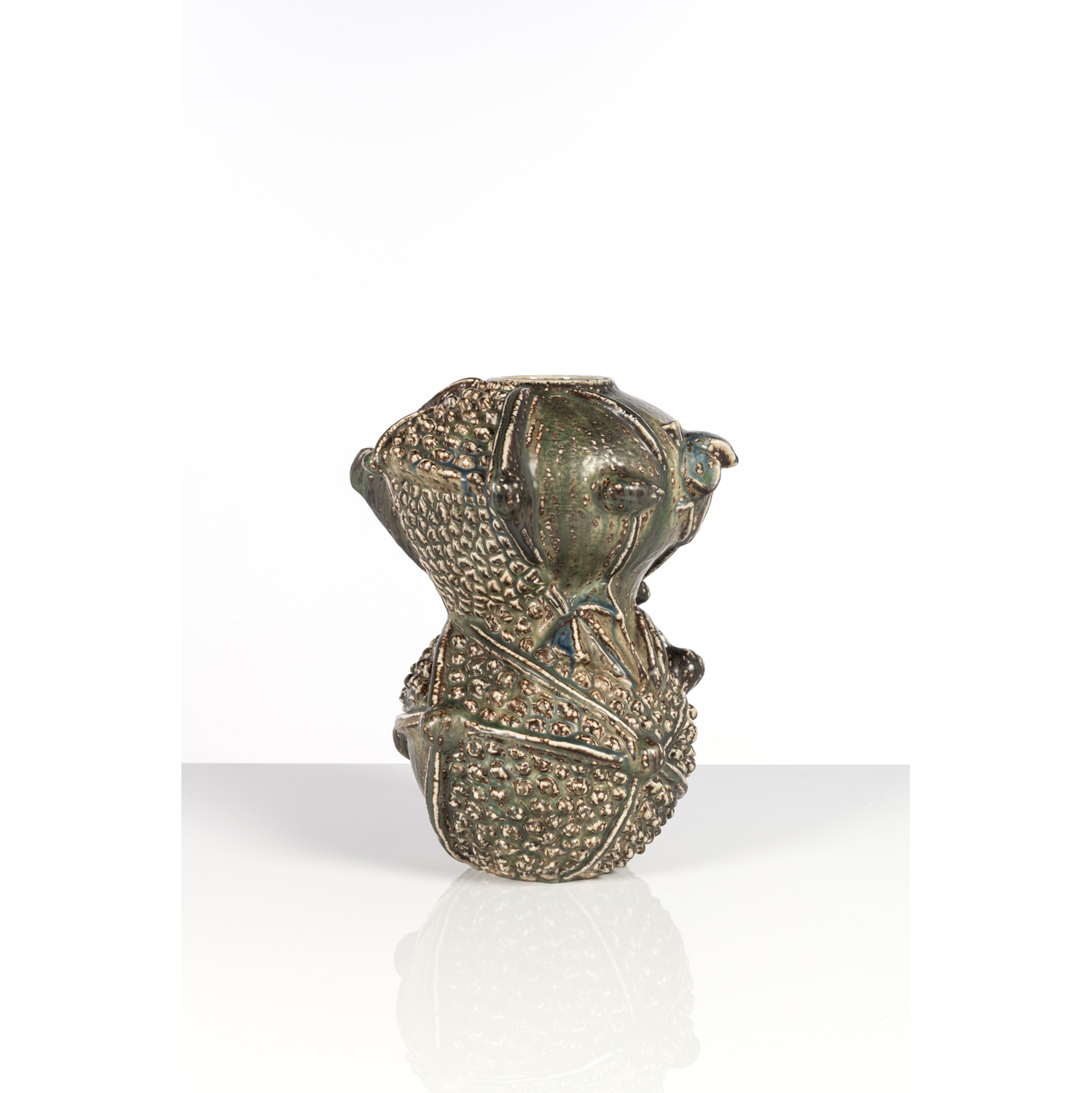 Axel Johannes Salto (1889-1961)
Modèle 21.629
Result: 83200 €
From 1933 onwards, he worked mainly with the Royal Porcelain Manufactory in Copenhagen. The technical virtuosity of the ceramist pushed him to experiment with ambitious glazes that gave the objects an exceptional, recognised and sought-after plastic quality.
From the early 1940s to 1951, Axel Johannes Salto multiplied his stoneware production. Very clean of the material and the technical dimension of his work, the artist will always keep in mind the expressive power that emanates from his pieces.
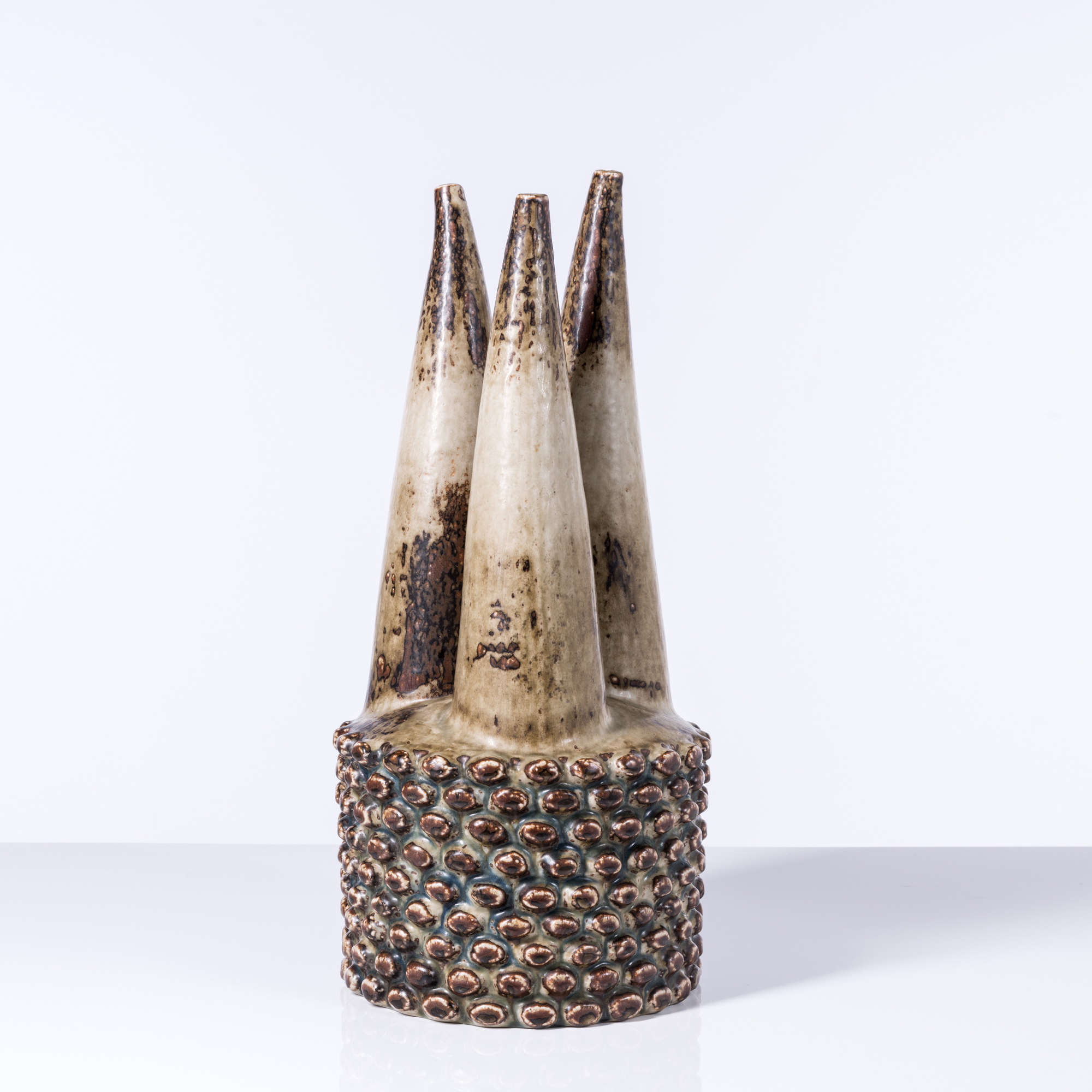 Axel Johannes Salto (1889-1961)
Modèle 21 375
Result: 75400 €
Pieces such as Model 21.629, made in 1959, reflect the artist's taste for working with the material and shaping its surface.
In some pieces, Axel Johannes Salto seems to hesitate between the functionalism of ceramics and the volume of the sculpture. This is the case, for example, with this glazed stoneware germinating vase sold in 2018. The extreme freedom, of which "Le Modèle 21 375" can be considered one of the emblems, allows infinite variation both in terms of colour and texture.
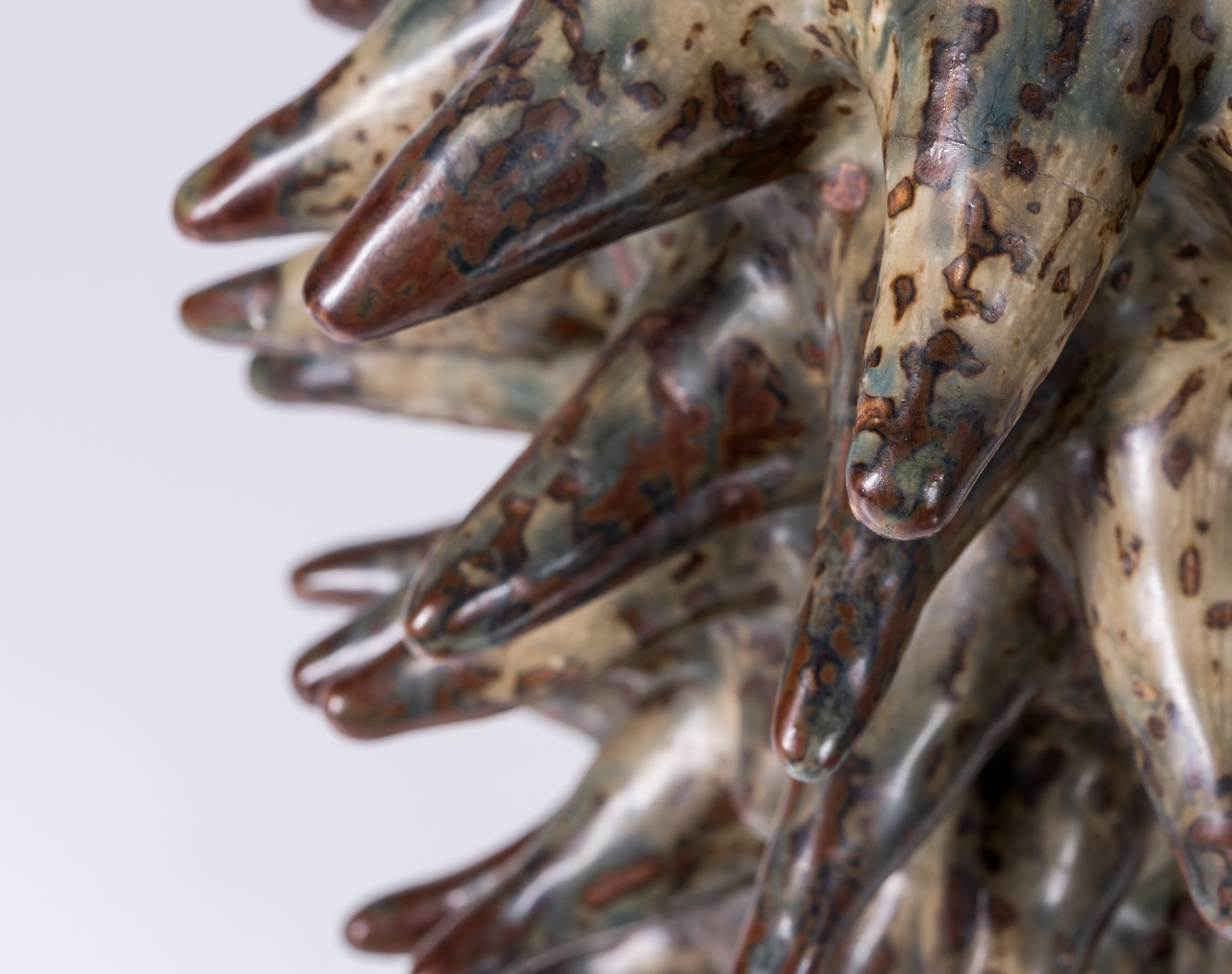
Axel Johannes Salto (1889-1961)
Vase germinatif
Result: 49400 €