


Strongly boosted by its last auction session, which on 7 November 2019 doubled its estimate to €1.43 million, PIASA's African Contemporary Art department, in partnership with ASPIRE auction house, is organising an auction on 14 February 2020 in Cape Town, South Africa. This unprecedented event will take place on the sidelines of the Investec Cape Town Art Fair.
For this sale, which is a first in terms of bringing together a Western auction house and an auction house based on the African continent, PIASA and ASPIRE will pool their networks of collectors and contacts in Europe, the United States and the African continent to offer a selection of works that reflects the richness and diversity of contemporary artistic creation in Africa and its Diaspora.
PIASA will bring its viewpoint and its selection of artists that have earned it its position as a prescriber on the African contemporary art market, acquired since 2014.
Reflecting the diversity of African artistic production, the selection will offer for sale works by artists from scenes already well identified by collectors such as Côte d'Ivoire with Aboudia, Cameroon with Marc Padeu or Congo with Chéri Samba. In keeping with its role as a precursor in this rapidly expanding market, PIASA will also present artists from regions whose artistic intensity is still largely unknown. This is for example the case of Kenya with Peter Ngugi or Sudan represented by the painter Salah Elmur.
Marlène Dumas (born in 1953)
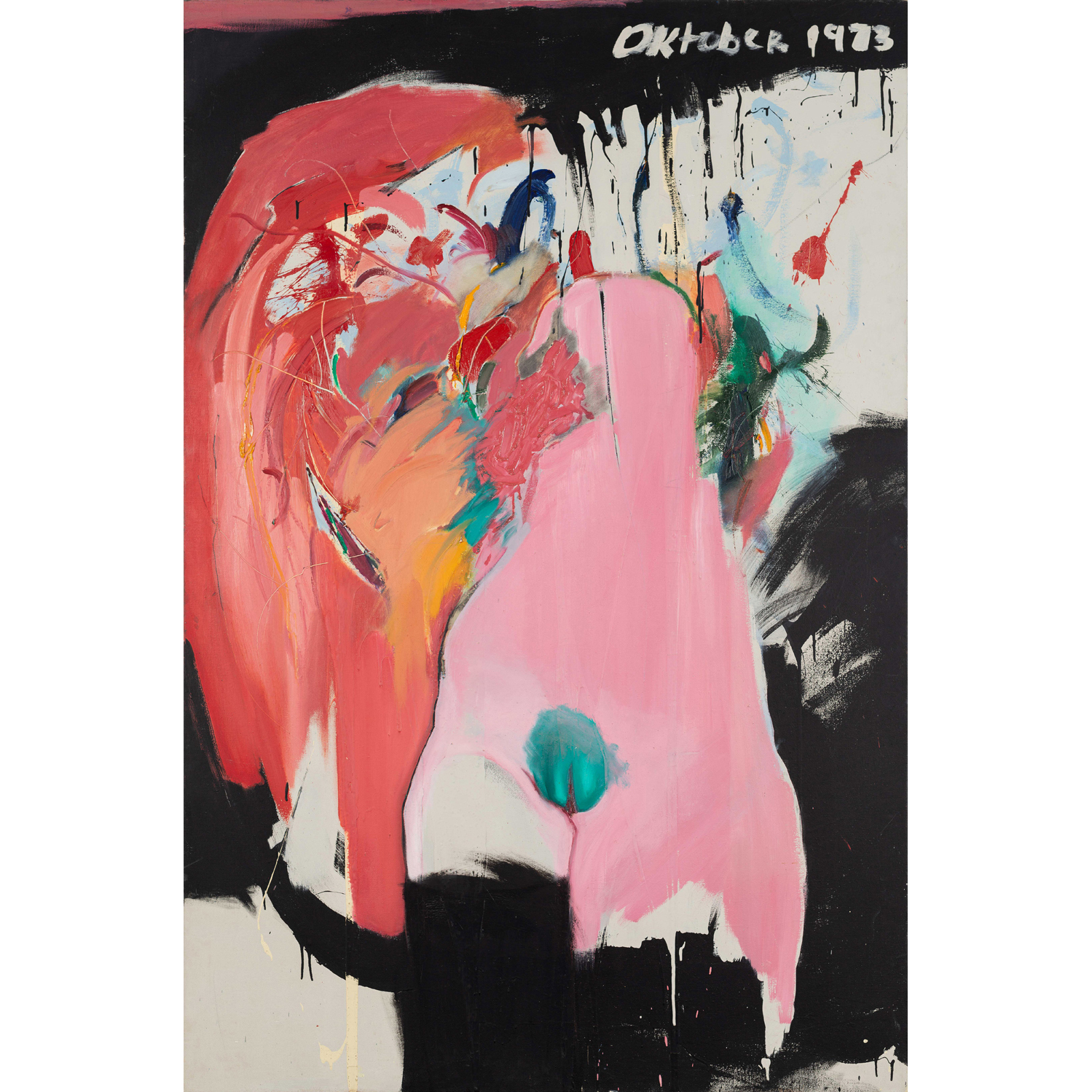
Oktober 1973 is only the third unique Marlene Dumas work ever to be sold at auction locally by this South African-born artist who is widely regarded as one of the most influential painters working today.
Produced in Dumas’ second year at the Michaelis School of Fine Art during a time of local and global student uprisings seeking political and sexual liberation, this remarkable painting fearlessly addresses many of the issues of its time. Its painterly exuberance echoes that of the Abstract Expressionists whose works were admired by her professors like Kevin Atkinson. The subject—erotic passion—prefigures later works such as those in her recent exhibition Myths and Mortals.
Approaching the loaded subject of ‘the nude’, Dumas offers us a refreshingly candid painting of a naked woman in the throes of erotic pleasure. In locating thepristinely smooth pink body—delicious in its contrast to the astonishingly vivid green pudenda with its alizarin crimson genitalia—within a field of pulsating reds, the artist evokes the extraordinary nature of female sexual pleasure and its unique capacity for multi-orgasmic experience, as posited by French psychoanalytic feminists, Julia Kristeva and Luce Irigaray.
Marlène Dumas (born in 1953)
Oil on paper
183,5 x 122,5 cm
Estimation : 189000 / 315000 €
Salah Elmur (born in 1966)
A graduate of the College of Fine and Applied Arts in Khartoum, Salah Elmur is the author of a multidisciplinary body of work that has been exhibited throughout Africa, the Middle East, Europe and North America over the past twenty years. In parallel to his pictorial production, Salah Elmur has made short films and illustrated nearly 35 children's books translated into several languages and widely awarded.
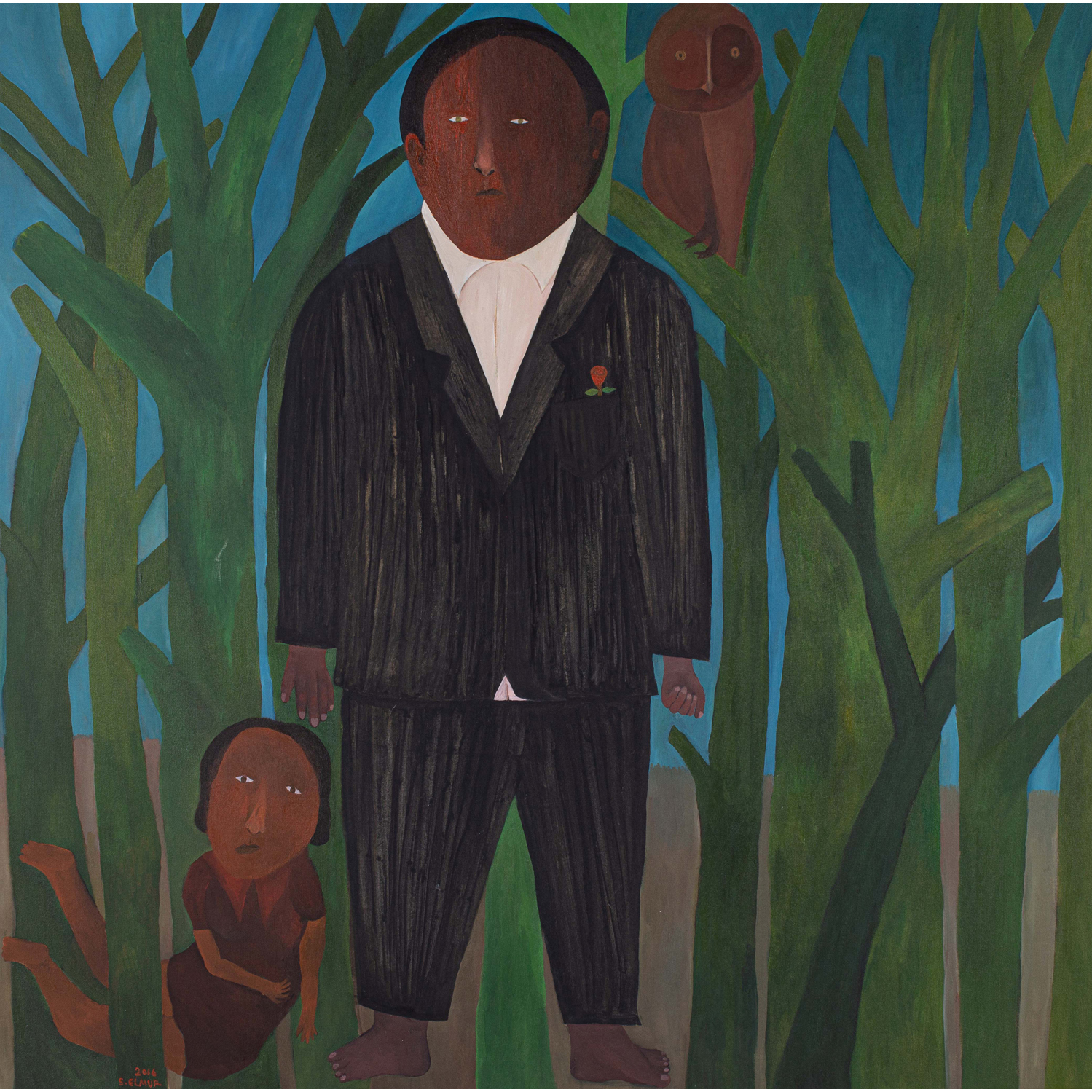
As The Green Forest shows, the plant world occupies a decisive place in his painting. It was the main theme of his last two exhibitions: "Fragrances of the Forest and Photos" at the Sharajah Art Museum in the United Arab Emirates in February 2018 and "Forests and Spirits: figurative art of the Khartoum School", a hanging dedicated to Sudan at the Saatchi Gallery.
The recurrence of this tree-lined presence is reminiscent of the Sunut Forest, a place of leisure and conviviality, located at the junction of the White Nile and the Blue Nile in the centre of Khartoum, the Sudanese capital where the painter was born.
The colour of the sky and the mysterious presence of a stylised owl indicate the last hours of the day. The mutism, the forehead and the disproportion between men and women create an intriguing atmosphere, quick to arouse the viewer's attention.
Salah Elmur (born in 1966, Soudan)
Oil on paper
137.5 x 138 cm
Estimation : 12000 / 16000 €
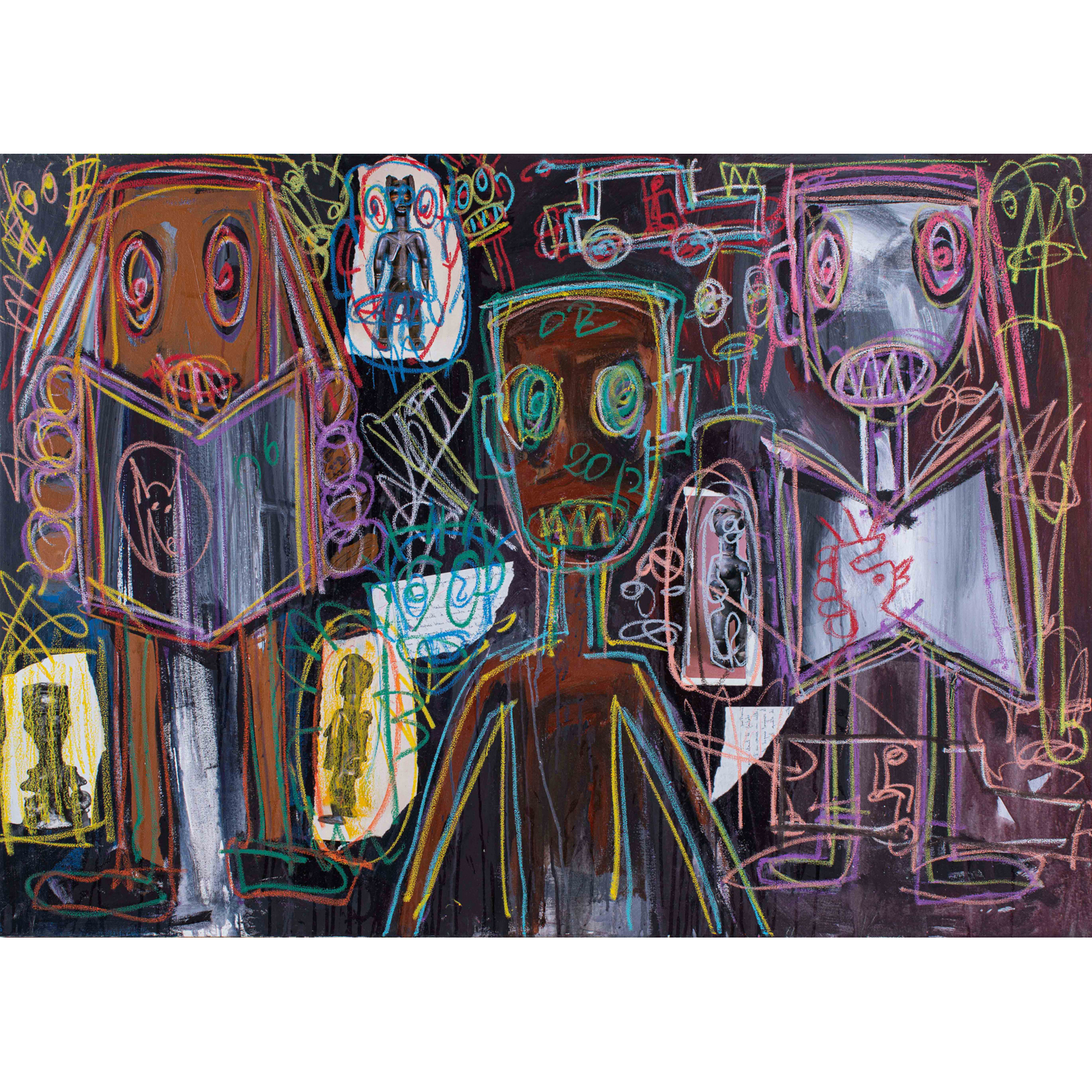
Over the course of the sales, PIASA has succeeded in raising the awareness of an ever-growing public of collectors to the expressive power of the paintings of the Ivorian artist Aboudia.
Aboudia is being spotted by international critics in 2011 thanks to his works documenting the violence of the Ivorian crisis. In 2010, he was in Abidjan when riots broke out following the presidential elections. While many intellectuals and artists prefer to flee the civil war, Aboudia chooses to stay and work despite the danger.
Aboudia's painting is full of children, but they are very different from the photogenic kids in the idealized images of Africa. These children are painted in a naive and brutal way. Their faces are in a permanent state of surprise, not yet blasé by the vision of ordinary scenes of violence. Aboudia paints in the nouchi style, a mixture of the street styles he makes his own, a source of escape in response to the deprivations found on the walls of the neighbourhoods around Abidjan.
Abdoulaye Diarrassouba dit "Aboudia" (born in 1983, Côte d'Ivoire)
Acrylique, pastels gras et collages sur toile
100 x 139 cm
Estimation : 8 000 / 10 000 euros
The Kenyan artist has made clothing - contemporary or traditional - the true subject of his paintings. Usually depicted as feet, the men and women who wear them are often relegated to the rank of simple silhouettes, as in Through the print, done in 2019.
When they are not left untouched, the backgrounds are populated with geometric shapes, objects symbolizing African modernity or plant motifs.
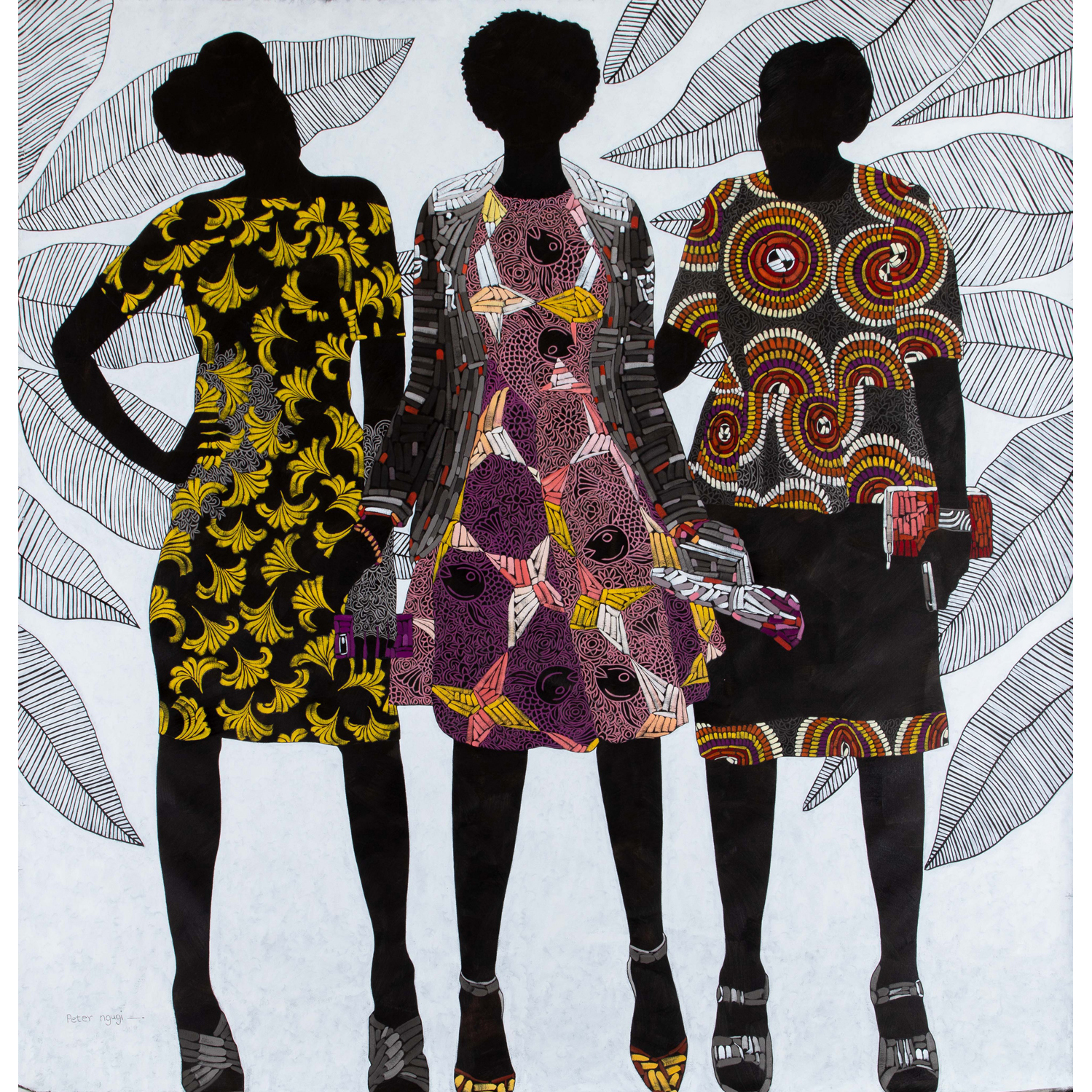
Peter Ngugi (né en 1978, Kenya)
Acrylique sur toile Signée en bas à gauche
208 x 200 cm
Estimation : 6 000 / 8 000 euros
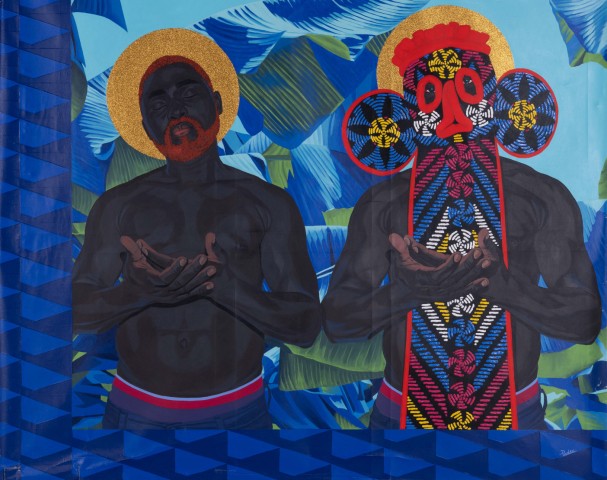
A graduate of the Institute of Fine Arts of the University of Douala (IBA), the young Cameroonian artist Marc Padeu has managed in just a few years to establish himself in the increasingly dynamic landscape of contemporary African art. During the last session organised by PIASA on 7 November 2019, two of his paintings sold for nearly €200,000.
Marc Padeu's paintings are a bridge stretched on both sides of the Mediterranean. While the models that populate his compositions seem to come from African modernity, the scenes depicted make direct reference to the religious paintings of the Italian Renaissance. The prayer scene takes place against a background of banana leaves. The halo encircling the heads of the two men - the emblem of Christianity - is in dialogue with the bamileke mask worn by the figure on the right, symbolising the traditional culture of the artist who still lives and works in his native Cameroon.
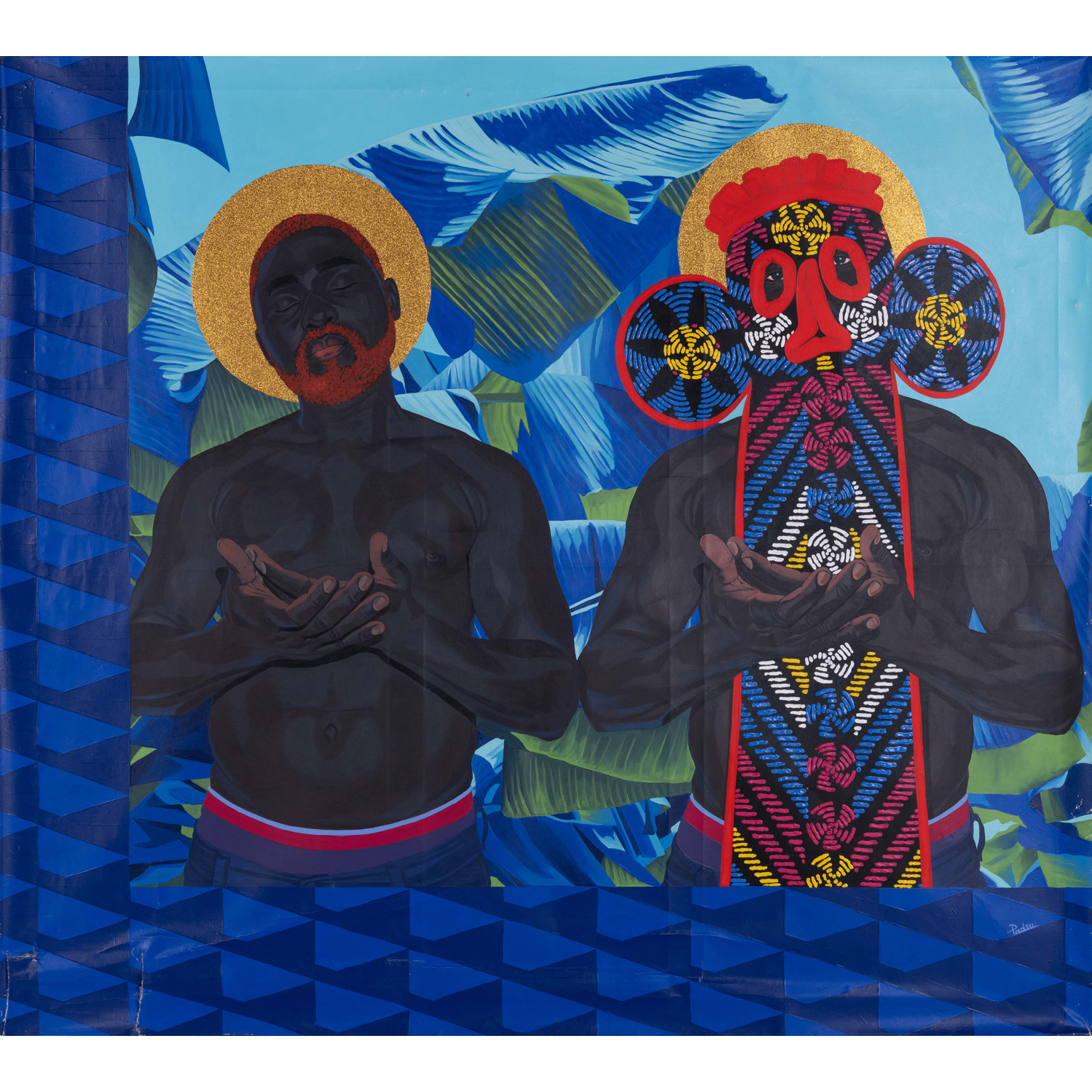
Marc Padeu (né en 1990, Cameroun)
Acrylique et paillettes sur toile
189 x 209 cm
Estimation : 5040 / 8000 €
Mohamed Saïd Chair (born in 1989)
Originally from Tangier, Mohamed Saïd Chair leaves the world of finance, which he entered after his studies, to devote himself fully to the exercise of his passion: painting.
Strongly influenced by figurative aesthetics, notably that shaped by the British painter Lucian Freud, these works depict figures with their heads covered by a cardboard box, thus creating an echo to the cardboard material used as a support.
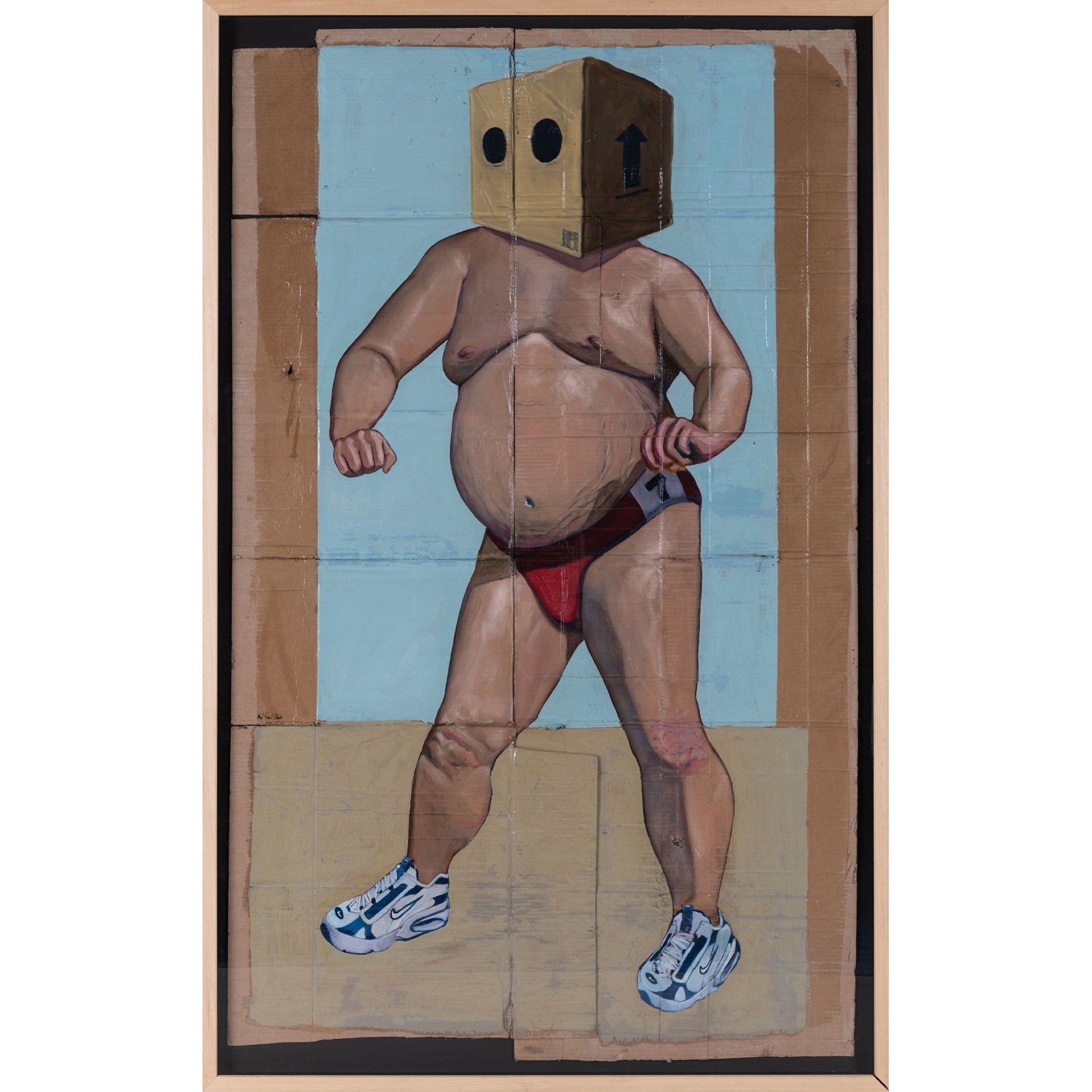
Mohamed Saïd Chair (né en 1989, Maroc)
Huile sur carton
190 x 115 cm
Estimation : 5040 / 8000 €
Chéri Samba (born in 1956)
Chéri Samba made an international name for himself when he took part in the "Les Magiciens de la Terre" exhibition at the Centre Pompidou in 1989. The artist now lives between Kinshasa and Paris and his work is regularly showcased, notably at the 2007 Venice Biennale and at the Louvre's "A Brief History of the Future" exhibition in 2015.
In 1972 this blacksmith's son left his village for Kinshasa at the age of 16 to become a painter for advertising signs. At the same time he worked for the Congolese entertainment magazine Bilenge Info and opened his studio in 1975. He quickly became well known in Congo thanks to the magazine's large circulation. It was during this period that he developed his style which combines painting and text.
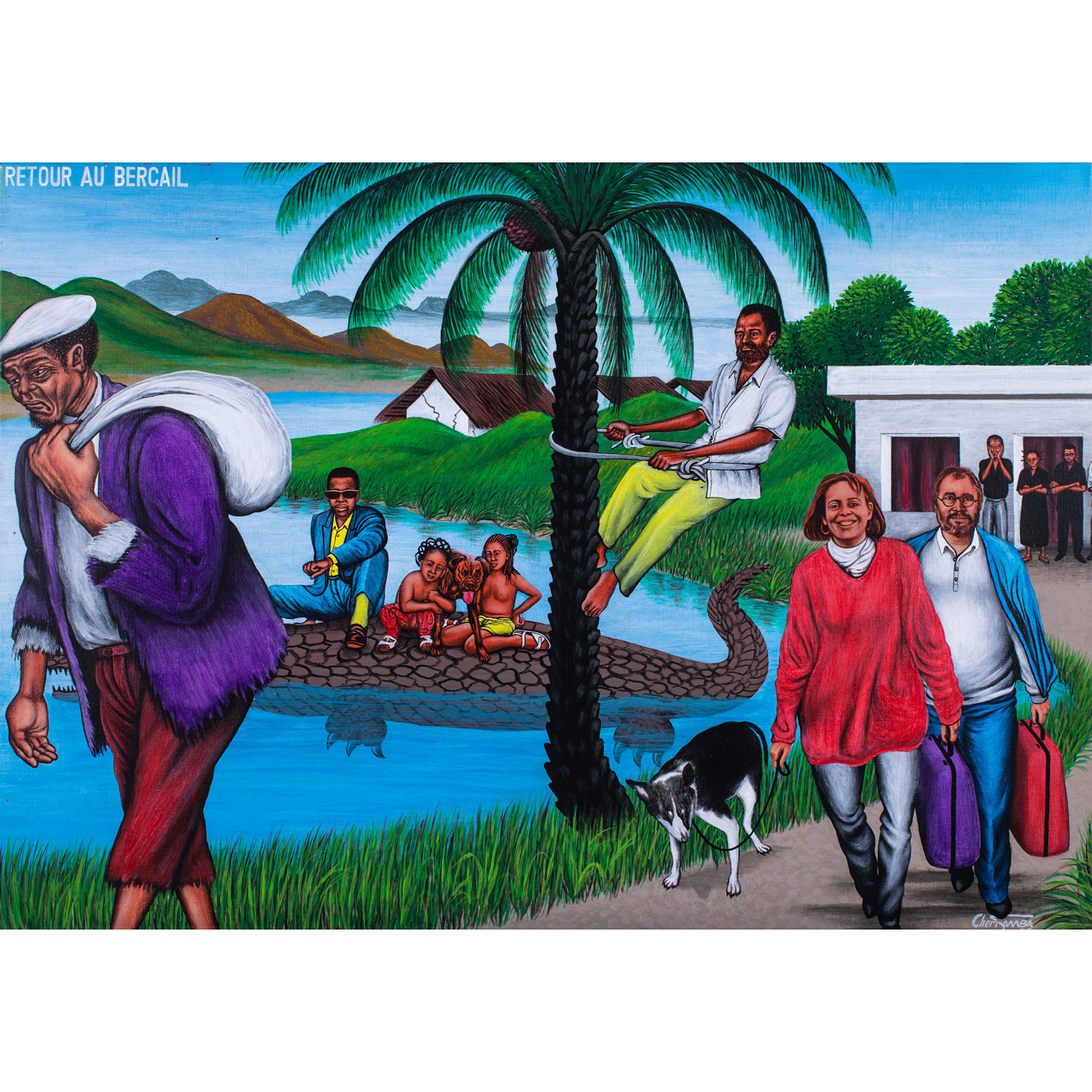
Chéri Samba (né en 1956, République Démocratique du Congo)
Huile sur toile
Signée et datée en bas à droite Titrée en haut à gauche
80 x 113 cm
Estimation : 14 000 / 18 000 euros
Zemba Luzamba (born in 1973)
Before leaving his native country to study at a business school in Lusaka, Zambia, Congolese artist Zemba Luzamba had attended an art school. In 2000, he moved to South Africa.
Hyper realistic, his painting depicts subjects projected in a place where the context, if not totally absent, is very discreet.
Like a vestige of the present time, the New Generation canvas represents both the art of undermining - extremely popular in a number of African societies - but also the new generation's obsession with the self-image reflected in technology.
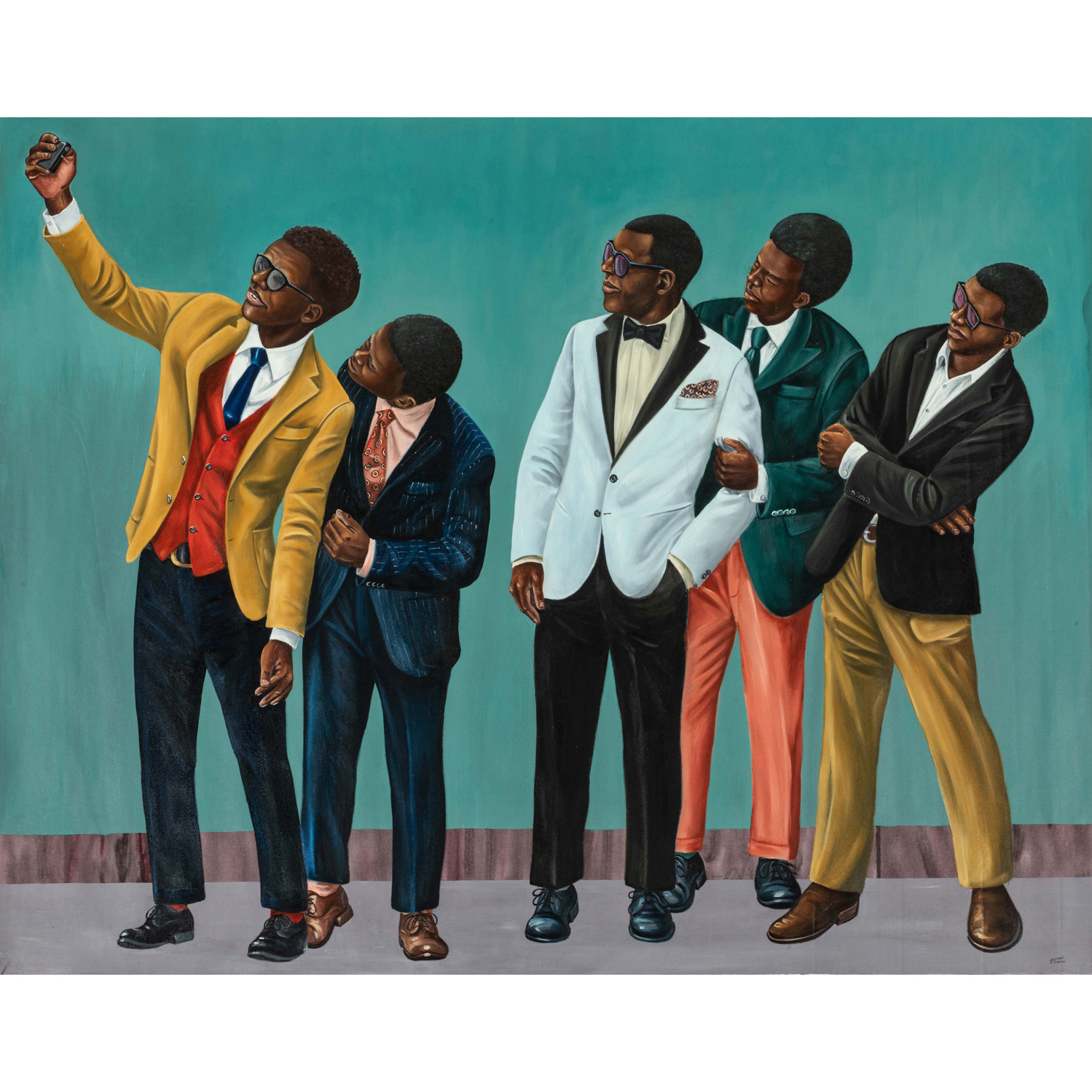
Zemba Luzamba (né en 1973, République Démocratique du Congo)
Huile sur toile
Signée et datée en bas à droite Titrée et datée au dos
134 x 169 cm
Estimation : 6 000 / 8 000 euros
Jacobus Hendrik Pierneef (1886–1957)
JH Pierneef holds a unique place in South African art history and in our imagination. While he had many admirers, there were few—if any—who shared his unique vision, making his paintings as highly sought after today as they were in his day. In this rare early painting, the artist captures the particularities of a specific South African landscape with apparently effortless ease, revealing both the spirit of the place and the quality of outdoor life he so loved and enjoyed. While trees are a favourite subject for Pierneef, baobabs are rare.
This centuryold work is probably his earliest painting of these extraordinary trees found in lowlying areas of Africa and Australia. Growing to enormous sizes, they may live to be 3,000 years old, according to carbon dating.1
The site featured in the painting, the Soutpansberg area, includes Mapungubwe National Park and World Heritage Site as well as the Kruger National Park. According to renowned botanist and horticulturalist Dr Ernst van Jaarsveld, formerly of Kirstenbosch National Botanical Gardens and now at the helm of Babylonstoren, the vegetation of this area is known as Musina Mopane Bushveld which is part of the Savanna Biome. Important trees in the area include mopane (Colophospermum mopane), knob-thorn (Acacia nigrescens), redbush willow (Combretum apiculatum), Sheppard tree (Boscia albitrunca), and various corkwood (Commiphora spp.).
However, it is the baobab which is very common to this area—in fact, more common than anywhere else in southern Africa—that is one of the most spectacular sights to behold.
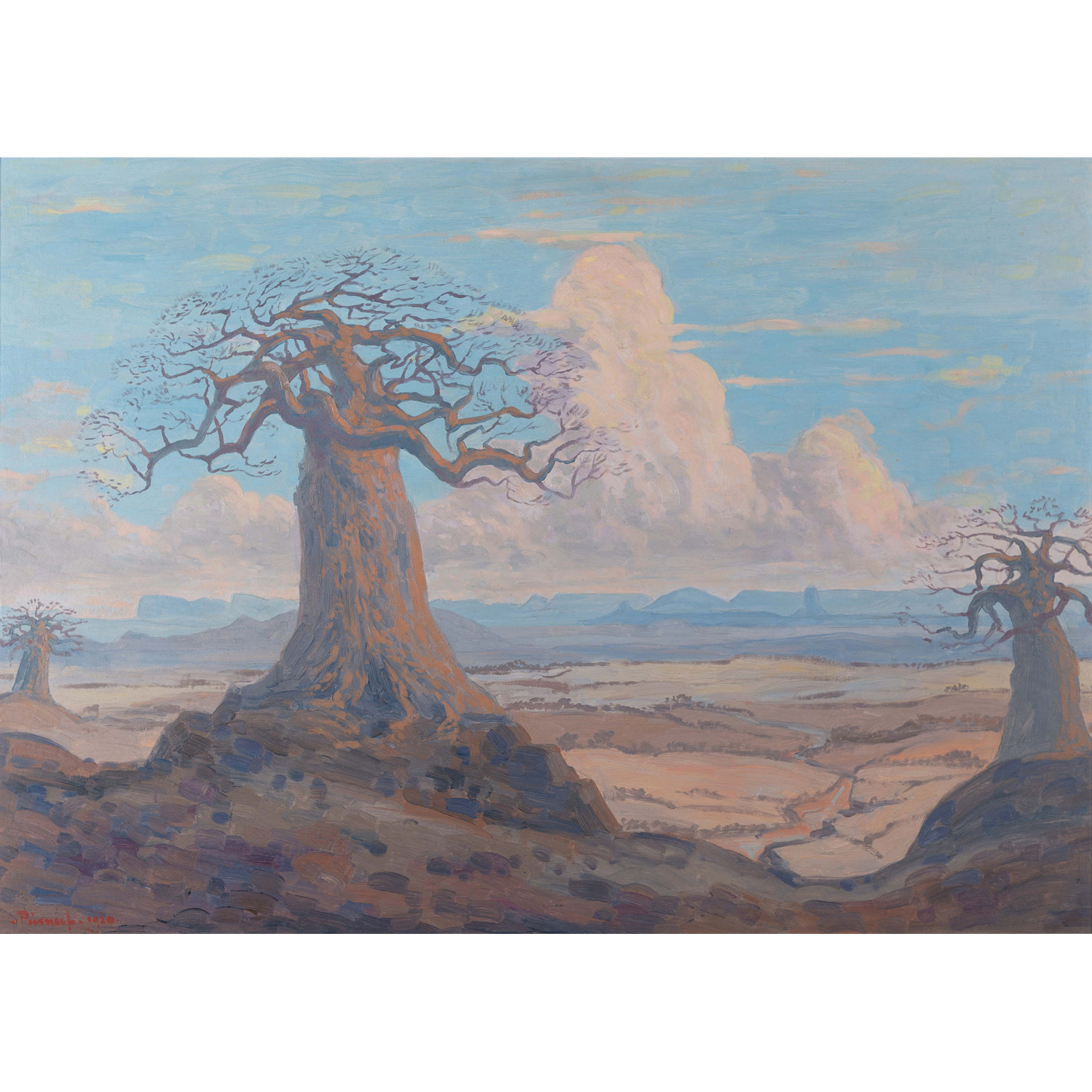
Jacobus Hendrik Pierneef (1886 -1957)
Baobabs with Soutpansberg in the distance, 1920
Huile sur planche
Signée et datée en bas à gauche
70 x 98 cm
Estimation : 378 000 - 567 000 euros
William Kentridge (born in 1955)
Whilst reaching down (slowly) emanates from a body of multimedia work by William Kentridge created in 2013/2014, under the general title 2nd Hand Reading.
The exhibition was one of the most sustained in his oeuvre to deploy the idea of what might be called the ‘dictionary palimpsest’. Starting life as a series of drawings on found dictionary pages, which then became both a filmic narrative and a flip-book animation, the series draws together Kentridge’s longstanding interest in the interface between text, filmic narrative (including photography) and drawing.
His breakthrough series of major work was of course cinematic—the cycle of animated charcoal drawings chronicling the rise and fall of Johannesburg’s modern Randlord Soho Eckstein, and the vicissitudes of his love life with Mrs Eckstein and her lover, Soho’s alter ego Felix Teitelbaum, against the backdrop of a tumultuous and convulsing South African society
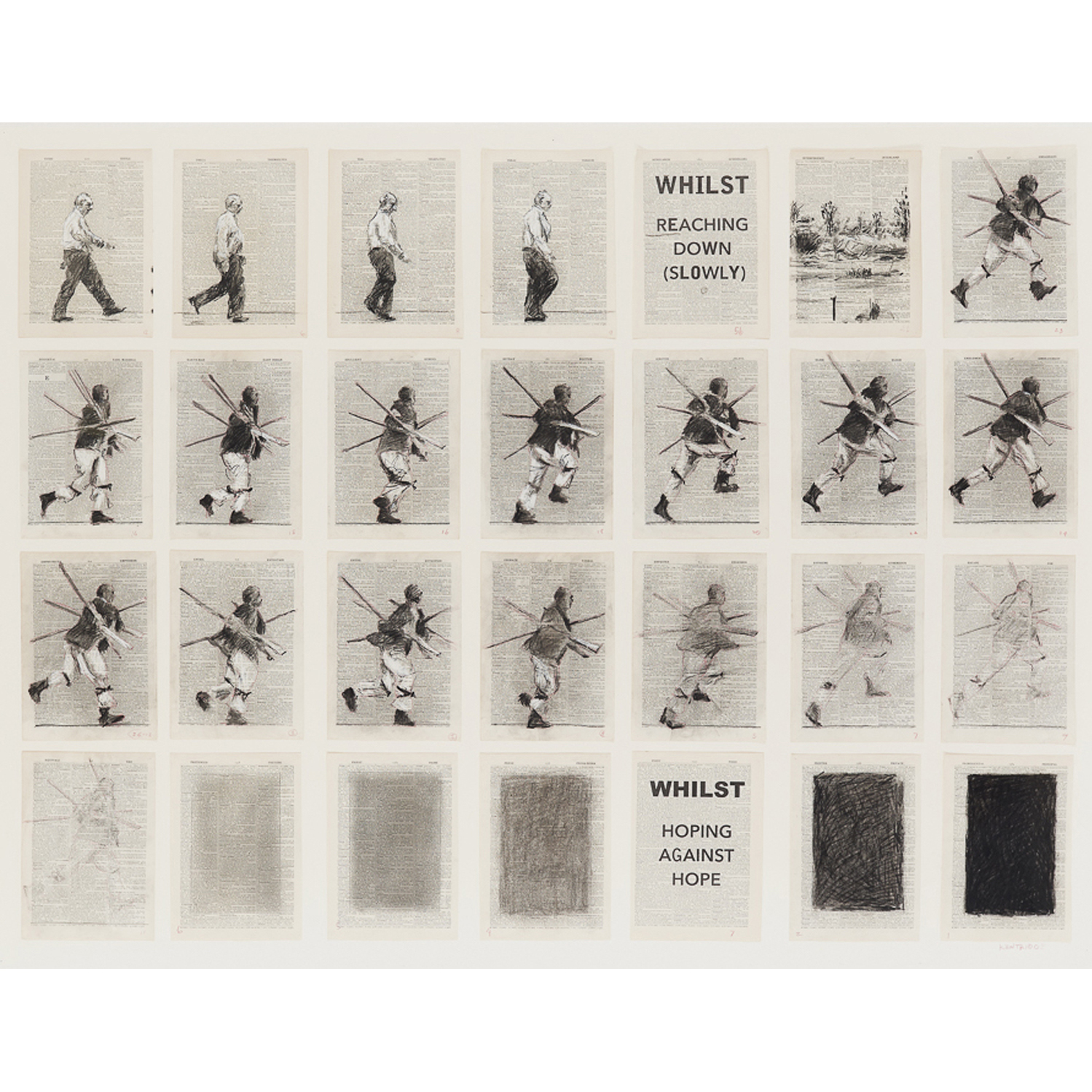
William Kentridge (né en 1955)
Whilst Reaching Down (Slowly), 2013
120 x 160 cm
Estimation : 189 000 – 315 000 euros
William Kentridge’s 9 Drawings for Projection, originally released after the first nine Soho Eckstein films had been gathered together (the films were made between 1989 and 2003), was a series of screenings of the entire first nine short films featuring his now-iconic characters. Some of these were performative, with at least one screening featuring a string quartet accompanying the screening with a live soundtrack, and others were screened as museum installations.
Though it has since been added to, the original 9 Drawings films follow the fictional story of Kentridge’s antihero Soho Eckstein, a wealthy South African mine owner, land developer, and cuckold.
The nine films chronicle the rise and fall of Soho’s Johannesburg empire, his wife’s passionate affair with his nemesis and alter ego Felix Teitlebaum, against the backdrop of the changing political circusmtances and upheaval of a South African in uprising against the apartheid regime from which Soho benefits. This print series takes the fomr of one of Kentridge’s iconic images, a sinister box camera on a tripod looming large over a typical highveld landscape, the suggestion of a drive-in screen on one side.
The drawing for which the print series was made embodies the stopmotion ethos of the drawings which make up the films, a suitably melancholy and self-referential image for publicising the original series.
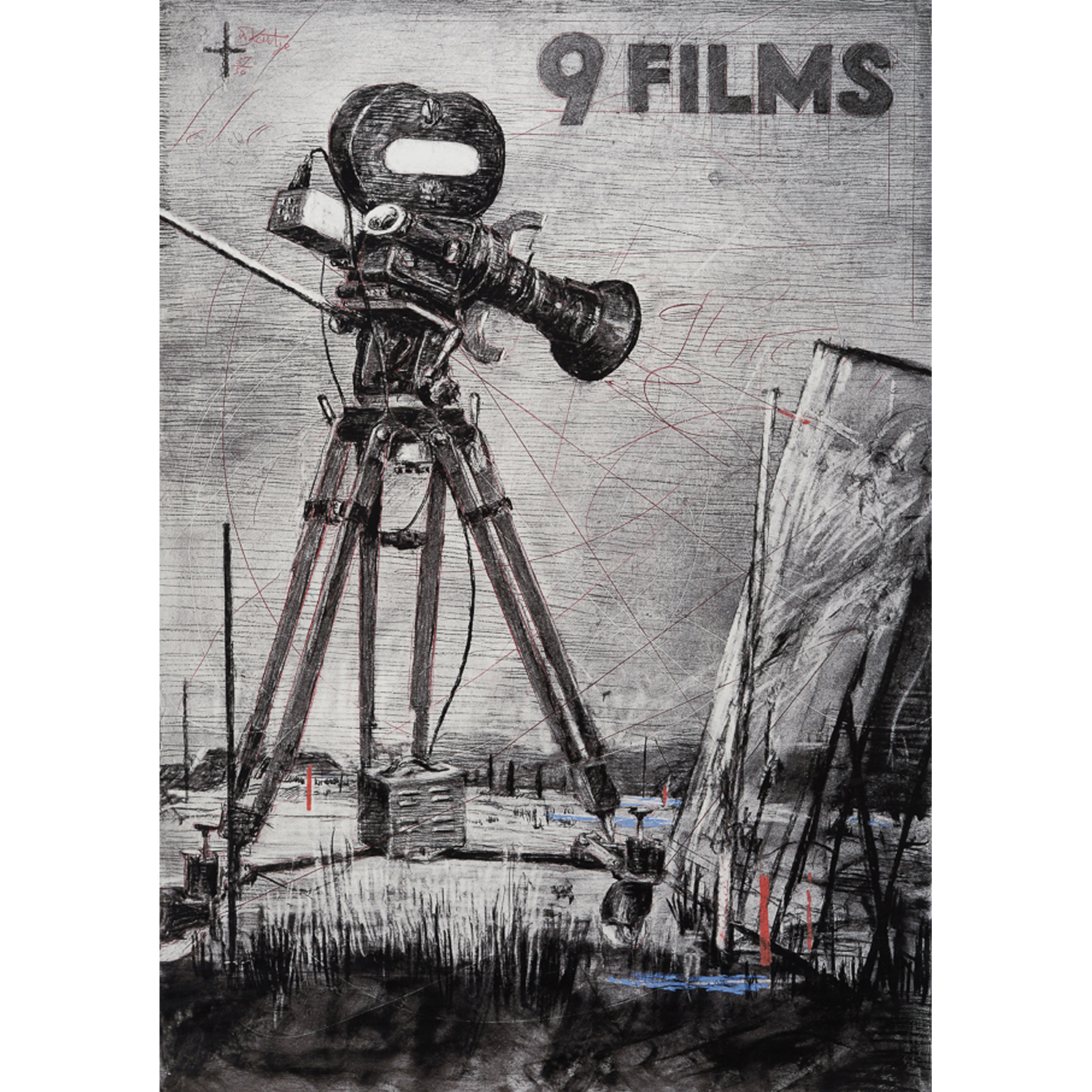
William Kentridge (né en 1955, Afrique du Sud)
Taille de la feuille : 158,5 x 110 cm
Estimation : 25200 / 37800 €
Athi-Patra Ruga (born in 1984)
Multidisciplinary artist Athi-Patra Ruga’s work is centred around avatars that live out exaggerated plotlines created by the artist in a soap-opera-style fantasy narrative, all situated in the imagined nation-state of Azania. For Ruga, Azania is a utopia which exists concurrently in both pre- and post-apartheid South Africa, and where he addresses issues of social transformation in the country.
The Afrofuturistic citizens of Azania live lives of excess in bold hues and extravagant textures. Pictured here is the Future White Woman of Azania (FWWOA), strutting in brightly coloured balloons that exude opulence. The main protagonist in Ruga’s saga, the artist describes the character as “…too cute to be true.” Since 2008, Ruga has performed the FWWOA several times, including at Campo dei Frari during the 55th Venice Biennale in 2013.
Athi-Patra Ruga is one of South Africa’s leading artists, and was presented with the prestigious Standard Bank Young Artist Award in 2015. In 2017, his work was included in Art Afrique at the Louis Vuitton Foundation in Paris, and in 2018/19 he presented a solo show Of Gods, Rainbows and Omissions at Somerset House, London.
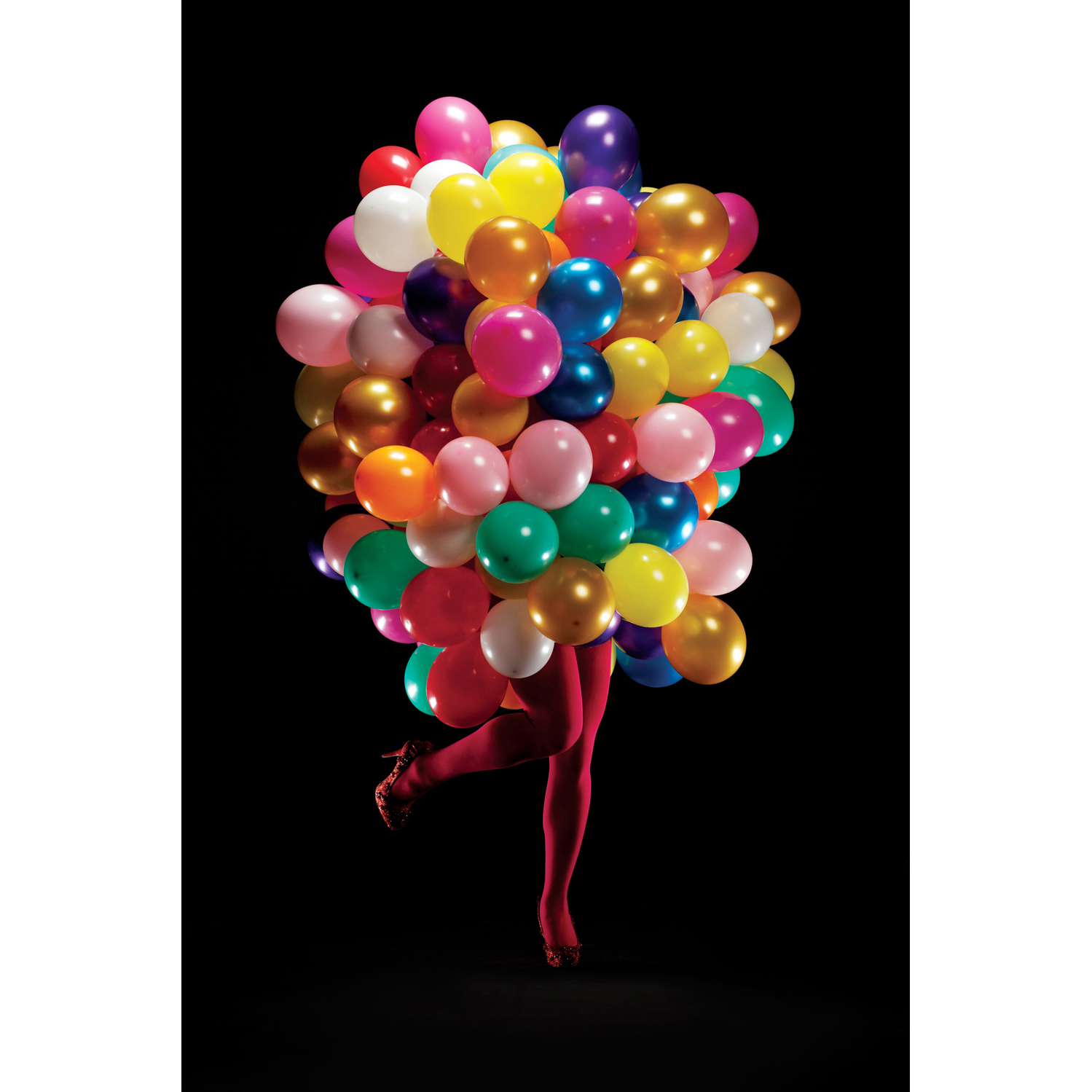
Athi-Patra Ruga (né en 1984, Afrique du Sud)
The Future White Woman of Azania II, 2012
Estimation : 9450 / 12600 €
Mary Sibande (born in 1982)
Mary Sibande was born in 1982 near Johannesburg, where she continues to live and work. She obtained an Honours degree in Fine Art from the University of Johannesburg in 2007, following a Diploma in Fine Arts from the Witwatersrand Technical College, also in Johannesburg, in 2004.
She is one of the brightest younger talents in South African contemporary art, and has been the recipient of numerous awards, residencies and fellowships, locally and internationally.
Sibande has spoken about building much of her work around the concept of women’s domestic work. Interested in fashion and in the overlaps between fashion and art, the artist began to develop a concept of a character draped, or at least dressed in, characteristic fabric and in a style identified in South Africa with domestic worker’s uniforms.
The concept of an alter ego of the artist, called Sophie, grew out of this. The at-times Victorian appearance of Sophie’s costumes derives from colonial histories of the domestic oppression of black women in South Africa. The character has featured in a number of African and European exhibitions, including the 54th Venice Biennale in 2011. Sibande has said that Sophie is a tribute to her great-grandmother, also a domestic worker. This work, from 2013, was initially part of Sibande’s Standard Bank Young Artist Award travelling exhibition The Purple Shall Govern.
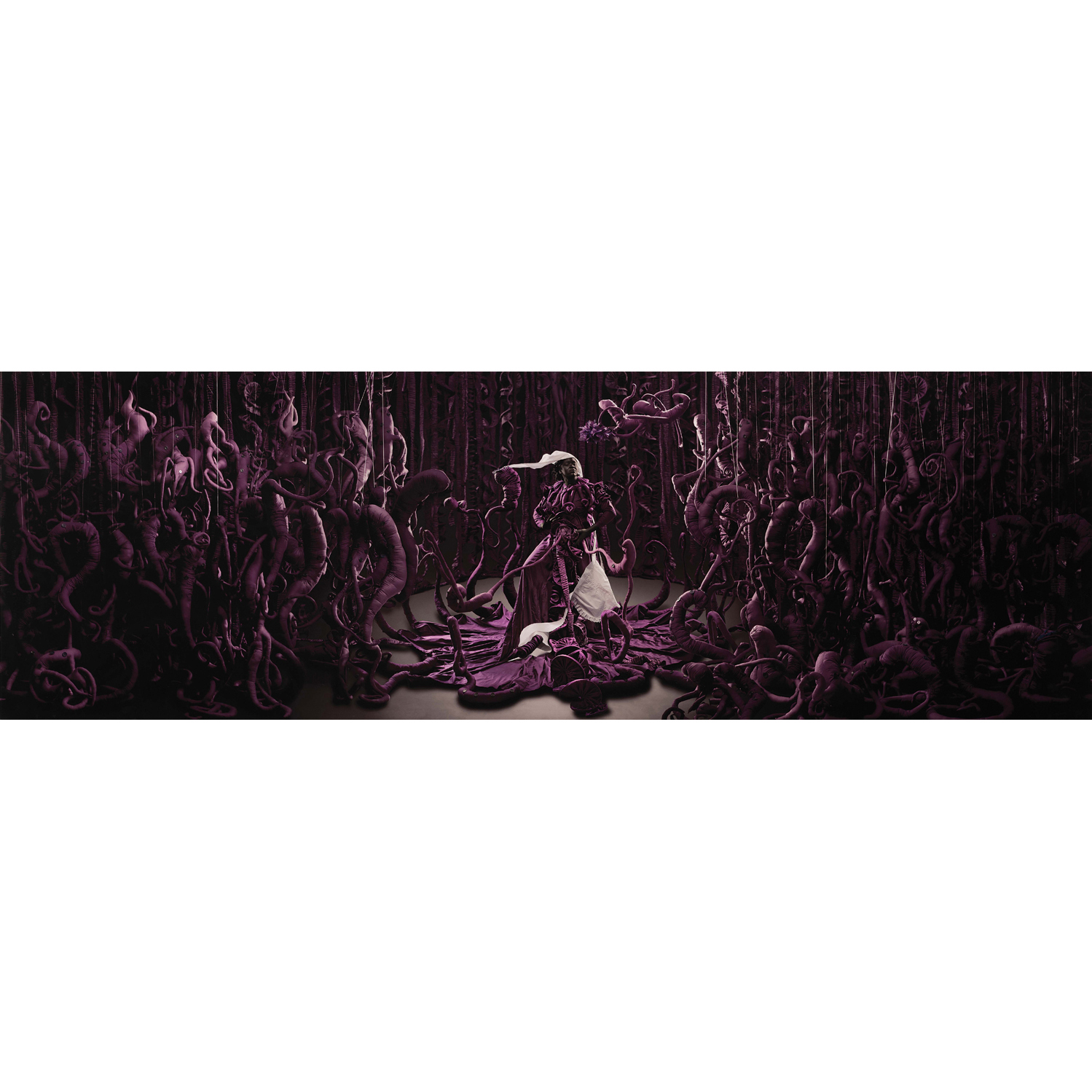
Mary Sibande (né en 1982, Afrique du Sud)
A Terrible Beauty is Born (from the Long Live the Dead Queen series), 2013
Estimation : 18900 / 25200 €
