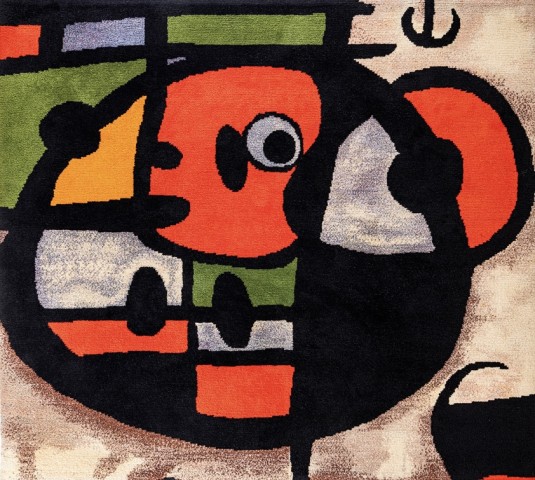
Today, the term "tapestry" is broadly used to describe a variety of woven textiles, whether embroidered or mechanically produced. Historically, however, "tapestry" referred exclusively to weft-faced, often figurative textiles woven by hand using a loom. The loom consists of two rollers that stretch the warp threads, forming the structural foundation of the tapestry. Due to its strength, wool was commonly used for the weft threads, while a variety of materials—including wool, linen, and silk—could be used for the warp.
Traditional tapestries became particularly popular in Europe during the 14th century. In 1384, Philip the Bold inherited the province of Artois in France and adorned his court with tapestries depicting the dynastic, religious, and commercial achievements of his territories. Between the 15th and 16th centuries, European royal families and nobility commissioned elaborate tapestries to display in their residences, churches, and castles. Henry VIII of England, for instance, amassed an impressive collection of Flemish tapestries to decorate his palaces and country homes.
Tapestry saw a renaissance in the 19th century, when Englishman William Morris produced modern and innovative works, often based on designs and motifs created by contemporary artists. Even today, tapestry makers continue to push the boundaries of their craft, creating unique works of art with dazzlingly complex patterns and designs.
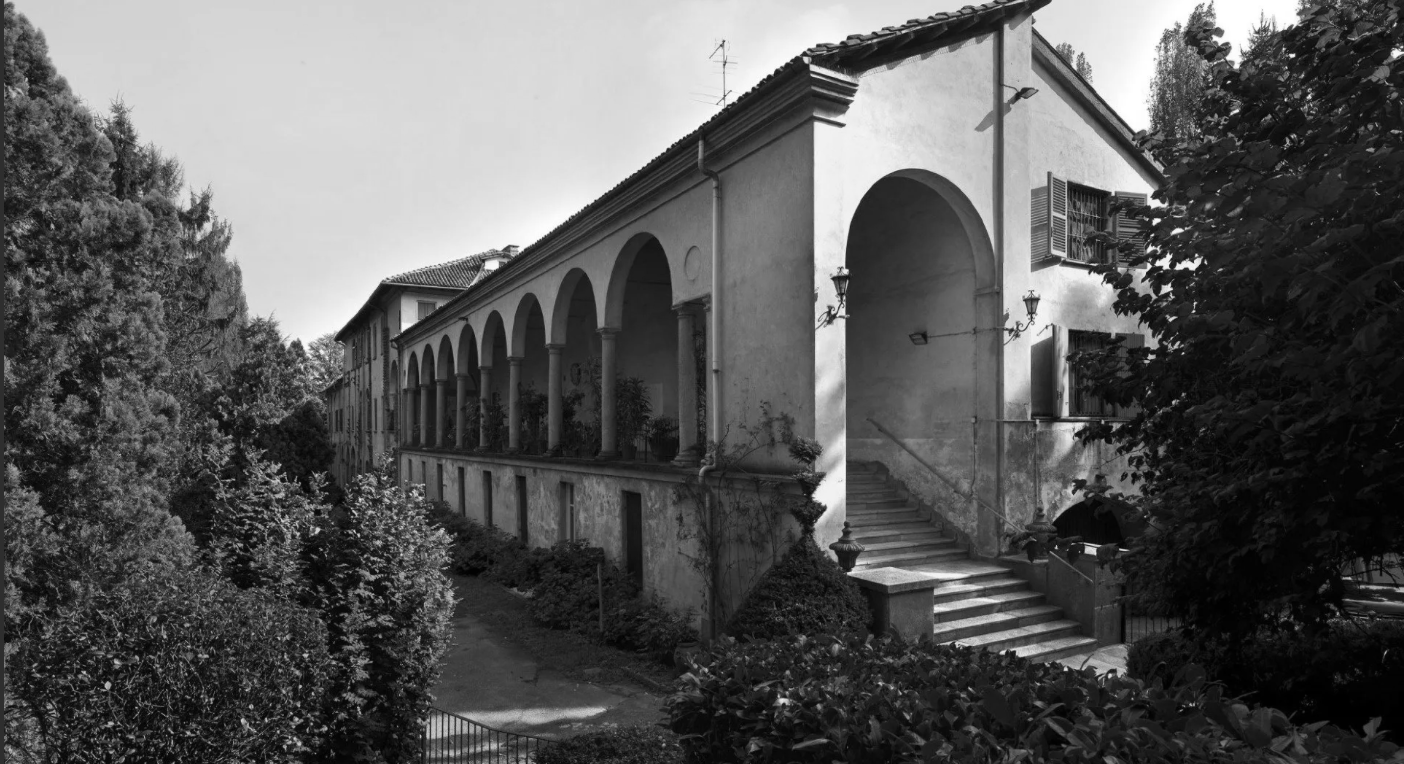
The Arazzeria Scassa, founded by Ugo Scassa in Asti, is one of the most prestigious tapestry workshops.
Located in the Certosa di Valmanera, a former medieval monastery in the city of Asti, northern Italy, it has over time specialized in weaving tapestries on 17th-century looms, using the traditional "haute-lisse" (high-warp) technique of grand historic tapestries. These artworks and craft pieces are a testament to a cultivated know-how, passed down uninterruptedly through two generations.
Ugo Scassa, founder of Arazzeria Scassa, began his journey in 1956 as co-founder of the art gallery “Il Prisma” in Turin. This exhibition space showcased contemporary Italian and international artists such as Lucio Fontana, Arnaldo Pomodoro, and Asger Jorn. When the gallery became solely owned by Ugo Scassa, he decided to move to Asti and renamed it “Italia Disegno.”
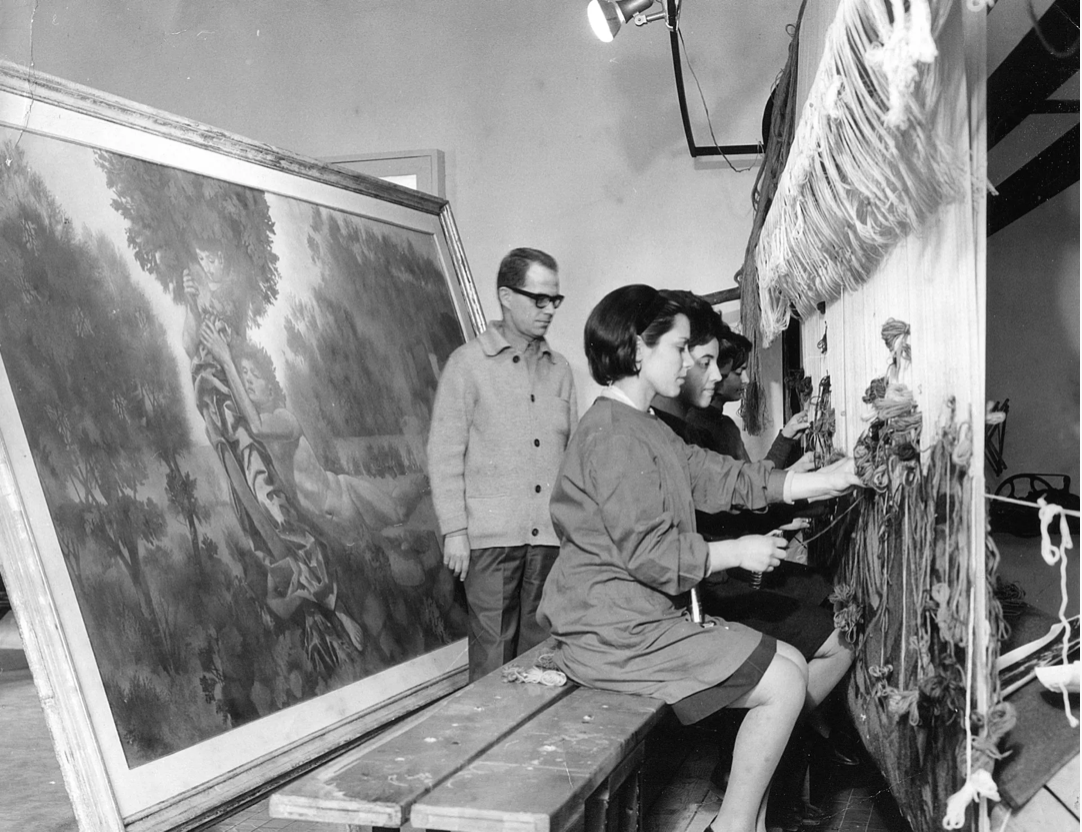
The gallery expanded its activities to include the publishing of designer furniture and rugs. With the leftover wool, Scassa decided to create tapestries.
A few years later, “Italia Disegno” won the competition to decorate the ballroom of the ocean liner Leonardo Da Vinci, producing sixteen tapestries designed by artists such as Giuseppe Capogrossi, Giulio Turcato, Antonio Corpora, Giuseppe Santomaso, Olimpia Bernini, and six by Corrado Cagli. All were woven in Asti. Over time, other ships were similarly furnished, such as the Michelangelo and Raffaello—luxurious and fast liners, equipped with the latest innovations in naval design and interior decoration, and true symbols of Made in Italy.
In 1964, the company transformed and took the name “Arazzeria Scassa.” With artist Corrado Cagli as artistic director, it established itself in the medieval monastery of Certosa di Valmanera in Asti.
Over time, Arazzeria Scassa has produced loom-woven works and collaborated with artists such as Carla Accardi, Fabrizio Clerici, Michelangelo Conte, Giorgio de Chirico, Piero Dorazio, Roberto Ercolini, Mario Giansone, Edoardo Giordano, Ezio Gribaudo, Costantino Guenzi, Beatrice Lazzari, Luigi Montanarini, Gastone Novelli, Giovanni Omiccioli, Achille Pace, Giuseppe Vittorio Parisi, Achille Perilli, Luigi Piciotti, Giuseppe Picone, Mimmo Rotella, Pietro Sadun, Antonio Sanfilippo, Antonio Scordia, Federico Spoltore, Emilio Tadini, Alessandro Trotti, Emilio Vedova, Antonino Virduzzo, and Tono Zancanaro, as well as major international artists such as Salvador Dalí, Max Ernst, Vassily Kandinsky, Paul Klee, Henri Matisse, Joan Miró, and architect Renzo Piano.
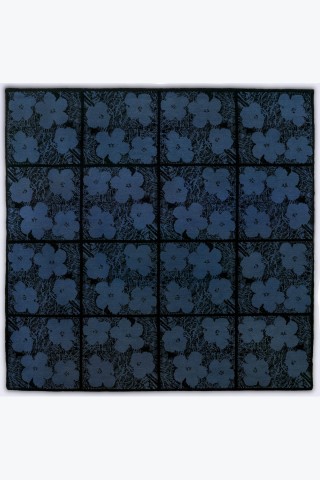
These artistic collaborations highlight both the high aesthetic standards and the technical resources of Arazzeria Scassa, offered to artists for more than half a century.
Over the years, Arazzeria Scassa has showcased its work at major international exhibitions, including in Athens, Paris, Gothenburg, New York’s MoMA, and at “The Italian Art of Living” exhibition organized in 1992 on Park Avenue. Among the tapestries created by Arazzeria Scassa, some are now preserved in the Salone del Trecento at the Istituto Bancario San Paolo in Turin, in the Vatican's Pontifical Galleries, the Italian Senate, the Rome Court of Appeals, the RAI headquarters in Turin, the Wenner-Gren Foundation for Anthropological Research in New York, and the Museum of Modern Art in Rome.
Each of these tapestries is entirely handmade on high-warp looms, using the traditional technique of the great weavers of the past—the most prized and complex: on average, 500 hours of labor are required to weave one square meter of tapestry. The final work is the result of craftsmanship that successfully interprets and fuses a centuries-old technique with the most impartial stylistic innovations of modern figurative art.
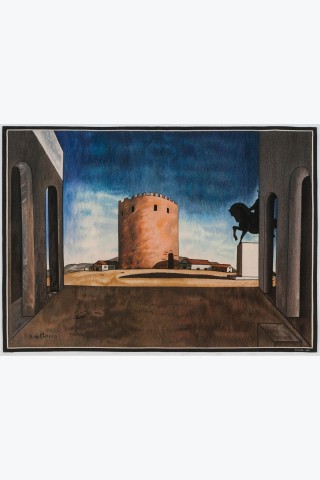
Achieving a woven rendering of contemporary painting—especially abstract painting—presents a true challenge.
Specific technical choices must be made: the tapestries are not made using the hatching technique (the juxtaposition of strokes in different colors), but by blending threads of different colors and shades within the same pass, as if they were a single thread. Furthermore, Arazzeria Scassa works from the front side of the tapestry rather than the reverse, as is generally done, allowing the weavers to make direct and immediate comparisons between the cartoon (template) and the tapestry.
Arazzeria Scassa’s expertise in weaving also extends to the production of artistic rugs, hand-knotted using Ghiordes knots—also known as “Turkish” knots—used throughout Anatolia, the Caucasus, and parts of Persia and Afghanistan.
The body of work signed by Arazzeria Scassa today represents one of the most important tapestry productions in Europe—a true foundational pillar of contemporary art, and a reference point in the history of 20th-century art and design.
Massimo Bilotta
Director of Arazzeria Scassa