Iconic figure of Pop Art, Andy Warhol is among the rare artists who have left a lasting mark on the collective imagination. After a brief career as a commercial illustrator, Andy Warhol became famous for his silkscreen prints of consumer goods and his portraits of icons of popular culture.
Self Portrait is part of the Portraits of the Artists series, conceived in 1967 for the Leo Castelli Ten Years exhibition, which celebrated the tenth anniversary of the Castelli gallery in New York. In this series, Andy Warhol presents silkscreen portraits of twelve of the sixteen artists featured in the exhibition.
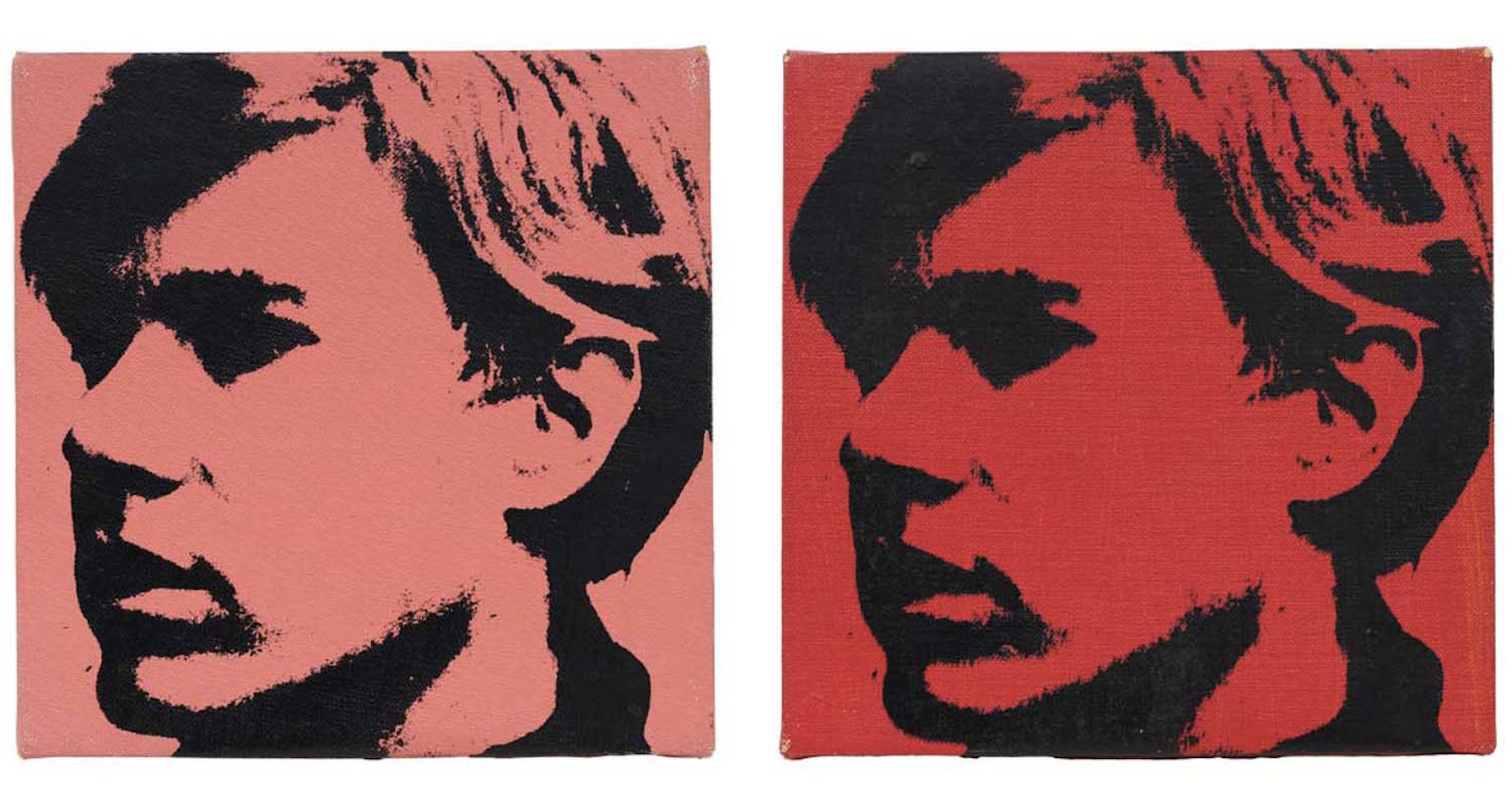
Always obsessed with his allure and the role of the artist's image, self-portraiture is present from Warhol's earliest drawings. However, to achieve a more mature realization, one must wait until the mid-1960s, a period during which Warhol truly achieved fame through his collaboration with Leo Castelli, which began in 1964. He was then recognized by his peers as an indispensable figure on the New York scene. This newfound legitimacy prompted him to create several series of self-portraits, similar to the works he devoted to icons such as Marilyn Monroe, Liz Taylor, or Elvis Presley, among others. However, he does so while preserving the mysterious aura of the artist. In Self Portrait (lot 67), unlike the other celebrities he portrayed, Andy Warhol does not directly gaze at the viewer; he does not meet their eyes. The artist's face is in shadow, turned three-quarters, the color palette is dramatic: Andy Warhol only reveals the idea of his image.
It is not just about maintaining a mysterious aura but also about concealing flaws. In his diary, Andy Warhol wrote: "Always omit the imperfections, they are not part of the good image you want to convey."