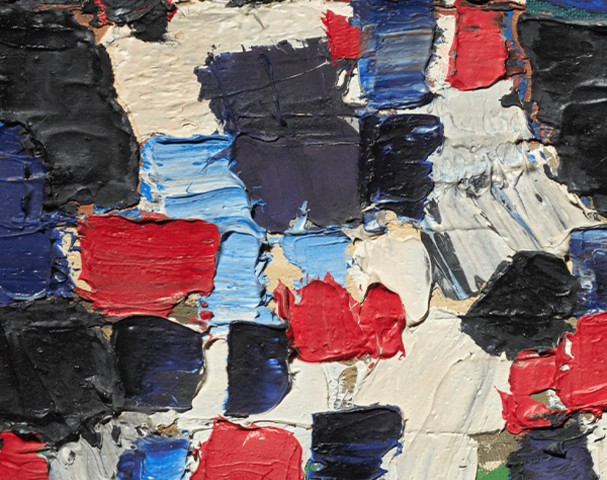
As part of the Modern and Contemporary Art auction on Tuesday June 6th, PIASA is offering a never-before-seen work on the public auction market. The work was created by one of the major figures of post-World War II French art, "Nuit au Parc des Princes" (1952) by Nicolas de Staël.
As its title suggests, this oil on cardboard was created by the artist after he and his wife attended the match between France and Sweden at the Parc des Princes on the evening of March 26, 1952. A true revelation, this sporting spectacle immediately inspired him to return to the studio and produce a series of paintings that express an enthusiasm bordering on exaltation, as shown by these lines addressed to his friend, the poet René Char: "Between heaven and earth, on the red or blue grass, a ton of muscles flutters around in total oblivion of self, with all the presence that this requires, in all implausibility. What a joy! René, what a joy!" (letter of April 10, 1952).
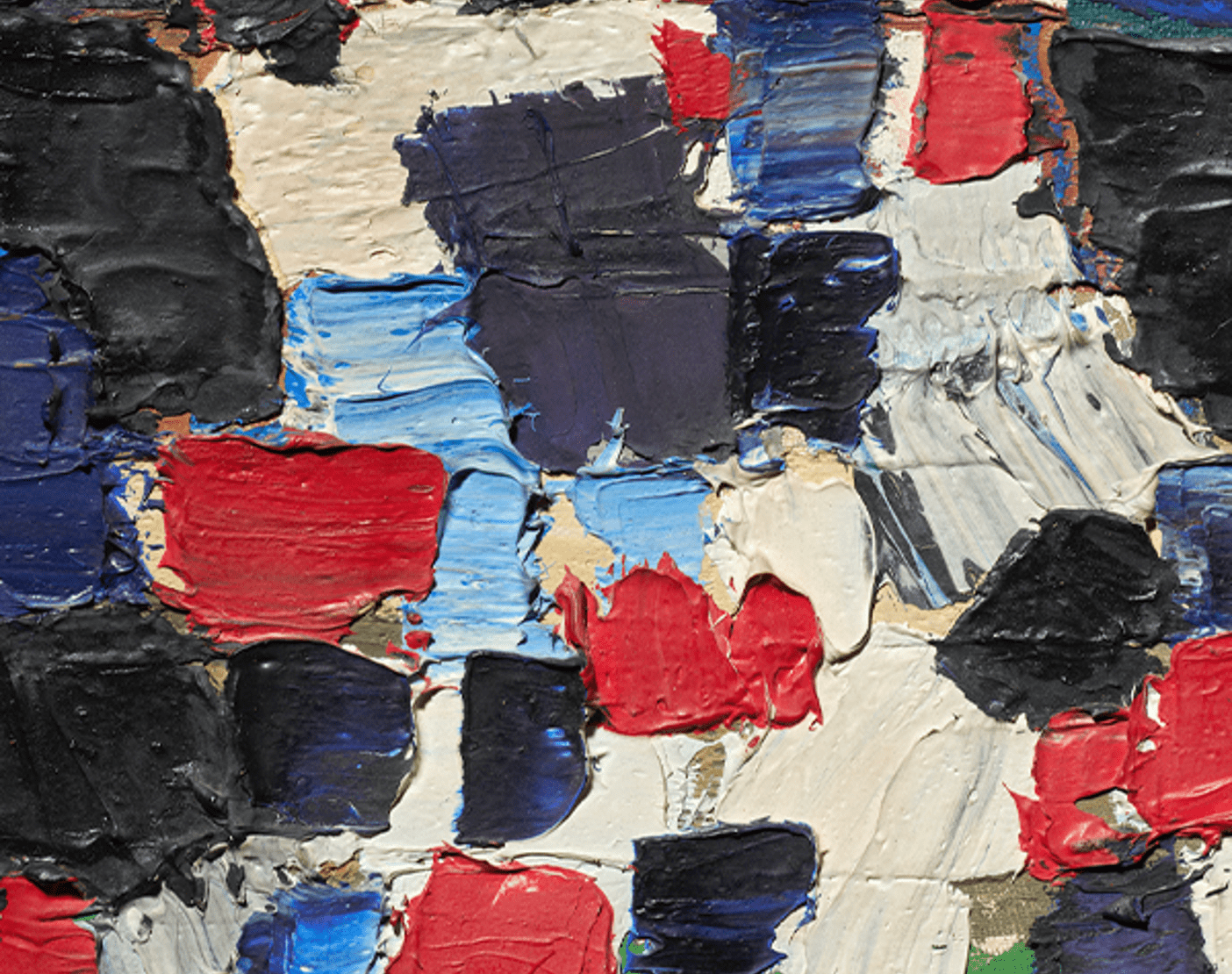
To create these intense works in all formats, Nicolas de Staël used press photos. As shown in Nuit au Parc des Princes, he treats the sports motif with distance and concentrates on the footballers in motion, who collide and leap into the air. Reducing their bodies to rectangular shapes, the artist favors the confrontation of colored masses, the contrasts of materials that he applies with a knife, nervously, in the thickness of superimposed or juxtaposed layers. The chromatic range evokes the nocturnal atmosphere of the stadium, the blinding light of the electric lights by opposing the reds, the whites and the blues treated in infinite nuances pulling until the black.
Through this series of works, Nicolas de Staël marks a turning point by the progressive reappearance of figuration. What interests him in Night at the Parc des Princes is not the faithful reproduction of the event, but the transcription of an atmosphere and the dynamism of the players in action. This work, along with the famous Parc des Princes and other paintings from the same group, was a real success when it was presented at the 1952 Salon de Mai. Impressed, the art dealer Paul Rosenberg decided to devote an exhibition to Nicolas de Staël in his New York gallery in March 1953. It was a critical and commercial triumph that prompted him to sign an exclusive contract with the dealer in the United States. The painter was finally able to freely pursue his quest for pure expression, in which he gave his experience of the visible world through a vocabulary of forms that were not necessarily imitative but not necessarily abstract.