As vibrant homage to his brilliant dazzle, the monographic radio session devoted to Alvar Aalto on Thursday 28th May 2020 offers an opportunity to look back at the trajectory of the star, which for nearly half a century crossed the skies of Scandinavian design and architecture.
Before becoming a major figure in Finnish design and architecture, Alvar Aalto - whose real name was Hugo Alvar Henrik - began his training at the Helsinki University of Technology. After graduating five years later, he founded his own practice in 1923 in Jyväskylä, the city where he was born. The following year he met Aino Mandelin, who became his wife and with whom he worked closely. Even though in the first years of his career the outstanding creator multiplied the number of design pieces, it was above all as an architect that he made himself known to the general public.
Alvar Aalto (1898-1976)
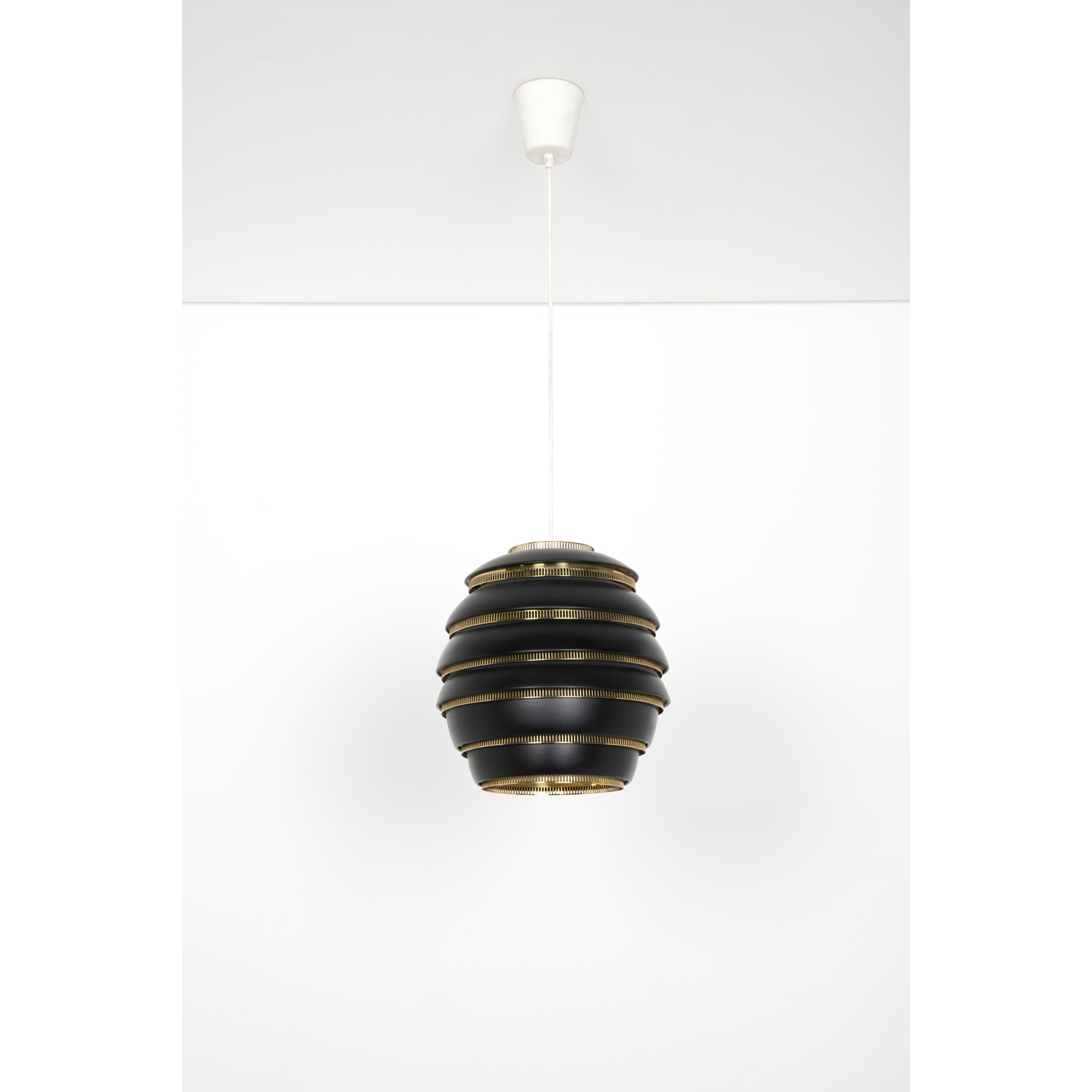
Modèle A331 dit Beehive
Estimation : 8000 / 12000 €
In 1933, he completed his first major work, the Sanatorium of Paimio. He will completely furnish the interior with furniture of his own design. Embodying the essence of the functionalist in the eyes of the Finnish and then international critics, the building retains traces of the influence that Le Corbusier may have had on the young architect. As an indication of the place he occupied on the eve of the outbreak of the Second World War, he was entrusted with the design of the Finnish pavilion at the 1937 Universal Exhibition in Paris.
In contrast to a rationalism that he often considered too rigid, the architecture he proposed was a more humanistic and coherent vision of nature. In the context of post-war reconstruction, he played a decisive role in the urbanization of the country. Through examples of furniture, lighting and historical glassware, his research restores a thought and a work that places man and his perceptions at the heart of the creative process.
Alvar Aalto (1898-1976)
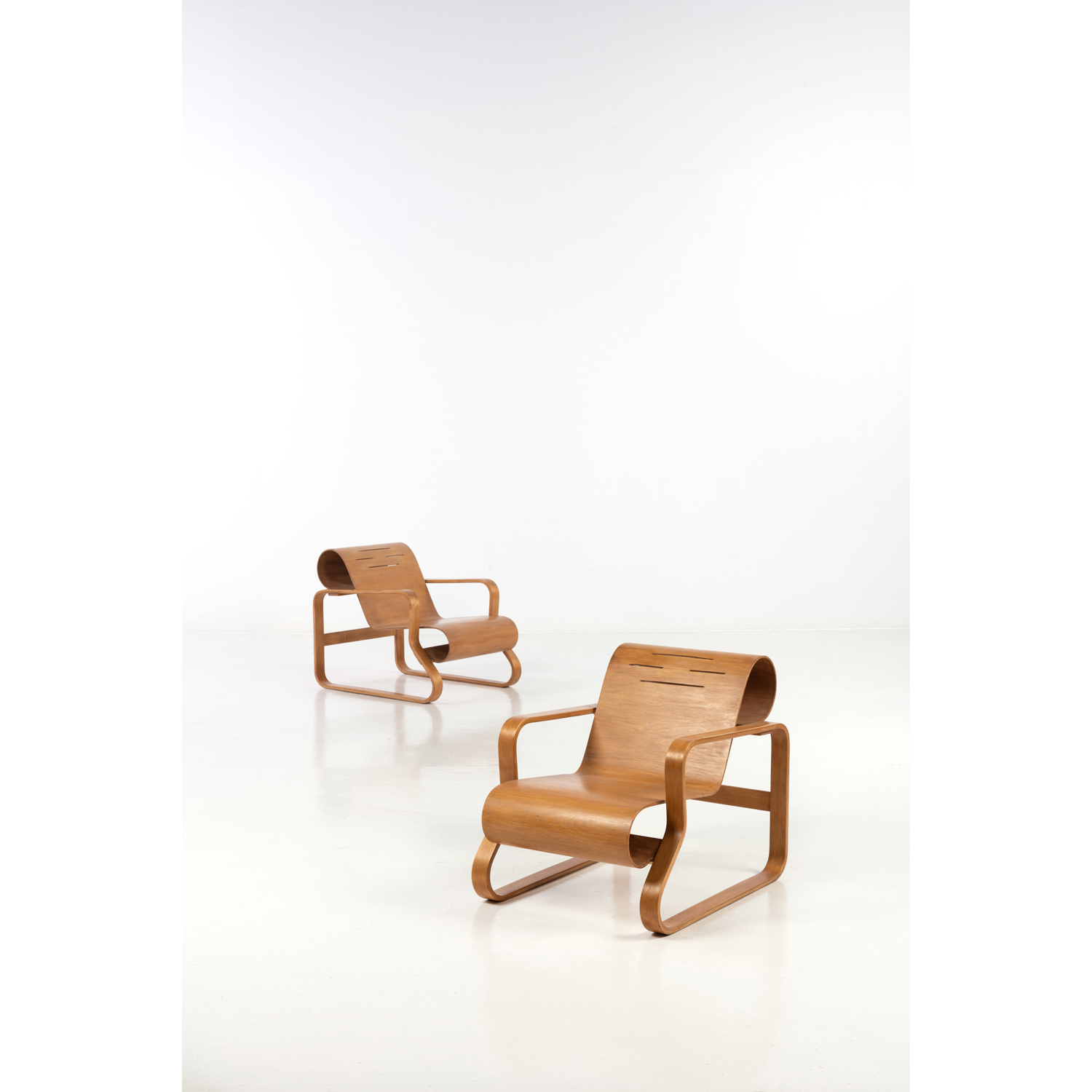
Modèle 41 dit Paimio
Estimation : 15000 / 20000 €
Among the wide variety of pieces proposed by PIASA's Design Department during its session on May 28, 2020, several lots should catch the attention of collectors.
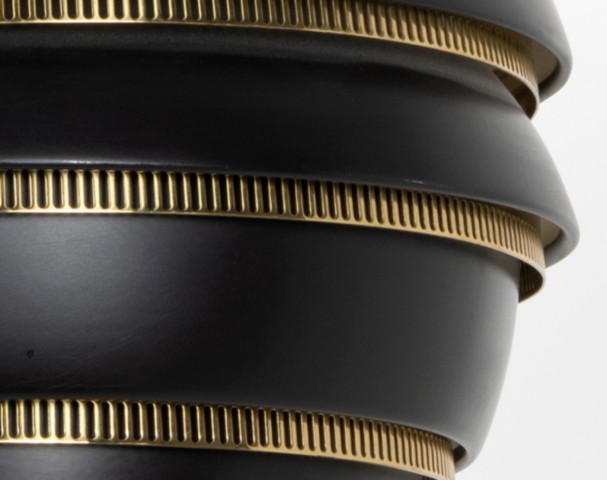
The lacquered metal and brass suspension, "Model A331" known as Beehive, was published by Valaistustyö in 1953. Its spherical shape, texture and chromatic effects give this piece great elegance.
This elegancy is combined with sobriety as can be seen in the pair of armchairs, "Model 41" known as Paimio, made with beech and birch lamellas. Published by Artek, it was made in 1932.