In its first sale of the year, the Publishing Department of the PIASA auction house will present on Thursday 12 March 2020 a selection of some of the most significant artists of the second half of the 20th century.
Focused on France and the United States, this sale offers a daring focus on the Asian scene, here embodied by the Japanese Yayoi Kusama, the Chinese Yue Minjun and the young Malaysian Red Hong Yi. This contemporary creative dynamism accompanies a booming market. Their works make manifest the ongoing dialogue that Far Eastern culture maintains with the West, as well as the tasty iconographic exchanges.
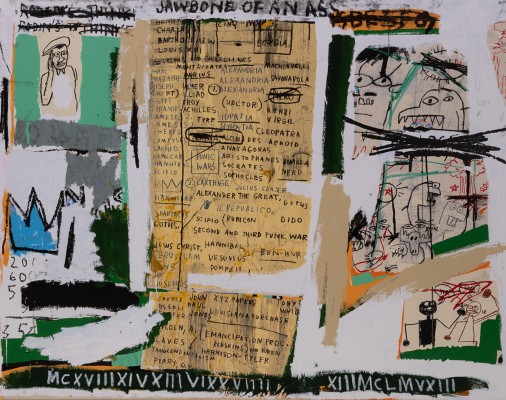
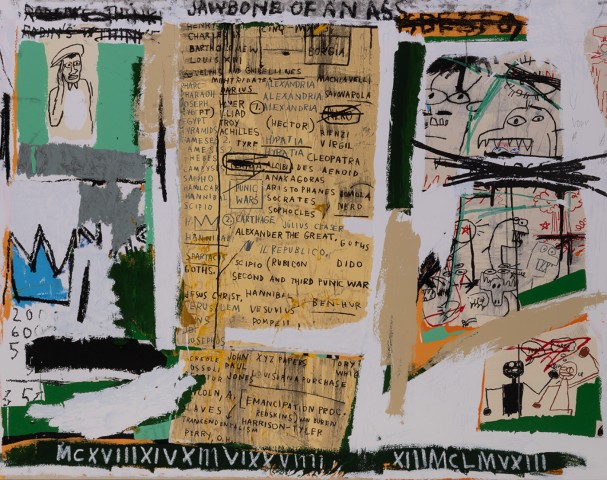
Following the success of the department's last session, during which a silkscreen print after Jean-Michel Basquiat sold for 91,000 euros, the selection gives pride of place to American artists, with two works after Basquiat, a carpet after Mark Rothko and Alex Katz, among others.
The richness and diversity of this selection illustrates, once again, the solidity of the network of French and international collectors that the Parisian auction house has been able to develop.
In addition to the leading figures of modern art, including Pablo Picasso, Marcel Duchamp, Niki de Saint Phalle and Pierre Soulages, the new generation is also honored with works by French visual artist François Pétrovitch.
Mark Rothko
A visible excrescence of the mysticism that would influence the artist throughout his life, Mark Rothko's work constitutes a remarkable alternative to the gestural painting that was very much in vogue in New York in the immediate post-war period. Long before he anglicized his real surname "Marcus Rothkowitz" at the outbreak of the Second World War, the artist, born in 1903 on the western fringes of a Russian Empire on the verge of disappearing in the turmoil of history.
It was not until the early 1950s, thanks in particular to the purchases of the American collector Duncan Phillips, that his career enjoyed its first successes. Rothko's use of colour, freed from its mimetic preoccupation, was destined to propagate itself in space by integrating the spectator.
Only eight copies of the woollen tapestry based on a work created by the artist in 1968 have been published. Its very imposing dimensions coincide with the artist's concern to offer visual experiences on a monumental scale.
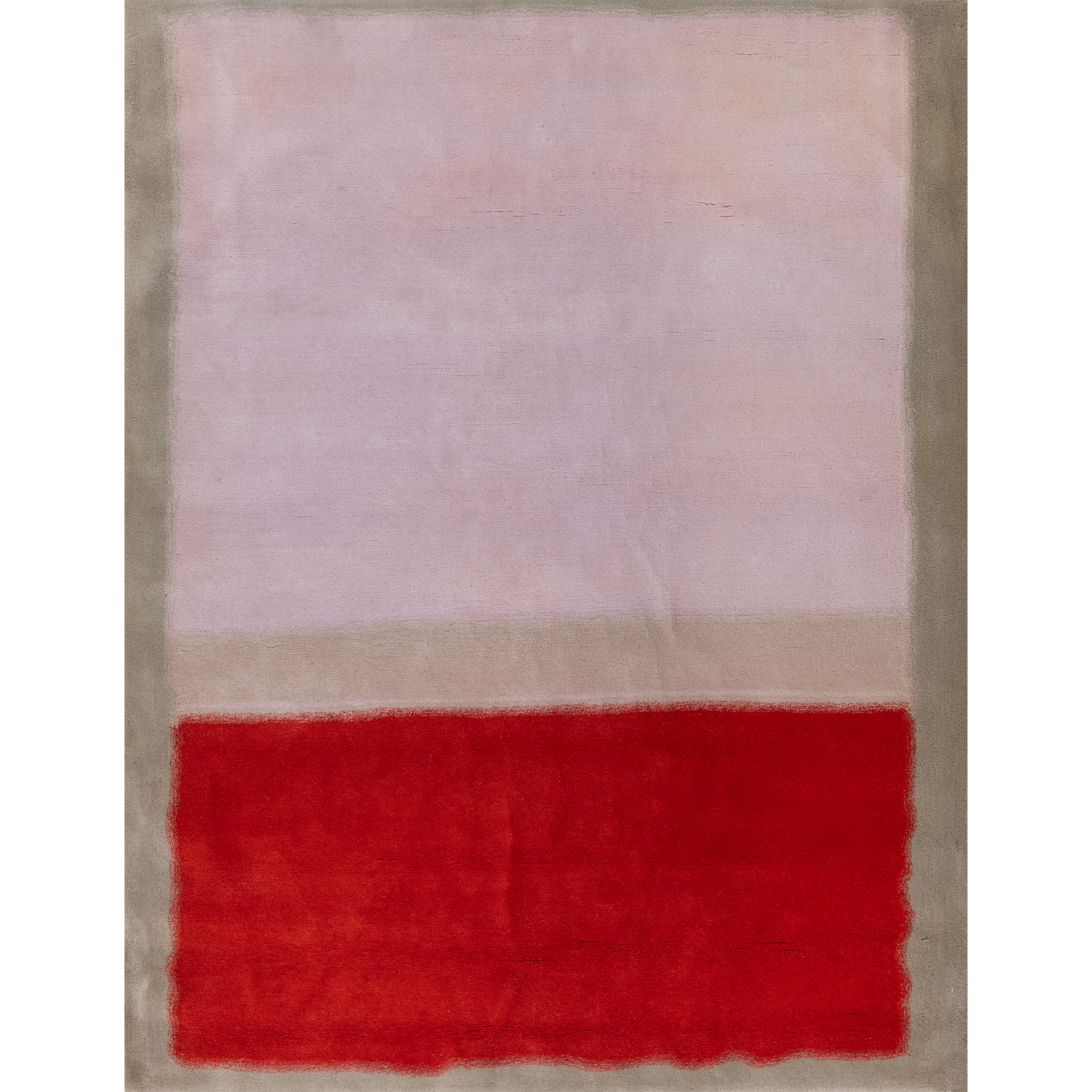
Mark Rothko (1903-1970) Pink Over Red - circa 1968
Estimation : 12000 / 18000 €
Pablo Picasso
After the Second World War, Pablo Picasso is approaching 70 years of age. With a density and diversity that is undoubtedly unequalled during the 20th century, his work already occupies the walls of the most emblematic museums and has been the subject of numerous exhibitions. It is at the height of its glory.
The atrocities that plunged the mid-twentieth century into mourning profoundly marked the artist and constituted a turning point in the function he assigned to his work. Picasso's commitment to peace became central after the outbreak of the Spanish War in 1936.
This dove is probably inspired by the white pigeons he kept caged in his studio. But the animal did not wait for the virtuoso virtuosity of the Andalusian master to become a symbol. Image of the Holy Spirit in medieval painting and then reborn, he is the one through whom hope arrives after the disastrous episode of the Flood. The bird adds to the already very important bestiary that populates Picasso's paintings.
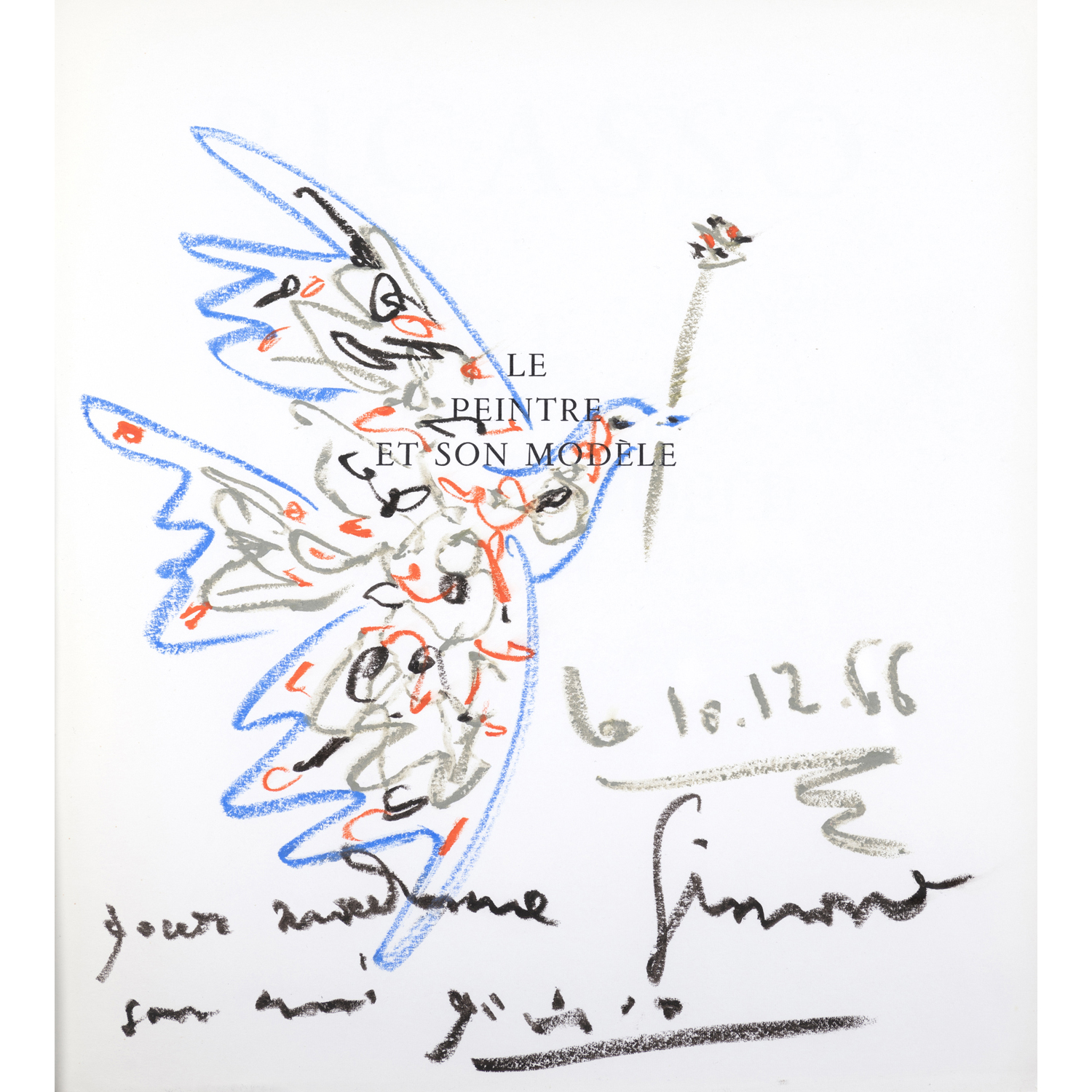
Pablo Picasso (1881-1973) Colombe - 1966
Estimation : 10000 / 15000 €
Marcel Duchamp
The artist took classes at the Julian Academy for a year. After a few publications and exhibitions of his drawings and caricatures, the young man presented his first paintings at the Salon d'automne in 1908 and then at the Salon des indépendants the following year.
La Mariée mise à nu à nu par ses célibataires (The Bride Exposed by her Bachelors), a work produced in New York between 1912 and 1923, is composed of two assembled glass panels, partly painted in oil, and including, among other things, lead inserts and dust. Exhibited at the Brooklyn Museum in 1926, the work is packed in a wooden crate for delivery to the person who bought it. When he opened it ten years later, he noticed that the glass panels were broken. The artist decided to keep the broken pieces and to assemble the fragments into thicker glass plates. Although the work is now kept at the Philadelphia Museum of Art, the 93 explanatory documents (notes, diagrams, drawings) were published in 1934 under the title Green Box. They form an integral part of the work.
Published in 300 copies, the work is a complete reproduction of his notes written on scraps of paper, respecting the format, coloured inks, erasures and corrections.
The man whom André Breton described as "the most intelligent man of the century", thus laid the foundations of conceptual art by elevating the idea to the same rank as their plastic manifestation.
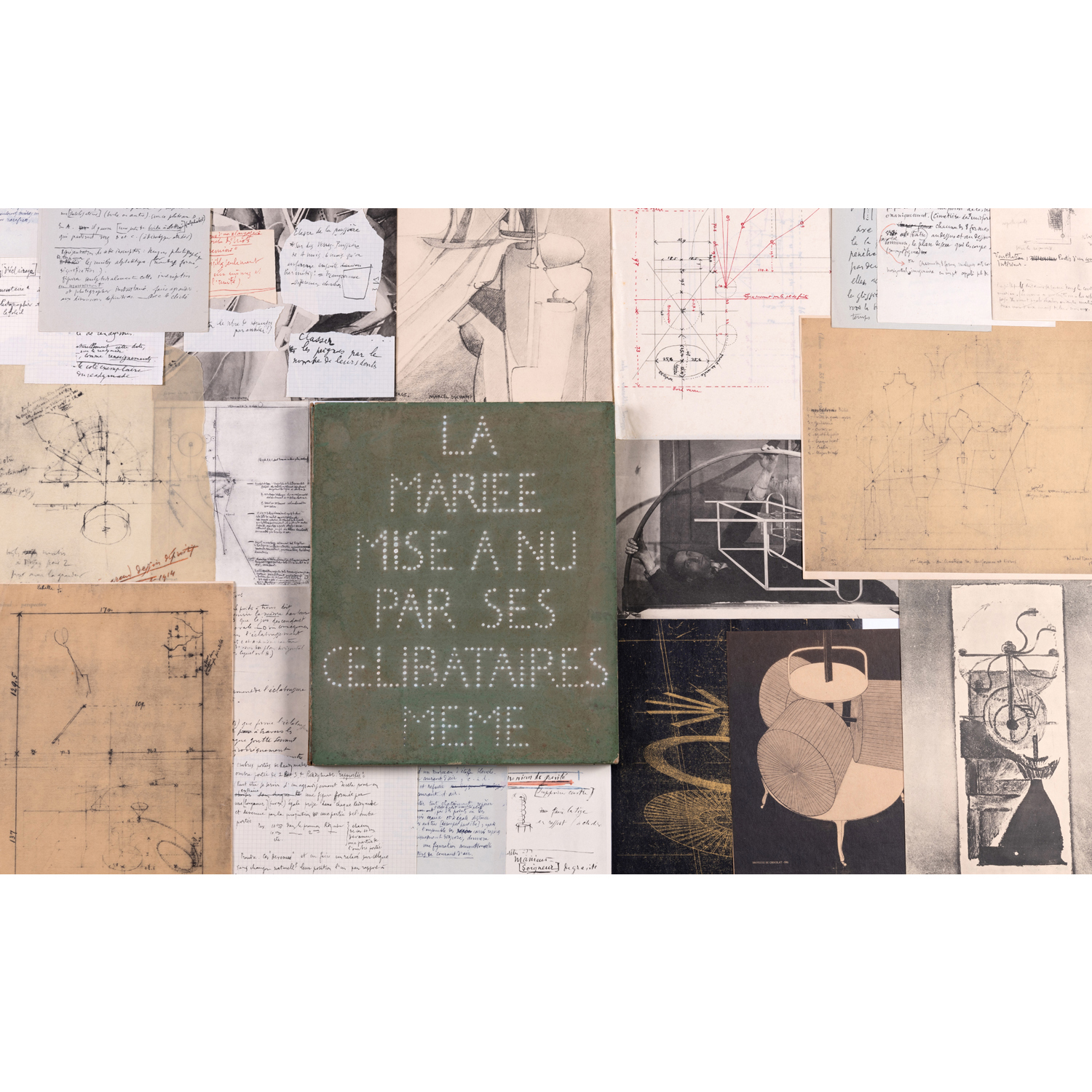
Marcel Duchamp (1887-1968)
La mariee mise a nu par ses celibataires meme - green box
Estimation : 20000 / 30000 €
Françoise Petrovitch
If for a long time Françoise Petrovitch expressed herself mainly through painting and drawing, her plastic itinerary pushed her to explore other techniques such as, from the beginning of the 2000s, ceramics, engraving and even video.
Over the years, the theme of intimacy has stood out from the others and appears at the centre of her works. The characters who populate these spaces are often beings situated on the borderline between childhood and adulthood. A polysemic symbol of fragility and innocence, childhood allows the artist to evoke the human faults that are probed, relentlessly, in an eminently moving manner.
As the present silkscreen print, published in 12 copies by Bernard Chauveau and measuring 2 by 4 metres, shows, the artist favours very imposing formats. Thus, the experience she offers to the spectators is immersive. Initially produced in watercolour, this work was printed on Canson paper. Subsequently, all the animals were added in silkscreen printing by varying the colours and locations.
Since the end of the 1990s, Françoise Petrovitch's work has been the subject of several major exhibitions, such as in 2008 at the Musée d'Art Moderne de Saint-Étienne and in 2011 at the Musée de la Chasse et de la Nature in Paris.
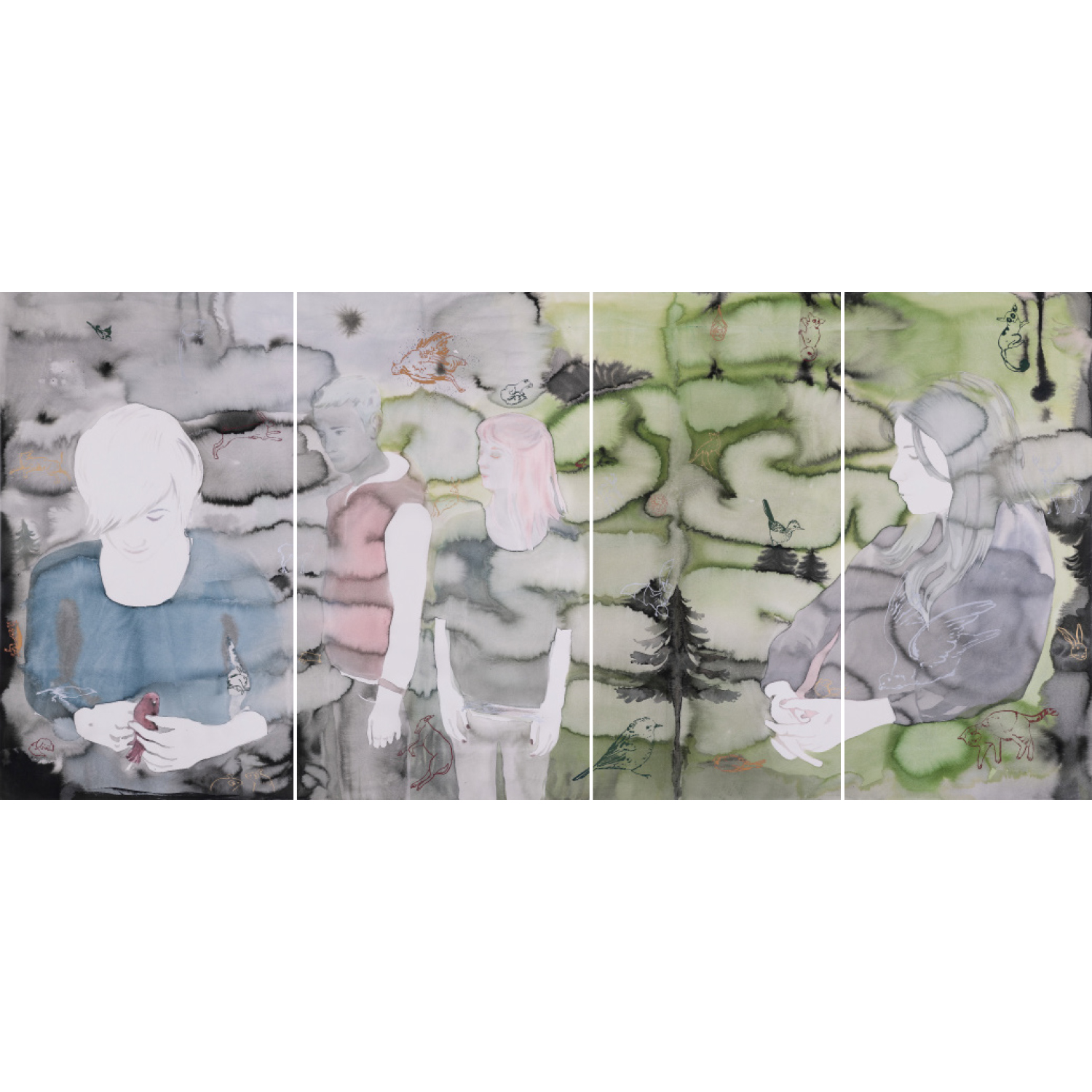
Francoise Petrovitch (nee en 1964) Lorsque la foret s'eclaircit et retient ses animaux en elle - 2014
Estimation : 6000 / 8000 €
Dionyssopoulos Pavlos
Born in 1930 in Filiatra, a small Greek fishing port stuck between the fields and the Adriatic Sea, Dionyssopoulos Pavlos turned his back on architecture and, in the immediate post-war period, joined the Athens School of Fine Arts. A scholarship from the French Embassy enabled him to continue his studies in Paris. At the time, the city was the scene of Yves Klein's Le Vide, Arman's Plein, Jean Tinguely's consecration and the emergence of the New Realists. He met the sculptors Giacometti, César and Calder.
Participating in the Salon des Réalités Nouvelles in 1963, Pavlos is spotted by the critic Pierre Restany, who invites him to exhibit the following year on the fringes of the Venice Biennale. This meeting, the most important of his career according to the artist, opened new horizons for him.
On the frontier of Pop Art, Pavlos' work met with some success during its first American presentation at the Fischbach Gallery in New York in 1967. The early 1970s were marked by a series of paper installations, including a set of 26 trees (The Forest), presented as part of the artist's first retrospective in Hanover.
As a free electron, Pavlos was an architect of the connection between art and life, the work and its audience. Contemporary of a culture that mummifies art, his ambition was to influence the viewer's gaze in order to bring a new world to his consciousness.
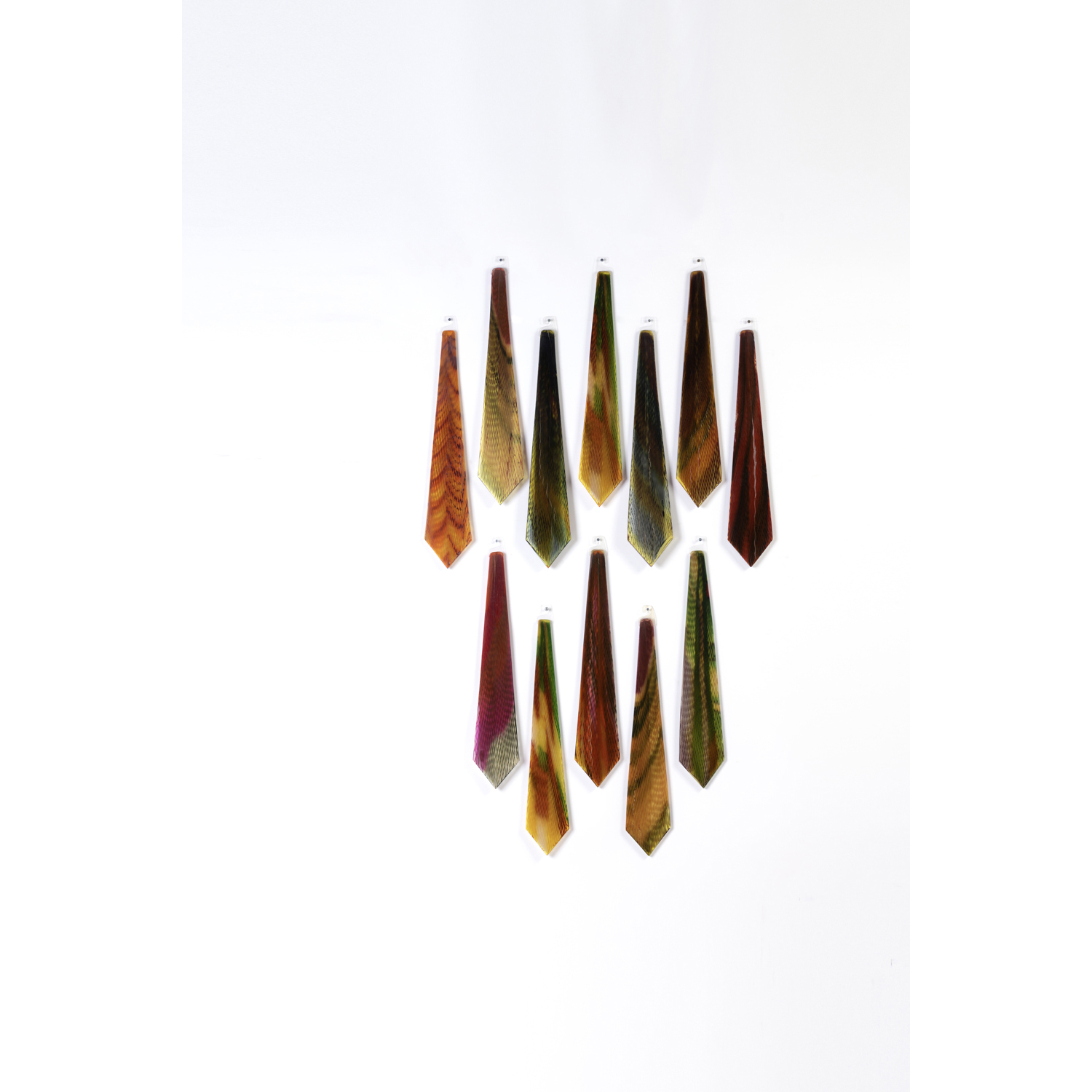
Pavlos (Pavlos Dionyssopoulos dit, 1930-2019) Cravates, set of 12 - 1970
Estimation : 6000 / 8000 €
Miquel Barceló
The artist spent the first years of his life in the small town of Felanitx on the south coast of one of the Balearic Islands. Sensitized to art by his mother, a landscape painter, the young man, who had just graduated from the School of Decorative Arts in Palma de Mallorca, went to Paris in 1973. There he discovered Art Brut and Informal Art as well as personalities such as Jean Dubuffet, Antoni Tàpies, or Jean Fautrier whose influence would profoundly influence his paintings. For him, the end of the 1970s was synonymous with social, artistic and political commitment against the Franco regime.
Constantly on the move, it was in New York that the artist put down his suitcases for a time, just before meeting Andy Warhol through Jean-Michel Basquiat. He had his first solo exhibition in Leo Castelli's gallery, the epicentre of the art market on the other side of the Atlantic. Close to the aesthetics of an Anselm Kiefer, Miquel Barceló, by experimenting with techniques such as drawing, watercolour, painting, but also pottery, sculpture and the creation of stage sets and costumes, has succeeded in bringing a protean work into the world.
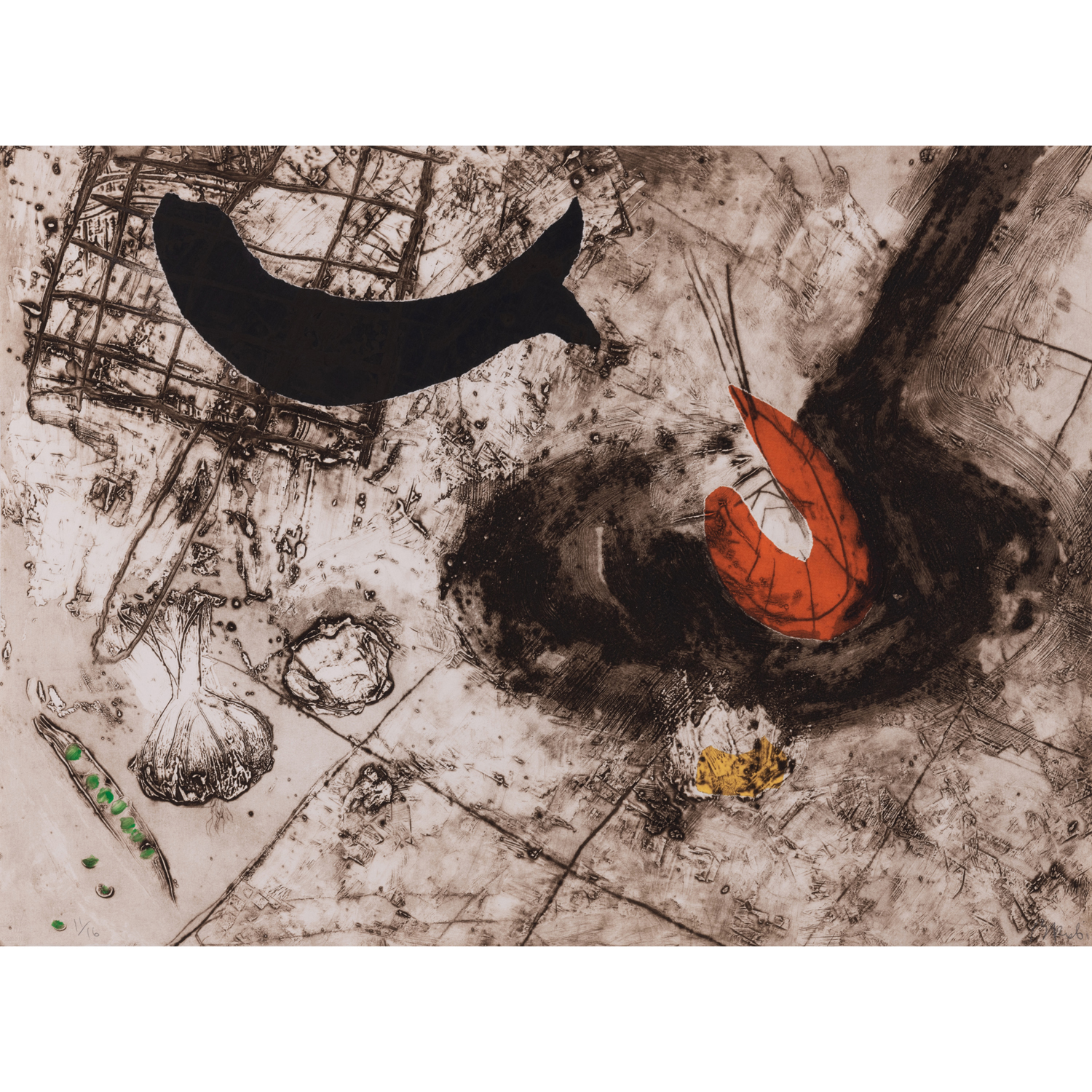
Miquel Barcelo (born 1957) Nature morte - 1987
Estimation : 3000 / 5000 €
Yayoi Kusama
The rigidity of the carcans that his school decides the artist to turn to Western art. Despite the success of several exhibitions in the early 1950s, first in Matsumoto and then in Tokyo, Yayoi Kusama left for the United States in 1957 and moved to New York a year later. The presentation of his "Infinity Nets" series at the Brata Gallery in 1959 was an important step. Converting his neuroses into a source of inspiration, his approach can easily be compared to art therapy. These abstract works covered with countless brushstrokes are strongly influenced by the hallucinatory visions she experienced as a child. Like so many psychedelic motifs, spots and dots are omnipresent.
In contact with the New York art scene (Jasper Johns, Yves Klein, Piero Manzoni, Claes Oldenburg and Andy Warhol), she befriended Donald Judd, who became her studio neighbour from 1961 onwards. During this period she created a large number of sculptures and accumulations.
Gravitating around the notion of self-representation, Yayoi Kusama quite naturally experimented with happening and performance, as in 1966 with "14th Street Happening", during which the artist lay on a mattress covered with protruding phallic forms, also decorated with dots.
Holder in 2014 of the record for the most expensive work by a living artist (7.1 million dollars), Yayoi Kusama has gradually risen to become a key figure on the Japanese scene.
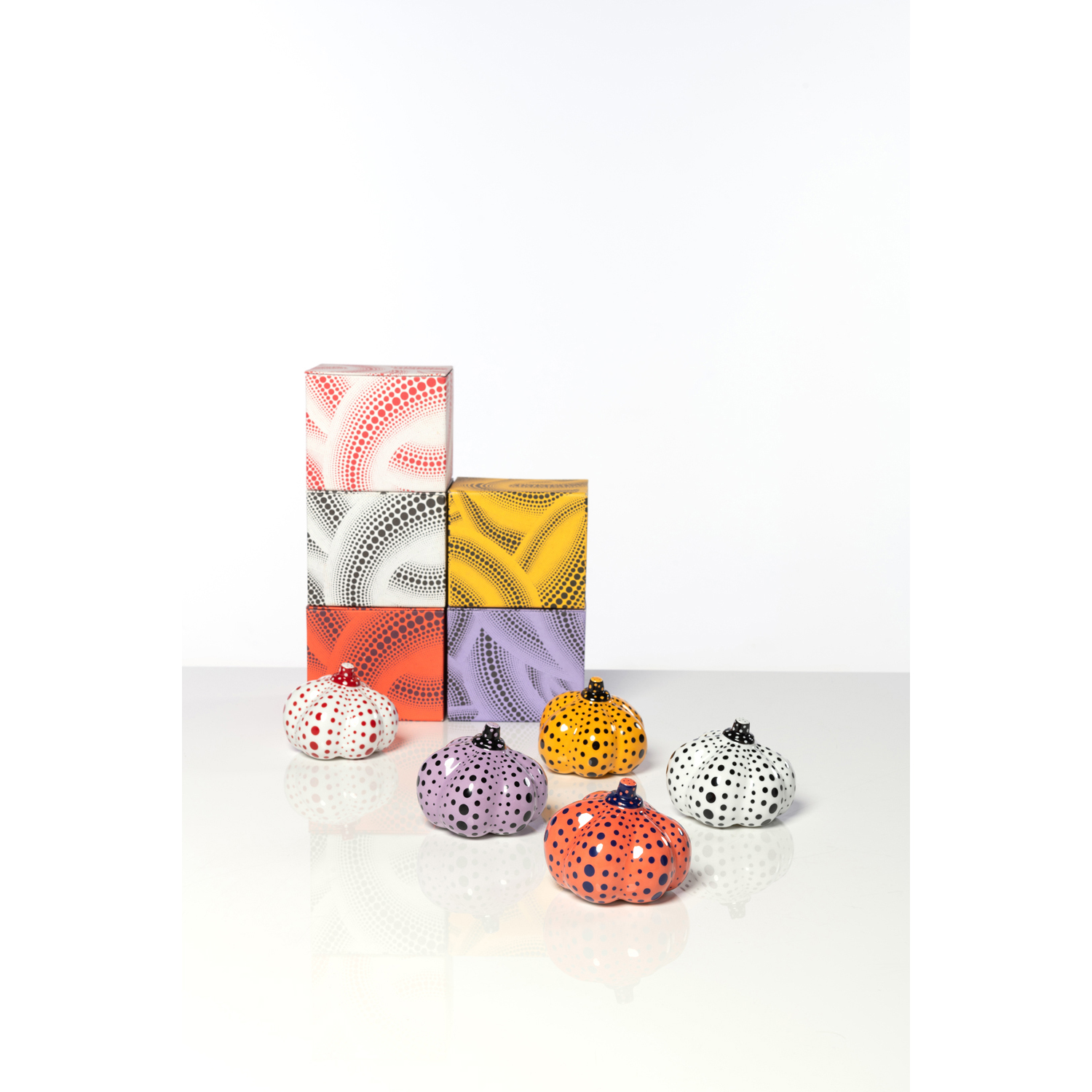
ƒ Yayoi Kusama (born 1929) Pumpkins, set N3, (set of 5) - 2002
Estimation : 35000 / 45000 €
Zao Wou-Ki
The eldest of seven children, Zao Wou-ki is part of a very old family whose origins date back to the Song Dynasty (11th-12th century). A very gifted student, passionate about literature, Wou-Ki began drawing and painting at the age of ten. His family encourages the boy in this way.
In 1935, at the age of fourteen, Zao Wou-Ki entered the Hangzhou School of Fine Arts after passing the entrance exam, which consists of drawing a Greek statue from a casting. For six years he studied drawing from plaster casts and then models, oil painting, traditional Chinese painting with copies, perspective in the Western manner and calligraphy.
Zao Wou-Ki settles in the Montparnasse district, in a small workshop in the rue du Moulin-Vert, next to Alberto Giacometti's studio. He learns French at the Alliance Française and attends the Académie de la Grande Chaumière where he takes classes with Émile Othon Friesz. A few years later he would say that it was in Paris that he found his true personality. He obtained his French naturalization in 1964.
In contrast to his abstract work which made him famous from the end of the 1950s, Zao Wou-ki's first paintings are realistic paintings in which portraits, still lifes or landscapes appear. But quickly, inspired by the work of Paul Klee, he detached himself from the mimetic relationship to reality and produced abstract compositions. The lyrical power of a painting that becomes gestural is then imposed. Halfway between the modernity of American abstract painting and the tradition of Chinese inks and calligraphy, Zao Wou-ki embodies a bridge between East and West.
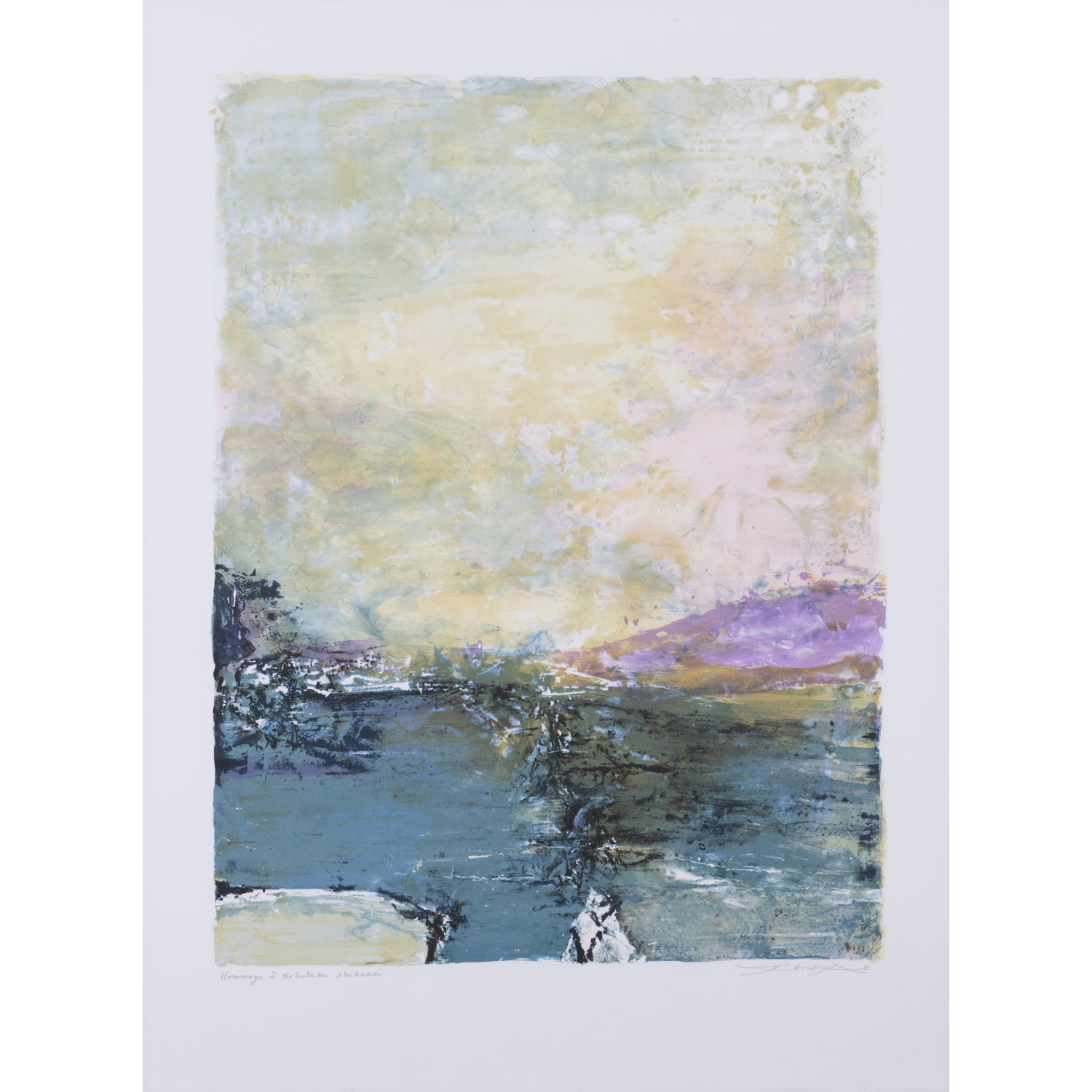
Zao Wou-Ki (1920-2013) Hommage a Nobutaka Shikanai - 1991, (Agerup 354)
Estimation : 2000 / 2500 €
Niki de Saint Phalle
A major figure on the art scene from the early 1960s onwards, the artist, whose real name was Catherine Marie-Agnès Fal de Saint-Phalle, began her public career as a model in one of the leading fashion magazines, including Vogue, Life and Elle. She spent her childhood in New York. A violent nervous breakdown leads her to a psychiatric hospital. Like a number of artists close to art brut, it is in this context that she takes up brushes for the first time.
During the 1960s, Niki de Saint Phalle explored the age-old iconography of women by making monumental dolls entitled "the Nanas". Stigmatas of the feminist dimension of her work, these sculptures were widely commented on by the press.
Inspired by the formal vocabulary inherited from prehistory, the anatomy of the women represented by the artist puts the curvature of the breasts and the hips in the same way as in this piece created in 2000 and published in only 150 copies.
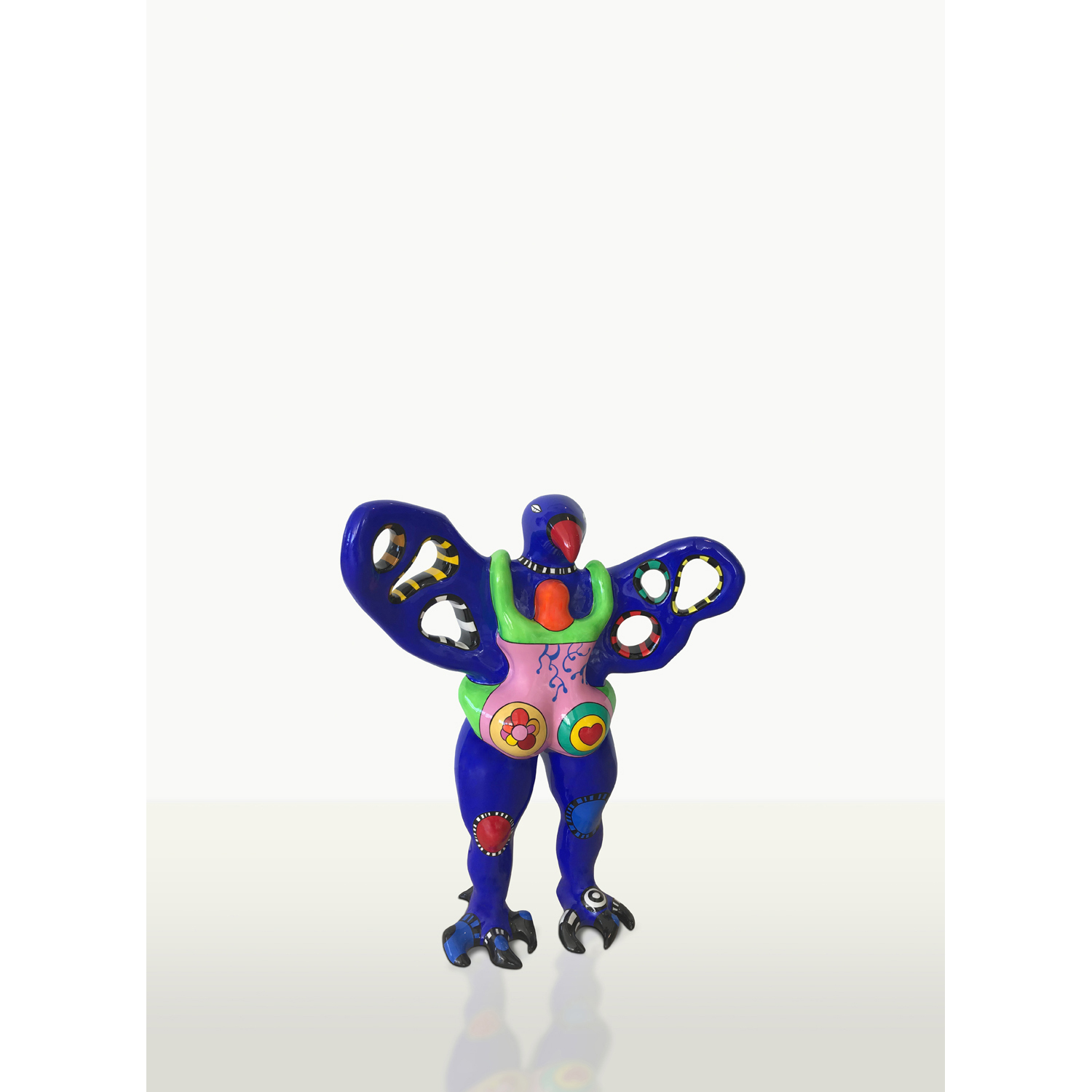
Niki de Saint Phalle (1930-2002)
L'Oiseau amoureux, Bird in Love, (vase) - 2000
Estimation : 20000 / 30000 €
Jean-Michel Basquiat
Originally from Puerto Rico and Haiti, born in 1960 in Brooklyn and died in New York in 1988 following an overdose at the age of twenty-seven, Basquiat belongs to a generation of graffiti artists who suddenly emerged in New York in the late 1970s.
The author of a body of work comprising over 2,000 drawings and paintings, Jean-Michel Basquiat has traversed the New York scene like a dislocated meteor. A product of an urban American culture heavily impacted by social and ethnic violence, the artist was one of the actors who allowed Street Art to enter museum halls. Immediately identifiable, his painting is the place of the emergence of a new iconographic repertoire and a style that has inspired many artists to this day.
As early as 1976, barely 16 years old, the young man intrigued the East Village art world by graffiti on the walls of the streets near Manhattan galleries under the pseudonym SAMO (Same Old shit). After several projects and collaborations (music, cinema...), his painting is the subject of a first exhibition in Annina Nosei's gallery in Soho then in 1980 in Larry Gagosian's gallery in Los Angeles.
The emblematic character of Basquiat's work touches the public but also collectors from all over the world. In the auction room, the record for this artist was reached in New York in May 2017 with an auction sale of nearly 100 million euros.
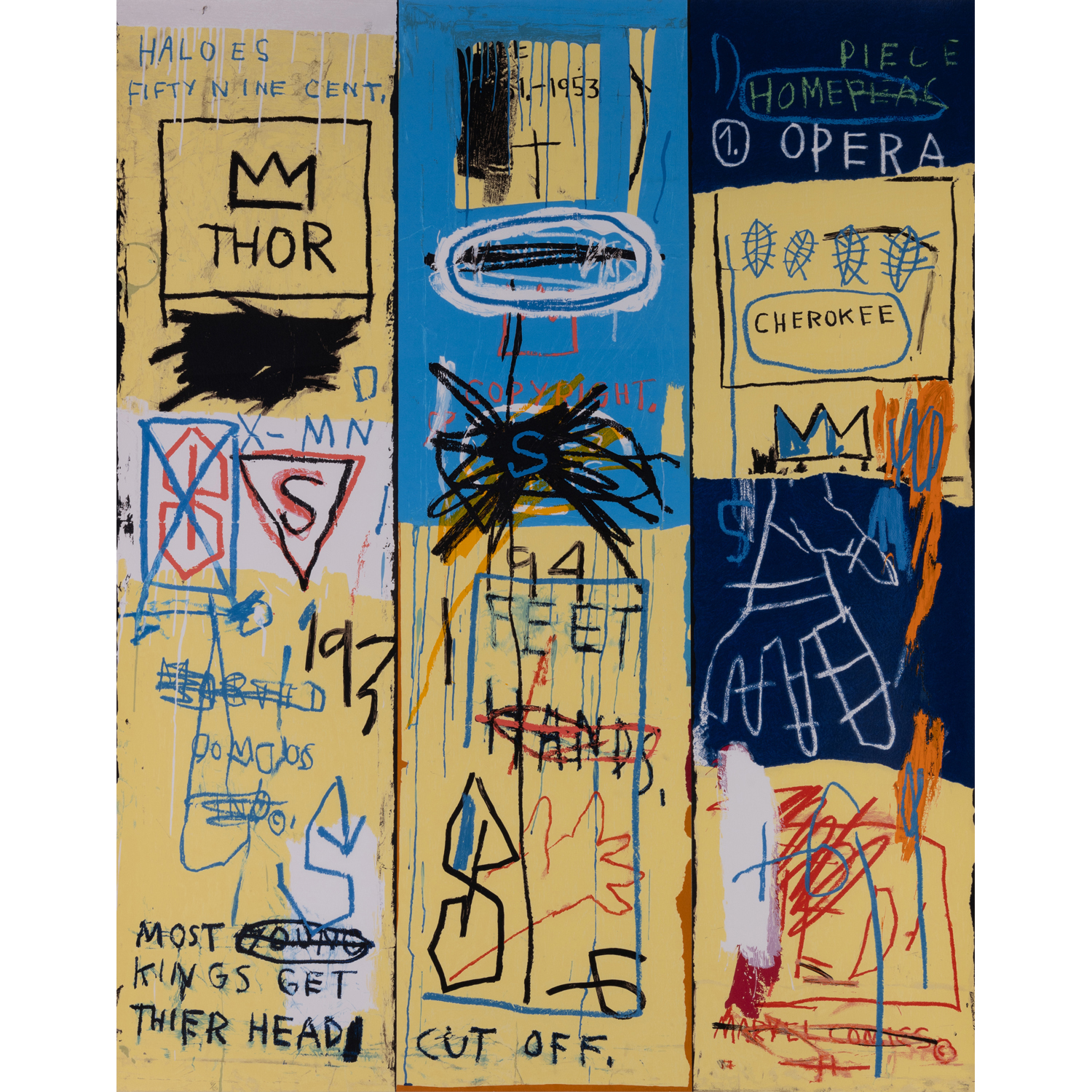
After Jean-Michel Basquiat (1960-1988) Charles The First - 1982/2004
Estimation : 40000 / 60000 €