


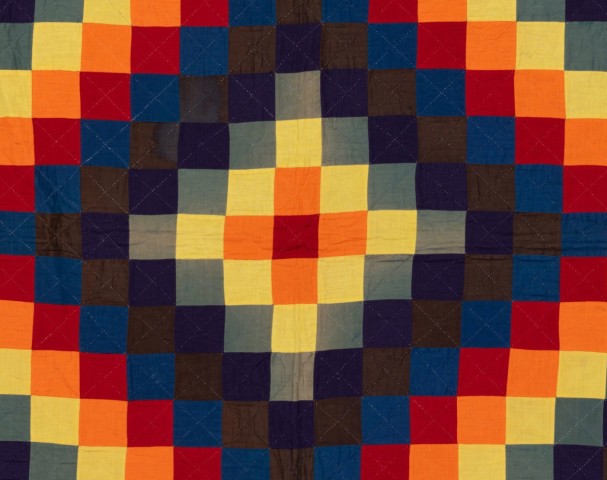
Our American Design auction of May 29th will host a first part dedicated to Quilts : « Abstraction in Craft », American Quilts at the turn of the 20th century
At first, as you page through this catalogue, you could easily mistake it for a world-class painting collection. In fact, you are looking at quilts: textiles that originated in remarkable circumstances, among the separatist communities of nineteenth-century America. How did these women - who otherwise embraced simplicity in their lives - produce such wildly creative things, foreshadowing the innovations of modern art? It is tempting to see them as bursting forth unbidden from their makers’ minds, all the more revelatory because the world was so circumscribed.
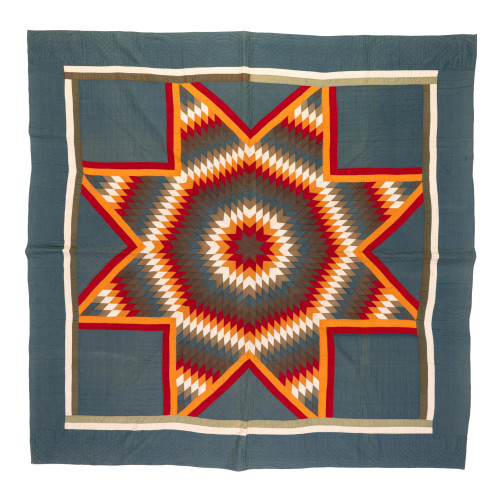
Quilt, Pennsylvanie Blazing Star - Pièce unique
Result : 2340 €
The quilts seem even more remarkable when seen outside their original context. As marvels of visual imagination, they easily equal much later works by Frank Stella, Bridget Riley, and Jasper Johns. Notice how a regular log cabin pattern is interrupted by a sudden color shift, just so, adding dynamism; or the infectious rhythm that plays across a set of “Joseph’s Coat” stripes. Notice, too, that many of the quilts have the effortless, slipsliding illusionism of 1960s Op Art, or the expansive radiating power of a Ken Noland target painting. Consider the conventional terminology that is applied to some of the patterns – “Trip Around the World”, “Lightning Border”, “Blazing Star”, “Eye Dazzler”. These names rightly gesture toward the immaterial ; though painstakingly stitched into being, the quilts conjure pure movement and celestial happenings. They possess what the influential art critic Clement Greenberg called opticality, the appearance of existing in the eyesight alone.
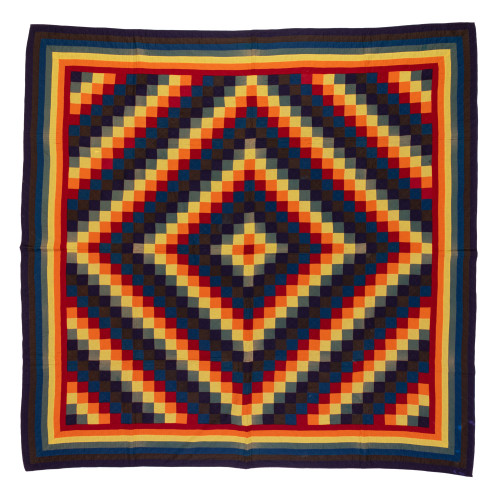
Quilt, Pennsylvanie Trip Around The World / Joseph’s Coat colors
Result : 1950 €
Back in 1828, the editors of Webster’s, an American dictionary, defined wit as “assembling and putting together with quickness, ideas… to make up pleasant pictures and agreeable visions in the fancy”. They may as well have been describing the era’s quilt-makers. For these textiles, humble and anonymous though they may be, demonstrate the restlessly creative nature of human intelligence. Abstraction and expressionism are here in abundance. All it takes to see them is pattern recognition.
— Glenn Adamson
