


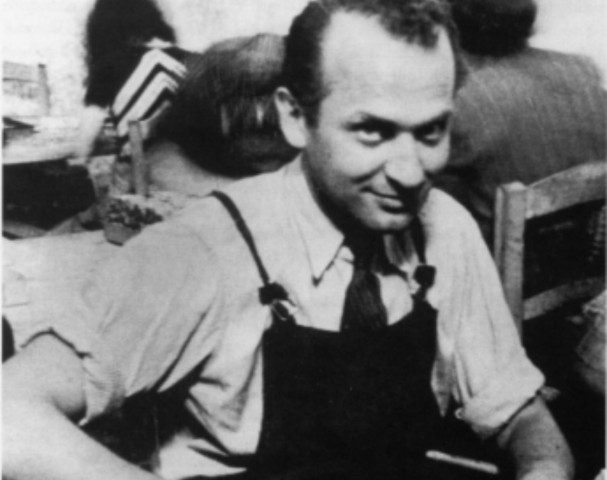
Originally from Romania, Jacques Hérold (1910-1987) trained at the School of Fine Arts and took part in the avant-garde magazine Unu, with its surrealist spirit, where his drawings were published in 1928 alongside those of Victor Brauner. In Paris, where he went in 1930, he met Brauner, Brancusi and Tanguy, who introduced him to André Breton. From then on, Jacques Hérold participated intensely in the activities of the surrealist group, particularly in Marseille during the war, where he took part in the "Jeu de Marseille" with his refugee friends such as Matta and Tanguy.
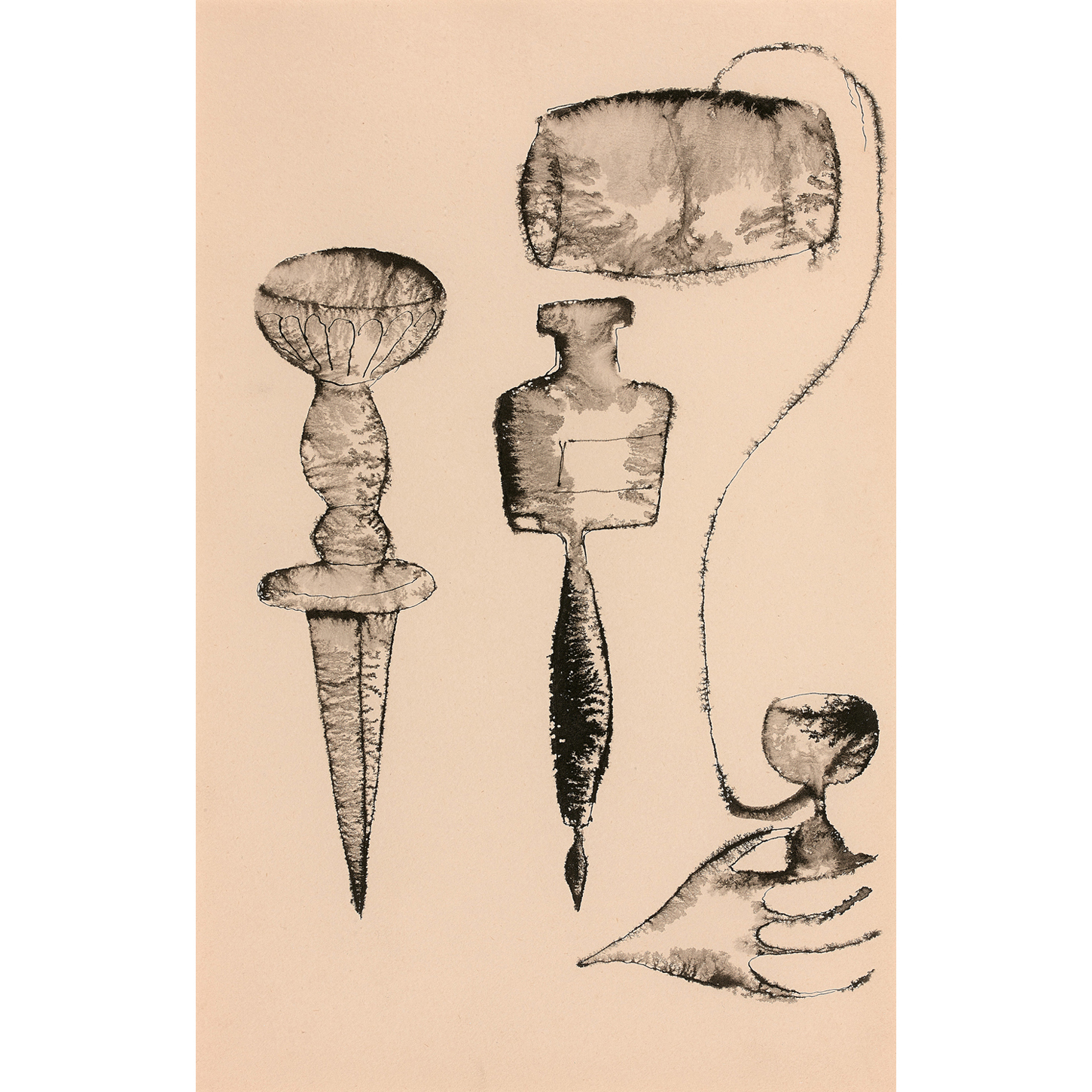 Jacques Hérold (1910-1987)
Composition abstraite, 1941
1 500 / 2 500 €
Of great poetic power, the work of Jacques Herold is comparable to that of an alchemist: over the decades, he has developed a formal repertoire in perpetual mutation, in the hope of capturing the ephemeral and penetrating the secrets of the material, as he had confided to Michel Butor : "That is what I would have liked my painting to be: the invasion of the body by a substance at once solid and liquid, crystalline, luminous, extremely subtle, drinking gold, the alchemists' elixir" (in Herold, Le Musée de Poche, Paris, 1964). In the manner of a poet, the titles he invents for his works associate rare and unusual words, leading to unpredictable associations of ideas that lead us sometimes to the absurd, sometimes to the marvellous. In this spirit, Jacques Herold had notably written Le Maltraité de la peinture in 1957, republished in 1985 by Fata Morgana. This book, writes Alain Jouffroy, reveals "the extreme accuracy of his poetic intuitions, some of which correspond to the discoveries of particle physics. The object," he says, "is torn apart by its becoming - we can only see one thing, we can only see things in each other, intermingled. "All of his paintings, all waves and shards, obey this law of penetration of the future of matter. »
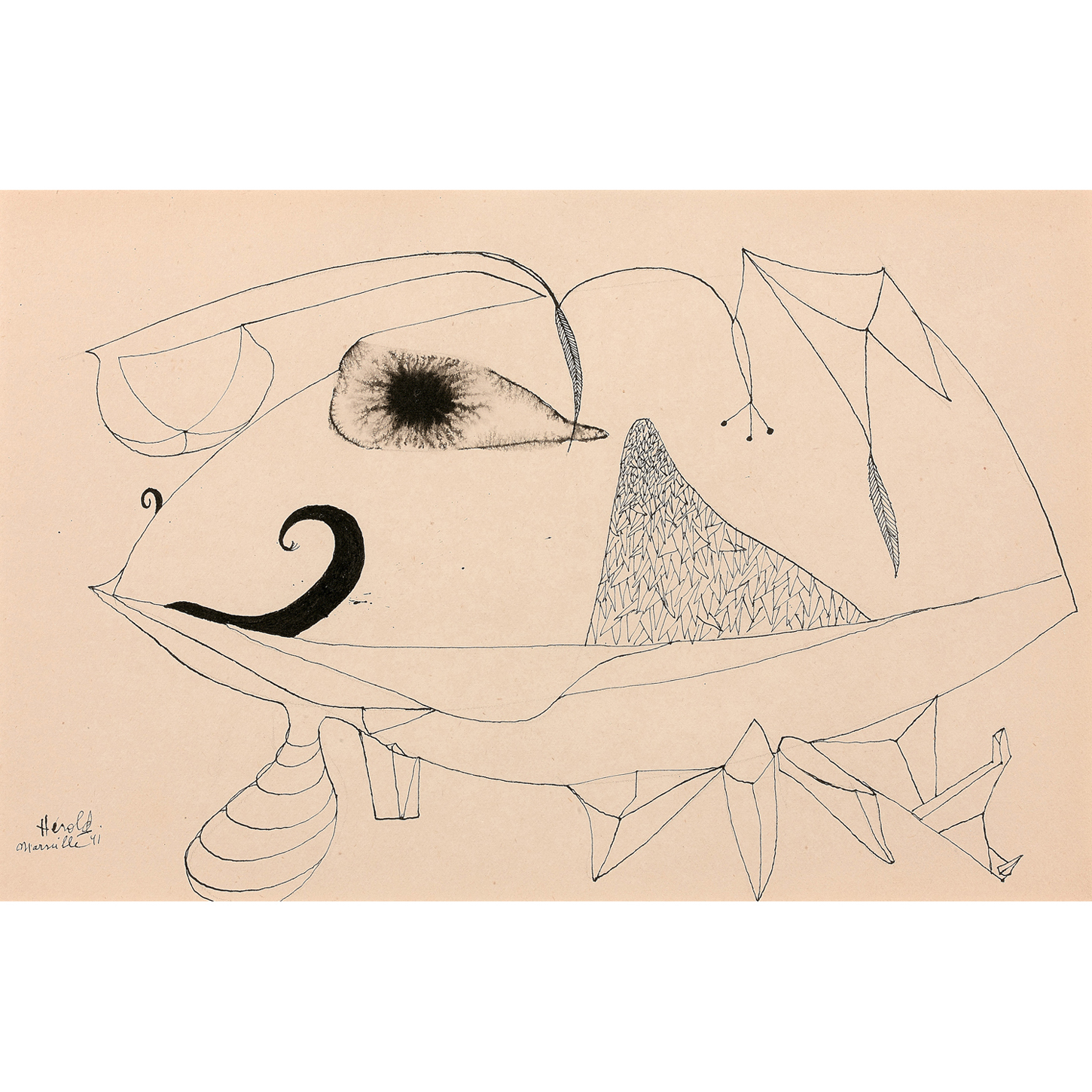
Jacques Hérold (1910-1987)
Composition abstraite, 1941
1 500 / 2 500 €