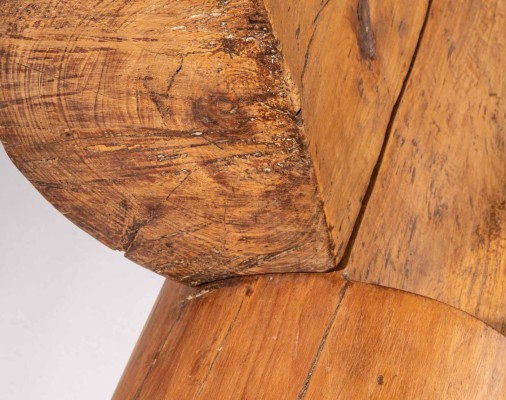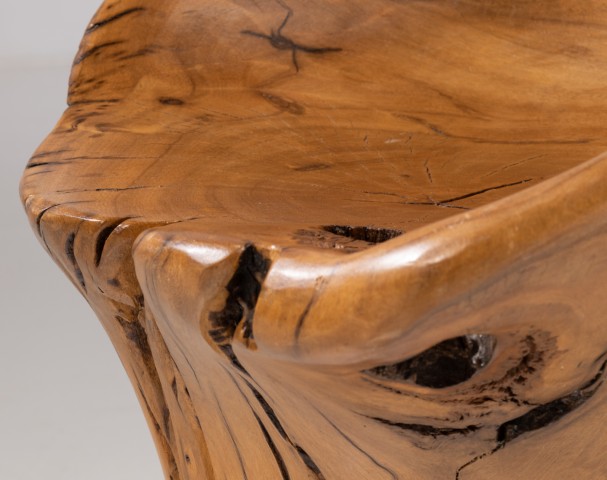
On Wednesday, December 10, 2020, PIASA will present an exceptional sale of American and Brazilian design. PIASA continues to spread the popularity of Brazilian design, once confidential, through sales highlighting iconic works by the great names in Auriverde furniture. In this upcoming session, several remarkable pieces by Hugo França and Jose Zanine Caldas are a striking demonstration of typically Brazilian work.
Hugo França, born in 1954, left the city in the 1980s to get closer to nature in Trancoso, among the indigenous Pataxó people. It is there that he discovers the waste born from the exploitation of wood, a discovery that will guide all his creation. França began to create what he calls 'sculptural furniture' at the end of the 1980s, using wood debris - trees condemned by natural causes, bad weather, or by human hands.
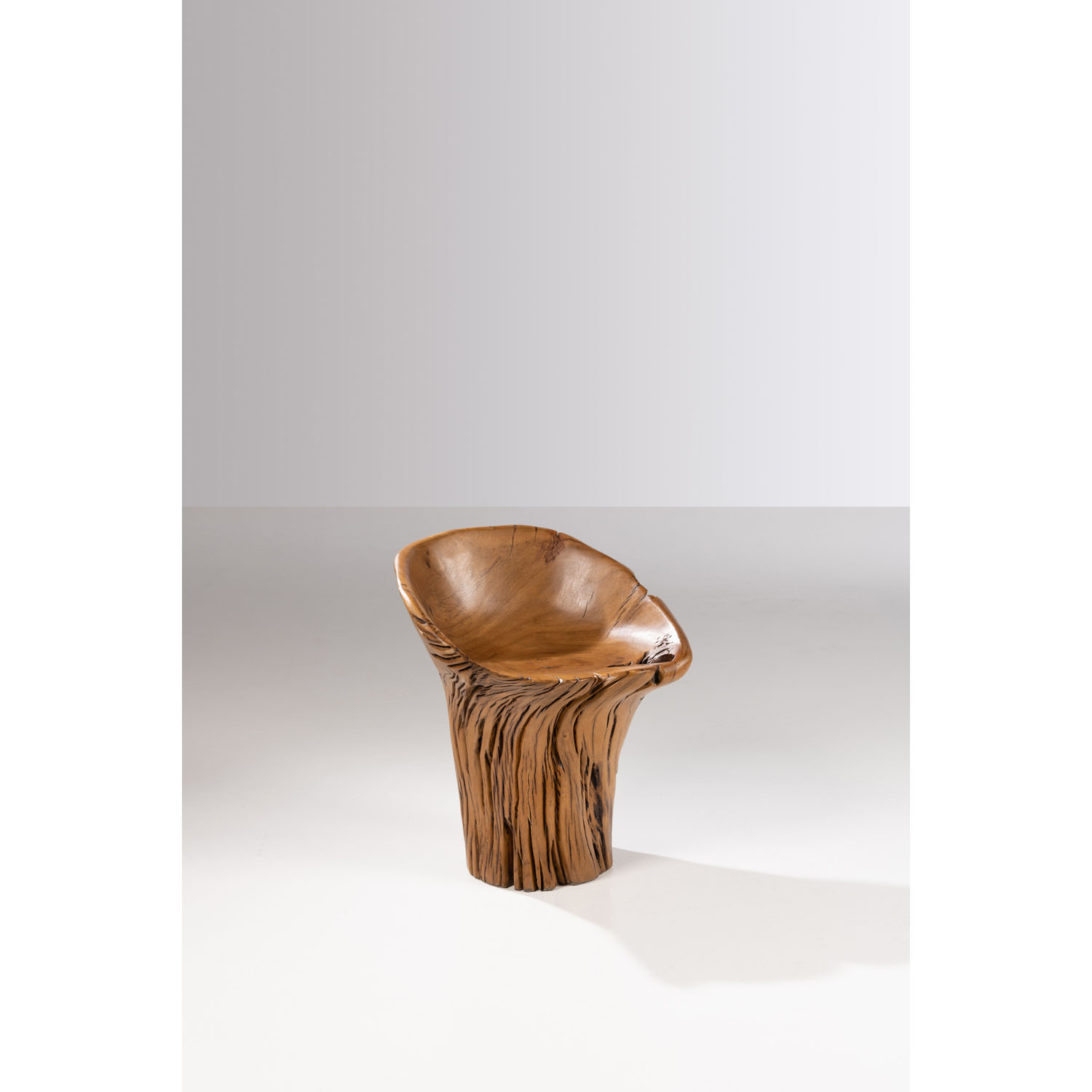
Hugo França (né en 1954)
Guasca - Unique piece
Estimate: 8000 / 12000 €
His creation is born from a creative dialogue with the raw material. The shapes, cracks, wear of time on the wood are the basis of each work. The species chosen are those usually abandoned by traditional carpentry; all parts of the tree are used: roots pulled out of the ground, hollow trunks, monumental logs. The size of the pieces often requires the works to be shaped on site, highlighting the shapes and textures of the wood.
"the main inspiration is each tree - not only because of the beauty of its shape, but also because it has a past. »
The works of França echo those of Jose Zanine Caldas in this sale. At the end of the 1970s, he settled in Nova Viçosa, a small town on the south coast of Bahia, and resumed his work as a designer interrupted in the 1950s. It is then that his Denùncia series was born: monumental handcrafted works in carved wood, generally recovered from the destruction of the forest of the Atlantic coast of Brazil.
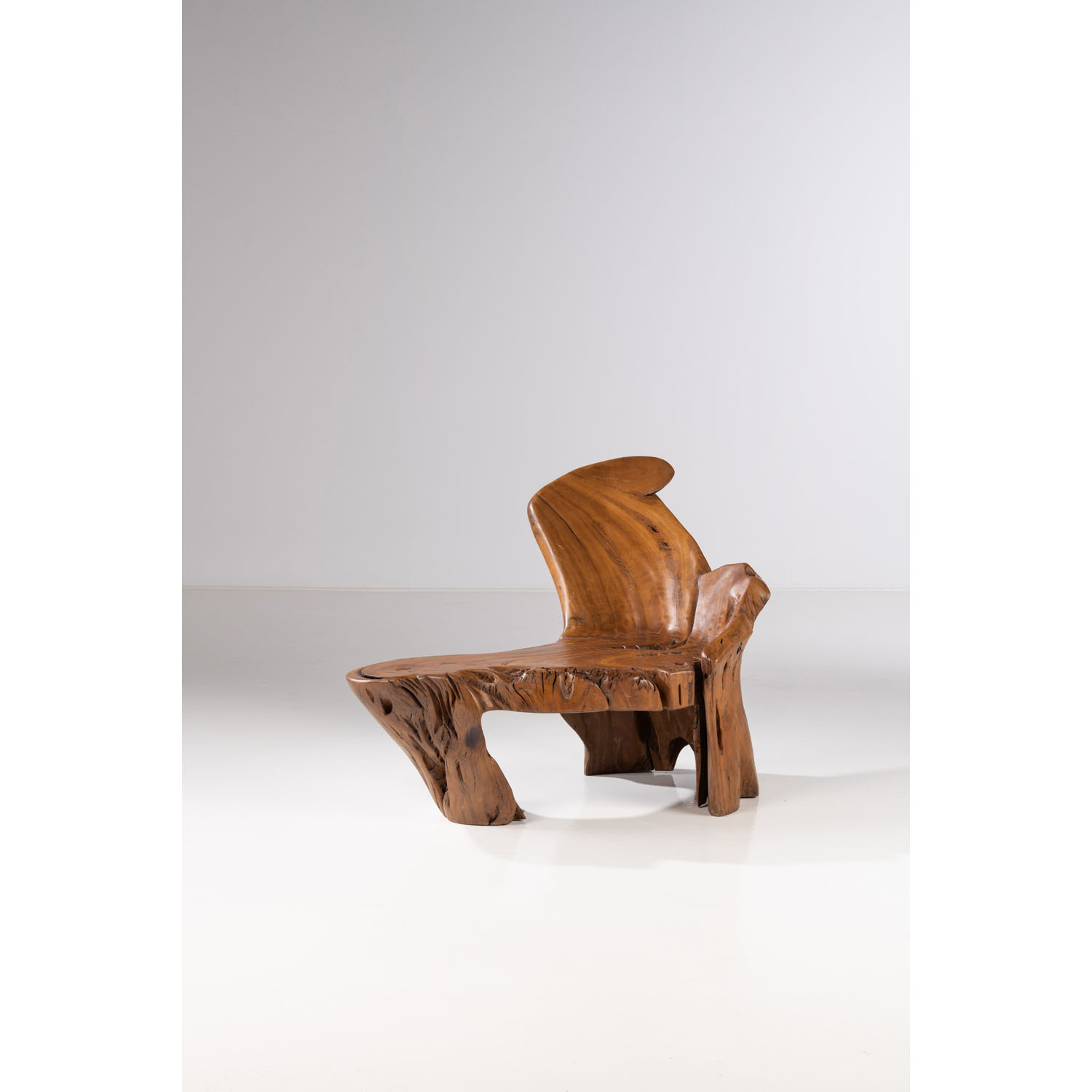 Hugo França (né en 1954)
Iterremã - Unique piece
Estimate: 15000 / 20000 €
This series is radically opposed to the rationality and industrial themes of his studio Moveis Z. From that day on, Zanine Caldas followed the protest movements that would influence subsequent generations of designers. He employed the indigenous canoe makers whose livelihood had been lost when their village was devastated by a storm: they carved their boats by hand from giant Ipê trees. These masters of the "Nobre Madeira", the noble wood, became the main artisans of Caldas and built some of its iconic pieces, such as the wooden bench of Pequi offered for sale by PIASA.
The legacy of Jose Zanine Caldas continues today, with the contemporary creations of his son, the designer Zanini de Zanine.