


For its first vacation of the year, Design (1929-2008) on February 20th, the PIASA house is offering an insight into the creators who contributed to writing the history of modern design during the 20th century. Among them, Gio Ponti, represented with eight lots, continues to embody an international benchmark.
The charismatic founder of the magazine Domus and a key player in the Milan Triennial, the Lombard designer and architect Gio Ponti was considered, as early as the mid-1930s, one of the most emblematic figures of Italian modernity. Through its vacations dedicated to Italian design, PIASA regularly pays tribute to the genius of this designer by offering his pieces to collectors.
Gio Ponti's studies at the Milan Polytechnic were interrupted by the outbreak of the First World War. Once the armistice was signed, he resumed his training, from which he graduated in 1921. He then met Emilio Lancia and Mino Fiocchi, with whom he joined forces to set up an architectural firm. 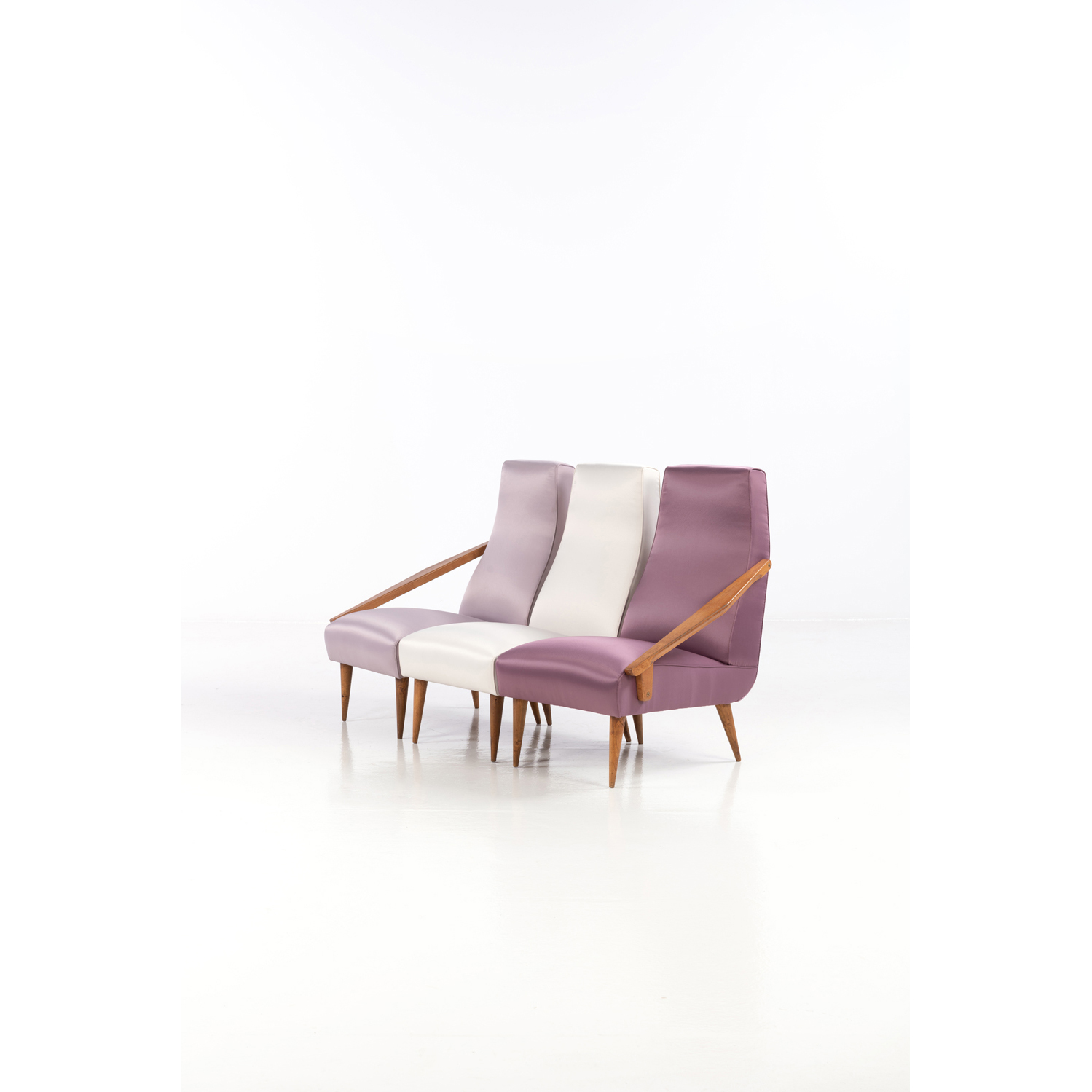
Gio Ponti (1891-1979) Banquette à trois assises
Estimate : 5000 / 7000 €
Appointed artistic director of one of the most important Italian porcelain manufacturers, Gio Ponti completely renewed the iconographic repertoire by rationalizing the production system of the pieces, while maintaining their high quality of execution. His first pieces were presented at the first Biennale of Decorative Arts in Monza in 1923 and then in 1925 at the International Exhibition of Decorative Arts where he was awarded the Grand Prize for Ceramics.
Gio Ponti promoted Italian creation in all its forms. In 1927, he became a member of the management committee of the Monza biennials, where he advocated a rapprochement between craft and industry.
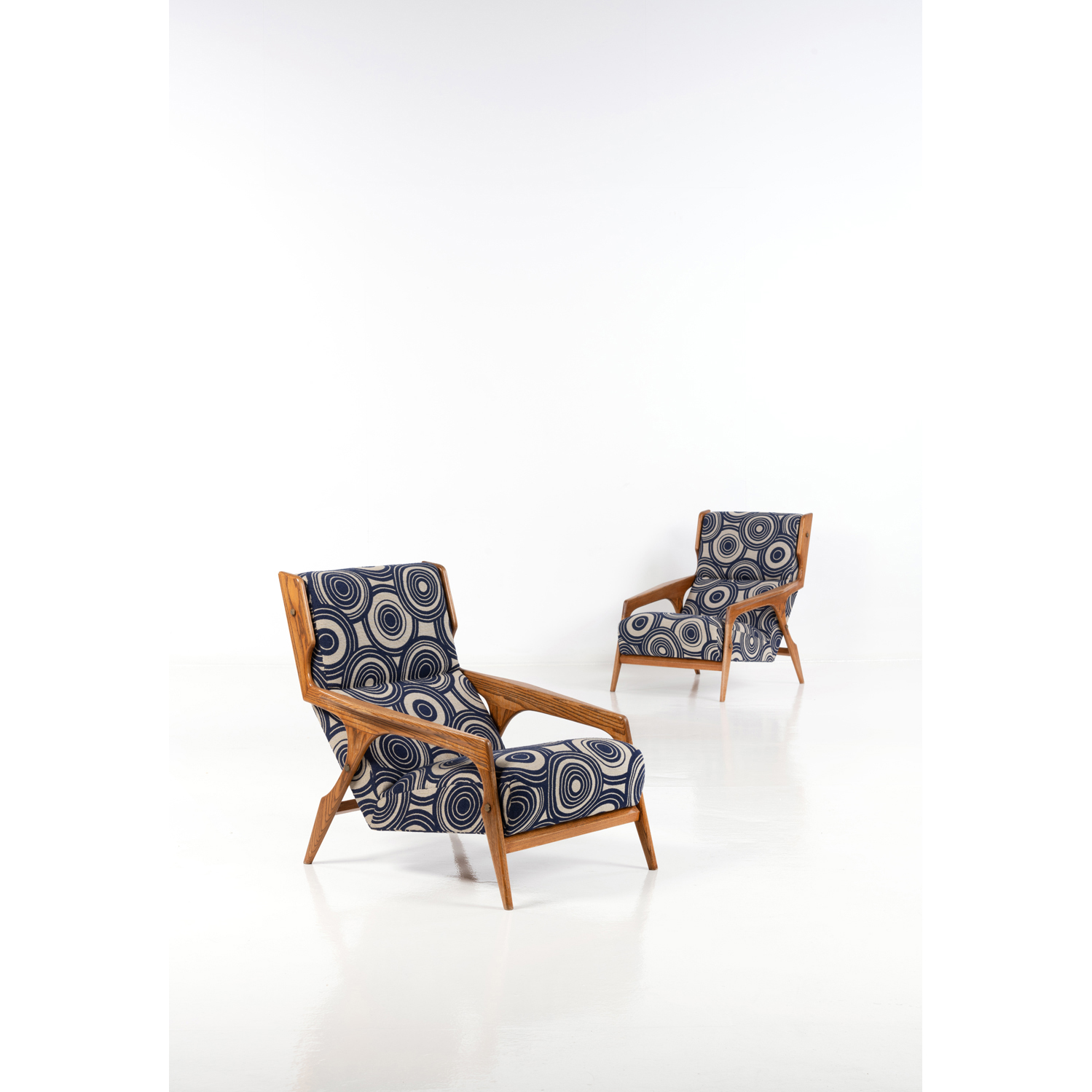
Gio Ponti (1891-1979) Paire de fauteuils
Estimate : 40000 / 60000 €
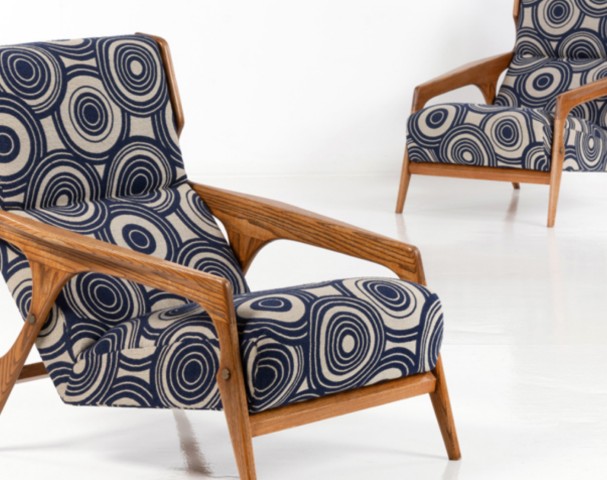
Throughout his career, he was keen to select materials capable of diversifying the rendering of textures and colours, as with this pair of armchairs created in 1964. This one edited by Cassina comes from the Hotel Parco dei Principi, Rome. Giving the illusion of movement, the circular patterns contrast with the rectilinear wooden frame.
An ardent defender of the revival of Italian design in the post-war context, he was the author of a work presented on numerous occasions, such as in 1950 as part of the "Italy at Work" exhibition at the Brooklyn Museum and in 2018 at the Musée des Arts Décoratifs in Paris.
