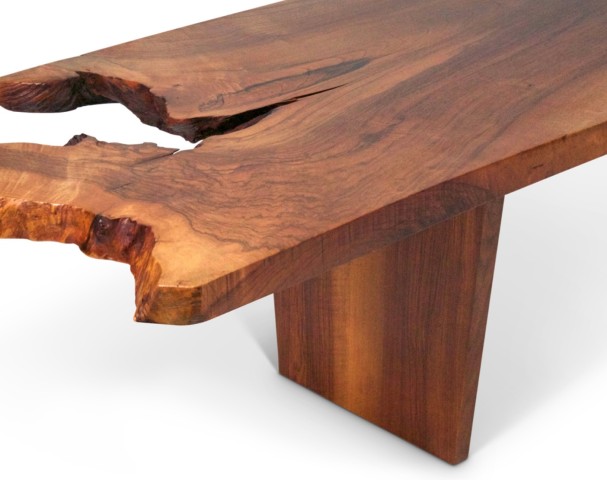
The aesthetics of the wooden furniture that the American designer George Nakashima has shaped all his life has propelled him very high in the pantheon of the history of interior architecture. The artist's fascination with the expressive potential of the wood left in places in the state of a tree trunk must be linked to the region in which he was born in 1905.
Born into a Japanese family, George Nakashima was born in Spokane, Washington. For this city, which lived mainly from mining and forestry, the first years of the 20th century were synonymous with economic decline. As far as the eye can see, the surroundings of the city are covered with a thick layer of trees. He abandoned this natural environment to study architecture at the Massachusetts Institute of Technology (MIT). Upon graduation, the 26-year-old man left the United States and embarked on a long journey.
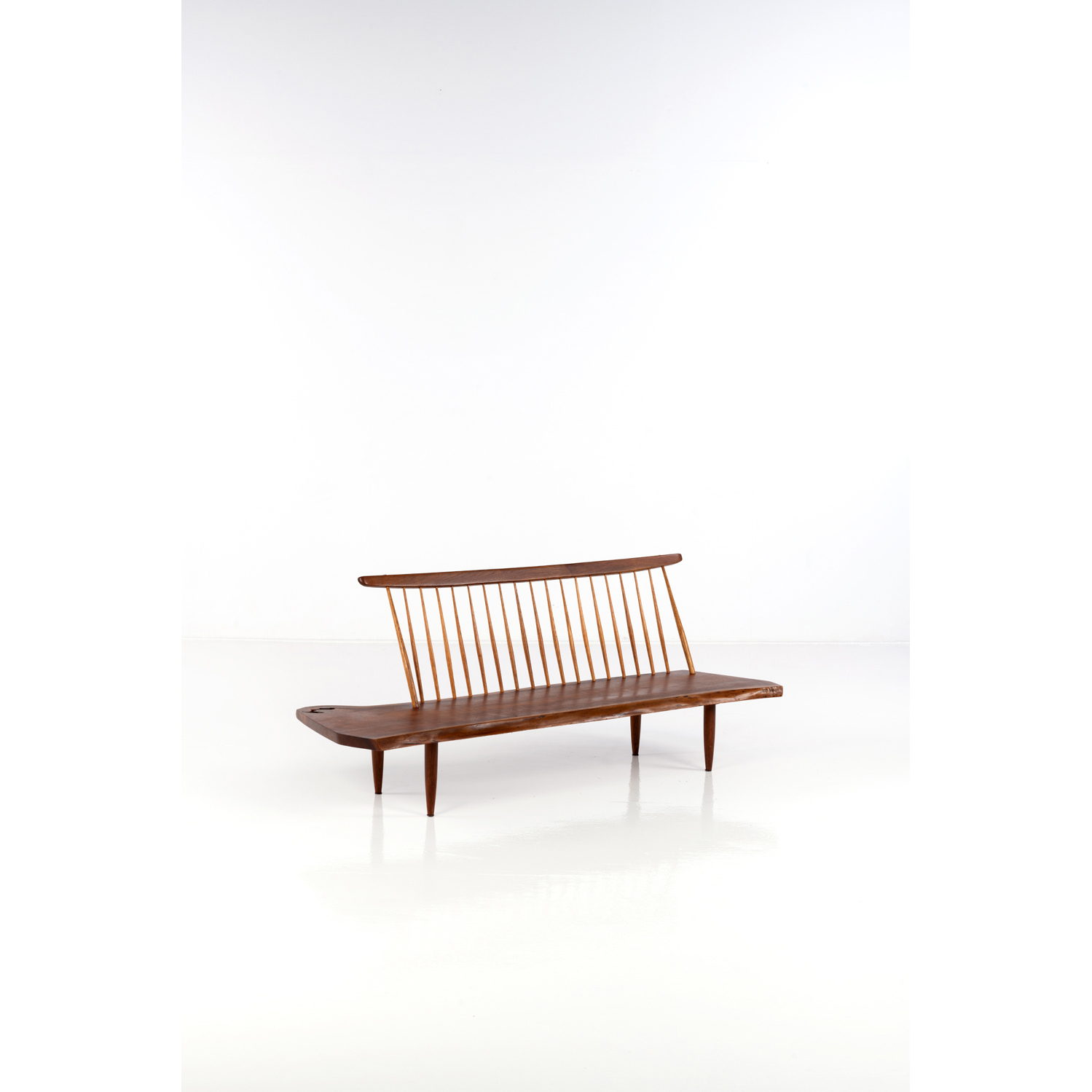
George Nakashima (1905-1990)
Conoid bench - Pièce unique
Result : 20800 €
This one leads him to travel around France for several months as a bohemian artist. Via North Africa, George Nakashima then continued his itinerary towards Japan. He discovered the design and architecture of the Japanese archipelago with Antonin Raymond himself trained by Cass Gilbert and Frank Lloyd Wright.
He made his first furniture for an ashram in Pondicherry, India, which the authorities entrusted him with the construction. In 1940, he returned to Seattle where he taught woodworking. As a result of the United States' entry into the war, the designer of Japanese origin was taken prisoner. He was only released in 1943 thanks to the sponsorship of his friend Antonin Raymond.
As part of the sales dedicated to American Design, PIASA regularly pays tribute to this talented designer, who is now celebrated all over the world.
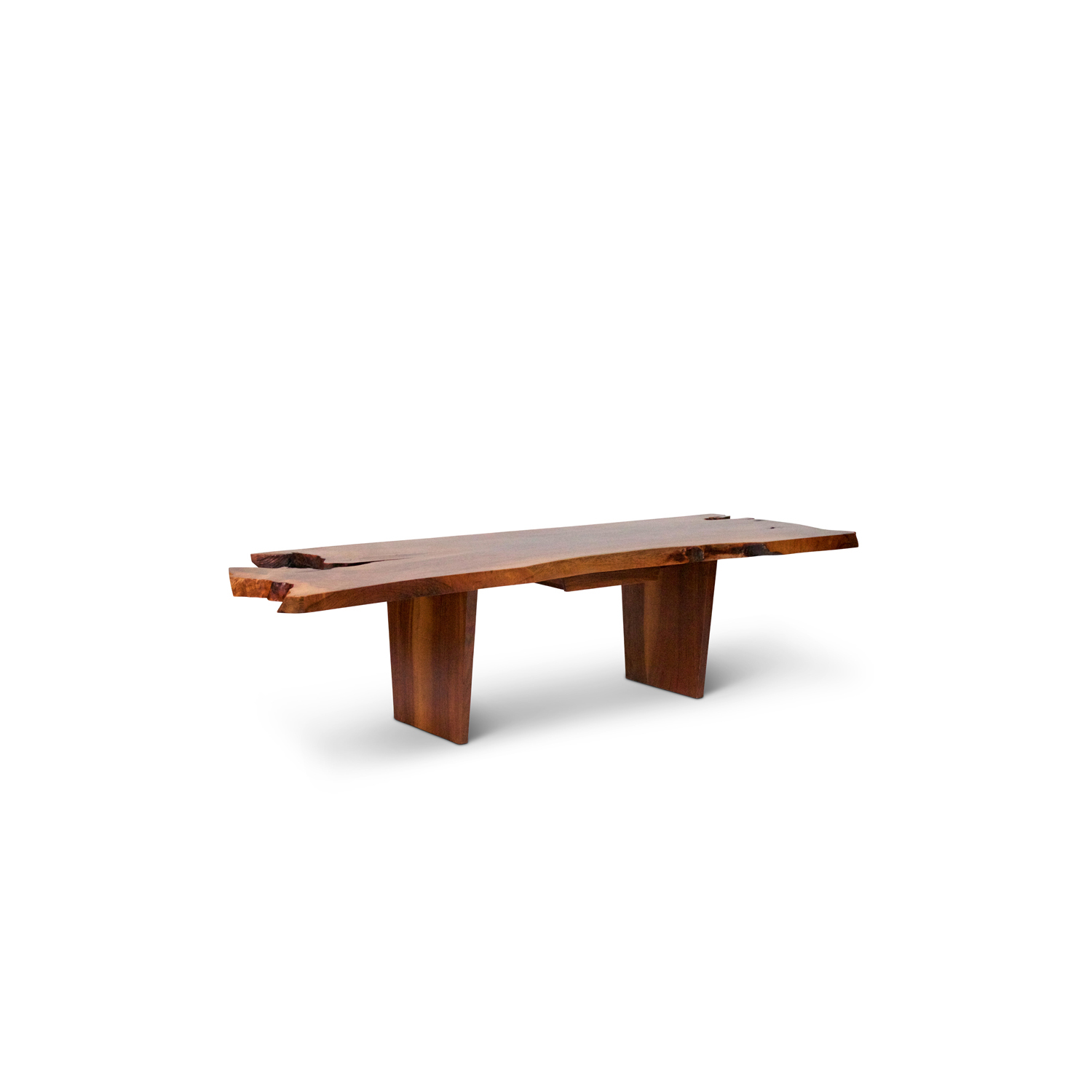
George Nakashima (1905-1990)
Dean's Desk - Pièce unique
Result : 80600 €
A true symbol of the way it approaches the material, the walnut wood desk aroused considerable interest during the sale celebrating PIASA's five years in its setting at 118 rue du faubourg Saint honoured.
The perfectly smooth surface contrasts with the edges of the furniture, which are deliberately left unfinished. This simplicity of the structure of this piece of furniture refers to the aesthetics of Japanese design that George Nakashima, to whom he became familiar, in particular with Gentauro Hikogawa, a carpenter he met during his imprisonment.
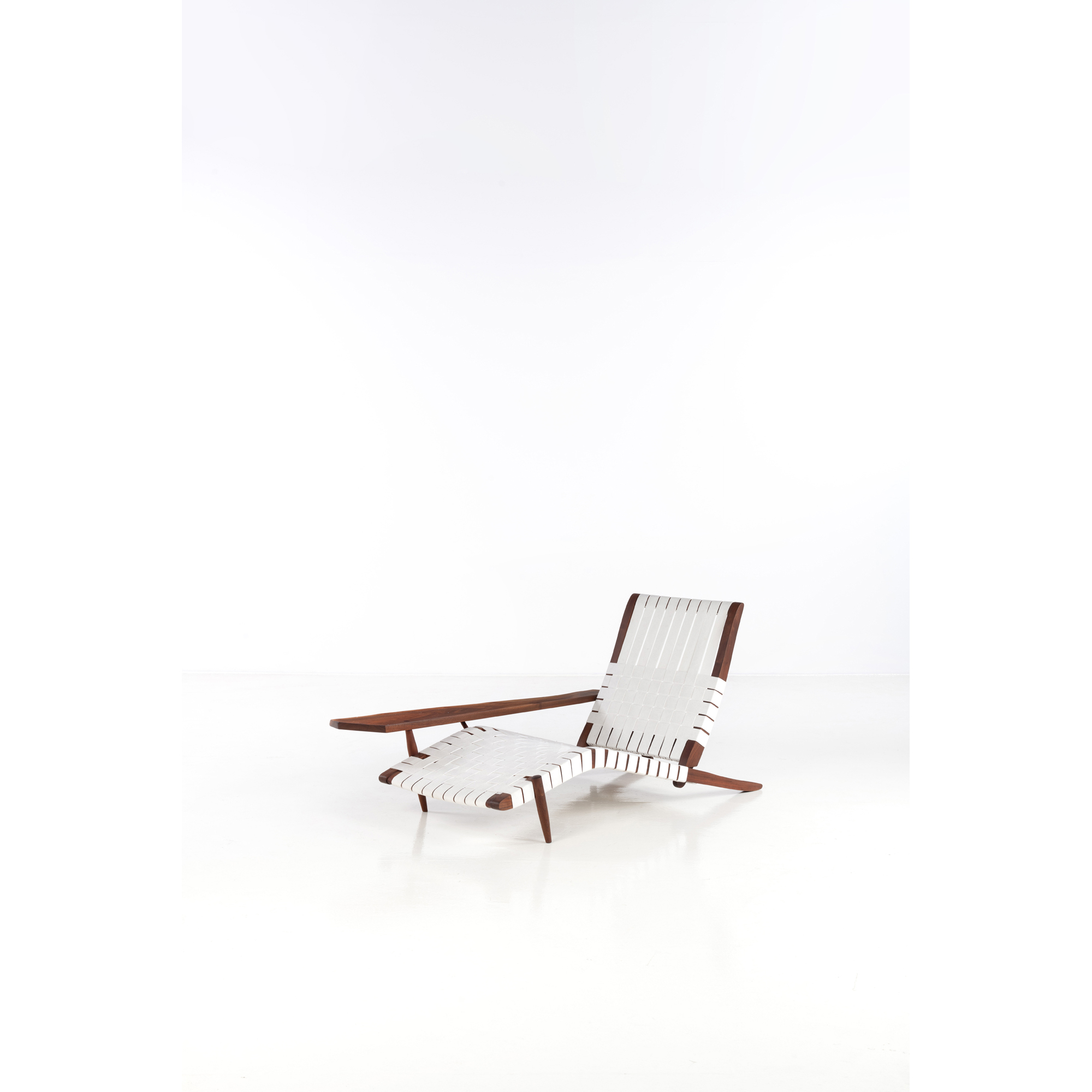
George Nakashima (1905-1990)
Chaise longue - Pièce unique
Result : 48100 €
Although he may sometimes move away from the woods, George Nakashima never loses the path of the plant. For example, this lounge chair made of walnut and cotton, made in 1957, or this chair - accompanied by a desk - designed with sea grass.
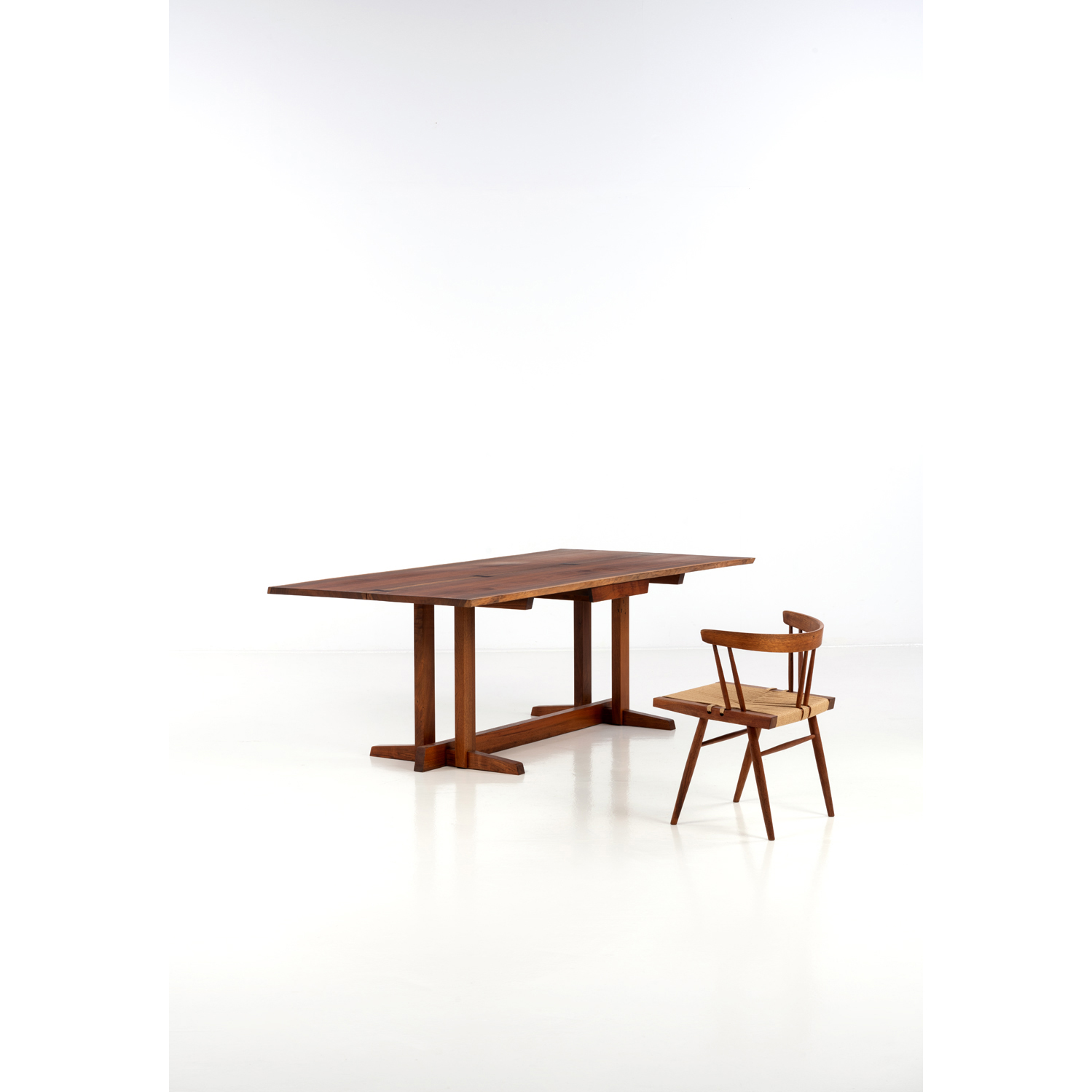
George Nakashima (1905-1990)
Frenchman’s Cove desk et Seagrass chair
Result : 29900 €
Some pieces explicitly reflect the influence that the aesthetics of Japanese furniture has had on his work. Specially commissioned by Dr. Paul Murray, this Bahut seems to have been extracted straight from a Japanese interior, a remnant of his family memory.
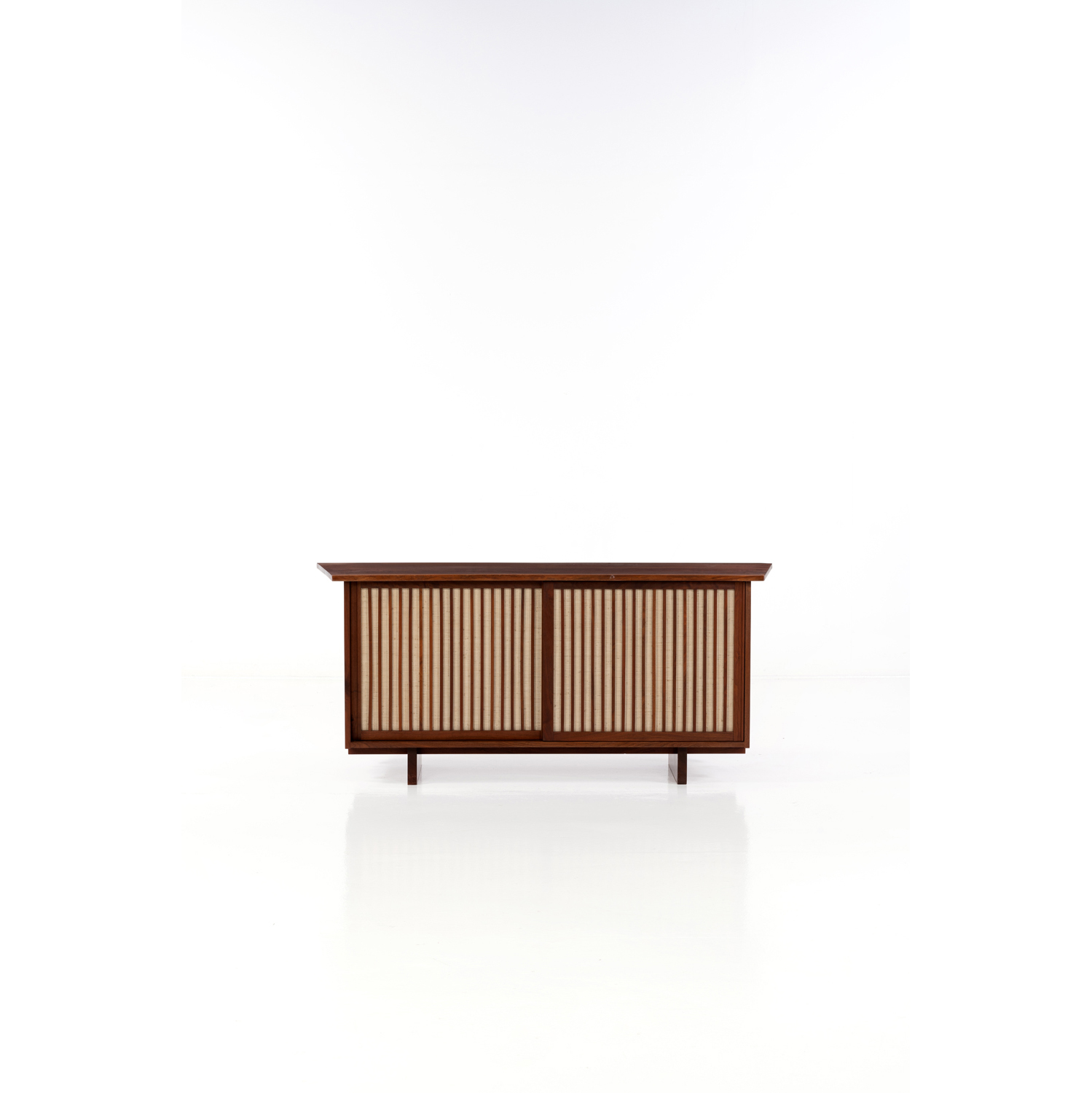
George Nakashima (1905-1990)
Bahut - Pièce unique
Result : 28600 €